
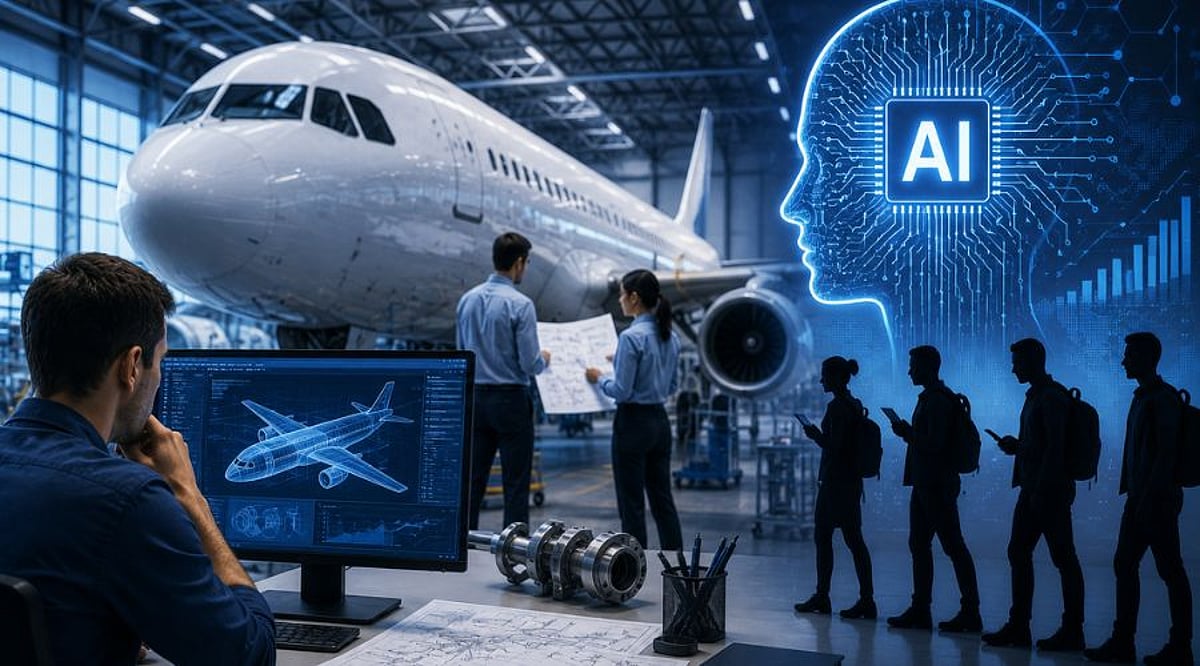
The global aerospace industry is facing an escalating talent crisis as artificial intelligence companies lure skilled engineering graduates with superior salaries, accelerated career progression, and fewer entry barriers. Industry leaders warn that the shortage could hamper aircraft production at a time when demand for new planes is soaring.
AI Boom Reshapes Engineering Career Choices
At the recent Farnborough International Airshow, recruiters intensified efforts to attract Generation Z and Generation Alpha, hoping to spark interest in aerospace careers. However, the talent pipeline is narrowing as more graduates gravitate toward AI, software, and other emerging technologies.
The UK aerospace and defense sector alone faces a shortfall of roughly 10,000 specialized engineers annually. Over half of the nation’s licensed aerospace engineers are over 50, and fewer than 10% are under 30, raising concerns about the industry’s long-term viability. According to trade body ADS, the sector has grown 31% in the past decade, but hiring has not kept pace.
Retirement Wave Compounds the Problem
This shortage coincides with record order backlogs at aircraft manufacturers like Boeing and Airbus, which are also preparing for a wave of retirements among experienced engineers. Many companies previously scaled back apprenticeship programs as a cost-saving measure, relying on graduate intake routes that have not produced enough trained professionals to meet demand.
To make aerospace careers more appealing, firms set up interactive displays, hands-on engineering puzzles, and flying demonstrations at Farnborough, aiming to capture the attention of younger visitors who might otherwise be uncertain about aviation roles.
Industry Seeks Broader Appeal
Experts note that aerospace employers are competing fiercely with AI companies, which often offer slightly better compensation and faster career advancement. Even top engineering graduates are increasingly choosing AI firms over traditional aerospace manufacturers.
Industry leaders believe that developments in sustainable aviation, electric aircraft, and air taxis could make aerospace roles more attractive again. They also advocate for engaging more women and school students early—before university—to consider engineering careers.
Last year, the UK aerospace, defense, and security sectors contributed £46.8 billion to the economy, underscoring their importance. However, companies warn that without a stronger influx of young engineers, sustaining future growth and innovation will become increasingly difficult.