
Tag: CEO insights

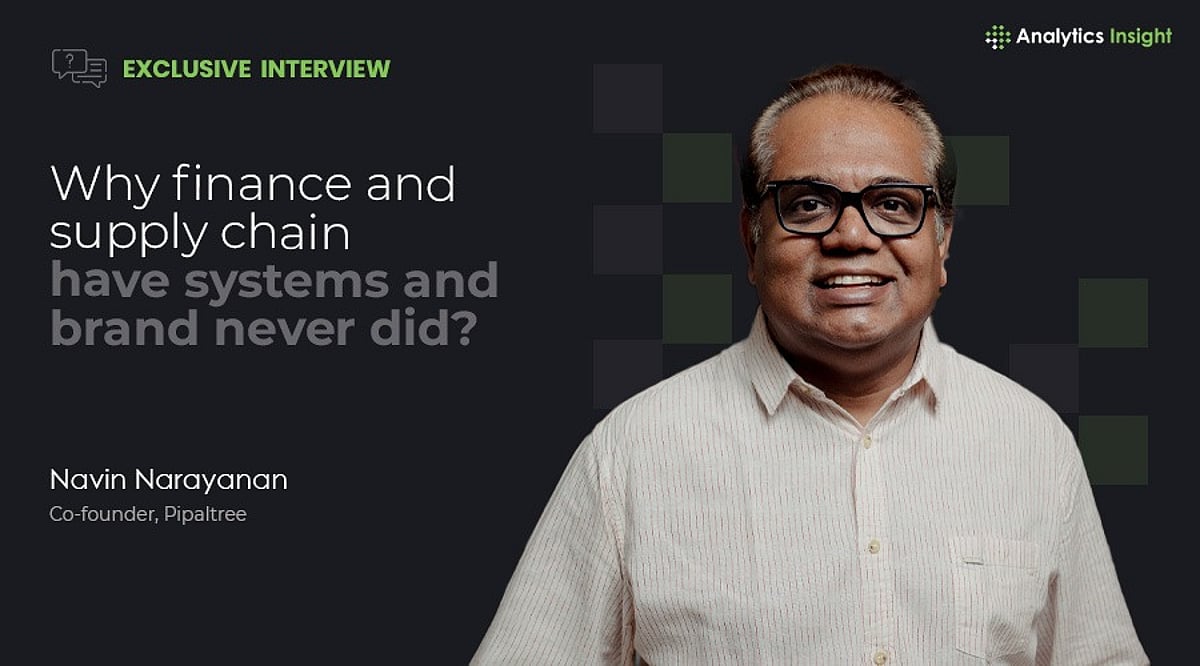
  • Pipaltree Co-Founder Navin Narayanan: Why Brand Measurement Is Broken and How Actionable Brand Intelligence Fixes It

    Pipaltree Co-Founder Navin Narayanan: Why Brand Measurement Is Broken and How Actionable Brand Intelligence Fixes It

    Interview: Navin Narayanan on Reinventing Brand Intelligence

    Pipaltree co-founder Navin Narayanan explains why brand measurement is broken and how actionable brand intelligence helps CEOs drive brand coherence across every touchpoint.

    Q: The brand research and insights industry is crowded — Nielsen, Kantar, Gartner, and countless boutique agencies. Where in this ecosystem does Pipaltree sit? Are you a replacement, a supplement, or something entirely new?

    A: Pipaltree is something entirely new — and the distinction is not about features. It is about what a brand actually is. A brand is a net impression. It is the feeling created in the mind of a customer through every interaction they have with a business — across every touchpoint, every channel, every experience. That feeling is what drives their decisions. The prevailing approach to measuring brand breaks that impression into atomistic attributes and asks people to rate them on a scale. Trustworthiness: 4 out of 5. Quality: 3 out of 5. The problem is not the execution. The problem is the premise. You cannot reconstruct a net impression from fragments. The moment you atomise it, you have already lost the thing you were trying to measure. Pipaltree is built on a different premise that is drawn from clinical psychology adapted for brand management. We capture the net impression as a whole, through real conversations at scale, and synthesise that into intelligence a CEO can act on. Finance has systems. Supply chain has systems. Brand has never had one. Not because no one tried, but because no one started from the right definition of what a brand actually is. That is what we are building.

    Q: Category creation is expensive and uncertain. You’re building “Actionable Brand Intelligence” as a new category. What evidence do you have that this category actually exists in the mind of a CEO, versus being a solution looking for a problem?

    A: We don’t have a survey that proves CEOs want this. We have something more reliable which is what clients do after they start using Pipaltree. Once a team begins using Pipaltree and acting on what it surfaces, the story travels inside the organisation. Other divisions ask for it. Other countries want it. What started in one part of the business mushrooms across it, not because we pitched the expansion, but because the people already using it made the case internally. A significant part of our growth comes from existing clients expanding. That is the evidence.

    Q: At what stage of a brand’s or organisation’s journey does actionable brand intelligence become relevant — and is there such a thing as too early or too late to adopt it?

    A: Pipaltree is not for every brand. If a brand is still defining itself, like at a stage where it is still working out its values or still finding its voice, there is nothing coherent yet to measure. But when a business has multiple touchpoints like customers, employees, partners, channels, brand is the only thing that can hold all of it together. Every one of those touchpoints is forming an impression in someone’s mind. That impression, accumulated across millions of interactions, is what the brand actually is. And yet most businesses have no system to drive it. Finance has one. Supply chain has one. Brand gets a study, once a year, and a deck. Actionable brand intelligence is the system that was missing to help you drive the brand the way you drive every other part of the business, consistently, with real signals.

    Q: How does this industry look at handling data sovereignty, privacy regulations (GDPR, India’s DPDP), and client concerns about sensitive brand data being processed by LLMs or technology?

    A: We designed for privacy before it became a compliance requirement. When we use open-source models, they are deployed on our own servers. The data does not leave our environment. When we use external models like OpenAI, Anthropic, others, the system strips all personally identifiable information before anything leaves the platform. Names, phone numbers, anything that can link a response to a real person is redacted before the data moves. What the external model sees is clean, anonymised conversation. The client’s brand intelligence never touches a public model in a form that could identify anyone. We are watching the regulatory environment closely and building ahead of it.

    Q: What is the future of actionable brand intelligence — and which businesses stand to lose the most by waiting?

    A: The businesses that need this most right now are the ones already managing multiple touchpoints. These touchpoints include customers, employees, partners, channels, where brand coherence is an operational challenge, not just a communication one. But the more interesting shift is happening in categories that never had to think this way. CPG/FMCG brands built their identity through communication. A good campaign, a consistent message, and the net impression formed. That model is no longer holding. The same brands are now building platforms, creating communities, tweaking packaging more frequently, experimenting with variants. They are becoming multi-touchpoint businesses without necessarily planning to be. The world is moving toward multi-touchpoint brand building. The businesses that recognise this early and put a system behind it will have a significant advantage over the ones still treating brand as something you communicate rather than something you drive coherently and consistently across touchpoints.

  • 7 Executive Strategies for Dominating the AI Economy

    7 Executive Strategies for Dominating the AI Economy

    The AI economy is reshaping competitive dynamics, cost structures, and customer expectations simultaneously. According to McKinsey’s 2026 State of AI report, 78% of organizations now use AI in at least one business function, up from 55% the year before — a pace of adoption that means the gap between leaders and laggards is widening faster than most boards anticipated. For CXOs, the question is no longer whether to adopt AI but how to adopt it in ways that create durable advantage rather than temporary efficiency gains.

    Treat AI as a Strategic Priority, Not an IT Project

    The most frequent pitfall in executive oversight is to delegate AI adoption to the technology department and measure success by operational outcomes only. Leading organizations are those where the CEO has set clear AI goals linked to revenue and holds the entire C-Suite accountable. According to Gartner’s 2026 CIO research, companies whose CEO sponsors AI programs are 2.5 times more likely to have business impact from them. In this era, AI literacy is not negotiable for non-tech executives: an incompetent CFO unable to critically assess an AI investment case or a CMO who cannot judge the attribution model of an AI marketing campaign is at a considerable disadvantage.

    Build AI into the Core, Not the Edge

    Many organizations in 2025 ran AI pilots at the edges of the business: isolated proofs-of-concept in one department, a chatbot on customer service, a forecasting tool in one market. These generated learnings but rarely competitive advantage, because they were never connected to the core operating model. Winning in the AI economy requires integrating AI into the processes that directly determine how value is created: the customer experience, the supply chain, the product development cycle, and the sales motion. Companies that have integrated AI into their core operations report 40% higher productivity gains compared to those running isolated experiments, according to BCG’s 2026 AI adoption analysis.

    Rethink the Workforce, Don’t Just Retrain It

    AI will displace some jobs, radically alter many others, and bring into being job categories that do not currently exist. Managers who view this as a training issue invariably underestimate the magnitude of the change needed. The better way to think about this challenge is through workforce redesign — figuring out how to map activities into areas managed by AI, those requiring AI-human interaction, and those requiring uniquely human input, and then redesigning job categories, teams, and incentives accordingly. Companies that redesign their workforces with AI rather than augmenting pre-existing designs with AI realize far greater benefits.

    Govern AI Before It Governs You

    AI adoption without governance is a weakness rather than a strength. Failures show that the costs incurred in terms of reputation and regulation can often outweigh the efficiency benefits which motivated the adoption of AI technology in the first place. Leading organizations have established AI governance frameworks with clear accountability, mandatory human oversight for high-stakes outputs, regular bias auditing, and documented correction processes. This is not a compliance exercise. It is risk management and increasingly, a customer trust signal.

    Win on Data, Not Just on Models

    The commoditization of foundation models means model access alone is no longer a competitive differentiator. The durable advantage in the AI economy sits in proprietary data. Organizations that have invested in data quality, infrastructure, and governance for years can fine-tune models on their own customer behavior and operational history in ways competitors without that data asset cannot easily replicate. For executives building AI strategy, data strategy and AI strategy are the same document, and the executives who understand that distinction earliest will be the ones best positioned to lead in the AI economy over the decade ahead.

    Why This Matters

    Organizations that strategically integrate AI into their business models are more likely to improve productivity, accelerate innovation, and respond quickly to changing market conditions. Executive leadership, not technology alone, will determine which companies gain lasting competitive advantage.

    FAQs

    What is the AI economy?

    The AI economy refers to the growing business environment where artificial intelligence drives productivity, innovation, customer experiences, and competitive advantage across industries. Organizations increasingly use AI to automate workflows, improve decision-making, and create new products and services.

    Why should CEOs treat AI as a business strategy instead of an IT project?

    AI influences every business function, including finance, marketing, operations, and customer service. When executive leadership aligns AI initiatives with revenue growth and strategic objectives, organizations are more likely to achieve measurable business outcomes than when AI remains solely a technology initiative.

    How can organizations successfully integrate AI into core business operations?

    Companies should embed AI into value-generating processes such as customer service, supply chain management, sales forecasting, product development, and decision support. Integrating AI into daily operations delivers greater long-term benefits than isolated pilot projects.

    What is AI governance, and why is it important?

    AI governance establishes policies, oversight mechanisms, and accountability for AI systems. It includes bias testing, human review, regulatory compliance, data privacy protection, and continuous monitoring to reduce legal, ethical, and reputational risks.

    Why is data strategy essential for AI success?

    High-quality proprietary data enables organizations to train and fine-tune AI systems for better business outcomes. Since AI models are becoming more widely accessible, unique data assets increasingly provide the strongest competitive advantage.