
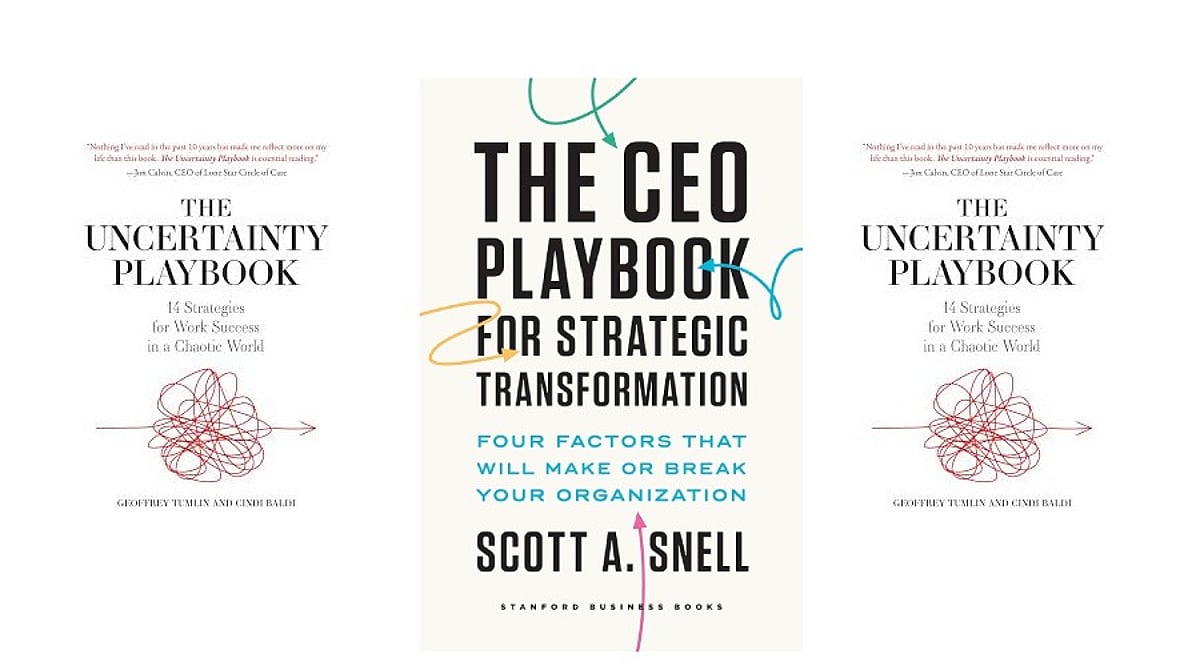
Tag: CEO Playbooks

  • 10 Essential CEO Playbooks for Navigating Economic Uncertainty

    10 Essential CEO Playbooks for Navigating Economic Uncertainty

    Economic uncertainty has become a defining feature of today’s business environment. From persistent inflation and geopolitical conflicts to supply chain disruptions and rapid technological change, companies are operating in a landscape where volatility is the norm rather than the exception. For CEOs, the challenge is no longer limited to protecting profits; it is about making confident decisions, keeping stakeholders reassured, and ensuring the business remains resilient through uncertain times.

    History shows that organizations with disciplined leadership often emerge stronger from economic slowdowns. While every crisis is different, successful CEOs tend to follow similar principles: they safeguard finances, communicate openly, invest wisely, and stay focused on long-term goals. These playbooks can help business leaders navigate uncertainty without losing momentum.

    Why This Matters

    Economic uncertainty puts every leadership decision under the microscope. CEOs who balance financial discipline, strategic planning, transparent communication, and innovation are better equipped to protect their organizations while creating opportunities for sustainable growth.

    10 CEO Playbooks for Uncertain Times

    Trying to steer through an unpredictable economy is not just about quick fixes. It’s a mix of steadier choices and sharper adjustments over time. These leadership approaches, tested in the real world, can help CEOs build resilience, deal with constant shifts, and gear their organizations toward longer-term success.

    1. Build a Strong Financial Cushion — Cash still counts as one of the most valuable assets when things get shaky. CEOs who protect liquidity, improve cash flow, and trim avoidable spending buy time, allowing the organization to handle interruptions while still being able to invest when fresh opportunities pop up.
    2. Focus on the Part of Business That Matters Most — During economic slowdowns, not every initiative deserves the same level of focus. Strong leaders put resources behind their best products, services, and markets, improving efficiency while keeping sustainable profitability in view.
    3. Keep Communication Clear and Consistent — Employees, investors, suppliers, and customers look to leadership for direction, especially when things get hard. Regular, transparent communication helps lower uncertainty, build trust, and align stakeholders around the company’s priorities.
    4. Cut Costs with Purpose, Not Panic — Trimming spending doesn’t automatically mean cutting off future growth. The best CEOs eliminate waste while preserving resources for innovation, digital transformation, cybersecurity, and customer experience — investments that strengthen long-term competitiveness.
    5. Get Ready for Different Economic Versions — No forecast can nail every market shift. When leadership prepares best-case, moderate, and worst-case scenarios, they can respond quickly and with confidence, avoiding reactive mode whenever conditions change.
    6. Speed Up Decisions, Then Follow Through — In unstable markets, waiting around can be expensive. CEOs who empower business leaders, shrink bureaucracy, and encourage quicker decision-making help organizations adapt smoothly to changing customer needs and market realities.
    7. Continue Investing in Talent — People remain a company’s biggest competitive strength. Even when the economy slows, investing in leadership growth, skill building, and careful hiring keeps know-how on hand and prepares everyone for the next expansion phase.
    8. Stay Close to Customers — When things feel uncertain, consumer patterns can shift rapidly. Companies that actively seek customer feedback and respond to evolving needs protect loyalty and spot fresh growth paths instead of just waiting around.
    9. Use Technology to Solve Business Problems — Artificial intelligence and automation should back business goals, not just chase trends. CEOs who invest in tech with clear results can boost day-to-day efficiency, productivity, forecasting accuracy, and customer experience.
    10. Lead with the Future as a Baseline — Resilient CEOs treat downturns as openings to strengthen their organizations. They modernize how work gets done, reinforce culture, and make planned investments that fit the long game, so performance is stronger when economic conditions eventually turn around.

    The Bottom Line

    Economic uncertainty is unavoidable, but how strong leaders handle it can determine how well an organization gets through. The best CEOs mix disciplined financial management with strategic insight, stay open with stakeholders, and keep funding people and new ideas even when times are rough. In this unpredictable work environment, resilience isn’t just about surviving a downturn — it’s a measure of how quickly a leader can adjust, inspire confidence, and shape an organization to flourish once the next growth phase begins.

  • 10 CEO Playbooks to Drive Innovation Without Increasing Budgets

    10 CEO Playbooks to Drive Innovation Without Increasing Budgets

    Overview

    Build innovation through smarter leadership, agile teams, customer insights, and disciplined decision-making every day. Reduce costs by eliminating bureaucracy, improving operations, and maximizing existing business resources effectively together. Create sustainable growth using data-driven strategies, experimentation, and continuous learning across every business function consistently.

    Innovation has long been associated with bigger budgets, larger teams, and heavy investments in technology. This mentality is beginning to shift. In an environment where companies must operate on narrower profit margins, CEOs must deliver growth amid constrained costs.

    It is not necessarily the companies spending the most money that win out. Instead, it is those who make quick decisions, empower their people, maximize their assets, and meet customer demands promptly. Innovation is not about writing bigger checks but about fostering a culture of smart ideas.

    10 CEO Playbooks to Drive Innovation Without Increasing Costs

    Here are 10 CEO-level playbooks that aid innovation without raising costs:

    1. Make Lemonade Out of Lemons

    Constraints often spark innovation. Rather than providing more money to a team, ask them to come up with innovative solutions by leveraging the resources they already have. Working under constraints fosters innovation and cuts waste.

    2. Small Before Large

    New and innovative ideas may not be fully implemented through their entire process cycle within the business organization. Implementing pilot projects, prototypes, or MVPs will enable the business organization to gather important information about innovations without incurring costly mistakes.

    3. Get Rid of Bottlenecks

    The process of innovation is impeded by lengthy decision-making cycles. The decrease of stages of approval, the holding of fewer unnecessary meetings, and the delegation of decision-making power to teams will speed up the innovation process. Sometimes, getting rid of bureaucracy works better than additional financing.

    4. Assign Major Tasks to Small Teams

    It is unlikely that big teams will come up with innovations. Cross-functional small teams with clearly defined responsibilities can significantly increase efficiency in implementing innovation processes. People feel more responsible if they have decision-making power.

    5. Make the Business Work Better

    Innovation is not just about inventing new products. Simplifying and automating business processes, improving customer service, and making operations more efficient help increase productivity and reduce costs. Sometimes, competitiveness lies in doing things more efficiently.

    6. Innovate According to Customer Demand

    Customers can first see any shortcomings in your products and services. Feedback can be obtained through customer reviews, surveys, support groups, and personal interactions to identify issues that need improvement. These usually turn out to be very practical innovations.

    7. Always Have Data Behind Your Decisions

    Evidence always makes good ideas better. Analyze customer behavior, operational performance, and product usage to identify opportunities for innovation. While doing this, do not waste money on projects that have no tangible success.

    8. Explore Opportunities in Your Current Assets

    Sometimes innovation has nothing to do with coming up with something new. Your existing technology, talented employees, manufacturing processes, intellectual property, and even your customers can all be used to develop ways to earn additional revenue.

    9. Build a Culture That Learns from Failure

    The fear of failure means experiments will never happen. Employees need to be inspired to conduct experiments, learn from their failures, and share their insights with others. Even though not all experiments will succeed, they all provide important information that helps make future decisions.

    10. Align Innovations with Corporate Goals

    Innovations should address a company’s problem. If the goal of an innovation is to improve customer experience, reduce expenses, increase productivity, generate additional income, etc., any innovation should deliver results for a company. Otherwise, an innovation is not worth the money spent on it.

    Why This Matters

    At this point, there isn’t really a clear correlation between innovation and larger budgets. Companies that try to innovate by making sharper decisions, staying nimble, pulling real customer insights, and improving efficiency can end up moving faster, becoming more profitable, adapting to market shifts, and even outdoing competitors without increasing expenses.

    Conclusion

    Being an awesome company doesn’t have to mean being an awesome spender. Great CEOs tend to make their organizations more efficient by cutting costs, giving real trust to team members, leaning into learning, and making better decisions. In the business world, where every rupee counts, innovation that does not inflate costs can become the signature of strong leadership.

    Frequently Asked Questions

    1. Can businesses innovate without increasing budgets?

    Yes. Smarter leadership, better resource allocation, agile teams, and efficient processes can drive innovation without significantly increasing operational spending.

    2. Why are small teams more effective for innovation?

    Small, cross-functional teams make faster decisions, collaborate efficiently, adapt quickly, and take greater ownership of delivering measurable business outcomes.

    3. How does customer feedback support innovation?

    Customer insights reveal pain points, helping businesses improve products, services, and experiences while reducing unnecessary development costs and risks.

    4. What role does data play in innovation?

    Data helps leaders identify opportunities, measure performance, eliminate ineffective initiatives, and make informed decisions that improve business results.

    5. Why should CEOs focus on operational innovation?

    Improving internal processes increases productivity, reduces costs, enhances customer experience, and creates long-term competitive advantages without major investments.