Tag: charging infrastructure

  • Tesla’s Rise to Dominance in the Electric Vehicle Market: A Systematic Approach

    Tesla’s Rise to Dominance in the Electric Vehicle Market: A Systematic Approach

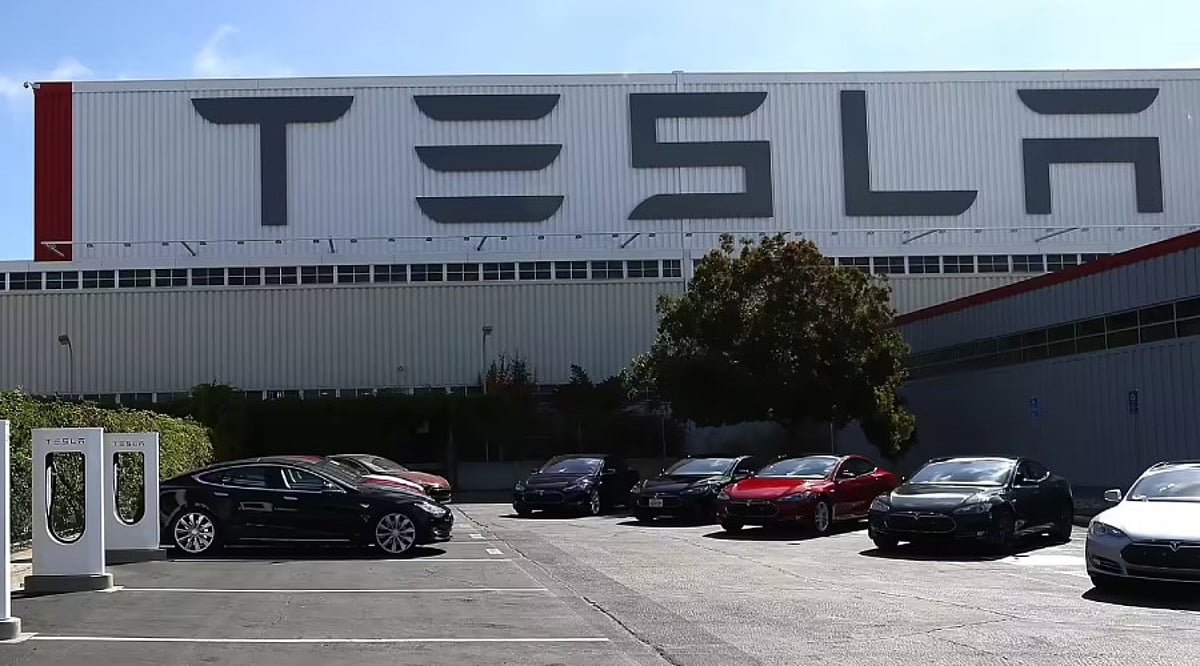
    Tesla did not become a major automaker overnight. It did not get there through one clever invention either. Its growth came from solving one problem after another. First, Tesla had to prove people wanted electric cars. Then it needed batteries, the ability to build cars at scale, and expansion into new countries. Each solution created the next challenge. This pattern explains Tesla’s rise better than any single product ever could.

    The Roadster Gamble

    Tesla was founded in 2003 by Martin Eberhard and Marc Tarpenning. Elon Musk joined as chairman and lead investor in 2004 and later became CEO. The company’s first car, the Roadster, launched in 2008. It used a Lotus Elise chassis and a battery pack made of thousands of small lithium-ion cells—the same type used in laptops at the time. This gave Tesla access to an already scalable battery supply chain. The hard part was managing heat, wiring the cells safely, and controlling the entire pack with software. The Roadster proved that a fast electric car could sell to real buyers, even at a high price.

    Model S Changes the Blueprint

    The Model S, introduced in 2012, marked a real shift for Tesla. Unlike the Roadster, it was built from scratch as an electric car, not adapted from another model. Tesla designed its own battery system, opened Supercharger stations to solve range anxiety, and introduced over-the-air updates that could change how a car worked even after it left the factory. This mix of software, batteries, and charging under one company gave Tesla more control over the driving experience than most traditional automakers had.

    Solving the Battery Bottleneck

    By 2014, demand for Tesla cars had outpaced its battery supply. The Gigafactory in Nevada was built to fix this, partnering with Panasonic to bring battery cell and pack production closer to the car assembly line. This partnership combined Tesla’s scale with Panasonic’s battery expertise, driving down costs over time. Tesla later built more Gigafactories in Shanghai, Berlin, and Texas, each one moving production closer to the markets it served.

    The Model 3 Manufacturing Crisis

    Tesla’s hardest period came with the Model 3 in 2017 and 2018, a stretch the company itself called “production hell.” Building an affordable car at scale exposed real gaps in Tesla’s factory process. Musk later said the company came close to running out of money. The fix was not simple: Tesla built a temporary assembly line in a tent outside its Fremont factory and rethought automation steps that had slowed everything down. Once stabilized, the Model 3 became one of the best-selling electric cars in the world, proving Tesla could handle mass production, not just small batches of luxury cars.

    Shanghai Proves the Model Can Travel

    Tesla broke ground on its Shanghai factory in January 2019—its first plant outside the United States. Model 3 production began there later that same year, an extremely fast timeline for any car factory. Shanghai showed that Tesla’s production approach could succeed outside California. Local suppliers and production cut costs and gave Tesla direct access to China, the world’s largest EV market.

    Model Y Builds on What Already Works

    Tesla did not design a brand-new platform for the Model Y. Instead, it leveraged much of the same engineering as the Model 3, allowing Tesla to enter the crossover and SUV market quickly without repeating years of development. Shared parts extended the value of earlier investments into a whole new vehicle type.

    A Market That Has Changed

    Tesla once had the EV market mostly to itself, but that is no longer true. Legacy automakers now offer strong electric vehicles, and Chinese companies like BYD report huge sales numbers (though often including plug-in hybrids). Tesla still has strong advantages: its charging network, software, and factory scale. But rivals are building the same strengths. What sets Tesla apart today is not being first—it’s how well Tesla integrates all these pieces into one cohesive system.

    Final Thought

    Tesla’s real story is not about inventing the electric car. It’s about building the machinery around it. Batteries, factories, charging stations, and software were once separate parts of the business. Tesla turned them into one connected system. That system, more than any single car, is what transformed a small EV startup into a global manufacturer.
  • EV Industry Outlook 2026: Key Trends Driving Growth in Europe, China, and Beyond

    EV Industry Outlook 2026: Key Trends Driving Growth in Europe, China, and Beyond

    The electric vehicle market is entering a new phase, marked by shifting regional dynamics, falling prices, and rapid technological advances. Global sales of battery-electric and plug-in hybrid vehicles reached 1.85 million units in July 2026, a 9% year-over-year increase, with total sales for the first seven months hitting approximately 11.5 million. Europe is emerging as the fastest-growing market, while China faces a saturated domestic market and North America shows mixed signals. The next wave of EV adoption will hinge on price, battery innovation, charging infrastructure, software capabilities, and trade policies.

    Europe Gains Momentum

    In 16 major European markets, battery-electric vehicles accounted for 25.7% of new car sales in July 2026. BEV sales rose 13.6% year-over-year to 224,266 units. France achieved a 35% BEV share, Germany 29.3%, and Denmark an impressive 80.1%. However, Italy saw its share drop to 5.9% after ending purchase subsidies. Stable regulations and more affordable models will be critical for Europe to maintain its lead.

    China Shifts Focus to Exports

    China’s domestic EV market is under pressure, with passenger vehicle exports rising 77.5% year-over-year in August 2026, while domestic sales fell for the 11th consecutive month. Electric and plug-in hybrid exports surged 154.7%, even as domestic sales of these vehicles declined 10.1%. Major automakers like BYD and Geely are increasingly looking overseas for growth as the home market becomes saturated.

    Price and Battery Costs Are Key

    Price remains the central factor in EV adoption. According to the International Energy Agency, nearly 70% of battery-electric cars sold in China in 2025 cost less than the average petrol or diesel car, and about 30% of electric models had an entry price below USD 20,000. In Europe, fewer than 10% of BEV models were priced below USD 30,000 in 2025. Low-cost Chinese models hold a strong advantage, but trade barriers could shift the balance.

    Global EV battery use reached 1.2 terawatt-hours in 2025, up nearly 30% from 2024. Average battery prices fell 8% in 2025, though lithium prices at the start of 2026 were more than double their level from the same period in 2025. Battery makers must balance lower pack costs with volatile mineral prices. Smaller, cheaper models could attract more buyers if range and safety remain acceptable.

    Charging Infrastructure and Software

    The world had over 43 million private light-duty vehicle charge points in 2025, with roughly one-third each in China and Europe and one-sixth in the United States. Public fast-charging rates can be up to 240% higher than residential tariffs, making home charging a key value driver. The average electric car range is now around 380 km and has largely plateaued. New 1,000-volt models and ultra-fast charging systems can cut charge times to under 10 minutes.

    Software is playing an increasingly important role. Modern EVs support remote updates, advanced driver assistance, battery management, and new digital features. Driverless taxis are already operating in more than 20 cities, primarily in China and the United States.

    India’s Unique Path

    India presents a different growth story. Alternative-fuel passenger vehicles accounted for 41.95% of retail sales in August 2026, ahead of petrol and ethanol at 40.85%. CNG and LPG held 25.28%, hybrids 9.04%, and EVs 7.63%. India recorded 297,820 EV registrations in August, with Uttar Pradesh alone contributing 42,007. The country shows strong potential across small cars, two-wheelers, three-wheelers, buses, and fleet vehicles.

    What Lies Ahead

    The next phase of the EV industry will not be defined by a single technology or market. Europe needs stable policies and lower prices. China must secure overseas access. Battery manufacturers require lower costs and stable mineral supply. Automakers need better software and faster charging. India offers room for diverse growth. The winners will be those that can deliver the right combination of price, range, software, and charging access.

    FAQs

    • What is driving the next phase of EV growth? Lower prices, battery innovation, faster charging, improved software, and supportive trade and policy frameworks.
    • Why is Europe becoming an important EV market? Europe is seeing faster BEV adoption, with several major markets recording strong growth and higher electric-car sales shares.
    • What challenge is China’s EV industry facing? A saturated domestic market is pressuring sales, encouraging Chinese automakers to expand exports and enter overseas markets.
    • Will EV prices continue to fall? Lower battery costs and increased competition could support more affordable EVs, although mineral prices and trade barriers may affect pricing.
    • What role will India play in the EV transition? India has significant growth potential across EVs, two-wheelers, three-wheelers, buses, and fleet vehicles, supported by broader growth in alternative-fuel mobility.
  • 7 Crucial Factors Every EV Buyer Must Consider Before Ditching Petrol

    7 Crucial Factors Every EV Buyer Must Consider Before Ditching Petrol

    Switching from a petrol car to an electric vehicle (EV) is a major decision that involves more than just environmental benefits. Before you make the leap, here are seven key factors to evaluate.

    1. Charging Infrastructure

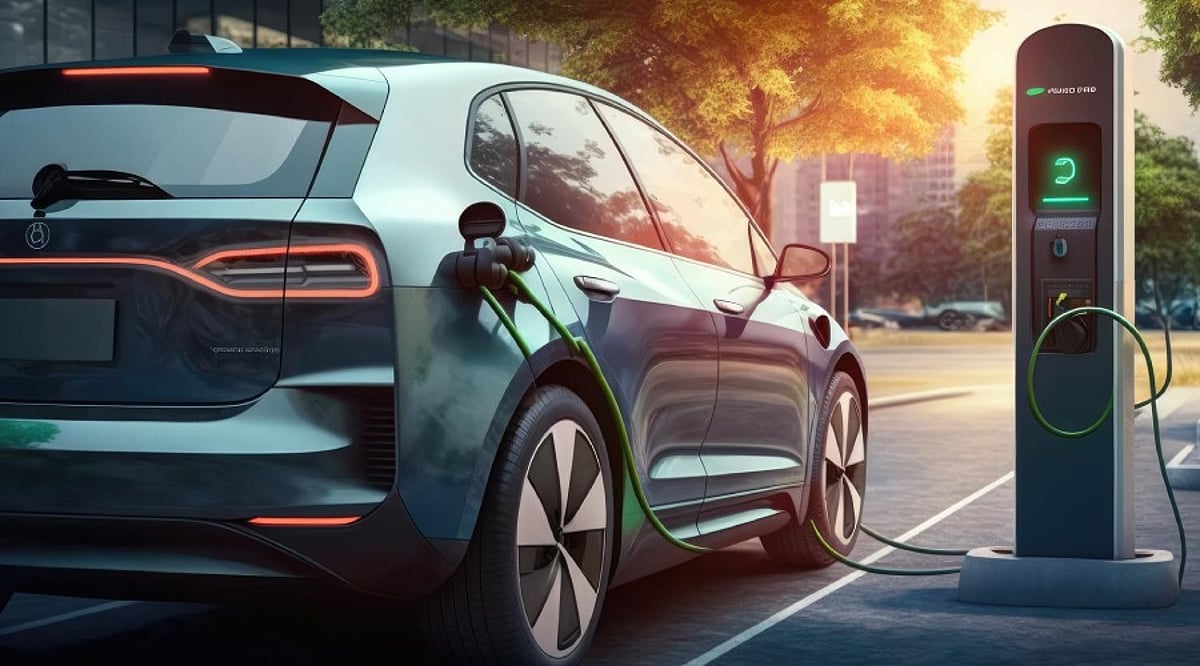
    Before choosing an EV, check the availability of charging stations near your home, workplace, and along your regular routes. This ensures convenient daily charging and reduces range anxiety.

    2. Driving Range

    Compare the manufacturer’s claimed range with your typical travel needs. Remember that real-world range can be affected by traffic, weather, driving style, and highway speeds.

    3. Charging Time

    Understand the different charging speeds and connector types. Charging an EV can take significantly longer than refueling a petrol vehicle, so plan accordingly.

    4. Purchase Cost

    EVs often have higher upfront prices. Compare financing options, available incentives, insurance premiums, and expected running costs to get a full picture of the investment.

    5. Battery Life

    Check the battery warranty, replacement coverage, and expected lifespan. These factors are crucial for understanding potential long-term ownership costs.

    6. Maintenance Costs

    EVs have fewer moving parts, which can lower routine maintenance. However, components like tyres, brakes, and battery systems still require regular attention.

    7. Home Charging

    If possible, install a suitable home charger. Overnight charging makes daily EV ownership far more convenient and practical.

    Additionally, consider resale value trends for your preferred model, as battery condition, technology updates, warranty coverage, and market demand can affect future value. Finally, be prepared for a different driving experience—EVs deliver instant torque, quiet operation, and smooth acceleration compared to conventional petrol cars.

  • India Achieves Record EV Sales on World EV Day, Infrastructure Hits Critical Turning Point

    India Achieves Record EV Sales on World EV Day, Infrastructure Hits Critical Turning Point

    India’s electric vehicle market has entered a pivotal new phase as record-breaking sales shift the spotlight from consumer adoption to the infrastructure required to sustain millions of EVs on the road. On World EV Day 2026, September 9, the country celebrates its highest-ever monthly EV retail figures while confronting the next big challenge: building a robust charging and service ecosystem.

    Record Sales Mark a Milestone

    According to data from the Federation of Automobile Dealers Associations (FADA), India retailed 327,901 EVs in July 2026, a surge of more than 66% compared to July 2025. This milestone meant EVs accounted for nearly one in every eight vehicles sold during the month. August continued the upward trend with 298,448 units sold, up 52.9% year-over-year.

    The numbers coincide with the World EV Day 2026 theme, “Switching Electric: driving down the cost of motoring,” placing affordability at the heart of the nation’s electric mobility transition.

    Two-Wheelers Lead the Charge

    Electric two-wheelers remain the primary growth driver, crossing the two-lakh mark for the first time in July. Passenger EV sales climbed more than 83% year-on-year to 32,928 units. Electric three-wheelers have solidified their segment position, and commercial EV adoption is accelerating as fleet operators ramp up electrification.

    However, as EVs move beyond early adopters into the mass market, purchase decisions increasingly hinge on running costs, charging access, service reliability, and overall ownership experience.

    Charging Infrastructure Under the Spotlight

    India’s charging network has grown significantly, but the focus now is on quality, location, and uptime. Government data shows 52,718 public charging stations exist as of July 2026, including 16,561 equipped with fast chargers for cars. The PM E-DRIVE scheme has allocated ₹2,000 crore (approx. USD 240 million) for public EV charging infrastructure.

    Industry executives point out that gaps persist outside major cities and in residential buildings, where limited parking, electrical capacity, and dedicated charging facilities complicate adoption. According to experts, reliable roadside assistance, battery and charger reliability, local service networks, grid upgrades, energy storage, and smarter charging systems are all critical components of a mature EV ecosystem.

    Home Charging and Grid Capacity

    Home charging remains a significant concern, particularly for apartment dwellers. As EV numbers rise, electricity demand will climb, making coordination between the transport and power sectors more essential than ever. For India, the record sales suggest that while consumer willingness to go electric is growing, the tougher question is whether infrastructure, service networks, and energy systems can keep pace with demand.

    World EV Day 2026 thus becomes a moment to celebrate progress while underscoring the next hurdle: building a comprehensive, reliable, and accessible EV ecosystem for all.

  • Key Players in the EV Ecosystem: Stocks Powering Electric Mobility’s Future

    Key Players in the EV Ecosystem: Stocks Powering Electric Mobility’s Future

    Electric Vehicle Market Enters a New Growth Phase

    The electric vehicle industry is expanding beyond car manufacturers, creating opportunities across batteries, charging infrastructure, software, and energy solutions. Companies supporting the EV ecosystem are becoming important players as global demand for cleaner transportation increases. Investors are closely watching businesses that contribute to the development, production, and adoption of electric mobility worldwide.

    EV Manufacturers Lead the Transformation

    Electric vehicle makers remain central to the industry’s growth as they introduce new models, improve battery efficiency, and compete for global market share. Companies developing affordable, premium, and specialized electric vehicles are influencing the future of transportation. Their progress depends on innovation, production capacity, technology improvements, and the ability to meet changing consumer expectations.

    Battery Companies Power Electric Mobility

    Battery technology is one of the most important parts of the EV ecosystem because it determines range, performance, and cost. Battery manufacturers and suppliers are investing heavily in advanced materials, faster charging solutions, and improved energy storage. Companies involved in battery production are becoming increasingly important as automakers seek reliable partners for future electric vehicle growth.

    Charging Networks Build EV Infrastructure

    The expansion of electric vehicles depends heavily on charging infrastructure. Companies developing charging stations, fast-charging technology, and energy management systems are helping create a stronger EV network. As more drivers switch to electric vehicles, charging providers are expected to play a larger role in supporting convenient and accessible transportation solutions.

    Semiconductor and Software Companies Gain Importance

    Modern electric vehicles rely on advanced chips, artificial intelligence, and software systems to improve performance and safety. Semiconductor companies and technology providers are becoming key contributors to the EV ecosystem. Their innovations support autonomous driving features, battery management systems, connected services, and smarter vehicle experiences for future generations of electric cars.

    Global Competition Shapes EV Investments

    The EV market includes companies from different regions competing through technology, pricing, and innovation. Manufacturers, battery suppliers, and infrastructure providers are expanding their capabilities to capture growing demand. Investors are monitoring businesses with strong growth potential while considering challenges such as supply chain risks, changing regulations, and increasing market competition.

    The Future of EV Ecosystem Stocks

    The electric vehicle revolution extends far beyond vehicle production, creating opportunities across multiple industries. Companies involved in batteries, charging, software, and renewable energy solutions will continue influencing the future of transportation. As EV adoption increases globally, ecosystem-focused businesses are expected to remain important areas of interest for technology and mobility investors.

  • Why Major Automakers Are Splitting Investments Between EVs and Hybrids in 2026

    Why Major Automakers Are Splitting Investments Between EVs and Hybrids in 2026

    Automakers are now taking a more balanced approach to powertrain investments, splitting billions between fully electric vehicles (EVs) and hybrids. Rather than retreating from electrification, companies like Toyota, Ford, GM, Honda, and Stellantis are using hybrids to manage risk and support long-term EV goals.

    Why EV Demand Has Cooled

    Between 2021 and 2024, automakers set ambitious timelines for an all-electric future. But by 2025, EV demand slowed as several markets cut incentives and consumer interest plateaued. Toyota reduced its 2026 global EV production target to 1 million units and delayed its US EV production start. Yet Toyota remained the top-selling automaker in the US in 2025, largely thanks to strong hybrid sales. This shift signals that many buyers still prefer hybrids as a practical, affordable choice.

    Why Hybrids Are Making a Comeback

    Hybrids appeal to buyers who want better fuel economy without worrying about charging infrastructure or the higher upfront cost of many EVs. Ford is adding hybrid options across nearly its entire lineup. Honda is developing a new hybrid platform from the ground up. Stellantis, meanwhile, is moving away from plug-in hybrids in North America toward mild hybrids and range-extended models.

    Why Automakers Need Both Powertrains

    Hybrid production uses existing engine and transmission lines, existing supplier deals, and much smaller battery packs than full EVs. This reduces exposure to volatile lithium and nickel prices and helps factories stay busy while EV demand catches up. Ford expects its EV division, Model e, to turn a profit by 2029, with hybrid profits helping bridge the gap. GM took a $6 billion writedown on its EV business and is rethinking an all-electric Cadillac lineup. Stellantis is building the STLA One platform, designed to handle EV, hybrid, and gas models on the same production lines. This approach doesn’t sideline EVs—it uses hybrid profits to buy time for the industry to get electric mobility right.

    Regional Strategies Shape Powertrain Choices

    No single global strategy works for every market. Easing US emissions rules have reduced the compliance value of plug-in hybrids in some segments, leading Stellantis to retire them in North America. Europe, on the other hand, continues to push for tighter emissions standards and stronger EV incentives. North America’s uneven charging infrastructure keeps hybrids ahead in mainstream segments, while regions with robust charging networks and policy support favor EVs. Executives now describe this as running several regional strategies in parallel, rather than one transition plan with a fixed end date.

    What It Means for Buyers and Investors

    Buyers can expect more hybrid choices in mainstream segments through 2026, alongside EVs positioned carefully where charging infrastructure is mature. For investors, key metrics to watch are hybrid margins, capital committed to shared platforms like STLA One, and how fast EV divisions close their profitability gap.

    Final Thoughts

    Instead of betting solely on EVs or hybrids, automakers are competing on operational flexibility—running both powertrains on shared factories and platforms without overcommitting to either. That flexibility, more than any single technology, is shaping up as the industry’s real competitive advantage for the rest of the decade.