Tag: Chennai

  • Starbucks to Open Global Tech Hub in Chennai, Create 800 Jobs

    Starbucks to Open Global Tech Hub in Chennai, Create 800 Jobs

    Starbucks Plans Global Capability Center in Chennai

    Starbucks has announced plans to establish a global technology center in Chennai, India, as part of its international expansion. The coffee giant signed an agreement with the Tamil Nadu government and expects to hire around 800 technology professionals for the facility. The state government confirmed the deal on Monday but did not disclose the investment amount.

    Chennai Center to Support Global Operations

    The new center will provide technology services for Starbucks’ worldwide operations. Global capability centers typically handle software development, finance, data analysis, and research. They help companies support their main offices and optimize internal systems. Starbucks’ technology chief, Anand Varadarajan, highlighted Chennai’s skilled workforce, strong infrastructure, and low employee turnover as key advantages, according to a government press release. The company did not comment further outside regular business hours.

    The center is expected to create roughly 800 technology jobs in Chennai, adding to the city’s growing base of global business professionals. Starbucks has not yet announced a recruitment timeline, facility opening date, or specific roles.

    Expanding Starbucks’ Footprint in India

    Starbucks already operates about 500 cafes in India through its joint venture with Tata Consumer Products. The proposed Chennai center will extend the company’s presence beyond retail coffee into technology services. The agreement gives Starbucks access to India’s vast engineering talent pool and Chennai’s established office infrastructure and network of global business centers. The center will support technology needs across multiple markets.

    The Tamil Nadu government did not specify whether the facility will be a new campus or an existing office building, and Starbucks has not provided a project completion timeline.

    Chennai Attracts Global Tech Investments

    Starbucks’ deal comes shortly after US pharmacy chain Walgreens signed a similar agreement to set up a technology center in Chennai, creating about 250 jobs. Companies like Citi, Barclays, and American Express already operate global business and technology centers in the city. According to the Tamil Nadu government, Chennai accounts for about 10% of India’s global capability center base. The city attracts overseas firms due to its trained workforce, strong transport links, and lower turnover rates.

    India now hosts over 2,100 global capability centers, employing about 2.36 million people and generating nearly USD 100 billion in revenue, according to a 2026 Nasscom-Zinnov report. These centers handle finance, software development, research, and other high-value functions. Starbucks will join this expanding network with its Chennai technology center.

  • Starbucks Establishes First India Global Capability Center in Chennai, Aiming for 800 Tech Jobs by 2027

    Starbucks Establishes First India Global Capability Center in Chennai, Aiming for 800 Tech Jobs by 2027

    US-based coffee chain Starbucks is set to establish its first Global Capability Center (GCC) in India, selecting Chennai as the location. The company signed a Memorandum of Understanding (MoU) with the Tamil Nadu government for the facility, with plans to create approximately 800 technology jobs in its initial phase.

    Starbucks Selects Chennai for Technology Hub

    Starbucks stated, “Chennai was selected after evaluating factors including access to technology talent, employee retention, and infrastructure. The company plans to integrate the new center into its broader global technology network.” The Chennai hub will collaborate with Starbucks’ technology and business teams in the US and other international locations. The company highlighted that the center will help build capabilities in-house over time and reduce its reliance on some third-party service providers.

    Starbucks Chief Technology Officer Anand Varadarajan said, “India remains an important market for the company. He also highlighted Chennai’s skilled technology workforce, relatively low attrition, and infrastructure as factors behind the decision.”

    Chennai Strengthens GCC Position

    The Starbucks announcement adds another multinational to Chennai’s expanding GCC ecosystem. The city already hosts technology centers for companies including Citi, Barclays, and American Express. According to the Tamil Nadu government, Chennai accounts for roughly 10% of India’s GCC base.

    India has emerged as the world’s largest GCC hub. A 2026 Nasscom-Zinnov report stated, “The country includes more than 2,100 GCCs employing about 2.36 million people and generating nearly USD 100 billion in revenue.”

    The new Starbucks facility will operate independently of the company’s retail joint venture with Tata Consumer Products in India. Starbucks currently operates around 500 cafés in the country through that partnership.

    Hiring is expected to commence from Q1 2027 as the company expands its global technology operations.

  • India-Made iPhone 18 Pro and Pro Max Enter Global Launch Supply as Foxconn and Tata Expand Production

    India-Made iPhone 18 Pro and Pro Max Enter Global Launch Supply as Foxconn and Tata Expand Production

    Apple is expanding its India manufacturing push ahead of the global launch of the iPhone 18 Pro and iPhone 18 Pro Max, with locally assembled units already moving to overseas markets. Multiple chartered flights have reportedly departed from Chennai carrying premium iPhone 18 models as Apple works to secure enough supply for customers when sales begin on September 18.

    The move signals a new phase in Apple’s India production strategy. For the first time, Pro and Pro Max models assembled in India are expected to be available in international markets from day one of global sales. The standard iPhone 17 reached overseas buyers on launch day last year, but Apple’s Pro models previously entered Indian production later in the product cycle.

    Foxconn and Tata Electronics Scale Up Output

    Two Indian plants are currently producing the iPhone 18 Pro and Pro Max: one run by Foxconn and one run by Tata Electronics. Reports indicate that both factories have been operating around the clock as Apple prepares for launch demand.

    Production capacity may grow further as well. Industry reports suggest the number of assembly lines could eventually approach 12, depending on international demand. Apple has not disclosed production volumes or confirmed how many units are allocated to individual countries.

    An estimated 80 to 90 percent of India’s Pro-series output is expected to be exported, with the United States identified as a major destination. That figure is a reported production estimate rather than an Apple-confirmed shipment target.

    Chartered Flights Move iPhones From Chennai

    Speed is central to Apple’s launch logistics. Several chartered aircraft have reportedly carried India-made iPhone 18 Pro and Pro Max units from Chennai to international markets ahead of the September 18 sales date.

    The US is expected to account for a significant share of those shipments. India has become an increasingly important source of iPhone exports to the US as Apple broadens manufacturing beyond China. Analysts cited by India Today estimate that about 26 percent of all iPhones shipped globally in 2026 could be made in India.

    India’s Growing Role in Apple’s Supply Chain

    Apple’s expanding Pro-series production in India adds to an ecosystem that already includes assembly, testing, enclosures, selected mechanical components, battery packs, chargers, cables, packaging, and other subassemblies. However, several high-value components, including displays, camera modules, memory, and advanced semiconductors, continue to be sourced from outside India.

    The latest shipments also highlight a broader shift: India is moving from serving primarily its domestic market to supporting Apple’s international supply chain. With Pro and Pro Max models now entering global distribution from launch day, Indian factories are becoming part of the launch-time production network rather than a later-stage manufacturing base.

  • Agnikul Cosmos Expands Private Space Capabilities with New Chennai Testing and Manufacturing Facilities

    Agnikul Cosmos Expands Private Space Capabilities with New Chennai Testing and Manufacturing Facilities

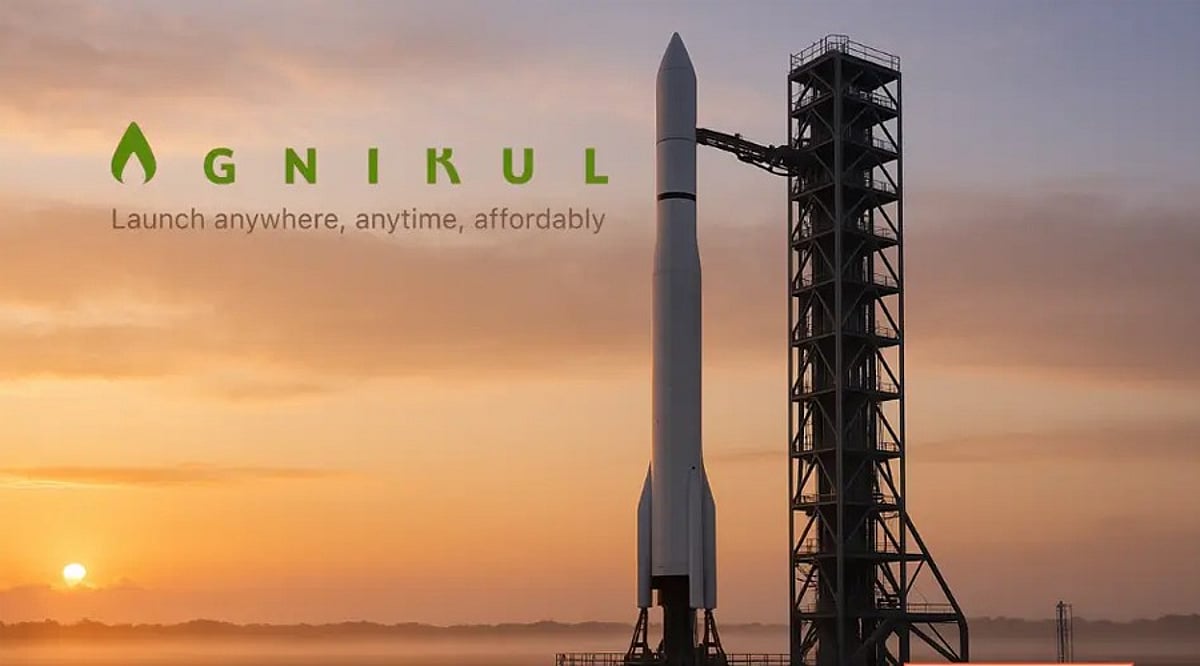
    Indian space startup Agnikul Cosmos has inaugurated two new assembly and testing facilities in Chennai, marking a significant step toward reusable launch vehicle technology and bolstering India’s private space sector. The facilities, unveiled at the company’s assembly and testing complex, are designed to support the Agnibaan rocket program and preparations for Mission-02.

    Stage Testing & Inspection Facility (STIF)

    The Stage Testing & Inspection Facility (STIF) is a fully in-house facility built to test reusable rocket stages under flight-like operating conditions. It will also enable post-flight inspection and requalification of recovered stages. The facility supports thrust levels ranging from 1 kN to 200 kN, LOX subcooling down to 73 K, and full-duration burns of up to 150 seconds.

    Agnikul Cosmos co-founder and CEO Srinath Ravichandran emphasized the importance of this capability: “STIF gives us the ability to test complete stages for the duration of their mission and inspect and requalify recovered stages. This is an important capability as we work towards Mission-02.”

    Pressurant Tank Realisation, Over-wrapping and Outfitting Facility (PROOF)

    The PROOF facility enables in-house manufacturing of pressure vessels—rocket components designed to hold gases or liquids at pressures significantly different from the outside environment. The new facility can produce more than 10 vessels per month, including vessels with capacities of up to 3,500 liters and 350 bar.

    Group Captain and Indian astronaut Shubhanshu Shukla, who inaugurated the facilities, remarked: “India’s space program is entering an exciting phase, with capabilities developing across the country to support increasingly ambitious missions.” He welcomed Agnikul’s expansion in advanced manufacturing and testing.

    Agnibaan Program and Future Plans

    Headquartered in Chennai and incubated at IIT Madras, Agnikul Cosmos develops the Agnibaan family of configurable small-lift launch vehicles. In May 2024, the company successfully conducted Mission 01 (Agnibaan SOrTeD) from its privately built launchpad in Sriharikota. Agnikul also designs and manufactures its single-piece, 3D-printed semi-cryogenic engines in-house, along with avionics, propulsion, and other vehicle systems.

    The new facilities represent a major step toward reusable launch technology, echoing the approach of companies like SpaceX. By bringing testing and manufacturing in-house, Agnikul aims to accelerate its development cycle and reduce costs, supporting India’s growing ambitions in space exploration.

  • India’s AI Startup Ecosystem Expands Beyond Bengaluru: Key Hubs and Specializations

    India’s AI Startup Ecosystem Expands Beyond Bengaluru: Key Hubs and Specializations

    India’s artificial intelligence ecosystem has entered a new phase. Bengaluru still dominates the funding charts and deep-tech innovation, but the country’s AI growth story no longer revolves around a single city. Hyderabad, Mumbai, Pune, Delhi-NCR, Chennai, and emerging cities like Kochi, Chandigarh, Ahmedabad, and Kolkata are developing specialized strengths in enterprise AI, fintech, healthcare, industrial automation, and language technologies.

    Why Bengaluru Continues to Lead India’s AI Economy

    Bengaluru remains the country’s biggest AI startup destination because of its unmatched scale. The city hosts India’s deepest pool of engineers, startup founders, venture capital firms, and multinational R&D centers. AI companies working on foundational models, cloud infrastructure, and enterprise software continue to choose Bengaluru as their primary base. Notable startups include Sarvam AI, Observe.AI, Mad Street Den, and Uniphore. Global firms have also strengthened Bengaluru’s position, driven by engineering talent and startup density.

    How Hyderabad Turned into India’s Fastest-Growing AI Hub

    Hyderabad has rapidly transformed from an IT outsourcing destination into one of India’s most ambitious AI ecosystems. Government-backed initiatives, better infrastructure, and lower operational costs have encouraged startups to expand aggressively. HITEC City and T-Hub have played a major role in building the ecosystem around enterprise technology and AI innovation. The city has gained traction in conversational AI, enterprise automation, and cloud technologies.

    Why Mumbai’s AI Ecosystem Focuses on Finance and Media

    Mumbai’s AI startup landscape reflects the city’s larger economy. Unlike Bengaluru’s engineering-heavy ecosystem, Mumbai specializes in fintech, advertising technology, and consumer-facing AI products. Banks, financial institutions, media companies, and large enterprises create strong demand for AI-driven analytics and automation tools. AI firms in Mumbai work on fraud detection, financial analytics, personalized advertising, and generative content systems.

    How Delhi-NCR Became a Major AI Innovation Corridor

    Delhi-NCR has quietly emerged as one of India’s strongest AI startup regions. The ecosystem spreads across Gurugram, Noida, and Delhi, creating a large network of enterprise software firms, logistics platforms, and edtech startups. AI companies operating in automation, mobility, and cloud infrastructure are increasingly based in the region. The region also benefits from access to policymakers and government-backed technology initiatives.

    Why Pune is Becoming an Engineering and Industrial AI Center

    Pune’s AI rise comes from its strong engineering and manufacturing base. The city is home to major automotive companies, industrial firms, and educational institutions, creating demand for AI-powered automation and predictive technologies. Startups in robotics, supply-chain optimization, and industrial analytics are increasingly choosing Pune. Lower operating costs and access to skilled engineering talent further strengthen its ecosystem.

    How Chennai Built a Strong Presence in Healthcare and Industrial AI

    Chennai’s AI ecosystem has developed around manufacturing, mobility, and healthcare. The city’s long-standing automotive and industrial network created early demand for AI-led automation. Healthcare technology has emerged as another important sector, with AI startups working on diagnostics, medical imaging, and hospital management systems. Engineering institutions and research centers continue supporting innovation in robotics, mobility technology, and semiconductor research.

    Why Ahmedabad is Emerging as a Growing AI Startup Destination

    Ahmedabad represents the expansion of India’s AI economy beyond Mumbai into western India. The city’s strong business culture and manufacturing ecosystem have encouraged startups building automation and analytics solutions for SMEs and industrial firms. AI companies in Ahmedabad focus on retail intelligence, logistics, and operational software. Lower business costs and faster operational execution are major advantages.

    How Kolkata is Building a New AI Startup Identity

    Kolkata entered the AI startup race later than most major cities, but the ecosystem has begun to show steady growth. Lower operating costs and a strong technical education network have helped several startups emerge in analytics, edtech, and language technologies. University incubators and state-backed innovation programs continue to support early-stage companies. Founders focus on niche areas such as regional-language AI and civic technology.

    Why Kochi and Chandigarh are Attracting the Next Generation of Founders

    India’s AI boom isn’t restricted to metros anymore. Kochi and Chandigarh have started luring startups because of cheaper costs, better infrastructure, and remote work capabilities. Kochi’s ecosystem revolves around health-tech, digital products, and marine technologies. Chandigarh has evolved into a thriving hub for SaaS and enterprise software startups targeting northern India. Remote working practices have lowered the need to recruit from Bengaluru-centric centers.

    Why India’s AI Future Now Belongs to Multiple Cities

    The AI ecosystem in India is slowly breaking free from centralized control. While Bengaluru continues to lead in funding, talent, and startups, other cities have found their own ways to attract entrepreneurs and venture capitalists. Hyderabad comes across as the key city for business development. Mumbai acts as the engine for AI implementation by businesses. Pune serves as the engine for industrial AI research and development. The Delhi-NCR region acts as the engine for both business software and governance technology. Smaller cities are now part of the conversation. The current Indian startup ecosystem has transformed into a diverse network of innovation centers, each developing specialized capabilities to drive progress in the artificial intelligence economy.