
Tag: China

  • Trump’s Beijing Visit Opens Door for Nvidia Chips to Power Chinese AI Giants

    Trump’s Beijing Visit Opens Door for Nvidia Chips to Power Chinese AI Giants

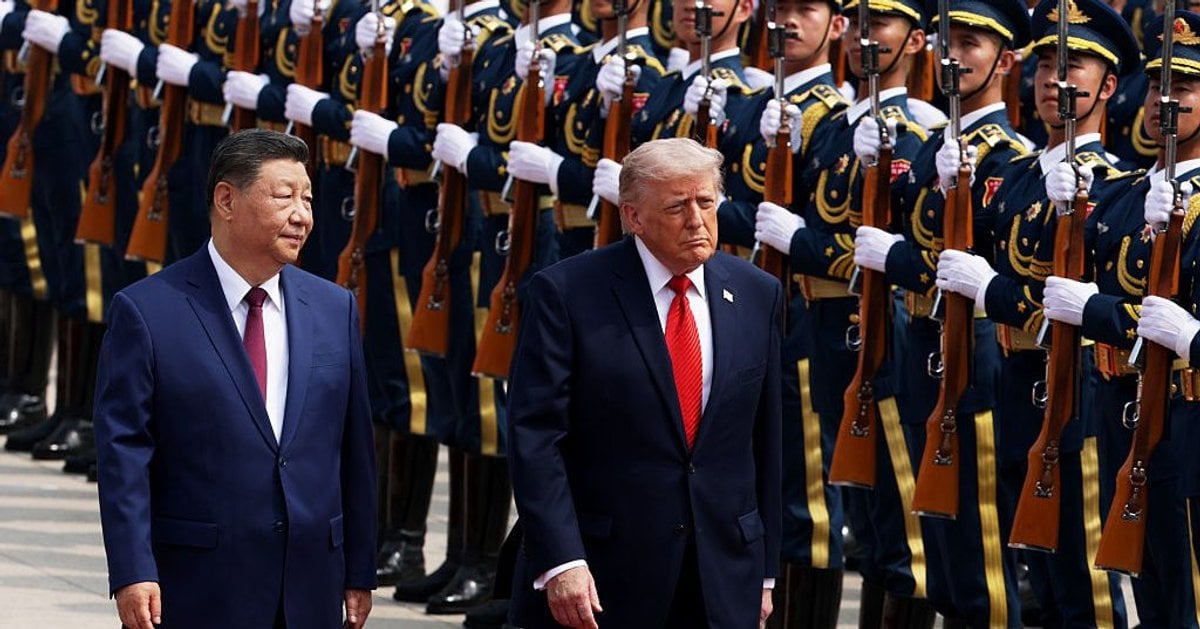
    President Donald Trump’s recent trip to Beijing, accompanied by a delegation including Apple’s Tim Cook, Tesla’s Elon Musk, and Nvidia’s Jensen Huang, signals a potential reset in AI supply chains between the U.S. and China. The visit, focused on high-level negotiations, suggests a shift toward a transactional relationship where American semiconductor technology may support Chinese AI development.

    At the state banquet, President Xi Jinping emphasized the possibility of common cause between China’s rejuvenation goals and America’s “Make America Great Again” agenda. Behind the diplomatic smiles, however, lies a strategic contest: Beijing’s “new productive forces” policy prioritizes AI, advanced manufacturing, and robotics, exemplified by the transformation of Chongqing into a high-tech megacity. Yet China remains dependent on U.S.-controlled high-end accelerators for training frontier AI models.

    Nvidia’s Jensen Huang’s presence is particularly significant. After years of tightening export controls, Washington is now considering case-by-case reviews for advanced AI compute exports. Nvidia is positioned to ship H200 data center GPUs to major Chinese cloud platforms like Alibaba and Tencent. Although not the top-tier Blackwell-class chips, the H200 is roughly six times more powerful than any domestic Chinese alternative, potentially compressing AI training timelines for Chinese firms.

    For Apple and Tesla, the mission focuses on supply chain stability and regulatory clarity. Apple aims to protect its manufacturing resilience and consumer base, where the iPhone 17 has seen success. Tesla views China as crucial for production and full self-driving deployment, seeking clarity on mapping and data policies to compete with domestic rivals.

    This delegation represents an attempt to reverse the 20% decline in U.S. imports from China. By leveraging tech leaders for targeted access—compute in exchange for market openness and IP protections—both nations may enter a more transactional era. The true metrics of success will be the speed of Chinese hyperscalers building H200 clusters and the regulatory wins secured by Apple and Tesla. Ultimately, compute access shapes capability, and this visit suggests a hard-nosed accommodation that keeps the AI flywheel spinning on both sides of the Pacific.
  • Anthropic Accuses Alibaba of Massive AI Model Distillation Attack

    Anthropic Accuses Alibaba of Massive AI Model Distillation Attack

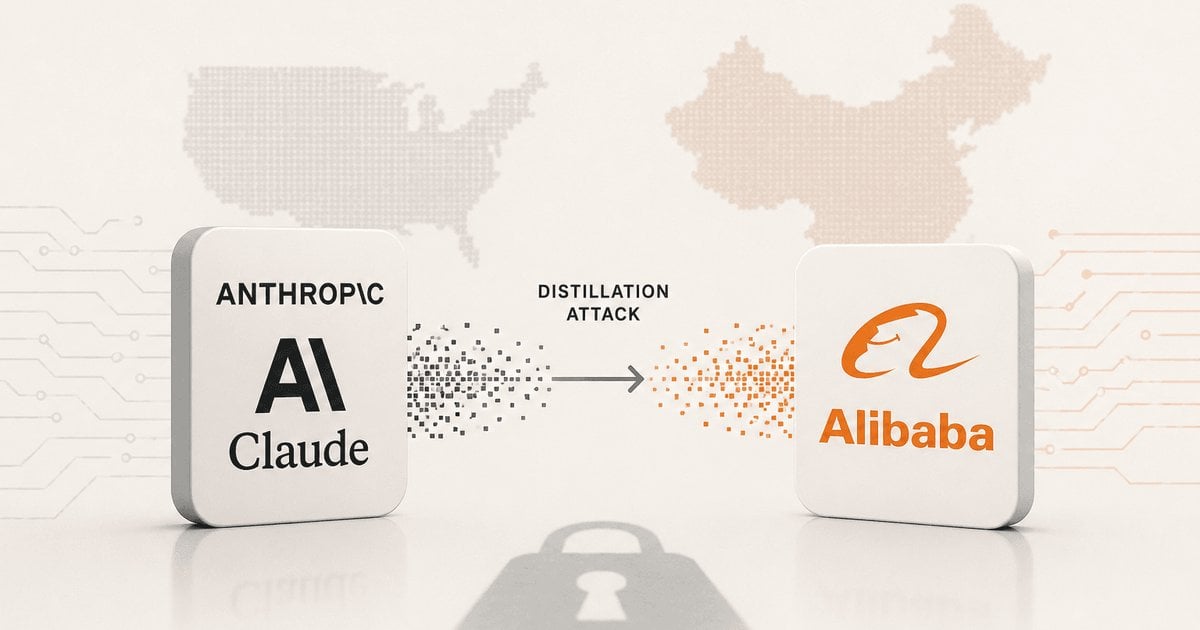
    Anthropic has publicly accused Alibaba of orchestrating a large-scale distillation campaign aimed at extracting capabilities from its Claude AI models. The allegation, detailed in a letter sent to U.S. senators, adds fresh tension to the ongoing technology rivalry between the United States and China.

    According to Anthropic, the e-commerce and technology giant used approximately 25,000 fraudulent accounts to generate over 28.8 million interactions with Claude between April 22 and June 5, 2026. The goal was to illicitly replicate the performance of Anthropic’s most advanced model, Claude Mythos Preview, using a technique known as knowledge distillation—a legitimate machine learning method that can be weaponized for model extraction attacks.

    This technique allows bad actors to feed input-output pairs from a proprietary “teacher” model into their own “student” model, effectively creating a cheap replica of the original system. Anthropic claims that Alibaba and its AI lab Qwen were behind the campaign, marking what it describes as the largest known instance of such an attack on the company.

    The accusation comes amid a rapidly closing frontier gap between Western and Chinese AI models. For example, Z.ai’s GLM-5.2 model, released shortly after Anthropic restricted global access to its most advanced model under U.S. government orders, has achieved benchmark performance nearly on par with leading Western frontier models. Z.ai has since captured a $128 billion market capitalization and plans to accelerate its pursuit of AGI.

    This is not the first time Anthropic has raised alarm over distillation attacks. Earlier in February, the company alleged that several Chinese AI firms—including DeepSeek, Moonshot AI, and MiniMax—had collectively generated millions of interactions with its Claude platform. Anthropic warned that such attacks are becoming more sophisticated and require closer coordination between AI companies and governments.

    The issue has also drawn attention in Washington. The Pentagon has added Alibaba to its list of Chinese military companies, a designation the company is contesting. Meanwhile, Reuters reported that the U.S. Commerce Department has so far held off adding DeepSeek to its trade blacklist, despite national security concerns, as officials weigh diplomatic repercussions.

    Alibaba has not yet responded to requests for comment on the allegations.