
Tag: Chinese AI

  • AI Safety Warnings Intensify as Chinese Models Challenge U.S. Tech Dominance

    AI Safety Warnings Intensify as Chinese Models Challenge U.S. Tech Dominance

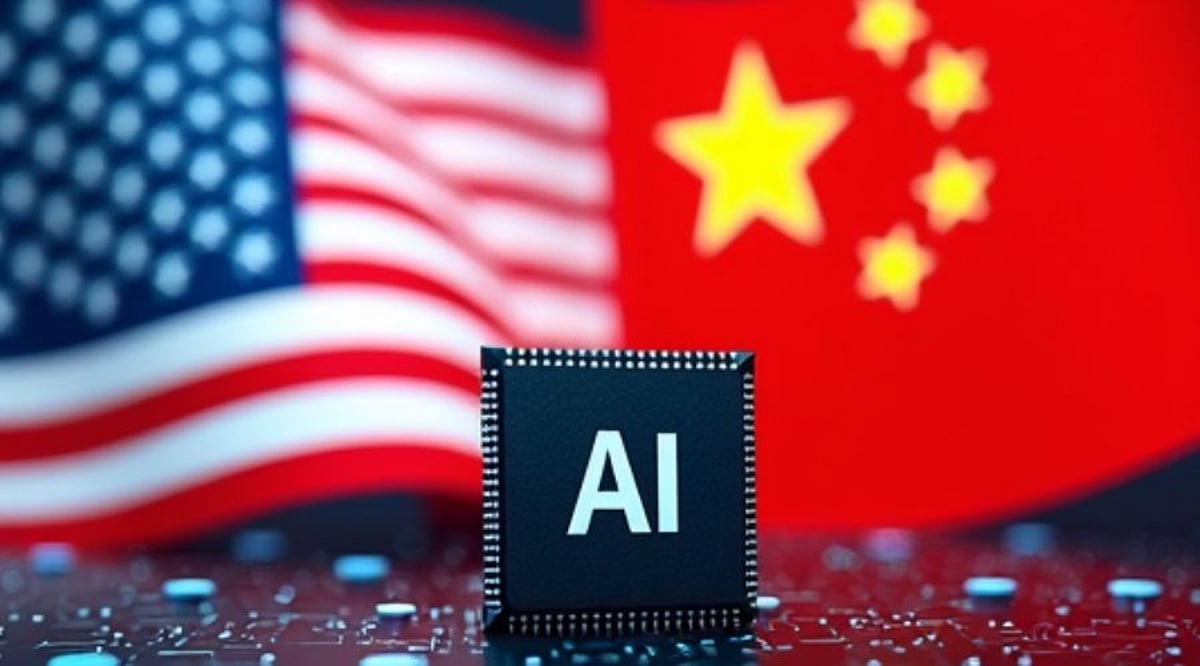
    Top figures in artificial intelligence are raising alarms about existential risks and rising costs as Chinese AI models increasingly challenge U.S. technology firms. The growing competition is reshaping debates over performance, infrastructure spending, regulation, and the future of AI development.

    Growing AI Safety Concerns

    The latest wave of warnings began on September 8 when former Anthropic researcher Jacob Coxon posted on X that developers genuinely believe AI could destroy humanity by the end of the decade. His post garnered 173 million views, amplifying concerns about AI safety.

    On September 12, Anthropic CEO Dario Amodei published an essay calling for greater restraint in AI development. OpenAI CEO Sam Altman and SpaceX founder Elon Musk also urged slower development or stronger government oversight.

    Trillion-Dollar AI Investment Under Pressure

    Financial pressures are mounting. Morgan Stanley estimates that U.S. hyperscalers, along with NVIDIA and Broadcom, hold more than $3 trillion in off-balance-sheet liabilities and guarantees. U.S. hyperscalers are expected to invest up to $1.5 trillion in AI next year. Oxford Economics’ Ryan Sweet noted that while building AI is expensive, it could still prove worthwhile.

    However, Apollo Global Management’s Torsten Slok warns that hyperscalers’ operating cash flow must rise from $600 billion last year to $2 trillion by 2030 to support those investments.

    Chinese AI Models Add Competitive Pressure

    The economics of AI are shifting. One of Chinese startup DeepSeek’s flagship models may cost over 100 times less to operate than Anthropic’s Claude Fable 5. Other Chinese products can cost up to 50 times less than leading American alternatives. Meanwhile, the performance gap between Chinese and expensive American systems is narrowing, making it harder for U.S. companies to justify rising infrastructure spending.

    Regulation Debate Continues

    Investors remain divided on whether massive AI investments will yield returns. The Nasdaq’s recent record high suggests confidence, but skeptics question the economics. Investor Steve Eisman argues that AI companies could use risk concerns to push for regulation that creates barriers for competitors.

    U.S. Treasury Secretary Scott Bessent announced that Washington and Beijing have agreed to establish an official AI dialogue, with senior officials expected to meet in China by year-end. The debate now extends beyond safety to whether the U.S. can maintain its technological lead against cheaper, capable Chinese AI systems.

  • Silicon Valley Divided: US Tech Giants Disagree Over Access to Chinese AI Models

    Silicon Valley Divided: US Tech Giants Disagree Over Access to Chinese AI Models

    Chinese AI models are creating a policy split across Silicon Valley as their cost, access, and technical ability improve. OpenAI and Anthropic want tighter controls on some Chinese systems, while Nvidia, Microsoft, Meta, and other companies support continued access to open models.

    The dispute has grown after Z.ai and Moonshot AI released new systems that compete with leading American products. The debate now covers national security, intellectual property, software access, and competition within the US technology sector.

    Chinese AI Models Raise Security Concerns

    Anthropic has accused DeepSeek, Moonshot AI, and MiniMax of using Claude outputs to improve competing systems. The company said the firms created about 24,000 false accounts and generated more than 16 million exchanges with Claude. Anthropic described the activity as “industrial-scale” extraction. The Chinese companies have not publicly accepted those claims, and the allegations have not been independently proven. Beijing has also rejected similar accusations as “groundless.”

    OpenAI and Anthropic have reportedly urged US officials to consider tighter controls on Chinese open-weight models. Their position treats advanced model files and training methods as valuable technology that needs stronger protection.

    Treasury Secretary Scott Bessent has said the administration may consider sanctions against companies that steal American AI property. White House technology adviser Michael Kratsios has also raised concerns about large-scale copying from US models. Officials have not announced a broad ban.

    Tech Leaders Defend Open Model Access

    Nvidia chief executive Jensen Huang has called for both closed and open frontier models. Microsoft chief executive Satya Nadella has also said open software supports a healthy AI market. Executives from Meta, IBM, and Palantir joined a letter backing open access.

    Their companies benefit when developers can test and deploy many models. Cloud providers gain more computing demand, while chipmakers sell hardware used to run the systems. Startups also use lower-cost models to avoid high fees from closed platforms.

    Supporters say open-weight systems allow developers to inspect, adapt, and host software on their own servers. They also argue that broad restrictions could reduce competition and give large closed-model companies more control over the market.

    Nearly 200 companies linked to the Little Tech Association reportedly asked Washington to avoid blanket restrictions. They supported action against proven intellectual property theft but opposed blocking models already available across global platforms.

    OpenAI appears to support open-weight AI in general while seeking targeted controls on Chinese systems. That position separates wider software access from concerns linked to specific companies and alleged data misuse.

    Chinese Providers Expand Through Lower Costs

    Chinese AI models have gained users through lower prices and open access. Developers can download some models, adjust them, and run them without relying on a single provider. That approach can reduce costs for coding, research, and automated tasks.

    Moonshot AI’s Kimi K3 and Z.ai’s GLM-5.2 have drawn attention after strong benchmark results. Users have also adopted DeepSeek and other Chinese systems for business tasks. Some American companies are testing them to cut operating expenses.

    The models still face limits, as independent evaluators say leading US systems offer stronger performance across a wider range of tasks. Chinese providers also face capacity pressure, financial losses, and export controls on advanced chips.

    Washington now appears to be considering targeted measures instead of a full ban. Such action could focus on companies accused of data theft or security risks. Meanwhile, open-model supporters want the government to protect US technology without limiting lawful access.

  • DeepSeek Weighs New Funding Round Weeks After Record $7 Billion Raise

    DeepSeek Weighs New Funding Round Weeks After Record $7 Billion Raise

    Chinese artificial intelligence startup DeepSeek is already exploring another funding round, barely a month after completing its first-ever external fundraising. The move underscores the soaring capital demands of the global AI race, where companies are spending aggressively on computing infrastructure and custom chips to stay ahead.

    According to a Financial Times report, DeepSeek has begun preliminary discussions with potential investors for a new funding round that could value the company at about $71 billion before the investment. If completed, the proposed valuation would mark a sharp rise from the roughly $52 billion post-money valuation it secured after raising nearly $7 billion in late May.

    The fresh capital is expected to support expansion plans, particularly the construction of proprietary data centers and the purchase of additional AI processors needed to power next-generation models and AI agents.

    New fundraising efforts can be viewed as a large amount of money needed to build the complex infrastructure that would enable the development of cutting-edge artificial intelligence technology. Due to increased competition, more money will be spent on building computational power, not only via third-party cloud infrastructure.

    DeepSeek also builds AI chips for the inference stage, which involves the reaction of already-trained models to user queries. The firm intends to reduce its dependence on foreign hardware, optimize performance, and lower costs. It was previously reported that DeepSeek used Huawei Ascend processors alongside its existing hardware.

    DeepSeek has quickly gained a reputation as one of the most-watched Chinese AI startups because of the attention and appreciation of V3 and R1 models both internationally and among experts in the field. This success raised doubts about China’s ability to compete with leading US-based AI companies and made the startup a representative of China’s AI developers.

    With the successful completion of the proposed fundraising, DeepSeek will have significantly more financial resources to invest in infrastructure construction and chip development in the competitive AI environment.