
Tag: chip industry

  • Samsung Refutes US Share Listing Rumors After SK Hynix’s Record NASDAQ Debut

    Samsung Refutes US Share Listing Rumors After SK Hynix’s Record NASDAQ Debut

    Samsung Electronics has officially denied recent reports that it is considering a United States share listing via American depositary receipts (ADRs). The denial follows a media report suggesting the company had held preliminary discussions with banks about a potential offering. In a statement, a Samsung spokesperson said, “Samsung Electronics is not reviewing the possibility of issuing American Depositary Receipts,” directly challenging the earlier account. The company did not elaborate on any past discussions or its reasoning.

    The earlier report indicated that any talks were at a very early stage and that Samsung had not decided whether to proceed. It also noted that the review “may not result in a listing.” Samsung had previously explored a similar plan but ultimately chose not to move forward. ADRs allow foreign companies to list shares on U.S. exchanges, making them more accessible to American retail investors. Currently, Samsung Electronics trades primarily on the Korea Exchange, limiting direct access for U.S. investors.

    The speculation gained momentum after SK Hynix, Samsung’s main competitor in memory chips, completed a massive U.S. share offering. SK Hynix priced its ADRs at $149 each, raising approximately $26.5 billion — the largest U.S. listing by a foreign company, according to Reuters. The shares began trading on NASDAQ on July 10 and surged more than 12% on their first day, reflecting strong investor demand for exposure to memory chips used in AI data centers.

    Both Samsung and SK Hynix compete in the DRAM, NAND, and high-bandwidth memory markets, and both have benefited from surging demand for chips powering artificial intelligence servers. However, memory stocks remain volatile. SK Hynix shares later fell as some investors took profits, and market participants are closely watching production growth, chip supply, and the pace of AI infrastructure spending.

    Samsung recently released preliminary second-quarter results, estimating sales of about 171 trillion won and operating profit of approximately 89.4 trillion won — a dramatic increase from 4.68 trillion won a year earlier. Despite the strong profit growth, Samsung shares declined after the update, as investors weighed high expectations against concerns about future AI spending and potential oversupply. The company plans to publish detailed quarterly results on July 30.

    In June, Samsung and the SK Group announced major manufacturing expansions, each planning to build two new chip plants in South Korea. The combined investment totals 800 trillion won (about $536 billion). Additionally, South Korean companies including Naver have committed 550 trillion won to build 8.4 gigawatts of data-center capacity by 2029. For now, Samsung’s public denial leaves no active ADR plan confirmed. Any future U.S. listing would require a new official announcement or regulatory filing.
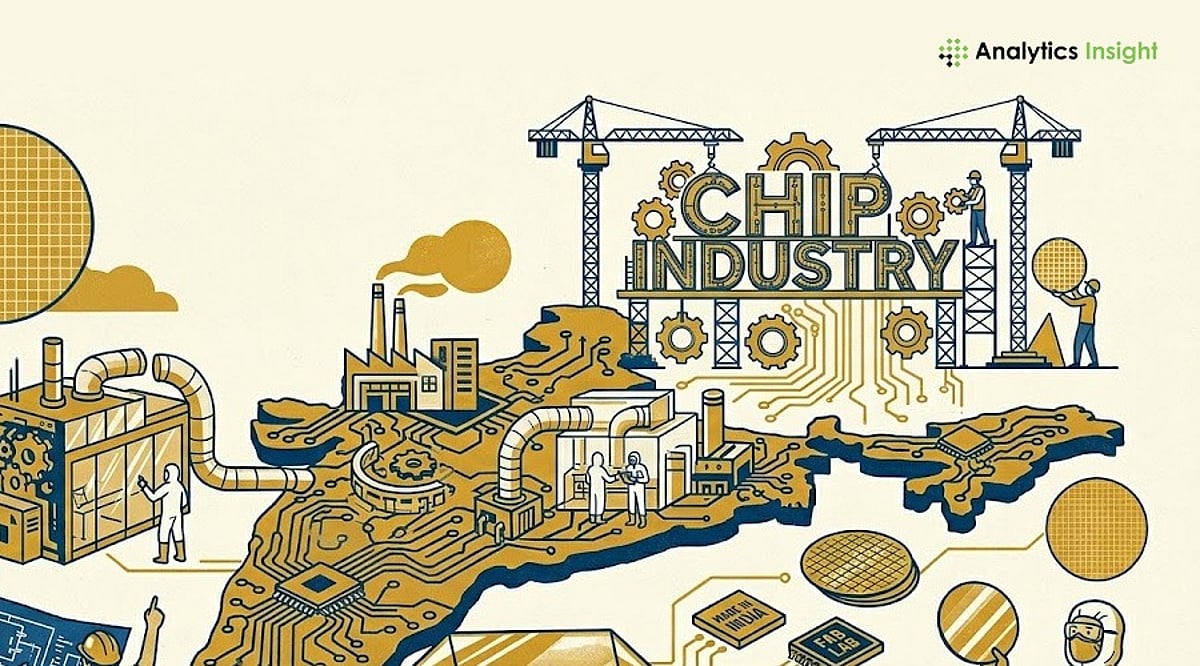
  • India’s Semiconductor Strategy: From Design Hub to Global Chip Manufacturing Powerhouse

    India’s Semiconductor Strategy: From Design Hub to Global Chip Manufacturing Powerhouse

    India has long been a silent force in global technology, with nearly 20% of the world’s semiconductor design talent based in cities like Bangalore and Hyderabad. But designing chips and manufacturing them are vastly different challenges. Until recently, the country lacked the advanced fabrication plants, or ‘fabs,’ required to turn designs into physical silicon.

    The COVID-19 pandemic exposed the fragility of global supply chains, halting car production and highlighting the dangers of relying entirely on a few countries for chips. Driven by these lessons, India is now racing to build a semiconductor industry from scratch. The launch of the India Semiconductor Mission (ISM) 2.0, backed by billions in government support, marks a determined shift from being a design house to becoming a global manufacturing hub.

    Starting with Assembly and Testing

    Building a cutting-edge chip factory is one of the most expensive and complex undertakings imaginable—a single advanced machine can cost more than a large airplane. Instead of immediately competing with giants like Taiwan on 2-nanometer AI chips, India is pursuing a bottom-up strategy. The initial focus is on Outsourced Semiconductor Assembly and Test (OSAT): taking raw silicon wafers, slicing them into individual chips, and packaging them. This 10-to-12-step process is less capital-intensive than a full fab but equally vital.

    Companies such as Kaynes Semicon have already started production in Gujarat, concentrating on chips for automotive, telecom, and defense applications. These may not power the latest smartphones, but they are the workhorses of the modern economy. By serving its domestic market first, India is building the scale and manufacturing culture needed to eventually produce more advanced, smaller chips.

    Government Policy and Self-Reliance

    The Indian government is backing this push with investment and clear policy. The Union Budget for 2026-27 introduced ISM 2.0, allocating Rs. 8,000 crore specifically for manufacturing and design this year. The target is ambitious: by 2029, India aims to design and manufacture 70% to 75% of its own semiconductor needs—from home appliances to advanced defense technology.

    Under the first phase of the mission, ten major projects worth about Rs. 1.60 lakh crore have been approved, spanning silicon power plants and packaging units across six states. The broader vision is to position India as a trusted ‘Plan B’ for the world amid rising geopolitical tensions.

    Building Talent and Indigenous Tech

    One of the biggest hurdles is the shortage of trained engineers for chip manufacturing, which demands extreme precision and cleanroom protocols. India has launched programs like ‘Chips to Startup,’ providing hundreds of universities and over 1,000 startup engineers access to high-end design tools. Partnerships with firms like Lam Research aim to train 60,000 engineers over the next decade.

    India is also developing its own intellectual property to reduce reliance on foreign licensing. Indigenous microprocessors such as ‘DHRUV64,’ ‘SHAKTI,’ and ‘THEJAS’ are built on open-source architectures, lowering costs and fostering innovation in 5G, automotive electronics, and industrial automation. These chips represent a move toward digital sovereignty.

    Strategic Importance and Job Creation

    Semiconductors have become the oil of the 21st century, powering everything from medical devices to satellites. With India’s chip market projected to grow from $38 billion in 2023 to $110 billion by 2030, domestic production is a matter of national security and economic resilience. The new semiconductor units are expected to create thousands of high-quality jobs for engineers and technicians, helping retain top talent within the country.

    What Lies Ahead

    Progress is already visible. According to IT Minister Ashwini Vaishnaw, four semiconductor plants are expected to be operational by the end of 2026. Facilities in Sanand, Gujarat, have moved from foundation to production in just 14 months—a pace that has surprised global observers. India’s first major fabrication unit in Dholera is slated to be ready by 2028, targeting advanced 3-nanometer and 2-nanometer technologies.

    The journey is long and requires patient capital, but the pieces are falling into place. Combining world-class design talent with a new focus on assembly, testing, and eventually full-scale fabrication, India is slowly turning its semiconductor dreams into silicon reality. The government has set a goal of becoming a top-three semiconductor nation by 2047.