Tag: CI/CD

  • Beyond Clean Code: What Today’s Mobile Engineers Need to Succeed, According to Tomasz Kubiak

    Beyond Clean Code: What Today’s Mobile Engineers Need to Succeed, According to Tomasz Kubiak

    As mobile engineering expands beyond writing and shipping code, esteemed software engineer Tomasz Kubiak draws on his experience building an app used by millions to explain why reliability, judgment, and product thinking are raising the bar for mobile engineers.

    Writing good code in mobile software engineering is no longer enough. A recent Forbes Technology Council article reports that median crash-free sessions have reached 99.95%, while 82% of users consider stability extremely important and 63% will uninstall an app after three crashes or fewer. As automation takes over more routine work, engineers have to bring more to the table. In this interview, Tomasz Kubiak, with 10+ years of experience, discusses the skills that increasingly separate strong mobile engineers from the rest and shares approaches that helped him grow and succeed in the field.

    Tomasz is currently a Senior iOS Software Developer at Welltech, where he works on WalkFit, a wellbeing app with more than 10 million downloads. His product work includes A/B-tested changes that delivered a double-digit lift in early goal activation and a measurable gain in first-week retention. A nutrition module he developed was also associated with higher customer lifetime value among purchasers. Before joining Welltech, Tomasz developed iOS apps at Talixo and introduced CI improvements that halved build times. His broader engineering career includes three patent records, with patents granted in the United States and Europe, peer-reviewed research, and IEEE Senior Member status.

    Q: The job of a mobile engineer looks very different today than it did even a few years ago. With more than a decade in engineering, what is expected from a strong mobile engineer today that wasn’t expected before?

    I think the biggest shift is toward broader ownership. Mobile engineering has become much more connected to how a product performs in the real world. Technical decisions affect stability, delivery, user experience, and how a product evolves over time. Strong engineers need to understand the context around the code and think several steps ahead. The ability to see those connections and make sound decisions as complexity grows has become a much bigger part of the job.

    Q: Your own path into mobile development was unusual: you started in mechanical and product engineering before moving into software. What did that experience teach you that later proved useful in mobile engineering?

    I studied Mechatronics at Lodz University of Technology in Poland, which gave me an early understanding of how different parts of a system affect one another. After university, I joined Corning and later moved from Poland to its engineering organization in the U.S. Working on product development there taught me to pay close attention to failure modes and to understand the cause of an issue before making changes. When I moved into software, I brought that mindset with me. It has been especially useful in mobile engineering, where an application has to perform reliably across releases and real-world conditions. That background also shaped how I approach testing and stability today: I tend to think about the whole application’s behavior and the consequences an engineering decision may have beyond the feature being developed.

    Q: At Talixo, you developed driver and customer iOS apps and nearly halved CI times while also working on modularization and release automation. When a mobile team needs to ship faster, where should it look for workflow improvements before asking engineers to code faster?

    I would start with the development workflow itself. A major improvement came from introducing a more advanced CI/CD caching strategy, which reduced CI times. That meant less time waiting for builds and faster feedback during development. We also worked on modularization and release automation, which made the applications easier to maintain and reduced the risk of manual releases. For me, the broader lesson was that delivery speed depends heavily on the systems around the code. Improving that infrastructure gives engineers more time to focus on the product and makes releases more predictable.

    Q: Today, you work on WalkFit, an app with more than 10 million downloads. Does building for an audience of that size change the way you think about engineering decisions, risk, and what happens after a feature is released?

    The product’s main goal is to help people make walking a regular part of their daily routine. It combines activity tracking with walking plans and other features that support long-term consistency. At this scale, even a small engineering decision can affect a large, diverse group of users. A feature may work perfectly in isolation and still affect the broader experience in unexpected ways. That has made me pay much more attention to what happens after release and to treating real-world behavior as part of the engineering process.

    Q: After resolving more than 50 production issues across eight iOS releases, what do you think separates strong engineers when something goes wrong in production?

    In my view, what separates strong engineers is the willingness to look beyond the immediate bug. A production issue can point to a deeper weakness in how a feature or part of the system was designed, so the goal is to understand what made that failure possible and whether the same conditions exist elsewhere. This way of thinking also shaped my research on mobile architecture. In a recent paper, “A Local-First Architecture for Privacy-Preserving Personalization in iOS Health and Fitness Applications,” published in American Impact Review, I proposed an approach to iOS personalization that keeps sensitive health data on the device whenever possible. The work identifies potential failure points before implementation and places safeguards as close to the source as possible. The context is privacy, but the engineering principle is broader. A strong solution should address the underlying weakness and make the system more resilient, instead of simply making the visible problem disappear.

    Q: The nutrition module you developed achieved a high-single-digit conversion rate and was associated with customer lifetime value increasing by well over half among purchasers. How much should mobile engineers understand about product and business performance, and how should that understanding influence technical decisions?

    Understanding product and business metrics helps an engineer see the impact of technical work beyond the release itself. With the nutrition module, the conversion rate and customer lifetime value gave us a much clearer picture of its value after launch. That perspective also changes engineering priorities. We can direct time and complexity toward features that genuinely improve the product, and technical decisions become easier to tie to measurable outcomes. For me, that connection between engineering and product impact is central to senior-level work.

    Q: Technical correctness alone does not make a mobile product successful. One of your A/B-tested improvements produced a double-digit lift in early goal activation and a mid-single-digit gain in first-week retention. How do you use experimentation and user behavior to determine whether a feature succeeds?

    Experimentation helps connect engineering decisions with what people actually do with a product. Before releasing a change, I want to be clear about what behavior we expect it to influence and how we will know whether it worked. A/B testing gives us evidence from real usage, but I also look beyond the primary metric because improving one part of the experience can affect another. I brought that habit of considering both the intended result and the wider impact to my role as an invited judge at the recent AITEX Summit Summer 2026. The same principle applies when evaluating technology more broadly. A technically impressive solution is only part of the picture; it also needs to address a real need and create value in practice.

    Q: Given these changes in the profession and your experience, what should mobile engineers invest in beyond coding if they want to stay valuable and keep growing over the next several years?

    I would invest in judgment. Coding tools will keep changing, but engineers still need to understand the consequences of their decisions. That comes from seeing how systems behave in production, how users respond to a product, and how technical choices affect the business over time. I would also stay curious beyond the immediate mobile stack. Some of the most useful ideas in my own career came from moving between different areas of engineering and bringing those perspectives into software. I believe the ability to connect those pieces and make good decisions when the answer isn’t obvious will keep engineers valuable as the profession continues to change.

  • Essential Ansible Use Cases for IT Automation in 2026

    Essential Ansible Use Cases for IT Automation in 2026

    Ansible continues to be a cornerstone of IT automation, enabling organizations to manage configuration, deployment, cloud provisioning, and infrastructure operations with consistent, repeatable workflows. Its agentless architecture reduces maintenance overhead, while reusable playbooks improve efficiency, minimize errors, and simplify large-scale system administration.

    What Makes Ansible a Valuable Tool

    Ansible is an open-source automation tool built for simplicity. It works across diverse systems and lets teams manage large setups without heavy setup processes. Its agentless design means no extra software is needed on managed machines, ensuring easy maintenance. IT administrators, DevOps professionals, and decision-makers rely on Ansible to keep systems stable and observable, whether in data centers, public clouds, or IoT networks.

    Top Ansible Use Cases

    Configuration Management

    The most common use case is configuration management. With playbooks, teams define the exact desired state of systems, and Ansible applies it automatically across all machines. This reduces guesswork and human error. Common tasks include creating user accounts, managing software sources, adjusting system settings, and setting network values. Many Ansible modules are idempotent, allowing playbooks to run repeatedly without unintended changes.

    CI/CD and Application Deployment

    Ansible supports deployment by linking development, testing, and production stages into one flow. A single playbook can pull the latest code, run database updates, and restart services automatically. Inventory files add flexibility, allowing the same playbook to work across environments with environment-specific values, ensuring consistent releases.

    Cloud Provisioning and Management

    As organizations move to the cloud, Ansible’s modules for AWS, Azure, and Google Cloud become essential. Teams use them to create virtual machines, configure storage, and manage network components through repeatable processes. Dynamic inventory automatically tracks changes in cloud environments, so automation always targets current resources without manual updates.

    Network Automation

    Ansible handles network tasks through modules built for network devices. Engineers automate configuration changes, compliance checks, and updates across devices from multiple vendors using the same YAML format. The agentless design scales across thousands of devices without extra management strain.

    Security and Compliance Automation

    Security teams use Ansible to apply policies uniformly. Playbooks configure firewalls, manage permissions, deploy threat monitoring tools, and disable unnecessary services. Compliance checks that once took hours can run automatically, finding and fixing gaps quickly. When new vulnerabilities emerge, Ansible can deploy fixes across all at-risk systems in one coordinated run.

    Disaster Recovery Automation

    Ansible supports disaster recovery by managing backup timing, storage rules, and data locking across on-premises and cloud systems. Recovery workflows—including failover, service prioritization, and network adjustments—are orchestrated carefully. It also automates recovery testing, a step often skipped due to manual effort.

    Complex Workflow Orchestration

    Beyond single tasks, Ansible ties together full workflows across multiple systems. Playbooks combine deployments, configuration changes, network updates, and security checks into one coordinated flow with conditional rules. This unifies complex processes under a single framework instead of relying on separate tools.

    Ansible Use Cases at a Glance

    Ansible covers configuration management, application deployment, cloud infrastructure, network operations, security enforcement, and disaster recovery—all through a consistent, reliable approach. For organizations seeking to simplify operations and reduce manual work, Ansible remains one of the most practical automation tools available.

  • Vercel: The Frontend Cloud Platform Powering Modern Web Development with AI and CI/CD

    Vercel: The Frontend Cloud Platform Powering Modern Web Development with AI and CI/CD

    Vercel is a software development company that provides a powerful frontend cloud platform for building, deploying, and scaling modern web applications. With cloud infrastructure, CI/CD automation, and AI coding agents, it enables developers to deliver fast, secure, and high-performance digital products efficiently across global environments.

    About the Company

    Vercel offers developers a robust frontend cloud platform that allows them to easily construct and test web applications before final deployment. The platform provides an efficient way to build fast and scalable digital products through its serverless features, high-performance hosting, and seamless workflow capabilities.

    Vercel develops its platform for developers by combining AI-powered tools with improved build systems and live teamwork features. The ecosystem enables teams to create innovative solutions through support for current frameworks, automatic deployment systems, and intelligent deployment procedures.

    Products and Services

    Vercel offers cloud infrastructure, CI/CD, serverless functions, an AI SDK, a content delivery network, observability, security tools, and deployment automation. These services enable developers to build, scale, and secure high-performance web applications globally.

    Revenue Streams

    Vercel generates revenue through tiered SaaS subscriptions, usage-based billing for compute, bandwidth, and storage, enterprise contracts, AI tool subscriptions, and premium managed infrastructure services that support scalable web applications.

    Client Segments

    The cloud platform provides frontend development capabilities together with serverless infrastructure, AI tools, CI/CD automation, security features, and observability solutions. Target companies include startups, mid-sized businesses, and enterprises that require scalable systems with high performance and developer-friendly features.

    Target Geography

    Vercel allows organizations from around the world to build, deploy, and scale applications to serve their needs.

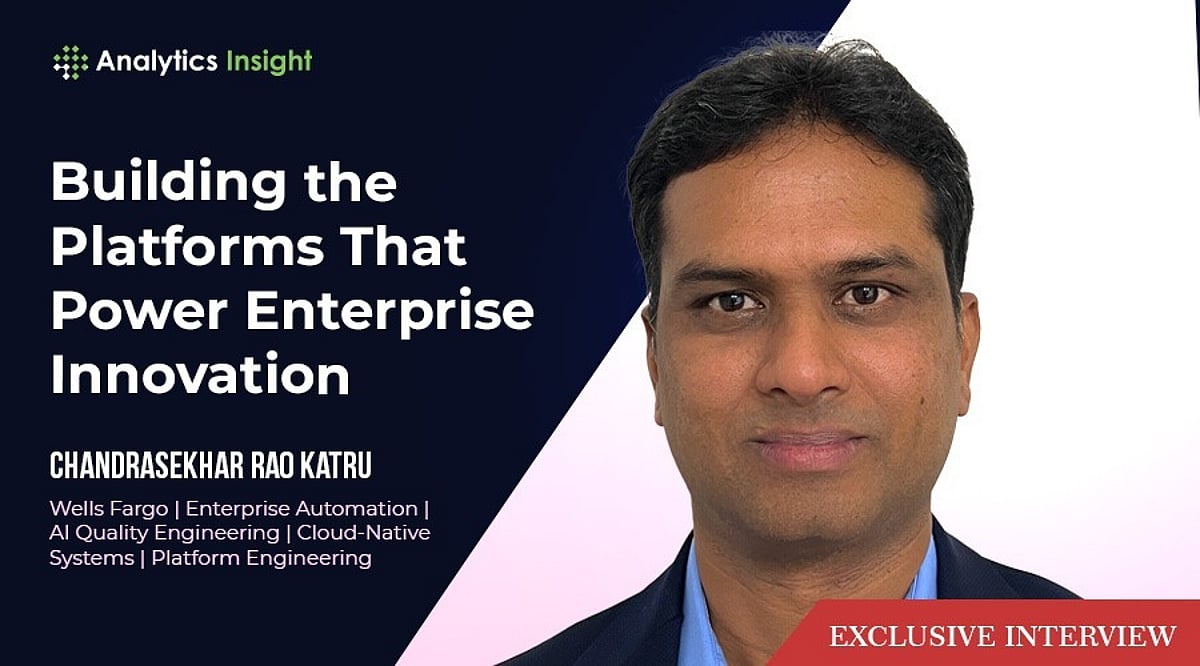
  • The Architect Behind Enterprise Platforms: A Conversation on Scaling, Quality, and AI in Software Engineering

    The Architect Behind Enterprise Platforms: A Conversation on Scaling, Quality, and AI in Software Engineering

    In this interview, Chandrasekhar, a seasoned software and platform engineering leader with nearly two decades of experience, shares his journey from building telecommunications billing systems to designing the infrastructure that powers one of America’s largest banks. He discusses the principles that have guided his work, the challenges of building platforms at scale, and how he integrates AI into quality engineering while maintaining compliance in regulated environments.

    Q: Could you briefly introduce yourself and share your journey into software engineering and platform engineering?

    A: I started as a Java developer in telecommunications, writing billing systems for British Telecom. That environment is unforgiving—processing errors have direct financial consequences for customers, so correctness at the design stage is not optional.

    What pulled me toward platform engineering was a pattern I kept seeing across every organization I worked in: teams solving the same infrastructure problems in isolation, building their own tooling, making the same avoidable mistakes. The London 2012 Olympics work sharpened this. When systems serve a global audience simultaneously, the shared infrastructure underneath the application matters as much as the application itself. I started building for that layer deliberately. Twenty years on, that is still the core of what I do.

    Q: Over the past two decades, what have been the most significant lessons you’ve learned from building enterprise-scale software systems?

    A: The first is that what works for one team breaks at fifty. Scale does not give you more of the same problems—it surfaces assumptions nobody noticed they had made. Decisions that felt reasonable in year one become liabilities in year five, and the engineers who made them are often long gone.

    The second came from Weight Watchers. The SmartPoints algorithm touched millions of daily decisions about what people ate. A subtle error there was not a software bug; it was a public health issue. I carry that framing into financial services. The downstream consequences of a bad deployment are real and human, and that changes how seriously you take the platform work upstream of every release.

    The third is harder to articulate but matters as much: staying longer than is fashionable. The full lifecycle of a platform—design, adoption, scaling, failure, recovery, evolution—takes years to live through. I have seen that arc on more than one system and it has fundamentally changed how I build.

    Q: You developed an automation framework that became the standard across thousands of projects at a major financial institution. What problem were you trying to solve and what impact has it delivered?

    A: The core problem was that quality had no common language across the organization. Teams were running inconsistent configurations, different frameworks, different data strategies, different reporting formats. You could not compare quality signals across teams because the signals themselves were incompatible. Leadership had no reliable picture of delivery health at the portfolio level.

    I redesigned the framework by embedding it directly into CI/CD pipelines, ensuring that any team capable of executing a build could also execute automation. I also rebuilt the entire test result structure throughout so that logging and failure reporting would be consistent regardless of which team or application was running the tests. The impact is measurable: the framework now operates as the standard across more than 2,500 enterprise projects, quality gates are automated rather than manually enforced, and the duplicated infrastructure investment across teams has been largely eliminated.

    Q: How do you ensure software quality and governance across an organization with tens of thousands of engineers without slowing down innovation?

    A: The honest answer is that speed and governance only conflict when governance is badly designed. I have been on both sides of that. I have watched teams grind to a halt because every release needed a manual sign-off from three people. I have also built systems where compliance happened automatically and nobody had to slow down to think about it.

    What I did was embed the quality checks directly into the pipeline so they run without anyone asking them to. Tests fire automatically. Policy gates trigger automatically. Audit records get created automatically. When doing the right thing is also the fastest thing, engineers just do it. It is a design decision I made deliberately. The governance is still there—it just does not require a human in the loop at every step. In a bank that ships software every day, that is the only way it works in practice.

    Q: Can you tell us about the cloud-native execution platform you’ve built and the challenges of operating it at such a large scale?

    A: When I took on this problem, teams were running tests on static infrastructure and execution time was a significant bottleneck. Test suites had grown to the point where sequential execution was taking hours. By then automated testing stops serving its purpose—the feedback arrives after the team has already moved on and the value is lost.

    I built the platform on Kubernetes so workloads run in parallel across containerized environments. In a regulated bank, though, making execution fast is only part of the problem. It also has to be auditable, and those two requirements pull in opposite directions. I originally built on AKS for orchestration, autoscaling and Azure-native integration. I am now expanding it with OpenShift support, which adds image signing, namespace isolation and role-based access controls that compliance teams require and that can be independently verified across environments.

    The numbers reflect what that shift produced. The platform now executes over 137,000 validation jobs and approximately 875,000 automated tests within a thirty-day period, with an average execution time of around 26 minutes. Jobs that previously took hours now finish in under half an hour. But throughput is not the metric I care most about. It results in trustworthiness. Teams have to be able to act on what the platform tells them and that requires a level of reliability that does not happen by accident.

    Q: What role is AI playing in modern quality engineering and how are financial institutions leveraging it to improve software delivery?

    A: I have applied AI to strengthen the automation systems I built, while preserving the control and audit mechanisms that regulated environments require. I introduced a GenAI-based approach to extend automation coverage to approximately 800 applications that previously had none, generating tests calibrated to each application’s complexity and integrating them automatically into the test execution platform.

    I built predictive models into automation workflows that surfaced failure patterns and dependency behavior under load that manual review would have missed. In one instance, a predictive model I built identified a dependency timing issue across seemingly unrelated failures, which significantly reduced investigation time and helped teams reach the root cause faster. But I did not automate decisions based on those outputs. In a regulated environment the model provides insight—the decisions and audit trails remain under human control. The capability is real; the implementation has to be redesigned around compliance requirements before it can run in production.

    Q: As organizations continue their cloud transformation journeys, what are the biggest mistakes you see teams making when adopting cloud-native technologies?

    A: The biggest one I keep seeing is teams treating migration as a hosting decision when it is actually an architectural redesign. I have watched teams lift applications that were built around shared memory and persistent connections, drop them into containers and then spend the better part of two years debugging failures that their old architecture never produced. The containers did not break anything—they just made visible what was always there.

    The second mistake is skimping on observability—and I ran into this myself. Early in building our cloud-native platform we had a category of failures that looked completely random. Nothing in the logs connected them. I added distributed tracing and it turned out to be a container warm-up timing issue that only showed up under certain cluster loads. Without that instrumentation I would still be guessing. In a regulated environment that kind of unexplained failure is not just an ops problem—it creates a compliance problem. I built observability from the start after that.

    Q: What does effective platform engineering look like in a highly regulated environment such as banking and financial services?

    A: The platform has to answer a regulator’s question before it is asked. What was deployed? When? By whom? What validations ran before it reached production?

    Early in my platform work, I had a release that cleared every quality gate—tests ran, coverage thresholds were met, the pipeline went green. It was stopped anyway because the test execution logs were not stored in a format that satisfied the audit requirement. The capability was there; the evidence trail was not. That incident changed how I design permanently. I now ensure every automation workflow captures logs, inputs, outputs and decision points in a structured, reviewable format. Traceability is a first-class requirement from day one, not something retrofitted after a compliance review.

    Effective platform engineering here also means risk and compliance teams are design partners, not downstream reviewers. The institutions that do this well end up with platforms that are both faster to use and easier to audit, because the compliance path and the delivery path are the same path.

    Q: Your research work has received recognition from global institutions and researchers. How do you bridge the gap between academic research and real-world engineering challenges?

    A: The research grows directly out of production problems. While building the data quality dashboard platform, I kept hitting a question that existing literature did not answer well: how do you make quality signals meaningful to non-engineers at enterprise scale? I worked through it, published the findings and that paper has since been cited by researchers at Delft University of Technology, institutions across China and others across fifteen countries. But the more important outcome was that the design patterns I developed for the paper became the foundation for how I structured quality reporting across the platform itself. The research and the engineering fed each other directly.

    As a practitioner, I am accountable for systems that run in production under load in regulated environments. I cannot theorize around a failure—I have to fix it. The research pushes me to evaluate whether the failures I encounter reflect broader, generalizable patterns. That combination produces reusable solutions with documented reasoning behind them, not one-off fixes and not just theory. I have over 100 citations from researchers across fifteen countries and that reach consistently tells me the problems I am solving inside one institution are problems the global research community recognizes as important.

    Q: Looking ahead, what technology trends do you believe will have the biggest impact on enterprise software development and platform engineering over the next five years?

    A: The thing I am watching most closely is AI moving from something that helps individual developers to something that sits inside the delivery pipeline itself. In the platforms I run I am already working through early versions of this: AI-assisted test generation, predictive failure analysis, automated coverage decisions. It works, but it creates a question I do not think the industry has answered yet: how do you audit a system that is partly generating itself, at enterprise scale, inside a regulated institution? That is something I am actively designing around right now.

    The London 2012 experience comes back to me when I think about where this is heading. Those systems had to be correct before they went live. There was no patching it during the opening ceremony. AI in the pipeline raises the same question at a much larger scale and with far less transparency about why decisions were made. The institutions that work out governance early will have a real advantage. The ones that leave it for later will find out why that was a mistake.

  • Best API Automation Testing Platforms for Modern DevOps Teams in 2026

    Best API Automation Testing Platforms for Modern DevOps Teams in 2026

    API automation testing enables faster software releases by validating APIs throughout the CI/CD pipeline with minimal manual effort. Different platforms support varying needs, including functional, security, performance, and enterprise-scale API testing. Selecting the right tool depends on workflow, integrations, scalability, collaboration requirements, and project complexity.

    CI/CD pipelines, microservices, and cloud-native setups rely on automated API checks. These tools verify how software functions, performs, and holds up. Using automation this way replaces slow manual code verification.

    Choosing the right platform can streamline testing while ensuring applications remain stable throughout rapid development cycles. There is no single API automation testing platform that fits every development team. The ideal choice depends on project complexity, team expertise, budget, and the existing DevOps ecosystem.

    We have listed the best API Automation Testing Platforms for Modern DevOps Teams:

    Postman

    Postman is one of the most popular solutions when it comes to developing and testing APIs. It provides a simple user interface that helps in designing, arranging, and automating API test sets. The tool is compatible with REST, GraphQL, and WebSocket APIs and integrates with CI/CD through Newman. Other features such as built-in collaboration, automation, mocking, and documentation tools help to make it useful for developers and testers.

    SoapUI

    SoapUI is an established testing tool for API testing, and it has earned its reputation for its capability of supporting both SOAP and REST web services. It supports functional, regression, and security testing through its versatile GUI and extensive scripting abilities. It allows users to verify XML and JSON responses, reuse test cases, and create automated test suites.

    ReadyAPI

    ReadyAPI is built on top of SoapUI and gives a testing suite that integrates functional, security, virtualization, and performance testing under one roof for enterprise-level organizations. In addition to the basic features of testing, it comes with data-driven testing, advanced reporting, and easy integration with DevOps tools like Jenkins and Azure DevOps. This tool is very helpful for organizations that need API testing at scale with complete visibility into test results.

    Karate DSL

    The Karate DSL makes API testing easier through the use of Gherkin syntax, where teams can develop tests following the principles of Behavior-Driven Development (BDD). Tests can be created and maintained with minimal coding. The tool can support REST, GraphQL, and SOAP APIs as well as mock services and performance testing.

    Katalon Studio

    Katalon Studio is an end-to-end testing solution for test automation in all types of testing, including API testing, web testing, desktop testing, and mobile testing. It comes with a low-code UI that enables easy creation of test automation scripts by beginners as well as scripting support for advanced users. The testing tool is capable of integration with Jenkins, Git, Jira, and other similar tools and supports REST and SOAP APIs.

    Tricentis Tosca

    Tricentis Tosca is a testing tool that can be used at an enterprise level, as it utilizes a model-based approach and requires very little scripting. This means that tests can be performed using APIs, user interface, and even full end-to-end processes. This makes the tool useful for any large-scale digital transformation project. Tricentis Tosca also integrates well with common CI/CD tools and enterprise apps.

    Apache JMeter

    Although Apache JMeter is commonly associated with performance and load testing, it actually provides powerful capabilities for API testing as well. It allows for validating REST, SOAP, and other web services along with measuring the performance of applications. The use of plugins, distributed testing, and integration into CI/CD processes helps developers test not only the functionality of their APIs but also their scalability.

    How to Choose the Right API Automation Testing Platform

    Selecting the right API automation testing platform depends on both technical and organizational requirements. Consider the platform’s usability, support for REST, SOAP, GraphQL, and other protocols, along with its CI/CD integration. Other factors to be considered are scripting needs, platform scalability, reporting and analytics capabilities. Cloud support, collaboration features, and integration with development tools should also be considered. An enterprise organization may have different requirements from a startup since the former needs governance and management capabilities, whereas the latter wants flexibility.

    Choosing an appropriate platform will help improve test efficiency, increase application reliability, accelerate software delivery, and ensure quality at all stages of software development.

    FAQs

    1. What is API automation testing?
    API automation testing uses software tools to automatically validate API functionality, reliability, security, and performance, reducing manual testing while supporting continuous integration, continuous delivery, and faster software releases.

    2. Why is API testing important in DevOps?
    API testing identifies issues early in development, improves collaboration between teams, supports automated CI/CD pipelines, enhances software quality, and ensures reliable communication between application components throughout deployment.

    3. Which API automation testing platform is best?
    There is no universal best platform. The right choice depends on project requirements, team expertise, supported protocols, integration needs, scalability, reporting features, and existing DevOps infrastructure.

    4. Can API automation testing be integrated with CI/CD pipelines?
    Yes. Most modern API testing platforms integrate with CI/CD tools like Jenkins, GitHub Actions, GitLab CI, and Azure DevOps, enabling continuous automated validation during development.

    5. Is API automation testing only for enterprise teams?
    No. API automation testing benefits startups, small businesses, and enterprises alike by improving testing efficiency, reducing errors, supporting faster releases, and maintaining application quality as projects scale.

  • Top 10 GitHub Repositories for Mastering Claude Code in 2026

    Top 10 GitHub Repositories for Mastering Claude Code in 2026

    Claude Code has evolved far beyond a terminal novelty. Today, developers use it to read entire codebases, run commands, and manage multi-step engineering workflows. However, out-of-the-box capabilities only scratch the surface. The real power lies in the ecosystem built around it: skills, subagents, hooks, and reusable workflows that transform Claude Code from a helpful assistant into a structured development system. Here are ten GitHub repositories worth exploring if you’re serious about mastering Claude Code in 2026.

    Start with Anthropic’s Official Repositories

    The most reliable starting point is Anthropic’s anthropic/skills repository. It contains ready-made SKILL.md files for common tasks such as working with PDFs, spreadsheets, and presentations. Pair it with claude-code-action, Anthropic’s official GitHub Actions integration for automating Claude Code inside CI/CD pipelines. Another newer addition from Claude Code Skills 2.0 is Skill Creator, which lets you build, evaluate, and benchmark your own custom skills — no more guessing whether they actually work.

    Discover the Wider Ecosystem

    Before installing anything, it helps to know what exists. hesreallyhim/awesome-claude-code is a curated index of slash commands, CLAUDE.md files, hooks, and workflow tools — essentially a table of contents for the entire ecosystem. For a different angle, x1xhlol/system-prompts-and-models-of-ai-tools collects exposed system prompts and tool definitions from Claude Code and comparable agentic tools. This is especially useful for anyone studying how these systems are structured behind the scenes.

    Frameworks That Enforce Better Engineering Habits

    Two repositories stand out for imposing real discipline on how Claude Code writes software. Superpowers encodes a strict development methodology: brainstorm, spec, plan, test-driven development, review, and finalize. Notably, it refuses to keep any code written before tests exist. Everything Claude Code (ECC), built by hackathon-winning developer Affaan Mustafa, takes a broader approach, shipping dozens of specialized subagents, reusable skills, and security scanning tools that work across Claude Code and several other AI coding tools. Both are open source and free. Most experienced users pick a handful of components that fit their workflow rather than use every feature.

    Utilities That Solve Everyday Friction

    Some repositories exist purely to fix common pain points. Repomix packs an entire codebase — folder structure, documentation, and all — into a single AI-readable file, solving the problem of Claude Code losing context on larger projects. Claude Mem addresses a related issue: by default, Claude Code forgets everything between sessions. This tool gives it persistent memory of past decisions and project quirks.

    Advanced Setups for Teams

    For developers curious about running Claude Code as a coordinated team rather than a single assistant, the gstack repository documents Garry Tan’s setup. It assigns opinionated roles — Engineering Manager, Release Manager, QA — through reusable skills and slash commands. This is not a beginner’s starting point, but it’s a useful reference for structuring multi-agent workflows.

    Choosing Where to Start

    With so many options, star count alone isn’t a reliable filter; usefulness depends on what you’re trying to solve. Beginners are better served starting with Anthropic’s official repositories and the awesome-claude-code index before layering in frameworks like Superpowers or utilities like Repomix as specific needs arise. Building a stack gradually, rather than installing everything at once, tends to produce a far more stable and productive Claude Code setup.

    Why This Matters

    Claude Code is rapidly becoming a key AI development platform for software engineers. Understanding its ecosystem of GitHub repositories enables developers to automate workflows, improve coding efficiency, build custom AI skills, and integrate Claude into real-world engineering pipelines — making it an increasingly valuable tool for modern software development.

    Frequently Asked Questions

    What is Claude Code?

    Claude Code is Anthropic’s AI-powered coding assistant that helps developers understand codebases, write code, debug applications, execute terminal commands, automate workflows, and perform complex software engineering tasks. It supports both individual developers and teams working on modern software projects.

    Why should developers use GitHub repositories to learn Claude Code?

    GitHub repositories provide practical examples, reusable skills, automation workflows, documentation, and open-source tools that extend Claude Code’s capabilities. They allow developers to learn from real implementations instead of relying only on official documentation or theoretical tutorials.

    Which GitHub repository is best for beginners learning Claude Code?

    Anthropic’s official anthropic/skills repository is the best starting point for beginners. It contains ready-made skills for common development tasks and helps users understand how Claude Code executes structured workflows before exploring more advanced community-built repositories.

    Can Claude Code be integrated into CI/CD pipelines?

    Yes. Anthropic’s claude-code-action repository enables Claude Code to integrate with GitHub Actions and CI/CD pipelines. Developers can automate reviews, documentation, testing, and other engineering tasks directly within continuous integration and deployment workflows.

    Should developers install every Claude Code repository?

    No. The best approach is to start with official Anthropic repositories and gradually add tools that solve specific problems. Installing too many extensions at once can create unnecessary complexity and make workflows harder to maintain over time.

    Is the Claude Code ecosystem expected to grow in 2026?

    Yes. As Anthropic continues expanding Claude Code and enterprise adoption increases, the open-source ecosystem is expected to grow significantly. Developers can expect more GitHub repositories focused on automation, custom skills, AI agents, testing, memory management, and collaborative development workflows.

  • Top API Testing Tools: A Comprehensive Comparison of Features and Capabilities

    Top API Testing Tools: A Comprehensive Comparison of Features and Capabilities

    Selecting the right API testing tool is crucial for ensuring robust software quality and seamless integration in modern applications. With numerous options available, evaluating tools based on key criteria helps teams make informed decisions. Below we break down the essential features to consider when comparing API testing solutions.

    Ease of Use

    An intuitive interface reduces the learning curve, allowing developers and testers to create, execute, and manage API tests efficiently. Tools with drag-and-drop builders, clear documentation, and contextual help speed up onboarding and daily workflows.

    Protocol Support

    Top tools support a broad range of protocols including REST, SOAP, GraphQL, gRPC, and WebSockets. This ensures compatibility with diverse APIs across modern application architectures, from microservices to legacy systems.

    Automation Capabilities

    Robust automation features enable repetitive API tests to run seamlessly within CI/CD pipelines. Automated test suites improve software quality while reducing manual effort, allowing teams to catch regressions early and accelerate releases.

    Performance Testing

    Advanced platforms evaluate API speed, scalability, and reliability under varying workloads. Performance testing helps identify bottlenecks before production deployment, preventing negative user impact and ensuring system stability.

    Collaboration Features

    Shared workspaces, version control, and synchronized collections enable development and QA teams to collaborate efficiently. Real-time sharing of test definitions and results fosters alignment and speeds up issue resolution.

    Security Testing

    Built-in security testing capabilities identify authentication flaws, vulnerabilities, and misconfigurations. Strengthening API protection against cyber threats and unauthorized access is vital in today’s threat landscape.

    Reporting and Analytics

    Detailed reports, logs, and visual dashboards simplify debugging and monitor test execution. Actionable insights from analytics support continuous quality improvement and help stakeholders understand test coverage and results.

    Integration Support

    Seamless integration with Git, Jenkins, Docker, Kubernetes, and other DevOps tools streamlines automated testing workflows. Good integration accelerates software delivery cycles and fits into existing toolchains without friction.

    Pricing and Scalability

    Evaluate licensing costs, free-tier availability, and enterprise scalability. The right solution should meet current testing needs and accommodate future growth without unexpected cost overruns.

    By carefully assessing these factors, teams can choose an API testing tool that balances functionality, cost, and ease of use, ultimately driving higher software quality and faster delivery.

  • How Intelligent CI/CD and Infrastructure Automation Cut Operational Risk in Financial Services

    How Intelligent CI/CD and Infrastructure Automation Cut Operational Risk in Financial Services

    In financial services, the cost of a failed software release is rarely limited to engineering. A single production issue can disrupt payments, delay transactions, lock out customers, and draw immediate scrutiny from risk and compliance teams. As banks expand across cloud-native systems, digital channels, and modern payments infrastructure, the pace of change has increased sharply. So has the need to make every release path more controlled, predictable, and resilient.

    That pressure is now visible well beyond internal technology teams. Reuters reported in March 2026 that more than 40% of cyber incidents reported to the UK’s Financial Conduct Authority in 2025 involved a third party, including outages at Cloudflare and AWS. In Australia, regulators intensified scrutiny of ASX after software-upgrade failures and trade-processing glitches, and Reuters reported that an announcements-platform outage in December 2025 placed about 80 companies into a trading halt after the exchange linked the disruption to a software deployment for a security upgrade. In April 2026, S&P Global downgraded ASX after ASIC found governance and risk-management failures, underscoring how technology execution can now influence not only resilience but institutional credibility.

    Against that backdrop, Amol Agade’s work is best understood not simply as delivery acceleration, but as a response to a broader problem in regulated technology operations: how to increase the pace of change without weakening control. His focus in DevOps, automation, and regulated delivery has been on building release systems that detect risk earlier, reduce avoidable friction, and improve audit readiness before changes ever reach production.

    Over the past decade, his work has centered on modernizing how mission-critical banking platforms are built, tested, provisioned, and released. By embedding predictive checks, policy-based controls, and stronger automation into CI/CD pipelines, he has helped teams move away from fragile, manually coordinated release processes and toward more repeatable, governed systems. In practice, that has meant standardizing how infrastructure is provisioned, how deployment decisions are evaluated, and how operational evidence is captured across engineering workflows.

    The operational gains are most visible before changes reach production. In programs where predictive checks and policy-driven controls were standardized, deployment-related incidents fell by more than two-fifths. Infrastructure preparation that once required days of manual coordination was reduced to less than 30 minutes in standardized environments, while environment-related defects fell materially as provisioning became more consistent. In some systems, automated diagnostics and telemetry-driven analysis also shortened recovery times significantly by identifying likely causes earlier and reducing dependence on ad hoc troubleshooting.

    Security and compliance readiness improved as well. With automated patching, configuration management, and more consistent guardrails built into delivery workflows, compliance performance moved from uneven baseline coverage to a far more dependable level, in some cases improving from roughly two-thirds of target coverage to well above 90 percent. Agade’s contribution has also been organizational: treating automation not merely as a convenience, but as a risk-control strategy. Standard Terraform modules, reusable delivery patterns, and embedded compliance rules created a common language for safer change across engineering teams and adjacent platform partners.

    The broader lesson is becoming harder for financial institutions to ignore. In an environment where regulators are tightening incident-reporting expectations and market operators are being penalized for technology failures, intelligent CI/CD and infrastructure automation are no longer just productivity tools. They are increasingly part of how financial institutions defend trust, reduce operational risk, and deliver change safely at scale. Agade’s work fits into that larger shift: not as a stand-alone success story, but as a practical example of how governed automation is becoming a core discipline in modern banking operations.