
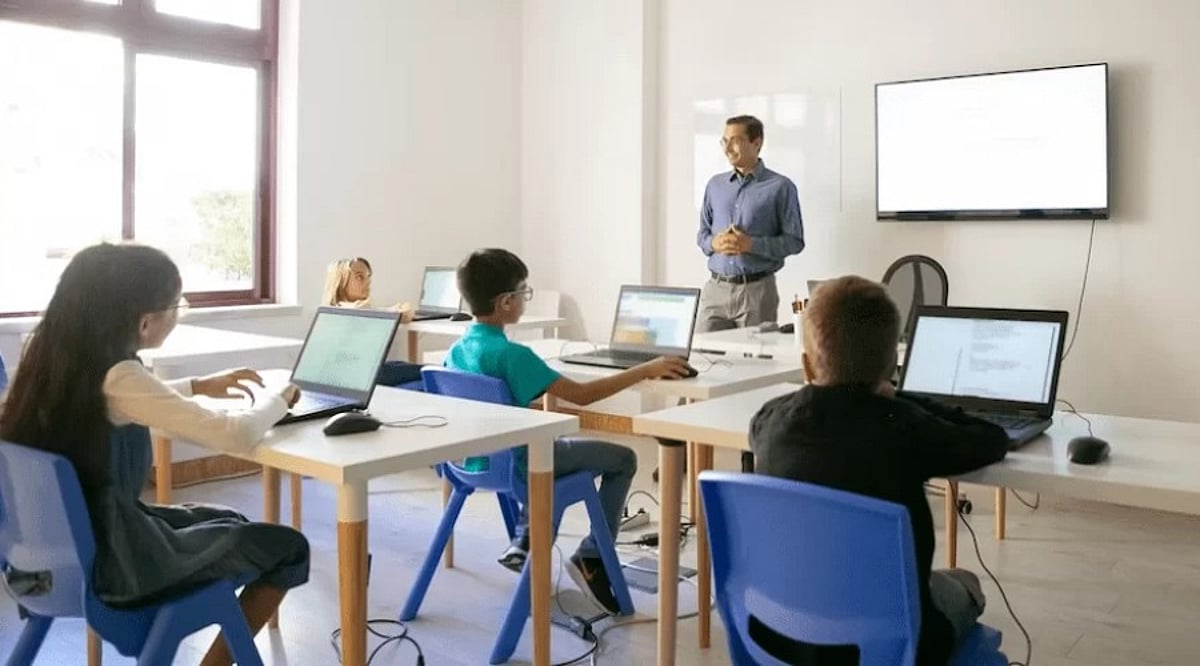
Technology is reshaping classrooms, making learning more interactive, personalized, and flexible. From AI-driven lessons to smartboards and e-books, these tools empower teachers to teach more effectively while offering students engaging and accessible ways to learn.
Overview
Modern technology is making classrooms more interactive, engaging, and easier to manage for both teachers and students. Smart tools like AI, digital learning platforms, and smartboards support different learning styles and boost classroom participation. These innovations help students learn at their own pace while equipping them with future-ready skills.
Classrooms have evolved significantly. Not long ago, students relied on blackboards and printed books. Today, digital tools make lessons more interesting and accessible. Students can watch videos, attend online classes, and learn in ways that suit them best.
Teachers remain central to every classroom. Technology provides them with additional tools to explain concepts and keep students engaged. Here are ten technologies that help schools create better learning experiences every day.
AI-Driven Personalized Learning
Students learn differently. Some grasp topics quickly, while others need more practice. AI-powered learning platforms tailor lessons to each student’s progress. They recommend additional practice when needed and allow students to move on when ready. This approach helps students learn without feeling rushed or left behind.
Gamification of Education
Many students find learning more enjoyable when lessons include fun activities. Schools now use quizzes, points, rewards, and badges to maintain interest. Small, achievable goals make learning exciting and less stressful. These activities also engage students in class and encourage them to do their best every day.
Digital Pads
Digital pads are now common in many classrooms. Students can write notes, complete homework, and draw diagrams on a single device. Everything stays organized, making it easy to find old notes. Teachers can also send worksheets and study materials in seconds.
Smartboards
Smartboards have made classroom teaching more dynamic. Teachers can display photos, videos, maps, and presentations with a single tap. Students can answer questions on-screen and participate in interactive activities. Everyone gets a clear view, making lessons easier to understand.
Microlearning Platforms
Studying for long hours can be exhausting. Microlearning platforms break lessons into short, manageable segments. Students learn one concept at a time, which simplifies learning and improves retention, especially during exam periods.
Social-Emotional Learning Tools
School is about more than grades. Students also need to develop collaboration, emotional management, and problem-solving skills. Social-emotional learning tools include simple activities and classroom discussions that support personal growth alongside academic achievement.
Lifelong Learning Platforms
Learning shouldn’t stop after school. Lifelong learning platforms allow students to acquire new skills at their own pace. Whether it’s coding, communication, or a new language, these platforms make continuous education accessible at any stage of life.
E-Books
E-books have become a practical choice for many schools. Students can carry numerous books on a single device instead of heavy backpacks. Features like search, highlighting, and note-taking enhance the reading experience. Some e-books also include videos and practice questions.
Remote Learning
Remote learning has made education more flexible. Students can attend classes from home when they can’t be at school. Live sessions, recorded lessons, and online discussions keep them connected with teachers and classmates. This flexibility means learning can happen almost anywhere.
Document Camera
Document cameras simplify classroom demonstrations. Teachers can place a book, worksheet, or science experiment under the camera, and it displays on a large screen. Every student gets a clear view without leaving their seat—especially useful for practical lessons.
Personal Recommendation: Three Technologies Every Student Should Try
If I had to choose three, they would be AI-Driven Personalized Learning, Smartboards, and Microlearning Platforms. AI-powered learning provides the extra support students need without pressure. Everyone learns at their own pace. Smartboards bring lessons to life with pictures, videos, and live examples, making tough topics easier to grasp. Microlearning platforms are perfect for busy students—bite-sized lessons fit into daily routines and make exam revision less stressful. Together, these tools make learning more fun, improve understanding, and build student confidence.
Learning Is Becoming Better Every Day
Technology has opened new doors for both students and teachers. Classrooms are more interactive, lessons more interesting, and learning more flexible. Information is more accessible than ever. However, teachers remain the most important part of education. Technology works best when it supports teaching, not replaces it. With more tools in schools, students can learn more, explore new ideas, and prepare for the future with confidence.
FAQs
1. How is technology improving today’s classrooms?
Technology makes lessons more interactive through videos, quizzes, and digital activities. It helps teachers explain topics clearly while offering students different ways to learn based on their needs.
2. Which classroom technology is most useful for students?
AI-driven personalized learning is one of the most useful tools because it adjusts lessons to each student’s progress. Smartboards and microlearning platforms are also great for making learning easier and more engaging.
3. Can technology replace teachers in the future?
No. Technology supports teachers but cannot replace them. Teachers guide students, answer questions, and create meaningful learning experiences that digital tools alone cannot provide.
4. Why are schools moving from printed books to e-books?
E-books are easier to carry, simple to update, and offer features like search, bookmarks, notes, and interactive content. They provide quick access to learning materials anytime.
5. What should schools consider before using new classroom technology?
Schools should choose tools that are easy to use, support learning goals, and are accessible to both teachers and students. Proper training and reliable internet access are also essential for best results.