Tag: clean energy

  • Bill Gates-Backed Fervo Energy Inks Record Geothermal Deal with Google for Utah Data Center

    Bill Gates-Backed Fervo Energy Inks Record Geothermal Deal with Google for Utah Data Center

    Fervo Energy, a geothermal power company backed by Bill Gates, has signed a landmark 396-megawatt power purchase agreement with Google, significantly expanding their existing partnership. The deal, announced this week, covers electricity from Fervo’s Cape Station project in southwestern Utah, with power delivery expected to begin in the third quarter of 2028.

    Google plans to use this carbon-free electricity as a foundational energy source for a potential new data center in the state. The agreement marks the largest enhanced geothermal power purchase deal ever signed, coming at a time when hyperscalers across the United States are racing to secure reliable electricity for growing artificial intelligence infrastructure demands.

    Under the terms, power will be delivered through four separate 99-megawatt blocks over a 15-year term. Google also holds an option to expand its purchase by roughly 600 additional megawatts by June 2030, which could push total contracted capacity to nearly one gigawatt.

    Fervo CEO Tim Latimer emphasized that the agreement demonstrates enhanced geothermal systems are ready to power next-generation computing infrastructure. “As demand for reliable electricity grows, customers like Google need energy resources that can be deployed at scale, operate around the clock, and deliver where power is needed,” Latimer said.

    Lucia Tian, Google’s Director of Advanced Energy Technologies, noted that the project will drive real economic benefits for the local community and help lower long-term energy costs by making geothermal power more affordable and accessible.

    The partnership dates back to 2021, when Google first collaborated with Fervo to jointly develop next-generation geothermal projects. Their pilot project in Nevada, known as Project Red, went live in 2023 and continues to supply power to the local grid, including Google’s own data centers in the state. In June 2024, the two companies signed a smaller 115-megawatt deal in Nevada alongside utility NV Energy.

    Fervo leverages drilling techniques borrowed from the oil and gas industry to tap underground heat more efficiently. This approach is quickly becoming an attractive alternative to solar and wind, as it can deliver steady, round-the-clock power without depending on weather conditions.

  • Leading Green Hydrogen Companies Driving the Clean Energy Transition

    Leading Green Hydrogen Companies Driving the Clean Energy Transition

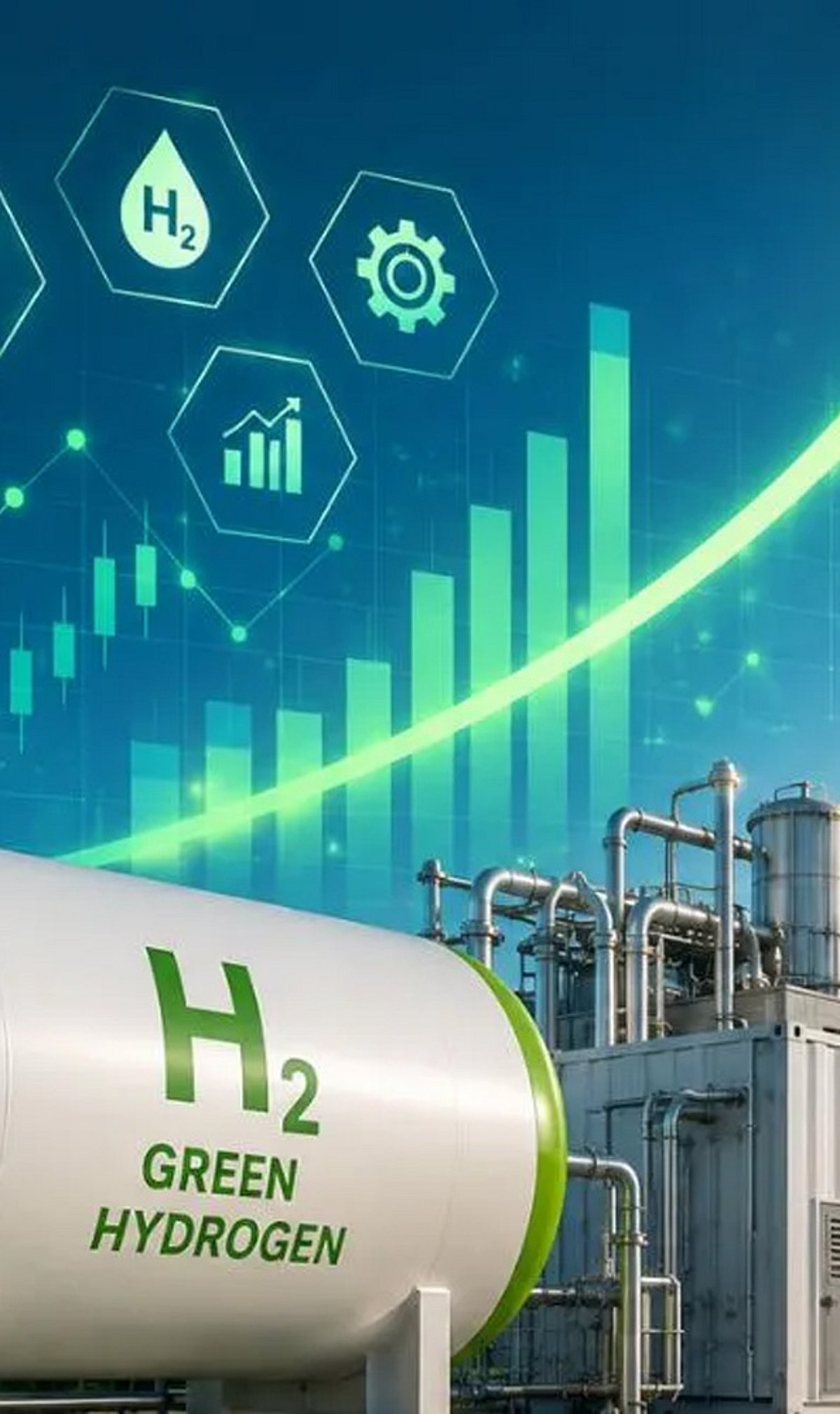
    The global push toward decarbonization has placed green hydrogen at the forefront of clean energy innovation. Produced using renewable electricity to split water into hydrogen and oxygen, this zero-carbon fuel offers a versatile solution for hard-to-abate sectors such as heavy industry, transportation, and power generation.

    Here is a look at the top companies advancing green hydrogen technologies and infrastructure worldwide:

    Plug Power

    Plug Power develops hydrogen fuel cells, electrolyzers, and integrated hydrogen solutions. The company helps industries reduce carbon emissions while expanding clean energy infrastructure across the globe.

    Nel ASA

    Nel ASA produces advanced electrolyzers and hydrogen fueling stations. Its technology enables renewable hydrogen production for transportation, industrial operations, and future energy applications worldwide.

    Air Liquide

    Air Liquide invests heavily in green hydrogen projects, leveraging decades of industrial gas expertise to support cleaner manufacturing and low-carbon mobility solutions globally.

    Linde plc

    Linde builds large-scale hydrogen production, storage, and distribution infrastructure. The company partners with governments and businesses to accelerate clean energy adoption across the world.

    Siemens Energy

    Siemens Energy develops electrolysis technologies powered by renewable electricity, supporting industries seeking low-emission alternatives to traditional fossil fuel-based hydrogen production methods.

    Cummins Inc.

    Cummins expands its hydrogen portfolio through advanced electrolyzers and fuel cell systems, helping industries transition toward cleaner transportation and sustainable power generation.

    ITM Power

    ITM Power specializes in proton exchange membrane electrolyzers that efficiently convert renewable electricity into green hydrogen for industrial and commercial applications globally.

    Bloom Energy

    Bloom Energy produces solid oxide fuel cells and hydrogen-ready energy technologies that improve efficiency while supporting cleaner electricity generation and hydrogen infrastructure expansion.

    Fortescue Energy

    Fortescue Energy invests in large-scale green hydrogen and renewable energy projects, aiming to become a major global supplier of zero-carbon fuels and clean energy.

  • AI-Driven Operational Intelligence for Renewable Energy: An Interview with Mohit Kumar Singh

    AI-Driven Operational Intelligence for Renewable Energy: An Interview with Mohit Kumar Singh

    Mohit Kumar Singh, Founder & CEO of Renewalytics Services Pvt. Ltd., is leveraging artificial intelligence to solve critical operational challenges in the renewable energy sector. His company builds AI-powered operational intelligence platforms that help solar and wind operators improve efficiency, grid reliability, and intelligent energy management while supporting India’s clean energy transition.

    Singh’s journey in renewable energy began in December 2016 at Climate Connect, where he worked extensively on forecasting, scheduling, and grid compliance for renewable energy generators. Over the years, he collaborated with independent power producers, operations teams, regulators, and grid stakeholders, gaining first-hand exposure to the operational complexities of integrating renewable energy into the power system.

    After Climate Connect was acquired by ReNew Power and later divested, Singh founded Renewalytics in 2023 with the belief that the industry needed an independent company focused entirely on intelligent software for renewable energy operations. Today, Renewalytics supports more than 3 GW of solar and wind assets across commercial and pilot engagements, offering AI-driven forecasting, scheduling, weather intelligence, DSM analytics, enterprise software, operational automation, and intelligent decision-support systems.

    Solving Real-World Challenges

    India’s renewable energy targets are ambitious, but operational complexity is growing rapidly. Renewable energy companies must manage weather uncertainty, grid regulations, scheduling obligations, battery integration, diverse data sources, operational risks, and increasingly complex market dynamics.

    Renewalytics addresses these challenges by transforming fragmented operational data into actionable intelligence. As Singh explains, “Our objective is to help renewable energy companies improve operational visibility, automate routine workflows, strengthen decision-making, and optimize plant performance.”

    How AI is Transforming Forecasting and Operations

    Artificial Intelligence is fundamentally changing how renewable energy assets are managed. Machine learning enables continuous learning from historical generation patterns, weather behavior, plant performance, and operational outcomes to improve prediction accuracy and support better planning.

    Beyond forecasting, AI is assisting operations teams through intelligent co-pilots that validate data, detect anomalies, recommend corrective actions, and automate repetitive tasks. At Renewalytics, the team is building agentic AI capabilities where specialized AI agents collaborate to support weather intelligence, operational analytics, forecast validation, data quality monitoring, and performance optimization.

    “Our philosophy is that AI should augment human expertise rather than replace it,” Singh says. “We aim to enable engineers and operations teams to make faster and better-informed decisions.”

    Differentiation from Traditional Solutions

    Traditional energy management platforms primarily focus on monitoring assets and reporting operational data. Renewalytics goes beyond monitoring by combining AI, machine learning, operational intelligence, automation, weather analytics, scheduling, DSM analytics, and enterprise workflow management into a unified platform.

    Singh notes that his team’s practical experience within the renewable energy ecosystem allows them to build solutions that address real operational challenges instead of simply presenting data on dashboards. “We believe the future lies in intelligent platforms that actively assist decision-making rather than simply displaying information,” he adds.

    The Role of Data in Renewable Energy Performance

    Data is the foundation of every intelligent renewable energy system, but the true value lies in its quality, reliability, and contextual understanding. Renewable energy operations depend on information from SCADA systems, weather services, meters, grid operators, market platforms, scheduling systems, and operational logs.

    “At Renewalytics, significant emphasis is placed on data engineering, validation, automation, and integration because reliable AI models can only be built upon reliable data,” Singh explains. High-quality data ultimately leads to better operational decisions, improved efficiency, and stronger grid reliability.

    Future Trends and Vision

    Singh believes the next decade of renewable energy will extend far beyond capacity addition. The sector will increasingly be shaped by battery energy storage systems, hybrid renewable projects, AI-powered operational co-pilots, autonomous software agents, intelligent forecasting, grid optimization, and advanced machine learning.

    “As renewable penetration continues to increase, maintaining grid stability will become just as important as adding new generation capacity,” he says. “Utilities, grid operators, and renewable energy companies will rely far more heavily on predictive analytics, flexible energy resources, and intelligent software platforms to maintain system reliability.”

    Looking ahead, Singh envisions Renewalytics evolving into a digital operating layer that helps organizations improve efficiency, strengthen grid reliability, and accelerate the global clean energy transition. “Our long-term ambition is to build technology from India that serves renewable energy companies across international markets,” he concludes.

  • Solar Stocks in India: Growth Drivers, US Tariff Impact, and Investment Risks in 2026

    Solar Stocks in India: Growth Drivers, US Tariff Impact, and Investment Risks in 2026

    India’s solar industry is growing faster than ever, but growth alone doesn’t tell the full story anymore. The sector added a record 44.61 GW of capacity in FY2026 and crossed 150 GW of installed capacity, cementing its place in the country’s clean energy shift. In the same year, the US imposed a 126% countervailing duty that disrupted exports and wiped billions off the market value of listed solar manufacturers.

    Solar stocks in India now sit at the intersection of opportunity and risk. Understanding how policy, trade, domestic demand, and execution fit together matters more now than just tracking capacity numbers.

    Why Solar Stocks in India are Entering a New Growth Phase

    The national target for 2030 remains the anchor for the whole sector, and hitting it requires roughly 50 GW of new solar installations every year, a pace India only just touched for the first time. Incentives such as the PLI scheme for high-efficiency modules and the newer mandate requiring locally made solar cells from June 2026 are built to sustain that pace. The harder constraint is capacity utilization. Indian module-making capacity has swelled to around 210 GW, far ahead of the 40–45 GW of annual domestic demand it needs to serve. That gap between built capacity and used capacity is quietly becoming a bigger swing factor for manufacturer earnings than the headline target itself.

    How US Tariffs are Reshaping the Future of Solar Stocks in India

    For years, the US absorbed nearly all of India’s solar exports, and PLI-backed manufacturers rode that demand. That changed in February 2026, when the US Department of Commerce imposed a preliminary 126% countervailing duty on Indian solar cells and modules, following complaints from American manufacturers over alleged subsidy benefits. Exports fell by roughly a third within weeks, and Waaree Energies, Premier Energies, and Vikram Solar all saw sharp single-day declines when the ruling landed. A final US ruling is expected later in 2026, and that date matters more to exporter stock prices than most quarterly earnings calls.

    Even so, the export slowdown is not the whole story. Utility-scale tenders, commercial rooftop adoption, and industrial clean energy procurement are expanding fast enough to absorb a growing share of that idle manufacturing capacity. Companies with diversified revenue across domestic and export markets are better placed to ride out trade disruption than pure exporters.

    Battery Storage and Hybrid Projects are Driving the Next Phase of Solar Growth

    The clearest forward-looking shift in the sector is the move from standalone solar to solar-plus-storage. In January 2026, the Solar Energy Corporation of India awarded 1.2 GW of solar paired with 3.6 GWh of battery storage under long-term power agreements. NTPC’s renewable arms followed up with hybrid solar projects in Uttar Pradesh and Rajasthan. Battery storage lets developers supply power during evening peak demand, not just when the sun is out. That improves project economics and cuts down on solar power going to waste. Meanwhile, more companies are signing long-term renewable power purchase agreements, and utilities are starting to use AI to forecast solar generation and manage the grid more precisely. Put together, these shifts are moving the industry away from just adding capacity and toward delivering power that’s reliable and efficient.

    Why Different Types of Solar Stocks in India Face Different Risks

    Generators such as Adani Green, NTPC Green, and Tata Power earn through long-term tariffs and are shielded from the export shock but exposed to discom payment delays and leveraged balance sheets. Manufacturers, including Waaree and Premier Energies, sit closest to the tariff risk and the overcapacity problem. EPC and ancillary players earn on execution margins tied to the capex cycle rather than on export markets. Treating all three as interchangeable is where most retail analysis of the sector goes wrong. Business model differences also explain why investors should not value every solar company the same way.

    Are Solar Stocks in India Still Worth Their Premium Valuations?

    Several listed solar and renewable names still trade at earnings multiples well above global peers, some in triple-digit numbers, a premium built on an uninterrupted growth story. With export markets now constrained, that multiple looks harder to justify without a matching improvement in cash flow visibility. Balance sheet strength, order book quality, execution capability, and exposure to export markets are becoming the key factors separating long-term winners from short-term momentum stocks.

    Final Thoughts

    India’s solar sector has entered a more demanding phase of growth. The companies that lead from here will not necessarily be those announcing the largest project pipelines but those that consistently convert policy support, disciplined execution, and operational efficiency into sustainable earnings and resilient cash flows.

    Disclaimer: Analytics Insight does not provide financial advice or guidance on cryptocurrencies and stocks. This article is provided for informational purposes and does not constitute investment advice. You are responsible for conducting your own research before making any investments.

  • India’s First Hydrogen Train to Launch on July 17 with PM Modi Inauguration

    India’s First Hydrogen Train to Launch on July 17 with PM Modi Inauguration

    India is set to mark a significant milestone in green mobility as Prime Minister Narendra Modi is expected to flag off the country’s first hydrogen-powered passenger train on July 17. The train will operate on the Jind-Sonipat route in Haryana, under the Northern Railway zone, showcasing Indian Railways’ commitment to clean energy and sustainable transport.

    The hydrogen train utilizes fuel cell technology, where electricity is generated through a chemical reaction between hydrogen and oxygen. Unlike conventional diesel locomotives, this system emits only water vapor and heat, making it a zero-emission solution during operation. This technology is gaining traction globally, particularly for routes where full electrification is not feasible.

    The train will be equipped with modern passenger amenities, though specific details regarding speed and passenger capacity have not yet been disclosed by Indian Railways. Given hydrogen’s high combustibility, the project incorporates dedicated systems for fuel storage, handling, and onboard safety measures. Officials have confirmed that the hydrogen used will be produced through environmentally sustainable methods.

    The July 17 launch serves as a pilot for the technology. If the trial yields positive results, Indian Railways plans to expand hydrogen-powered services to additional routes in the coming years. This initiative aligns with the national transporter’s broader strategy to reduce reliance on fossil fuels and increase the use of cleaner energy across its network.

  • How Seven Cities Are Using AI to Make Waste-to-Energy Cleaner and Smarter

    How Seven Cities Are Using AI to Make Waste-to-Energy Cleaner and Smarter

    Every growing city faces the same problem: what should be done with the huge amount of waste produced each day? Landfills occupy valuable land and are a major source of ground pollution. Waste-to-energy plants offer an alternative by converting non-recyclable waste into electricity and heat, helping cities recover value from discarded materials.

    Artificial intelligence is making these plants smarter. Cameras identify different types of waste, sensors monitor machinery around the clock, and data systems detect small problems before they become expensive failures. These tools help plants run more smoothly, waste less energy, and maintain tighter control over emissions.

    Several cities are already demonstrating what this future looks like. Their projects vary but share a common goal: making waste-to-energy cleaner, safer, and more efficient.

    Dubai, United Arab Emirates

    Dubai is constructing one of the world’s largest waste-to-energy plants. AI systems track waste movement, monitor combustion, and watch machine performance 24/7. Predictive software enables workers to identify problems before they cause a shutdown, making the plant more energy efficient and keeping emissions under close observation.

    Shenzhen, China

    Shenzhen exemplifies technology-driven waste management. AI-enabled cameras identify different types of waste on sorting lines, and data systems analyze collection patterns across the city. Better sorting means more recycling, less contamination, and greater energy recovery from remaining waste.

    Chicago, United States

    Chicago uses AI and data analytics to optimize waste collection and processing. Smart routing enables collection trucks to reduce unnecessary travel and conserve fuel. In waste facilities, predictive maintenance tools monitor equipment and alert operators to potential issues, resulting in more reliable plants and lower operating costs.

    Los Angeles, United States

    Los Angeles is working to reduce its reliance on landfills. Machine learning systems help identify recyclable materials and improve sorting accuracy. The city also uses data for resource management and waste operations planning, making processing cleaner and recovering valuable materials more effectively.

    Amsterdam, Netherlands

    Amsterdam is known for its circular economy ambitions. AI helps collect, sort, and recover energy from waste across the city’s waste network. Smart software analyzes operational data and allows facilities to adjust performance as needed, enabling better material recovery and more efficient use of energy produced from waste.

    Indore, India

    Indore has been recognized for its cleanliness and waste management. The city uses GPS tracking, digital records, and AI-assisted monitoring to improve collection and processing. Better source segregation means more recyclable material is recovered, and processing plants can generate energy more efficiently.

    Abu Dhabi, United Arab Emirates

    Abu Dhabi is advancing waste-to-energy projects with a technology focus. AI systems monitor plant health, detect maintenance needs, and analyze environmental data in real time. These tools reduce unplanned breakdowns, improve daily operations, and divert more waste from landfills.

    Why This Matters

    AI helps waste-to-energy plants operate more efficiently with fewer breakdowns, better sorting, and tighter emission control. As cities grow, so will their waste. Smarter systems can recover more energy, reduce landfill dependence, and save public money. These projects demonstrate the role of technology in achieving cleaner cities and a more sustainable future.

    A Smarter Future for Waste and Energy

    Dubai, Shenzhen, Chicago, Los Angeles, Amsterdam, Indore, and Abu Dhabi are on different paths but heading toward the same destination: cleaner cities, less landfill waste, and more efficient energy recovery. AI is helping them get there by improving sorting, reducing breakdowns, and giving operators a clearer view of facility performance.

    These projects highlight that technology works best when paired with good planning and long-term investment. As more cities adopt AI for waste management, less waste may go to landfills, more resources will be recovered, and cleaner energy will become available to more people. What was once seen as a problem in a garbage bin could become part of the solution for a cleaner and more sustainable future.

  • Hydrogen Fuel Cell Industry Leaders for 2026: Key Companies to Watch

    Hydrogen Fuel Cell Industry Leaders for 2026: Key Companies to Watch

    The hydrogen fuel cell industry is accelerating as the world seeks cleaner energy alternatives. From logistics and transportation to stationary power generation, these companies are pioneering technologies that promise to decarbonize multiple sectors. Here are the leading hydrogen fuel cell firms to keep an eye on in 2026.

    Plug Power

    Plug Power develops hydrogen fuel cell systems and green hydrogen infrastructure. Their solutions support logistics, transportation, manufacturing, and industrial decarbonization efforts worldwide, making them a key player in the hydrogen economy.

    Ballard Power Systems

    Ballard Power Systems specializes in proton exchange membrane (PEM) fuel cells. Their technology powers buses, trucks, trains, marine vessels, and stationary energy applications globally, providing reliable zero-emission power.

    Bloom Energy

    Bloom Energy produces advanced fuel cell platforms that deliver reliable electricity. The company is expanding into hydrogen-powered clean energy solutions for commercial industries, aiming to reduce dependence on fossil fuels.

    FuelCell Energy

    FuelCell Energy designs large-scale fuel cell power plants for utilities, industrial facilities, and carbon capture projects. Their systems generate cleaner electricity, contributing to sustainable energy grids.

    Cummins

    Known for diesel engines, Cummins is expanding into hydrogen fuel cells, electrolyzers, and zero-emission technologies. Their innovations support commercial transportation and industrial sustainability initiatives worldwide.

    Nikola Corporation

    Nikola Corporation focuses on hydrogen-powered commercial trucks and refueling infrastructure. The company aims to accelerate zero-emission freight transportation across North American markets.

    Doosan Fuel Cell

    Doosan Fuel Cell develops stationary fuel cell systems that supply dependable electricity for commercial buildings, industrial operations, and distributed energy networks across Asia.

    ITM Power

    ITM Power manufactures electrolyzers that enable green hydrogen production. Their technology supports renewable energy integration and accelerates clean fuel adoption in multiple industries.

    Bosch

    Bosch invests heavily in hydrogen fuel cell technology and collaborates with automotive manufacturers to advance sustainable mobility and industrial clean energy innovations globally.

    These companies represent the forefront of the hydrogen revolution, each contributing to a cleaner, more sustainable future. Stay updated with the latest developments by following industry news and insights.

  • Key Factors for Selecting a Top Solar Panel Manufacturer

    Key Factors for Selecting a Top Solar Panel Manufacturer

    Choosing the right solar panel manufacturer is critical for long-term energy savings and system reliability. Below are the essential criteria to guide your decision.

    Manufacturer Reputation

    Research brand credibility, industry experience, customer reviews, and successful installations before selecting a manufacturer. A trusted provider ensures reliable long-term solar performance.

    Product Certifications

    Verify international quality certifications that confirm panels meet recognized safety, efficiency, durability, and environmental standards. This step is non-negotiable before making a purchase.

    Panel Efficiency

    Compare efficiency ratings to maximize electricity generation, especially when rooftop space is limited for residential or commercial installations. Higher efficiency often translates to better return on investment.

    Warranty Coverage

    Choose manufacturers offering comprehensive product and performance warranties. These protect against manufacturing defects and guarantee long-term output degradation.

    Technology Used

    Evaluate advanced technologies like TOPCon, HJT, or bifacial panels. These deliver higher efficiency, improved durability, and superior energy production capabilities.

    After-Sales Support

    Reliable technical assistance, maintenance services, and prompt warranty claims ensure hassle-free ownership throughout the solar system’s operational lifespan.

    Pricing Transparency

    Compare complete installation costs without hidden charges. Balance affordability with quality, efficiency, and long-term value for money.

    Installation Network

    Prefer manufacturers with certified installation partners. This ensures professional setup, compliance with standards, and optimal system performance after commissioning.

    Customer Reviews

    Read verified customer feedback to understand real-world performance, service quality, installation experience, and long-term satisfaction before finalizing your purchase.