
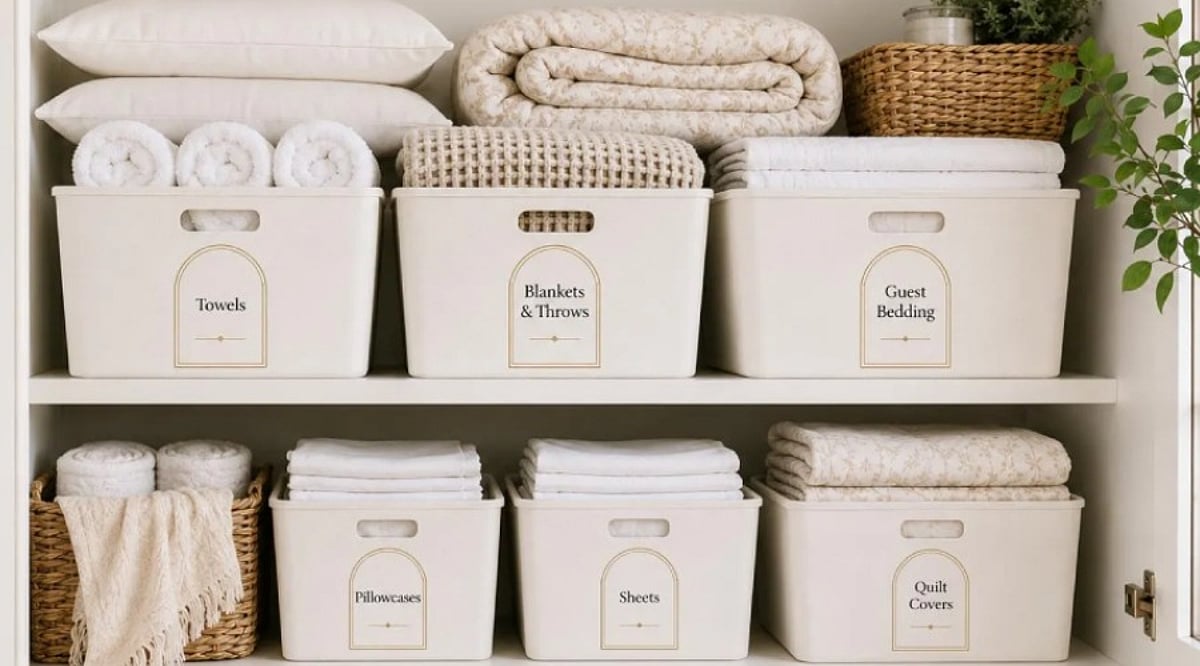
Smart labeling systems turn closets, storage bins, and cabinets into organized spaces that are easier to navigate and maintain. By using clear categories, consistent placement, durable materials, and even QR codes, you can create a storage system that stays accurate and clutter-free over time.
What Makes a Label Smart
A label is only truly smart when it meets a few key criteria. It should remain legible after months of handling, group items the way people actually search for them, and be easy to update when contents change. When useful, it can also connect to a digital record through a QR code or similar tool. Many popular labeling ideas are decorative, but the strategies below focus on function first and appearance second.
Closets: Cut Decision Time
Closet labels solve a speed problem. In the morning, no one wants to search through a wardrobe. Instead, workwear, gym clothes, and seasonal items should be instantly identifiable. A simple hierarchy works best: a zone label for a broad category like workwear, a shelf label for a type like shirts, and a bin label for specific items like belts. Not every level needs the same detail. Hanging divider tags are especially useful for shared wardrobes, where two people need to understand the system without explanation.
Storage Bins: Keep Contents Visible
Storage bins often hold items that go untouched for months, so their labels need to carry more information than a closet tag. A content list on the side, updated each time the bin is repacked, prevents the common problem of opening a bin only to find it doesn’t contain what you expected. For stacked bins, place identical labels on both the front and the lid so they remain readable whether the bin is in a stack or standing alone. Color-coding works only when each color represents a single variable, such as a room or a household member. Mixing meanings across colors makes the system harder to read than having no color at all.
Cabinets: End the Guesswork
A closed cabinet door removes the visual cue that an open shelf or bin provides. Frequently used cabinets, such as those holding everyday cookware, benefit from broad category labels that can be read in passing. Low-use cabinets, like those for seasonal appliances or first aid supplies, can carry more detailed checklists on the inside of the door. Checking a list takes far less time than opening every drawer to relearn what is stored where.
QR Codes and Digital Inventories
QR code labels extend a labeling system beyond what text alone can hold. Scanning a code can open a photo of a bin’s contents, a written inventory, or a location history. This is especially useful for moving boxes, seasonal decorations, or archived documents that stay sealed for months. The real value is being able to retrieve information without opening the container. A garage with forty identical bins becomes searchable rather than guessable, and the same principle applies to hardware inventories and emergency supplies.
Choosing the Right Label for Each Situation
- Writable labels are ideal for temporary storage.
- Waterproof vinyl labels suit kitchens and pantries.
- Printed adhesive labels work well for garage and attic bins.
- Hanging tags are effective for baskets or fabric containers where adhesives do not stick.
Keep the System Accurate
Every labeling system drifts as contents change. A short seasonal review can catch labels that no longer match what is inside before the gap grows large enough to abandon the whole system. Smart labels succeed when they reflect how people actually search, store, and return items. When the system matches everyday habits, organization stays maintained rather than constantly rebuilt.
Final Thought
Start with a single closet, bin shelf, or cabinet drawer. Test whether a label style matches your real habits before scaling it across your home. A system built on daily behavior lasts. One built on appearance alone rarely does.
FAQ
What are smart label ideas for closets, storage bins, and cabinets?
Smart label ideas combine clear category names, consistent placement, durable materials, and, where useful, QR codes that link to digital inventories. The goal is to make items easy to find and return, not just to make storage look organized.
How do QR code labels work for storage?
QR code labels link physical storage containers to digital information such as item lists, photos, or inventory records. Scanning the code lets users check a container’s contents without opening it, making them especially useful for seasonal and long-term storage.
What is the best way to label storage bins?
Use large, easy-to-read labels on the front of each bin and add a duplicate label on the lid if bins are stacked. For long-term storage, include a brief contents list or connect the label to a digital inventory using a QR code.
How can a cabinet labeling system stay accurate over time?
Review cabinet labels periodically and update them whenever contents change. A simple seasonal check helps keep labels accurate, prevents misplaced items, and ensures the organization system remains easy to maintain.