
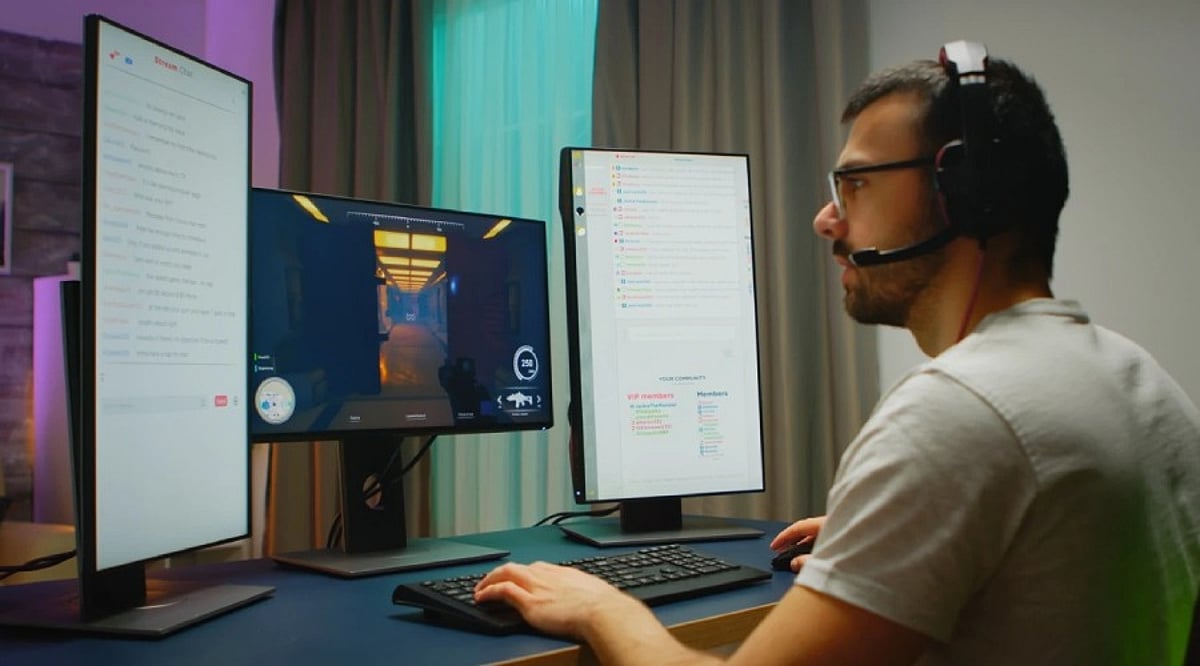
Cloud gaming is transforming how players access video games, removing the need for expensive hardware and massive downloads. Instead of running a game locally on a PC or console, the game executes on remote servers, with the gameplay streamed directly to your device over the internet. All you need is a compatible screen and a stable connection—whether it’s a laptop, smartphone, tablet, or smart TV.
How Cloud Gaming Works
The process begins in a data centre, where powerful servers host the game. These machines handle all the heavy lifting—rendering graphics, processing physics, simulating lighting, and managing sound. Once the game is running, the server encodes the visual output into a video stream and sends it to your device. When you press a button, your command travels back to the server, which processes it and updates the stream accordingly. This entire loop repeats continuously while you play.
Latency, or the delay between your input and the on‑screen response, is critical. A slow or unstable internet connection can introduce noticeable lag, making it difficult to react quickly in competitive games. For a smooth experience, NVIDIA recommends a delay under 80 milliseconds and a network speed of at least 25 Mbps for 1080p gaming at 60 frames per second. The physical distance to the server also matters—the closer you are, the faster your commands travel, which is why providers are expanding their data centre footprints globally.
The Hardware Shift
Cloud gaming fundamentally challenges the traditional notion that playing high‑end games requires a powerful local machine. A demanding AAA title can occupy over 100 GB of storage and demand a top‑tier graphics card—a cost barrier for many. With cloud gaming, the game lives in the cloud, so even a basic laptop can stream visually intensive experiences. This accessibility has sparked significant growth in the market, estimated at USD 3.4 billion in 2025 and projected to surge to USD 62.9 billion by 2033, with a compound annual growth rate of 43.7%.
Key Players and Limitations
Microsoft’s Xbox Cloud Gaming and NVIDIA’s GeForce NOW are the frontrunners, letting users stream games across a variety of devices. Xbox Cloud Gaming works on consoles, PCs, mobiles, and select smart TVs, while GeForce NOW focuses on PC titles, allowing subscribers to play on hardware they already own. Despite these advancements, cloud gaming isn’t without its challenges. A poor internet connection can degrade the experience, and for esports or latency‑sensitive games, even a few milliseconds of added delay can be a deal‑breaker for some players. Many gamers still prefer the stability and responsiveness of local hardware.
What’s Next
As broadband infrastructure improves and 5G becomes more widespread, cloud gaming is likely to evolve from a niche into a mainstream option. The technology won’t necessarily replace local gaming, but it offers a convenient alternative—one that lets you play the latest titles without upgrading your PC or console. The future will likely see a hybrid model, where players switch between local and cloud gaming depending on the game, their device, and their connection. With companies investing heavily in data centres and services, cloud gaming is poised to reshape how we think about access to games.