Tag: Cloud Security

  • RAH Infotech COO Suchit Karnik on Building Cyber Resilience for Indian Enterprises

    RAH Infotech COO Suchit Karnik on Building Cyber Resilience for Indian Enterprises

    India’s digital transformation is expanding the technology landscape for enterprises across sectors. Cloud adoption, connected ecosystems and AI are creating new opportunities while also increasing the number of entry points for cyber threats.

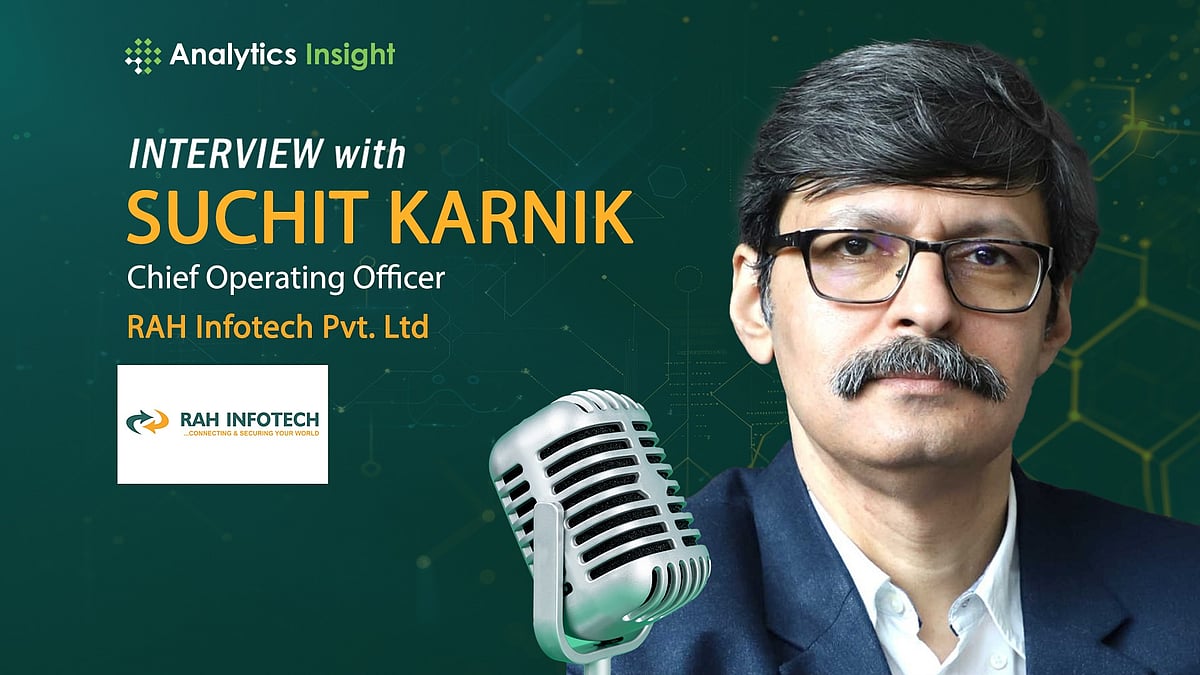
    In this episode of the Analytics Insight Podcast, host Priya Dialani speaks with Suchit Karnik, Chief Operating Officer at RAH Infotech, about the changing cybersecurity landscape and the growing importance of cyber resilience.

    Karnik discusses how enterprises can move beyond traditional security models. He explains why identity has become a critical security layer, how organizations can strengthen cloud governance, and why data classification and employee awareness matter under India’s data protection framework.

    What Does the Shift from Cybersecurity to Cyber Resilience Mean?

    I see cyber resilience as the ability to prepare for an attack, respond to it and continue business operations. Organizations cannot assume that they can prevent every attack. The threat landscape has expanded across credentials, email, cloud applications, and other access points. A single malicious email can expose sensitive information and create financial or reputational damage. That makes resilience a business requirement rather than simply an IT function. I also see AI creating new risks through deepfakes, voice manipulation and sophisticated identity attacks. Organizations need to bring cybersecurity into the boardroom and make resilience part of their overall business strategy.

    Why has Identity Become a Critical Layer in Enterprise Security?

    I believe identity has become one of the most important security controls for modern enterprises. Every user has specific access and privileges, so organizations need to know who is logging in and what that person can access. Identity and access management, privileged access management and identity verification can help establish those controls. Organizations also need audit trails and rule-based access policies. Cloud adoption has made this even more important since employees access applications and data from different locations and devices. I also see passwordless authentication gaining importance. Organizations need strong identity verification to ensure the right person accesses sensitive systems.

    Why are Governance and Data Classification Important for Cloud Security?

    I see governance as a critical part of cybersecurity, especially as organizations move more applications and data to the cloud. The first step involves classifying data based on its importance and sensitivity. Organizations then need to educate employees who handle that information. I believe data needs protection regardless of where it sits. It could exist on a laptop, an on-premises server or a cloud platform. Personal information also requires careful handling. Organizations need clear governance frameworks that explain how people should protect, monitor and share information. Standards such as ISO frameworks can also help organizations establish structured controls and auditing practices.

    How is RAH Infotech Building its Role as a Trusted Advisor?

    I joined RAH Infotech with the objective of strengthening its operational and governance processes. We want to work as a trusted advisor for our partners and customers rather than simply following an OEM-centric approach. Today, more than 30% of our 250-plus employees have technical roles. We invest significantly in training since technical capability helps us understand customer challenges and recommend suitable solutions. Around 85% to 90% of our revenue comes from cybersecurity solutions. We focus on a solution-centric approach that helps system integrators and end customers understand their technology requirements and address their specific security challenges.

    What Should Enterprises Prioritize as AI-Driven Threats Increase?

    I believe organizations need to make cybersecurity a business priority rather than treat it only as a cost centre. AI will create new forms of cyber threats, including deepfakes, voice manipulation and identity-based attacks. Organizations need to prepare for these risks through stronger identity controls, better governance and continuous employee awareness. They also need to understand their data and decide who can access it. Cyber resilience requires organizations to think beyond prevention. They need systems and processes that help them respond when an incident occurs. I also believe senior leadership must actively participate because cybersecurity now affects business continuity, reputation and growth.


  • Key Cybersecurity Trends Driving Change in the Banking Industry

    Key Cybersecurity Trends Driving Change in the Banking Industry

    Banks are increasingly turning to advanced technologies and frameworks to protect digital assets and customer data. Here are the most significant cybersecurity trends shaping the banking sector.

    AI-Powered Fraud Detection

    Financial institutions are deploying artificial intelligence to analyze transaction patterns in real time, identify anomalies, and accelerate fraud detection while reducing financial losses across digital channels.

    Zero Trust Security

    The zero-trust model is gaining traction in banking. Instead of assuming trust based on network location, organizations continuously verify every user, device, application, and access request to minimize risk.

    Biometric Authentication

    Fingerprint scanning, facial recognition, voice verification, and behavioral biometrics are replacing traditional passwords. These methods strengthen customer verification and improve overall digital banking security.

    Cloud Security

    As banks migrate workloads to the cloud, they prioritize stronger encryption, identity and access controls, continuous monitoring, and secure configurations to protect sensitive data.

    Ransomware Protection

    Banking organizations are reinforcing backup strategies, endpoint security, network segmentation, and incident response plans to limit disruption from ransomware attacks.

    API Security

    The growth of open banking expands API exposure. Robust authentication, authorization, encryption, monitoring, and vulnerability testing are essential to safeguard financial data.

    Cyber Threat Intelligence

    Banks leverage threat intelligence feeds to track emerging attack methods, identify indicators of compromise, and adapt defenses against evolving cyber threats.

    Behavioral Analytics

    By examining patterns in customer and employee behavior, banks can detect unusual activities, account takeovers, insider threats, and potentially fraudulent transactions.

    Regulatory Compliance

    Changing cybersecurity regulations require stronger data protection, incident reporting, third-party risk management, governance, and operational resilience to meet compliance standards.

  • Cloud Cybersecurity Risks: Credential Abuse, Misconfigurations, and the Rise of Identity-First Defense

    Cloud Cybersecurity Risks: Credential Abuse, Misconfigurations, and the Rise of Identity-First Defense

    Cloud breaches now often begin with stolen credentials rather than broken infrastructure. Misconfigurations and excessive permissions can turn minor weaknesses into major incidents, while multi-cloud complexity and shadow AI expand the attack surface. Identity-first security and stronger governance are essential to containing these risks.

    Why Cloud Environments Are Harder to Defend

    Every cloud workload, API, and third-party connection is a possible entry point, and each one usually sits with a different team or vendor. That spread has a real cost. IBM’s 2025 Cost of a Data Breach Report, based on 600 breached organizations across 17 industries, found breaches spanning multiple environments cost an average of USD 5.05 million. On-premises breaches, by comparison, cost USD 4.01 million. Complexity is not just a headache for IT teams; it shows up directly on the balance sheet.

    There is a bright spot in the same report: global breach costs fell for the first time in five years, dropping to USD 4.44 million, helped along by faster detection through AI-powered tools. But the gain is not shared evenly. In the United States, average breach costs actually climbed to USD 10.22 million, pushed up by regulatory fines and slower response times.

    Misconfiguration: One Small Gap, One Long Chain

    The 2019 Capital One breach still offers the clearest lesson. An attacker found a server-side request forgery flaw in a web application firewall running on AWS. That flaw let her query the cloud’s metadata service and pull out credentials. Those credentials then opened access to storage buckets holding customer records, exposing data from roughly 106 million people. The breach did not happen because of one mistake; it happened because two mistakes lined up: a vulnerable firewall and a firewall role that carried far more storage access than its job required. Fixing either link would have broken the chain.

    Identity Is the New Front Door

    Authentication and permission are two separate questions, and mixing them up is where most damage starts. A stolen password authenticates just fine every time it is used. The real question is what that login can reach once it is inside. This is why credential theft tops the list of breach vectors and why 88% of attacks on basic web applications involved stolen logins, with human error playing a part in 60% of all breaches. Infostealer malware has made this worse at scale. Verizon’s 2025 Data Breach Investigations Report found company credentials stored in infostealer logs on 30% of corporate devices and 46% of unmanaged ones, and over half of ransomware victims had exposed credentials in those logs before the attack even started.

    Multi-Cloud and Shadow AI: Two Fast-Growing Gaps

    A single security rule, such as keeping production databases private, has to be enforced separately across AWS, Azure, Kubernetes, and a dozen SaaS admin panels. One policy, several enforcement points, and each gap between them is where risk quietly builds up. Third-party access adds to the strain: breaches tied to outside partners doubled in a year, now making up 30% of all cases. Shadow AI is the newest version of this same problem. Staff paste code or client data into unapproved AI tools that lie outside normal data controls. IBM found that one in five studied organizations had a breach tied to shadow AI, adding up to USD 670,000 to the average cost and exposing customer data at a higher rate.

    Detection Is Getting Faster, Just Not Fast Enough

    A single action in a cloud system can touch an identity provider, an API, and a SaaS app, each logging events in its own format. The problem is not a lack of data; it is a lack of connection between the pieces. IBM’s numbers show real progress: breach lifecycles dropped to 241 days, the shortest in nine years, split between 181 days to detect and 60 days to contain. Organizations that take longer than 200 days to contain a breach pay USD 1.14 million more on average than those that move faster.

    Final Thought

    Cloud security has stopped being a story about firewalls and started being a story about access. The organizations closing the gap are not the ones buying the most tools. They are the ones asking a simpler question every day: who can reach what, and should they still be able to?

  • Cloud Computing vs Software Development: Which Tech Career Pays More in 2025?

    Cloud Computing vs Software Development: Which Tech Career Pays More in 2025?

    The debate between cloud computing and software development careers has intensified as both fields offer lucrative opportunities. This article breaks down salary potential for key roles in each domain, helping you decide which path aligns with your financial and professional goals.

    Cloud Engineering Roles

    Cloud Engineer: Cloud engineers design, deploy, and maintain scalable infrastructure. As businesses accelerate migration and modernization, these professionals command strong salaries.

    Cloud Architect: Cloud architects craft complex technology environments and migration strategies. This highly specialized role consistently ranks among the best-paid positions in tech.

    Cloud Security Engineer: Cloud security engineers protect infrastructure, applications, and data from cyber threats. Their specialized expertise attracts increasingly competitive compensation packages.

    Software Development Roles

    Software Developer: Software developers build applications, websites, and platforms. Experienced professionals earn competitive salaries across technology companies, startups, and enterprises.

    Full-Stack Developer: Full-stack developers handle both frontend and backend development. Their versatility creates strong earning opportunities across companies and tech-driven businesses.

    Backend Developer: Backend developers create server-side systems, APIs, and databases. Salaries increase significantly with programming expertise, scalability knowledge, and experience.

    Hybrid and Emerging Roles

    DevOps Engineer: DevOps engineers bridge development and operations, automating deployments and infrastructure. They earn premium salaries for specialized technical and automation expertise.

    Machine Learning Engineer: Machine learning engineers combine programming, mathematics, and AI. They often earn premium salaries because specialized AI skills remain highly sought-after globally.

    Career Growth Potential

    Both cloud and coding careers can become lucrative, but specialized skills, certifications, leadership responsibilities, and emerging technologies significantly influence earnings. The key is to choose a niche that matches your interests and invest in continuous learning.

  • Okta Delivers Secure Identity Access with Adaptive MFA Solutions

    Okta Delivers Secure Identity Access with Adaptive MFA Solutions

    Okta functions as a primary cloud-based Identity and Access Management service that enables secure user access to both applications and devices. It enables organizations to achieve secure access through its Single Sign-On and Multi-Factor Authentication and lifecycle management features, which work across both cloud and on-premise environments to enhance productivity, security, and user experience.

    About the Company

    Okta serves as the primary Identity and Access Management platform that establishes secure and efficient connections between users and technological systems. The solution enables users to access various applications, devices, and digital services while organizations establish trust and provide their users seamless experiences. The platform provides businesses with advanced authentication systems that operate on intelligent technology along with adaptable integration options and robust identity protection measures. It provides organizations with a neutral and innovative method that enables them to manage their access needs while they transition to new technological systems, including cloud computing and upcoming AI-based technologies.

    Products and Services

    Okta offers identity security solutions including Single Sign-On, Adaptive MFA, API Access Management, Lifecycle Management, Identity Governance, and Auth0 Customer Identity, securing users, devices, and AI agents across digital ecosystems.

    Core Leadership Team

    The company is led by an experienced executive team driving innovation in identity security. (Details not provided in source.)

    Revenue Streams

    Okta generates revenue through its subscription-based software-as-a-service model and its professional services and support offerings. The company achieves growth through its Customer Identity Cloud service, premium solution upselling, cloud marketplace partnerships, and new AI-based identity monetization strategies.

    Client Segments and Target Geography

    Okta serves enterprises, developers, and organizations needing secure identity and access management solutions. Target companies include large enterprises, mid-sized businesses, startups, and public sector organizations across industries globally. The company operates globally with a strong presence across North America, Europe, and Asia-Pacific markets.

    Social Media Handle

    LinkedIn | Website

  • Microsoft Pays Record $20 Million to Ethical Hackers Through Bug Bounty Program

    Microsoft Pays Record $20 Million to Ethical Hackers Through Bug Bounty Program

    Microsoft has awarded a record $20 million to ethical hackers through its Bug Bounty Program, marking the largest payout since the initiative began. The tech giant announced that from July 1, 2025, to June 30, 2026, it distributed $20 million among 562 security researchers, averaging roughly $35,000 per person.

    A significant contributor to this record sum was the Microsoft Zero Day Quest, a dedicated event held at Microsoft’s Redmond campus. This challenge invited ethical hackers and researchers from 20 countries to focus on high-priority security scenarios across Microsoft’s cloud and AI platforms. It generated approximately 700 vulnerability reports and resulted in $2.3 million in awards.

    Another key driver was a separate event that tasked researchers with finding bugs in open-source software, third-party components, and Microsoft cloud services. This effort produced over 300 additional vulnerability reports and more than $800,000 in payouts for previously undiscovered flaws.

    Notably, the geographic reach of the program expanded from 59 countries in 2025 to 64 countries in 2026. In the previous year, Microsoft paid $17 million to 344 researchers, averaging about $49,000 per person. The per-person payment decreased this year due to the larger number of participants.

    Cyberattacks are becoming increasingly sophisticated, and no company can identify every security flaw on its own. That’s why major technology firms are collaborating with ethical hackers rather than treating them as outsiders. These partnerships help companies release security updates much faster. As threats evolve, collaboration with ethical researchers remains one of the strongest defenses to keep software secure.

  • Sweet Security Launches Real-Time Agentic AI Blocking for Autonomous Enterprise Protection

    Sweet Security Launches Real-Time Agentic AI Blocking for Autonomous Enterprise Protection

    Sweet Security, a leader in proactive runtime enforcement for cloud and AI environments, has announced the expansion of its platform with Agentic AI Blocking capabilities. The new feature detects and stops rogue AI agent behavior in real time, preventing damage before it occurs in live production systems.

    As 80% of global businesses now operate as AI enterprises, their autonomous agents take on identities, access sensitive data, and act independently. However, traditional security tools only detect and alert after the fact, leaving organizations vulnerable to harmful actions.

    “AI has collapsed the cost of attack, and it has put autonomous software inside the enterprise. Someone has to decide, in the moment, what an agent is allowed to do,” said Dror Kashti, CEO and co-founder of Sweet Security. “When an agent reaches for data it shouldn’t touch, Sweet stops the action red-handed and provides the team one line: here is what we found, and here is how we stopped it. Nothing bad happened, and nothing is waiting in a queue. That is what lets an enterprise adopt AI with confidence.”

    Key capabilities of Sweet’s Agentic AI Blocking include:

    • Termination of unauthorized tool calls and sessions at runtime
    • Prevention of secrets, PII, and sensitive data from leaving through an agent
    • Live blocking of prompt injections before they steer an agent off course

    The platform’s effectiveness is powered by the Sweet Learning Loop, which continuously Attacks, Fixes, and Defends using a runtime reasoning layer that analyzes over one billion runtime events daily. This allows Sweet to enforce a simple rule: “do exactly what your creator intended and nothing more,” without breaking live production.

    Industry analysts increasingly view runtime inspection and enforcement as mandatory for securing AI agents, with the expectation that winning products will automatically prevent risky behavior rather than generating more dashboards and alerts. Sweet enforces this across cloud and AI in a single platform.

    Sweet already operates at extreme scale, including at Zoomd, where the platform protects tens of thousands of cloud applications. “Sweet gave us the confidence to adopt AI across the business,” said Niv Sharoni, CTO at Zoomd. “With most tools, you find out about bad behavior in a report after the damage is done. With Sweet, it’s blocked in runtime, the moment it happens. That’s the difference between monitoring risk and actually removing it.”

    Sweet’s autonomous protection will be demonstrated live at Black Hat USA 2026, Booth 5721. More information is available at https://hi.sweet.security/black-hat-2026.

    About Sweet Security

    Sweet Security delivers proactive runtime enforcement for cloud and AI. While the rest of the industry detects and alerts, Sweet blocks bad behavior before anything bad happens, where intent turns into action: in runtime. Through the Sweet Learning Loop, organizations continuously Attack, Fix, and Defend, driving every application and AI agent toward maximal immunity. Founded in 2023 by veterans of the IDF’s most elite cyber units and backed by $120M from Evolution Equity Partners, Munich Re Ventures, Glilot Capital Partners, and Key1 Capital, Sweet protects the world’s most demanding enterprises. Learn more at www.sweet.security.

    This is a paid press release published via CyberNewswire, a PR newswire syndication platform for cybersecurity companies.

  • Why Cloud Computing Skills Are Now a Must-Have for IT Professionals

    Why Cloud Computing Skills Are Now a Must-Have for IT Professionals

    Technology continues to reshape how businesses operate and deliver services. One of the most significant drivers of this transformation is cloud computing. Organizations of all sizes are migrating their applications, data, and processes to the cloud, making cloud expertise one of the most in-demand skills in the IT industry today.

    Whether you are starting your career in tech or looking to advance, gaining cloud computing knowledge can open many doors.

    What Is Cloud Computing?

    Cloud computing allows companies to access computing power—servers, storage, databases, networking, and software—over the internet without owning physical infrastructure. Instead of large upfront hardware investments, businesses can scale computing resources up or down based on demand.

    Why Businesses Are Moving to the Cloud

    Organizations adopt cloud solutions for several key reasons:

    • Reduced infrastructure costs
    • Improved business continuity
    • Faster application deployment
    • Better collaboration among remote teams
    • Increased scalability
    • Enhanced data backup and disaster recovery

    Cloud platforms enable businesses to respond quickly to market changes while maintaining reliable IT operations.

    Essential Cloud Computing Skills

    Professionals interested in cloud technology should develop expertise in these areas:

    • Virtual machines and virtualization
    • Cloud storage solutions
    • Networking fundamentals
    • Identity and access management
    • Cloud security best practices
    • Containers and orchestration
    • Monitoring and performance optimization
    • Backup and disaster recovery

    Understanding how these technologies work together helps IT professionals build reliable and secure cloud environments.

    The Importance of Cloud Security

    As businesses store more sensitive information online, cloud security has become a top priority. Organizations implement multiple layers of protection, including:

    • Multi-factor authentication (MFA)
    • Data encryption
    • Access control policies
    • Continuous monitoring
    • Security audits
    • Automated threat detection

    Security knowledge is now considered an essential part of cloud administration rather than a separate specialty.

    Automation Is Transforming IT Operations

    Automation is a defining aspect of the modern cloud landscape. Tasks once done manually are now automated through scripts and infrastructure-as-code tools. This brings consistency, reduces human error, and lets IT teams deploy services faster. Experts with automation skills are highly sought after as companies adopt DevOps and infrastructure-as-code approaches.

    Career Opportunities in Cloud Computing

    Demand for cloud professionals continues to grow across industries. Common career paths include:

    • Cloud Administrator
    • Cloud Engineer
    • Solutions Architect
    • DevOps Engineer
    • Systems Administrator
    • Site Reliability Engineer (SRE)
    • Cloud Security Specialist
    • Infrastructure Engineer

    These roles combine technical expertise with problem-solving skills and offer strong long-term career prospects.

    Best Practices for Learning Cloud Computing

    Learning cloud technology becomes easier with a structured approach:

    • Build a strong foundation in networking and operating systems.
    • Practice using cloud platforms through free learning environments.
    • Create small personal projects to apply new concepts.
    • Learn scripting languages such as PowerShell or Python.
    • Study cloud security principles alongside infrastructure topics.
    • Stay informed about emerging technologies and industry trends.

    Consistent hands-on practice is often more valuable than memorizing technical terminology.

    Common Challenges for Beginners

    Newcomers often feel overwhelmed by the many cloud services available. Instead of trying to learn everything at once, focus on fundamentals before moving to advanced topics. Breaking your studies into small, manageable pieces will help you make steady progress.

    The Future of Cloud Technology

    Cloud technology continues to evolve alongside artificial intelligence, edge computing, cybersecurity, and automation. More businesses are adopting hybrid and multi-cloud models for greater flexibility and resilience. Professionals with cloud skills will remain valuable across sectors.

    Conclusion

    Cloud computing has become one of the most crucial technologies of the modern digital age. Its potential to increase scalability, efficiency, collaboration, and business continuity makes it integral to today’s IT infrastructures. For technologists, developing cloud skills is not just about learning a new platform—it’s about building a foundation for career growth and future success.

  • Essential Cloud Technologies Every Modern Business Must Know

    Essential Cloud Technologies Every Modern Business Must Know

    Cloud computing has become a cornerstone of modern business operations, offering scalable, cost-effective, and flexible solutions. Understanding the key cloud technologies can help organizations optimize their IT strategies and drive growth. Below are ten essential cloud technologies that every business should be aware of.

    1. Hybrid Cloud

    Hybrid cloud combines private and public cloud environments, providing businesses with flexibility, stronger security, better compliance, and cost-efficient workload management.

    2. Multi-Cloud Strategy

    Using multiple cloud providers improves reliability, reduces vendor dependency, optimizes costs, and enhances business continuity across operations.

    3. Infrastructure as a Service (IaaS)

    IaaS delivers virtual computing resources, enabling businesses to scale servers, storage, and networking without investing in physical infrastructure.

    4. Platform as a Service (PaaS)

    PaaS provides development environments that simplify application creation, deployment, testing, and maintenance while reducing infrastructure management complexity.

    5. Software as a Service (SaaS)

    SaaS offers cloud-hosted applications accessible through browsers, improving collaboration, reducing maintenance, and minimizing software installation requirements.

    6. Cloud Security

    Cloud security protects cloud environments through encryption, identity management, threat detection, compliance monitoring, and continuous security updates against evolving cyber risks.

    7. Cloud Backup and Disaster Recovery

    This technology ensures business continuity by securely storing data and enabling rapid recovery after outages, cyberattacks, or accidental information loss.

    8. Serverless Computing

    Serverless computing allows developers to run applications without managing servers, automatically scaling resources while reducing operational costs and administrative overhead.

    9. Cloud AI and Machine Learning

    Cloud-based AI and ML integrate intelligent analytics, predictive insights, automation, and personalized customer experiences directly into business applications.

    These cloud technologies empower businesses to innovate faster, reduce costs, and stay competitive in a rapidly evolving digital landscape.

  • Accenture Acknowledges Security Incident After Hacker Alleges Theft of 35GB of Internal Data

    Accenture Acknowledges Security Incident After Hacker Alleges Theft of 35GB of Internal Data

    Accenture has confirmed that it recently experienced a cybersecurity incident after a hacker claimed to have stolen 35GB of company data. The attacker allegedly offered the data for sale on a cybercrime forum. While the company admitted a breach occurred, it stated the issue was limited and already resolved, with no disruption to its services or business operations.

    The incident came to light following a report from BleepingComputer, which was subsequently picked up by multiple technology news outlets. According to those reports, a hacker using the alias “888” claimed to have accessed a large volume of internal Accenture data in July 2026.

    Hacker Claims Stolen Data Includes Sensitive Credentials

    The hacker alleged that the stolen files include source code, RSA keys, SSH keys, Azure Personal Access Tokens, Azure Storage access keys, and configuration files. These components are critical to a company’s software and cloud infrastructure. If active keys or tokens are compromised, attackers could potentially gain unauthorized access to internal systems. Security experts caution that the claim has not yet been independently verified.

    To support the claim, the hacker shared a screenshot appearing to show an Azure DevOps project associated with an Accenture domain, including a repository named “121123_AtriasTalentAcademy.” While the screenshot makes the claim more credible, no independent verification of the full 35GB dataset has been conducted.

    Accenture’s Response

    Accenture confirmed the security incident and stated that it quickly remediated the source of the breach. The company emphasized that there has been no impact on its operations or service delivery. It did not disclose how the attacker gained entry, nor did it confirm the exact volume of data stolen or whether any customer information was affected.

    This breach underscores that even a rapid response cannot eliminate all risks. If source code or cloud access credentials fall into the wrong hands, attackers may use them to study systems and identify vulnerabilities. Companies typically rotate passwords, keys, and tokens after such incidents to mitigate future threats.

    Accenture has faced cyberattacks before. In 2021, it was hit by a LockBit ransomware attack that drew global attention. In 2024, the same hacker known as “888” claimed to have accessed Accenture employee data following a separate third-party breach. These incidents highlight that large technology and consulting firms remain prime targets for cybercriminals.

    Unanswered Questions

    Several details remain unclear. No independent investigation has confirmed the hacker’s claim regarding the 35GB dataset. Accenture has not disclosed the specific files involved or the attack vector. At this stage, the company has only confirmed that a breach occurred, the issue has been fixed, and services continue without disruption. The rest of the claims rely on the hacker’s assertions.