
Tag: Codex

  • GPT-5.6 Sol Streamlines Quantum Computing Experiments with Automated Calibration

    GPT-5.6 Sol Streamlines Quantum Computing Experiments with Automated Calibration

    Researchers at MIT have successfully used OpenAI’s GPT-5.6 Sol model to automate parts of quantum computing experiments, reducing the manual workload for scientists and enabling overnight data collection. The AI agent, integrated via Codex, handled routine measurements and qubit calibration on real superconducting hardware.

    AI Meets Quantum Computing

    Quantum experiments often require hundreds or thousands of preliminary measurements before researchers can proceed to the main experiment. MIT researcher Beatriz Yankelevich tested whether GPT-5.6 Sol could automate these workflows. By connecting the model to lab software through Codex, it could interact directly with quantum experiments.

    Worked With Real Qubits

    The experiments involved superconducting qubits cooled to extremely low temperatures inside dilution refrigerators. Once the chip was prepared, researchers controlled it via software using microwave signals. This environment became a natural testbed for an AI agent capable of interacting with measurement software.

    GPT-5.6 Sol Could Run Measurements

    Yankelevich gave Codex specialized skills explaining how individual measurements should be performed and evaluated. GPT-5.6 Sol could then select parameters, operate the hardware, analyze measurements, and decide whether to refine the experiment or move forward.

    It Helped Calibrate Qubits

    The model worked on an uncalibrated six-qubit chip used by the research group. It identified transition frequencies, calibrated control and readout pulses, and measured how long qubits retained quantum information. These steps are essential for accurately controlling superconducting quantum processors.

    Overnight Experiments Became Possible

    One major advantage was time. Researchers could allow agents to run routine measurements for hours while they worked elsewhere in the laboratory. Yankelevich said she could check progress remotely and intervene when an experiment needed correction or a different direction.

    AI Still Has Limits

    GPT-5.6 Sol performed better when experimental signals were clear and workflows were well defined. Weak or noisy signals were harder, sometimes requiring guidance from an experienced researcher. The results suggest AI agents can automate routine workflows while humans remain important for ambiguous physical results.

    Researchers Move Up the Stack

    The biggest impact is not simply faster measurements. By handing routine calibration and analysis tasks to agents, researchers can spend more time interpreting results, designing experiments, and planning new research directions. OpenAI says the MIT group now regularly uses agents for routine measurements.
  • OpenAI vs Anthropic: Can OpenAI Regain Its AI Leadership in 2026?

    OpenAI vs Anthropic: Can OpenAI Regain Its AI Leadership in 2026?

    The AI landscape has shifted dramatically in 2026, with OpenAI losing its long-held dominance to rival Anthropic. As ChatGPT’s growth slows and enterprises prioritize practical AI coding tools, Anthropic has surged ahead, raising the question: can OpenAI fight back?

    The Rise of Anthropic and the Coding Advantage

    Anthropic’s success stems from its laser focus on developers and businesses. Its flagship product, Claude Code, has gained significant traction among developers and enterprise customers, praised for its speed and ease of use. In contrast, OpenAI’s Codex has struggled to keep pace, giving Anthropic a crucial edge in the booming AI coding market. Google’s expanding Gemini platform has also intensified competition, squeezing OpenAI from multiple fronts.

    OpenAI’s Acknowledgment and Strategic Pivot

    OpenAI CEO Sam Altman has publicly acknowledged the company’s recent struggles. In a July 16 post on X, he admitted, “We did not have our best last 12 months ever, which is mostly my fault, but we are about to have our best 12 months to date.” This candid admission signals a strategic shift. OpenAI is now redirecting its focus toward AI coding and enterprise AI products, aiming to leverage Codex and other business tools to drive growth and attract paying customers.

    Leadership and Structural Changes

    Adding to the pressure, OpenAI has undergone significant leadership reorganization. The departure of Fidji Simo has altered expectations around the company’s executive structure, further complicating its path forward.

    Can OpenAI Reclaim Its Crown?

    Despite the setbacks, OpenAI retains a massive advantage: ChatGPT’s enormous user base and a strong brand presence. The challenge lies in converting this reach into sustainable business growth while closing the gap with Anthropic in the coding sector. The AI race has entered a new phase where practical, results-driven tools matter as much as model sophistication. OpenAI’s comeback will hinge on how quickly it can translate its renewed focus into products that businesses genuinely need.

    As the competition heats up, the industry watches closely to see whether OpenAI can turn its acknowledged missteps into a powerful comeback story.

  • OpenAI Launches ChatGPT Work: Autonomous AI Agent Powered by GPT-5.6 and Codex

    OpenAI Launches ChatGPT Work: Autonomous AI Agent Powered by GPT-5.6 and Codex

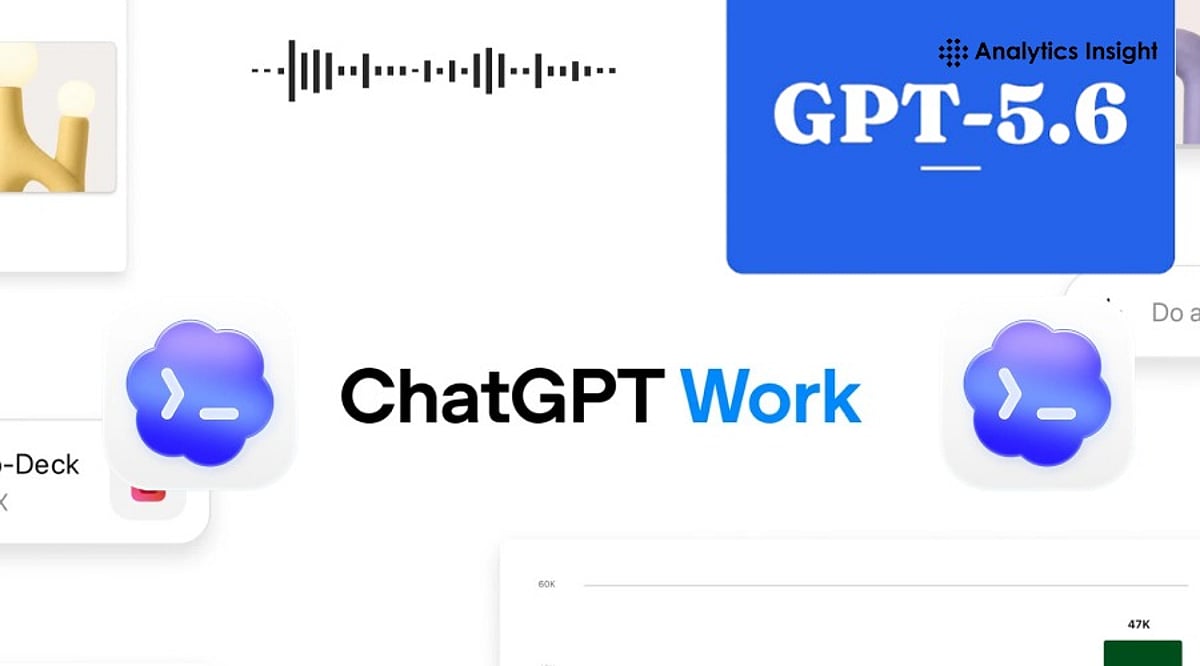
    OpenAI has introduced ChatGPT Work, a new AI agent designed to go beyond simple question-answering. Powered by the newly released GPT-5.6 model family and integrated with Codex, ChatGPT Work can autonomously research, analyze data, write code, create presentations, generate reports, and automate workflows across connected applications. This marks a significant shift from conversational AI to autonomous workplace productivity.

    What ChatGPT Work Can Do

    ChatGPT Work is built for extended, multi-step assignments rather than one-off prompts. It can pull information from connected apps, generate spreadsheets, presentations, documents, and web apps, and continue working for hours by breaking larger projects into smaller steps. A new Unified Plugins Directory bundles third-party integrations including Google Drive, SharePoint, Slack, Microsoft Teams, Gmail, Outlook, Salesforce, Adobe, Zoom, LinkedIn, GitHub, and Dropbox. Users can invoke a specific plugin using an “@” mention or let ChatGPT decide which data source is relevant. A Scheduled Tasks feature allows the agent to keep projects moving even when a user is away, such as converting new Slack or Microsoft Teams messages into updated documents and flagging important changes automatically.

    GPT-5.6 and the Sol, Terra, Luna Naming System

    Powering the new agent is GPT-5.6, introduced under a naming scheme where the number marks the model generation while Sol, Terra, and Luna represent separate capability tiers. Sol is OpenAI’s new flagship model, achieving state-of-the-art results in coding, knowledge work, cybersecurity, and science while using fewer tokens than prior frontier models. Terra matches GPT-5.5’s performance at roughly half the cost, and Luna is the fastest, most affordable tier. API pricing runs $5/$30 per million input/output tokens for Sol, $2.50/$15 for Terra, and $1/$6 for Luna.

    Codex Merges into the ChatGPT Desktop App

    OpenAI is also merging its standalone Codex coding app into a single updated ChatGPT desktop app for Mac and Windows, with the previous app renamed ChatGPT Classic. Existing Codex users keep their projects and settings after updating. OpenAI reports that more than 5 million people already use Codex weekly, with over 1 million using it for tasks outside software development, a trend the company is leaning into as it pushes AI agents into sales, finance, and marketing workflows.

    Rollout, Security, and Enterprise Controls

    ChatGPT Work started rolling out on July 9 for Pro, Enterprise, and Edu users on web and mobile, with Plus and Business access arriving in the next few days. The updated desktop app is available globally across all plans, including Free. On security, OpenAI has built in an auto-review system that checks sensitive actions before they run, which it says blocked all attempts to extract protected data during internal adversarial testing, though this hasn’t been independently verified. Enterprise and Edu admins get centralized controls over connected tools and sensitive actions, plus a Compliance API for visibility into ChatGPT Work’s activity.

    ChatGPT Work reflects the next stage of enterprise AI, shifting from answering questions to completing real tasks. Its long-term success will depend not only on advanced capabilities but also on trust, accuracy, and how effectively organizations integrate AI agents into everyday workflows.

  • OpenAI Set to Launch Dedicated Codex Hardware on July 15 for AI-Assisted Coding

    OpenAI Set to Launch Dedicated Codex Hardware on July 15 for AI-Assisted Coding

    OpenAI is poised to unveil a dedicated hardware device for its Codex AI coding assistant on July 15, signaling a strategic push into developer-focused physical products. The rumored device, teased via a video on X (formerly Twitter) with the caption “Your favorite Codex shortcuts are getting an upgrade,” appears to be a compact macro pad designed to streamline AI-assisted coding workflows.

    The teaser shows a square device covered in buttons, resembling Work Louder’s existing Creator Micro 2—a macro pad featuring 13 mechanical switches, a joystick, and a touch sensor for custom shortcuts. A Codex-branded version would likely offer physical keys for common actions like running commands, accepting suggestions, or switching between coding sessions, reducing reliance on memorized keyboard shortcuts.

    Codex, OpenAI’s AI coding tool, helps developers write, debug, and navigate code using natural language prompts. The dedicated hardware suggests OpenAI sees enough repetitive usage among its developer base to justify a purpose-built product, rather than treating Codex solely as a software feature. The device was also showcased at the AI Engineer World’s Fair in San Francisco, where OpenAI spokesperson Dominik Kundel described it as a keyboard “designed to supercharge people’s Codex usage,” according to The Verge.

    Work Louder’s Creator Micro 2 currently retails for $199 in the US, offering a price benchmark for comparable hardware. OpenAI has not confirmed pricing or full specifications, but further details are expected at the July 15 launch.

    This move comes alongside OpenAI’s separate project with former Apple design chief Jony Ive and his company LoveFrom to develop an AI-focused hardware device, though that initiative remains under wraps with no confirmed timeline. If successful, dedicated AI hardware could reshape developer workflows, offering faster, more integrated interactions with AI tools and expanding OpenAI’s ecosystem beyond cloud-based services.