
Tag: Computer Science

  • The Modern Computer Science Skill Set: What Students Need for a Tech Career

    The Modern Computer Science Skill Set: What Students Need for a Tech Career

    A computer science degree can open many technology career paths, but employers are looking for more than transcripts and basic coding exercises. Today’s tech roles demand strong fundamentals in programming and algorithms, plus practical experience with AI, cloud systems, databases, cybersecurity, and real-world software development. The World Economic Forum ranks AI and big data among the fastest-rising skill areas, followed closely by networks, cybersecurity, and technology literacy.

    Build Strong Programming and Problem-Solving Skills

    A successful developer needs more than syntax knowledge. Languages like Python, TypeScript, Java, C++, Go, and Rust serve different technology areas. Python plays a major role in AI, data science, automation, and back-end development. GitHub reports that TypeScript became its most-used language in August 2025, ahead of Python and JavaScript, while Python remains essential for AI and data science. Developing in-depth skill in one primary language and basic comfort with a second creates a solid foundation.

    Data structures and algorithms still matter. Arrays, trees, graphs, stacks, queues, recursion, dynamic programming, and Big-O analysis are valuable for technical interviews and system design. These skills also support code review, bug fixes, and architecture decisions. Algorithm knowledge should connect to real software work rather than stop at interview puzzles.

    Develop AI Literacy With Human Judgment

    AI now forms a major part of software development. The 2025 Stack Overflow Developer Survey found that 84% of respondents use or plan to use AI tools in development. However, 46% distrust AI output, while only 33% trust it. These numbers show why AI skills must be paired with human judgment.

    Useful AI knowledge includes large language models, AI APIs, embeddings, vector databases, retrieval-augmented generation, tool calling, AI agents, model evaluation, and foundational machine learning concepts. GitHub reports more than 1.1 million public repositories with an LLM software development kit, with more than 693,000 such projects created in the past 12 months. AI skills go beyond prompt writing. Code review, testing, security checks, and clear model limitations remain essential. AI can accelerate tasks, but technical knowledge determines whether the final result actually works.

    Master Software Engineering, Data, Cloud, and Security

    Real technology work requires professional software development skills. Git, GitHub, testing, debugging, APIs, code review, documentation, and continuous integration should all be part of a computer science education.

    Database knowledge also matters. SQL, PostgreSQL or MySQL, indexes, joins, transactions, query design, and data modeling provide a strong base. MongoDB and Redis add useful NoSQL options for specific system requirements.

    Cloud skills add another important layer. AWS, Microsoft Azure, and Google Cloud offer services for compute, storage, databases, networking, identity, serverless systems, and monitoring. Linux, Docker, CI/CD, basic Kubernetes, cloud deployment, and infrastructure tools help turn a local project into a reliable service.

    Cybersecurity needs daily attention. Authentication, authorization, HTTPS, encryption, secure passwords, API security, secrets management, dependency checks, and awareness of common web risks should be part of normal software work. The World Economic Forum places networks and cybersecurity among the fastest-rising skill areas for good reason.

    Understand Systems and Choose a Specialty

    Computer science fundamentals still form the technical foundation. Operating system concepts, computer networks, databases, computer architecture, concurrency, memory management, distributed systems, and system design explain what happens inside a real application. System design can begin with clients, servers, caches, queues, replicas, and databases, then expand to scaling, fault tolerance, and service architecture.

    A strong career path does not require mastery of every technology. Core computer science knowledge should be paired with one clear area of depth:

    • AI and machine learning: Python, statistics, neural networks, LLM systems, and model operations.
    • Software engineering: Data structures and algorithms, back-end or front-end development, databases, cloud, and system design.
    • Cloud and DevOps: Linux, networking, Docker, Kubernetes, CI/CD, and cloud platforms.
    • Cybersecurity: Network security, application security, cryptography, and incident response.

    Current data points to one clear career lesson: technical depth matters, but flexibility matters too. Stack Overflow reports that 69% of developers spent time in the past year learning a new coding technique or software language, while more than 36% studied AI-enabled tools for work or career growth. The World Economic Forum also identifies analytical thinking, creative thinking, resilience, flexibility, curiosity, and continuous learning as high-value skills.

    Why This Matters

    A computer science degree alone may not fully prepare students for modern technology roles. Employers need professionals with strong programming, problem-solving, AI, cloud, data, security, and software engineering skills. Learning these areas early helps students build meaningful projects, understand workplace expectations, adapt to new tools, and create a stronger foundation for long-term career growth.

    Frequently Asked Questions

    1. Which programming languages should computer science students learn?

    Python, TypeScript, Java, C++, Go, and Rust are all useful options across different technology fields.

    2. Does DSA still matter for tech careers?

    Yes. Data structures and algorithms support problem-solving, technical interviews, software design, code quality, and system architecture.

    3. Should every computer science student learn AI?

    Basic AI literacy has become valuable across many technology roles, even for students who do not plan to enter AI research.

    4. Why should students learn cloud computing?

    Cloud knowledge helps students understand how modern applications use computing, storage, databases, networking, and deployment platforms.

    5. Which skill should a student specialize in?

    Students should build core computer science knowledge first, then develop deeper expertise in an area such as AI, software engineering, cybersecurity, cloud, or data engineering.

  • 10 Must-Read Data Structures and Algorithms Books for Programmers in 2026

    10 Must-Read Data Structures and Algorithms Books for Programmers in 2026

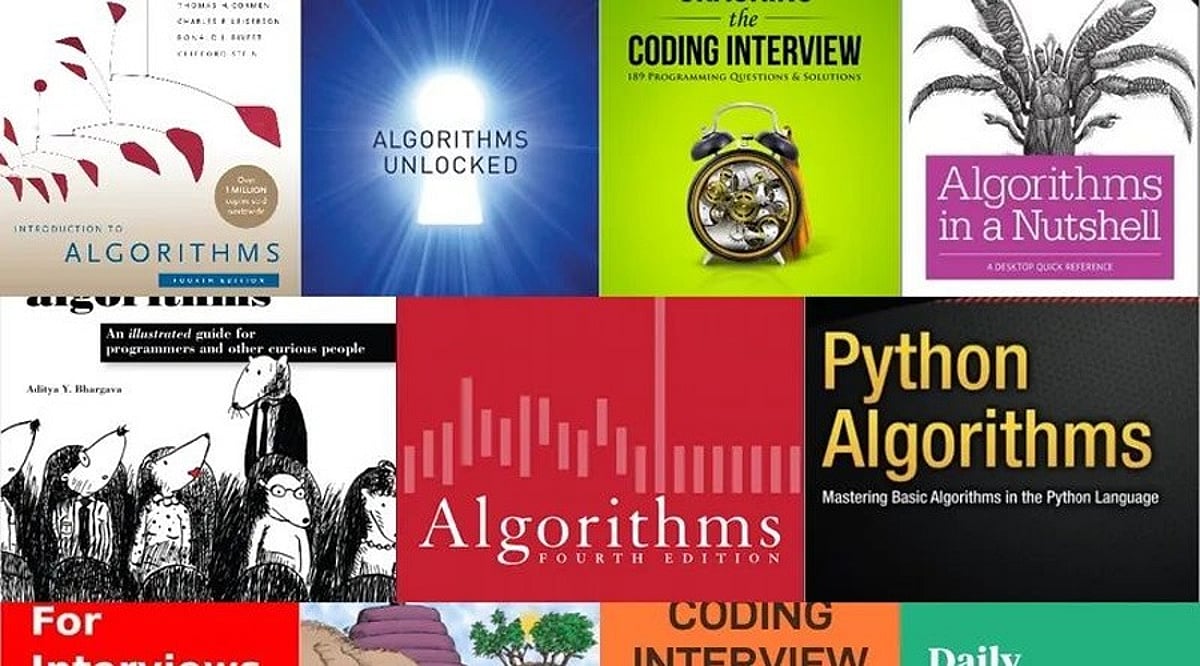
    Artificial intelligence can generate code in seconds, but it cannot replace a programmer’s deep understanding of data structures and algorithms (DSA). Whether you’re preparing for coding interviews, building scalable applications, or competing in programming contests, DSA remains one of the most valuable skills in software development. While AI can suggest solutions, knowing why an algorithm works and when to use it comes only through structured learning and practice. The right books make all the difference.

    Essential DSA Books to Build Strong Fundamentals

    These books establish the fundamentals of data structures and algorithms, helping readers build strong problem-solving skills before tackling advanced concepts.

    Introduction to Algorithms (CLRS) – The Definitive Reference

    CLRS, written by Thomas H. Cormen, Charles E. Leiserson, Ronald L. Rivest, and Clifford Stein, remains the standard guide to learning algorithms. It covers topics from graph and sorting algorithms to dynamic programming and computational complexity. Though challenging, no other book is as comprehensive.

    Grokking Algorithms – Where to Start Your Journey

    Aditya Bhargava’s book uses colorful illustrations and clear explanations to introduce binary search, recursion, graph traversal, and more. It’s one of the best books for beginners.

    Algorithms (4th Edition) – Learn Through Practice

    Robert Sedgewick and Kevin Wayne strike a balance between theory and practice, covering essential algorithm concepts and their implementation in real programs.

    Books Built for Coding Interviews

    Technical interviews focus on problem-solving rather than memorization. These titles help candidates build that mindset.

    Cracking the Coding Interview – The Interview Must-Have

    Gayle Laakmann McDowell’s book explains DSA concepts and includes nearly 200 interview questions, solutions, and tips for handling technical interviews at top tech companies.

    Data Structures and Algorithms Made Easy – Practice-Driven Learning

    Narasimha Karumanchi’s book uses a Q&A approach, reinforcing concepts through examples. It’s popular among engineering students preparing for placements and coding tests.

    Elements of Programming Interviews – Up the Difficulty Factor

    This book is designed for experienced programmers and includes various problems on arrays, linked lists, trees, graphs, and dynamic programming.

    Books That Sharpen Problem-Solving

    These books help programmers apply critical thinking to unfamiliar problems.

    The Algorithm Design Manual – Problem-Solving Application

    Steven S. Skiena merges theoretical concepts with practical problems solved using algorithms, providing insights across different industries. The algorithm catalog is especially helpful for finding the best way to solve different kinds of problems.

    Algorithm Design – Strong Academic Background

    Jon Kleinberg and Éva Tardos teach algorithm design using mathematical logic and well-chosen examples. It’s perfect for those who want to learn the principles of efficient computing.

    Books for Python Learners and Self-Study

    Not every programmer learns the same way. These books cater to different preferences and skill levels.

    Data Structures and Algorithms in Python – Learn DSA with Python

    Goodrich, Tamassia, and Goldwasser introduce basic DSA concepts via Python, focusing on ideas that apply across programming languages.

    A Common-Sense Guide to Data Structures and Algorithms – Simple and Accessible

    Jay Wengrow introduces difficult concepts in simple words with practical examples, avoiding complicated mathematical formulas. Its conversational style makes it one of the easiest DSA books.

    Choosing the Right DSA Book

    Depending on your goals, you can start with Grokking Algorithms and then move to Algorithms (4th Edition) or Introduction to Algorithms (CLRS). For placement preparation, choose Data Structures and Algorithms Made Easy and Cracking the Coding Interview. For experienced developers, The Algorithm Design Manual and Elements of Programming Interviews are excellent choices. Even in the era of AI, learning DSA is necessary, and practicing with these books is one of the best ways to improve your skills.

  • Your Guide to the Best AI and Programming Programs at the World’s Leading Universities

    Your Guide to the Best AI and Programming Programs at the World’s Leading Universities

    As artificial intelligence reshapes every sector, engineers who build these systems have become some of the most sought-after professionals of this century. Choosing where to study AI and programming is a pivotal decision that extends beyond the curriculum. The best programs offer access to cutting-edge research, world-class faculty, industry internships, and a global alumni network that can launch your career.

    Why Your Choice of University Matters in AI

    Not all AI education is equal. The rapid pace of the field means a top-tier program distinguishes itself through proximity to research breakthroughs, the caliber of peers, relationships with industry labs like Google DeepMind and OpenAI, and a degree that opens doors. Studying abroad adds value through language skills, cross-cultural understanding, and resilience—attributes highly prized by tech employers.

    The World’s Top Universities for AI and Programming

    Below is a curated list of institutions leading AI research and teaching, organized by region to help you decide where to build your career and life.

    North America

    • MIT (Cambridge, MA) – Home of CSAIL, one of the largest AI research labs. Offers BSc, MEng, PhD programs.
    • Stanford University (Palo Alto, CA) – Birthplace of Silicon Valley. The HAI Institute leads in AI ethics and policy.
    • Carnegie Mellon University (Pittsburgh, PA) – First dedicated School of Computer Science worldwide. Powerhouse in robotics and NLP.
    • UC Berkeley (Berkeley, CA) – BAIR lab produces landmark deep learning research. Strong ties to the Bay Area tech ecosystem.
    • University of Toronto & Mila (Toronto/Montreal) – Birthplace of deep learning. Home to pioneers Geoffrey Hinton and Yoshua Bengio.

    Europe

    • University of Oxford (Oxford, UK) – Future of Humanity Institute and Oxford Internet Institute. Deep research in AI safety.
    • Imperial College London (London, UK) – Applied ML, data science, and computing. Direct links to London’s tech scene.
    • ETH Zürich (Zürich, Switzerland) – Europe’s MIT. Exceptional in robotics, computer vision, and machine learning theory.
    • TU Munich (Munich, Germany) – Top German technical university. Close industry ties with BMW, Siemens, Google.
    • École Polytechnique (Paris, France) – Rigorous mathematical tradition. INRIA partnership positions it at the heart of French AI research.
    • TU Delft (Delft, Netherlands) – Strong in AI for engineering, autonomous systems, and responsible AI governance.

    Asia & Pacific

    • NUS & NTU (Singapore) – Asia’s gateway to global tech. World-class research, excellent industry links, English-medium instruction.
    • Tsinghua & Peking University (Beijing, China) – Massive state investment in AI. Among the top global publishers of AI research.
    • University of Tokyo (Tokyo, Japan) – Leading in robotics, cognitive computing, and human-AI interaction.
    • KAIST (Daejeon, South Korea) – Premier tech university. Globally ranked in AI, robotics, and software.
    • University of Melbourne (Melbourne, Australia) – Top-ranked for CS and AI. Strong research culture and multicultural campus.

    Program Formats to Know

    Most universities offer various entry points: 3–4 year bachelor’s degrees, 1–2 year master’s degrees (often the fastest career-change path), and fully-funded PhD positions. Many now provide hybrid or online options, but being physically present in a world-class research environment remains irreplaceable.

    What You Will Actually Study

    Today’s AI programs integrate theory and practice. Core classes cover three fundamental areas: mathematics, programming, and AI application.

    • Mathematics: Linear algebra, calculus, probability, statistics, discrete math.
    • Programming: Python, C++, data structures, algorithms, distributed systems.
    • Machine Learning/Deep Learning: Regression, decision trees, SVMs, CNNs, RNNs, transformers, diffusion models using PyTorch and TensorFlow.
    • Specialized Tracks: NLP, computer vision, robotics, reinforcement learning, generative AI, AI safety/ethics.
    • Research & Capstone Projects: Original research, industry partnerships, thesis work.

    Where an AI Degree Takes Your Career

    There is a global shortage of qualified AI workers across health, finance, energy, media, logistics, defense, and education. Graduates from top universities often receive multiple offers before graduation. Roles include machine learning engineer, research scientist, NLP engineer, computer vision engineer, data scientist, robotics engineer, AI product manager, AI safety researcher, MLOps engineer, and generative AI specialist. Many entry-level positions command six-figure salaries, and the work itself is highly rewarding.

    How to Choose the Right Program

    With so many excellent options, start by asking yourself: Do you prefer research or industry? Do you want to specialize early or keep options open? Is proximity to a specific tech ecosystem important? What language do you want to study in? What level of program are you ready for? Answers will narrow the field. For example, a student interested in robotics and willing to learn German might focus on TU Munich, while an NLP enthusiast wanting to stay Anglophone might look at Oxford or Stanford. There is no single best university—only the best one for you right now.

    Build Your Profile Now

    Strengthen your math, build Python projects, join Kaggle competitions, and read scientific papers. Top universities can tell the difference between a student who lives the subject and one who merely studied it.

    Editor’s note: Smapse Education is a recognized global service that assists students through the enrollment process for international AI and technology programs, offering everything from university selection to visa support.

  • Algorithms Research at MIT: Recent Breakthroughs and Developments

    Algorithms Research at MIT: Recent Breakthroughs and Developments

    MIT Algorithms News

    Massachusetts Institute of Technology continuously pushes the boundaries of algorithm research. Below are some of the latest stories from MIT News covering breakthroughs in AI, robotics, optimization, and theoretical computer science.

    • LLMs help robots understand vague instructions and focus on key details — A new approach uses one language model to clarify instructions and another to ignore irrelevant info. (June 26, 2026)
    • Improving the speed and energy-efficiency of AI agents — The Murakkab system optimizes multistep workflows for AI applications. (June 25, 2026)
    • Computer model could enable bridges and buildings that use less material — Approach generates more buildable structures, bridging optimized design and real-world construction. (June 24, 2026)
    • Exploring the societal impacts of AI — MIT researchers examine AI’s influence on employment and democracy. (June 23, 2026)
    • New chip could help tiny robots traverse complex environments — Efficient algorithm and dedicated hardware generate 3D maps for navigation. (June 23, 2026)
    • In game theory, generalists sometimes win out over specialists — Overlooked class of algorithms performs better than expected. (June 17, 2026)
    • Could AI tell you where you left your keys? — Spatial memory system for robots captures object details. (June 17, 2026)
    • When it comes to predicting preferences, it pays to consider “the power of three” — Upgrade to random utility models. (June 11, 2026)
    • NSF renews support for MIT-led AI and physics institute — IAIFI enters second phase. (June 4, 2026)
    • Teaching AI agents to ask better questions by playing “Battleship” — Small AI model outperforms larger ones at lower cost. (June 3, 2026)
    • New research enables a robot to chart a better course — MIGHTY system streamlines disaster recovery and delivery. (May 19, 2026)
    • Researchers “reprogram” materials by quickly rearranging their atoms — Method gives rise to exotic quantum properties. (May 13, 2026)
    • Method for stress-testing cloud computing algorithms helps avoid network failures — MetaEase technique predicts scenarios causing outages. (May 6, 2026)
    • Games people — and machines — play: Untangling strategic reasoning to advance AI — Gabriele Farina mines decision-making in multi-agent scenarios. (May 5, 2026)
    • The MIT-IBM Computing Research Lab launches to shape the future of AI and quantum computing — Convergence of AI, algorithms, and quantum computing. (April 29, 2026)

    For full articles, visit the MIT News Algorithms topic page.