
Tag: consumer electronics

  • Budget vs. Premium Power Banks: What Your Money Actually Buys

    Budget vs. Premium Power Banks: What Your Money Actually Buys

    When shopping for a portable charger, the price gap between budget and premium power banks can be staggering. But what are you really paying for? Here’s a breakdown of the key differences that separate cheap models from their expensive counterparts.

    Capacity Accuracy

    Cheap power banks often exaggerate their stated capacity, while premium models typically provide more reliable, tested capacity and better efficiency. You may get far less juice than advertised with a low-cost unit.

    Charging Speed

    Expensive models commonly support faster charging standards like Power Delivery or Quick Charge, delivering significantly quicker charging for compatible smartphones, tablets, and other devices. Budget options often stick to slower, standard rates.

    Battery Quality

    Premium power banks generally use higher-quality cells from reputable manufacturers, offering better performance, longevity, and consistency through repeated charging cycles. Cheap cells degrade faster and may deliver inconsistent power.

    Safety Features

    Costlier models usually include stronger protections against overheating, overcharging, short circuits, and excessive current, reducing potential charging risks. Safety circuitry is often minimal or absent in budget alternatives.

    Build Quality

    Cheap options may rely on lightweight plastics that feel flimsy and crack easily, whereas expensive power banks often feature sturdier materials like aluminum or reinforced polycarbonate designed to withstand everyday travel and drops.

    Port Selection

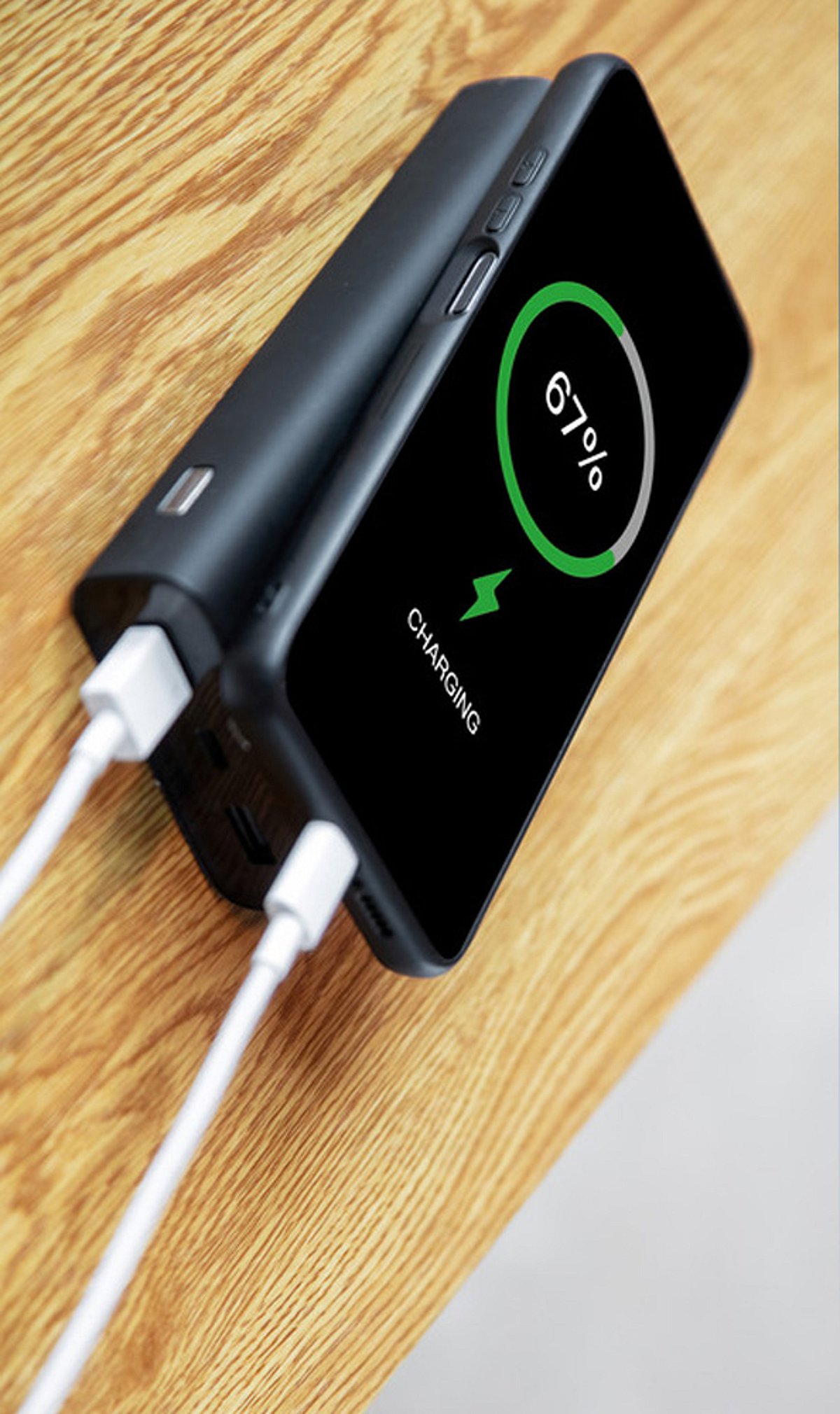
    Premium power banks frequently provide multiple ports, USB-C connectivity, and simultaneous charging, offering greater flexibility for multiple devices. Budget models typically have fewer ports and older USB-A standards.

    Size and Weight

    Expensive models can deliver higher capacity without becoming excessively bulky, thanks to better battery technology and internal engineering. Cheap power banks often trade capacity for bulk or use lower-density cells.

    Warranty

    Premium power banks often include longer warranties and stronger customer support, providing additional reassurance if performance problems emerge later. Budget brands may offer little to no warranty coverage.

    Overall Value

    Paying more can mean better safety, reliability, and longevity, making premium power banks potentially more economical over extended use. A low upfront cost may lead to replacements or safety concerns down the line.

  • Samsung Slashes Nearly 840 US Jobs as Consumer Electronics Headquarters Relocates to Texas

    Samsung Slashes Nearly 840 US Jobs as Consumer Electronics Headquarters Relocates to Texas

    Samsung Electronics has significantly reduced its US workforce, cutting hundreds of jobs as the company relocates the headquarters of its consumer electronics business from New Jersey to Texas. The restructuring has affected employees across display, smartphone, and other consumer electronics divisions.

    The largest impact has been in New Jersey, where 739 roles at the Englewood Cliffs office have been eliminated. Additionally, around 100 employees in Plano, Texas, including members of the mobile division, have been laid off. Samsung stated that a majority of affected workers were offered relocation opportunities, but did not disclose how many accepted.

    Documents reviewed by Reuters show employees were informed on June 30 about an ‘enterprise-wide reduction-in-force’ with a ‘significant number of impacts.’ More than 30 senior sales and marketing executives from Texas, New Jersey, and other US locations have recently left the company.

    The layoffs come as Samsung’s consumer electronics business faces slowing growth, higher costs, and increased competition. While its semiconductor division benefits from strong AI chip demand, the consumer side is under pressure. The mobile division is expected to report its first-ever loss, and Apple continues to dominate the premium smartphone market. Chinese brands TCL and Hisense are expanding in TV and home appliances, and higher chip costs are squeezing margins.

    The headquarters relocation occurs less than a year after Samsung opened its new office in Englewood Cliffs. The company stated the move aims to ‘foster stronger collaboration and optimize the organization by bringing more teams together within a growing technology and AI ecosystem.’ Samsung joins other tech giants like Tesla and Oracle in expanding operations in Texas. Samsung also clarified that there is no broad global restructuring underway within its consumer products business.

  • OpenAI Reportedly Developing Screen-Free AI Smart Speaker as First Consumer Hardware

    OpenAI Reportedly Developing Screen-Free AI Smart Speaker as First Consumer Hardware

    OpenAI is reportedly making its first foray into consumer hardware with a portable, screen-free smart speaker powered by ChatGPT. According to a recent report, the device is designed as an AI companion for the home, emphasizing natural voice interaction over a traditional display.

    Unlike conventional smart speakers, this new device is expected to feature a self-recharging battery, allowing users to carry it from room to room. It will also include a camera and various sensors to understand its environment and respond contextually. The speaker will manage smart home devices, play music, answer questions, handle messages, and provide access to ChatGPT, likely leveraging the advanced GPT-Live voice technology.

    One of its standout features is a mechanism that enables physical movement, adding a new dimension to home AI interaction.

    Design Team Led by Jony Ive

    The project reportedly involves Jony Ive, the former Apple design chief, and his firm LoveFrom, along with former Apple employees. This comes after OpenAI’s $6.5 billion acquisition of the AI hardware startup founded by Ive. Notably, Apple has filed a lawsuit against OpenAI, accusing the company and former Apple employees of misusing trade secrets in the development of consumer hardware. OpenAI has denied the allegations and declined to comment on the latest reports.

    Potential Launch Timeline

    While OpenAI has not officially announced the product, rumors suggest the smart speaker could be unveiled later this year and hit the market in 2027. The company is also working on other AI hardware projects beyond ChatGPT.