Tag: continuous learning

  • The Future of Work in the AI Era: Masai School’s Pratik Shukla on Jobs, Education, and Continuous Learning

    The Future of Work in the AI Era: Masai School’s Pratik Shukla on Jobs, Education, and Continuous Learning

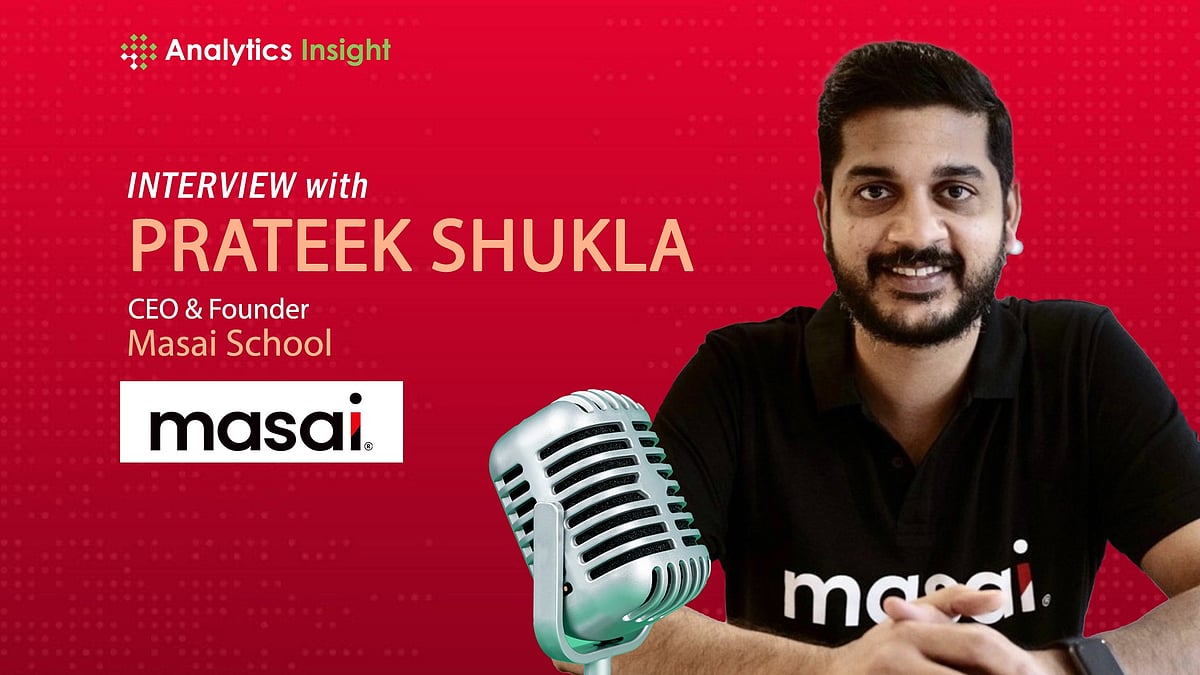
    In a recent episode of the Analytics Insight podcast, Priya Dialani interviewed Pratik Shukla, founder and CEO of Masai School, to discuss the transformative impact of AI on the workforce, education, and the necessity of continuous learning. Shukla shared his journey from IIT Kanpur and real estate to founding an outcome-driven education platform, and offered insights on how individuals and institutions can prepare for an AI-driven future.

    How AI Will Reshape the Workforce

    Shukla believes that AI will not simply replace people but will change the tasks within existing roles. Job titles may remain, but job descriptions could evolve significantly. He emphasizes the importance of learning to work with machines rather than fearing replacement. In the future, humans will focus on the ‘why’ and ‘when,’ while AI handles the ‘how.’

    The Importance of Continuous Learning

    Continuous learning is critical as technology evolves rapidly. Shukla argues that the ability to learn is more valuable than any single technical skill. Professionals need to stay curious and aware of changes, even if they don’t master every new tool. A degree may have a shelf life, but the capacity to learn does not.

    Preparing Students for AI Careers

    Educational institutions must overhaul their approach, moving away from rote learning toward problem-solving, critical thinking, and adaptability. Students need strong fundamentals, soft skills, and the ability to handle uncertainty. They should be prepared for jobs that may not yet exist.

    New Career Opportunities from AI

    While specific future roles are unpredictable, Shukla is confident that AI will create new job categories, as every technological revolution has done. The key is to stay informed and embrace new opportunities as they arise.

    Advice for Mid-Career Professionals

    Mid-career professionals should start small by integrating AI into their work gradually. They don’t need to become experts overnight. By combining existing expertise with AI capabilities, they can remain relevant without starting over.

    Listen to the full discussion on the Analytics Insight Podcast.

  • 7 Essential IT Leadership Rules for Modern Technology Leaders

    7 Essential IT Leadership Rules for Modern Technology Leaders

    Vision-Driven Leadership

    Align technology initiatives with business objectives, ensuring every project delivers measurable value while preparing the organization for future challenges.

    Data-Backed Decisions

    Use analytics and performance metrics to make informed technology investments instead of relying solely on assumptions or past experiences.

    Cybersecurity First

    Embed security into every technology decision, protecting business assets while maintaining compliance and customer trust across digital platforms.

    AI as an Enabler

    Leverage artificial intelligence to improve productivity, automate repetitive tasks, and support employees rather than replacing human expertise completely.

    Continuous Learning

    Encourage regular upskilling, certifications, and knowledge sharing so teams remain competitive as technology rapidly evolves across industries.

    Customer-Centric Innovation

    Build solutions focused on customer needs, ensuring technology investments improve user experiences while supporting long-term business growth and loyalty.

    Cross-Functional Collaboration

    Break departmental silos by encouraging technology, operations, and business teams to work together toward shared organizational objectives consistently.

    Agile Decision Making

    Adopt flexible strategies that allow quick responses to changing market demands, customer expectations, and emerging technological opportunities.

    Ethical Technology Use

    Promote transparency, responsible AI adoption, and ethical decision-making to build sustainable digital transformation initiatives with stakeholder confidence.

  • How to Thrive in Tech: Adaptability, Reskilling, and Readiness – Insights from Engineer Farzon Nosiri

    How to Thrive in Tech: Adaptability, Reskilling, and Readiness – Insights from Engineer Farzon Nosiri

    While workforce experts and policymakers continue to debate whether AI will replace jobs, the most significant shift may be taking place not in the jobs themselves but in the skills required to perform them. Over the past decade, the technology landscape has transformed multiple times, says Farzon Nosiri, an experienced software engineer and technical lead who has built a career across Tajikistan, Sweden, and the United States. He has transformed the Nexus Technologies platform from B2C to B2B, published scientific research, earned industry awards, and now develops next-generation AI-powered search and information management systems at Colorado Spirit Home Care. In this article, we turned to Farzon to understand what it takes to survive IT change and thrive as a result.

    Adaptability: The Foundation of Career Resilience

    “In my view, understanding how skills and responsibilities evolve over time is far more valuable than trying to predict which professions will survive technological change,” explains Farzon. “That is why continuous learning has become essential. Formal education provides a strong foundation, but long-term success depends on a willingness to keep learning long after graduation.”

    Nosiri’s perspective comes from firsthand experience. After graduating with honors from the Technological University of Tajikistan, he continued his education at the Royal Institute of Technology in Stockholm, where he earned a Master’s degree in Computational and Systems Biology. His research took him beyond traditional software engineering into bioinformatics. He worked with large-scale genetic datasets at the Royal Institute of Technology and the Karolinska Institute, applying computational methods to analyze gene expression data and investigate the biological mechanisms associated with the Epstein-Barr virus.

    Yet his career would not remain in academia for long. Returning to industry, Nosiri joined IMON International, one of Tajikistan’s largest financial institutions. As a cybersecurity analyst and ethical hacker, he designed a secure network connecting more than 180 branches across the country, strengthened the organization’s communications infrastructure, and participated in a high-profile digital forensics investigation following a cybercrime that resulted in more than $20,000 in losses. Rather than resisting change, Nosiri learned to treat every new challenge as an opportunity to grow – a mindset that turned adaptability into one of his greatest professional strengths.

    Reskilling: The Engine of Growth

    “I remember joining Nexus Technologies in Tajikistan as a software engineer consultant,” Nosiri recalls. “I was curious. I wanted to understand how entire platforms grew and evolved.”

    Farzon’s habit of constantly learning and exploring new technologies soon accelerated his professional growth, advancing him to a Senior Software Engineer role. One of the defining projects of this period was the redesign of the company’s core platform. Nosiri replaced the existing infrastructure with a distributed architecture, and Nexus Technologies transitioned from a B2C product to a scalable B2B platform. He later developed a data synchronization algorithm that improved performance by approximately 500 percent and significantly increased the system’s ability to handle growing workloads.

    At the same time, Nosiri continued learning and sharing knowledge with others. As Bootcamp Lead at Junior Code, he taught programming, algorithms, and data structures to aspiring developers, with more than 40 percent of participants later securing internships or full-time positions in the technology sector.

    Readiness: Preparing for the Future

    Last but not least, Farzon highlights readiness – the ability to prepare for change before it arrives. For him, this idea is closely connected to his current work in the United States. As a software engineer at Colorado Spirit Home Care, Nosiri focuses on building software solutions that support organizational workflows. Here, he designs a digital archive platform and builds an AI-powered retrieval system that uses semantic search and intelligent document navigation to improve access to critical information.

    “When I studied computational biology in Sweden, I couldn’t have predicted that years later I would be working with AI systems,” Nosiri says.

    Farzon’s research has also focused on systems that must remain reliable under pressure. In the Journal of Computing and Engineering Research, Innovation, and Education, he explored how microservice architectures can remain stable and efficient under changing workloads in his paper “Performance Optimization Techniques for Microservice Architectures in High-Load Scenarios.” In the American Research Journal of Computer Science and Information Technology, he examined the performance of five genome-mapping tools under conditions involving read errors, mutations, insertions, and deletions. His research interests have also extended into computational biology. In “Regulation of OCT-2,” published in the International Journal of Scientific Engineering and Science, Nosiri used computational methods and biological datasets to study the complex mechanisms that influence immune system activity and cellular response.

    The ability to think ahead has also brought Farzon industry recognition, including a Software Engineer of the Year nomination at the National Business Awards 2023 and a Platform of the Year nomination at the Innovation Time Awards 2024.

    Nosiri is sure: “No one can predict exactly what technology will look like five or ten years from now. What we can control is our willingness to evolve alongside it.”

    Looking at Farzon’s professional journey from Tajikistan to Sweden and the United States, we can conclude that the engineering superpower for surviving and thriving in tech is the ability to adapt, continuously acquire new skills, and stay ready for what comes next.

  • Future-Proofing the Workplace: Essential Strategies CEOs Must Implement Now

    Future-Proofing the Workplace: Essential Strategies CEOs Must Implement Now

    The future of work is no longer a distant concept discussed in boardrooms and industry conferences. It is unfolding in real time. Artificial intelligence is automating routine tasks, hybrid work has become an accepted norm, and employees are demanding greater flexibility, purpose, and opportunities for growth. At the same time, businesses are navigating economic uncertainty, stricter regulations, and a rapidly evolving cybersecurity landscape.

    For CEOs, the challenge extends beyond embracing new technology. The bigger task lies in building organizations that can adapt quickly without losing their human edge. Companies that view workplace transformation as an ongoing process rather than a one-time initiative are more likely to retain talent, improve productivity, and remain competitive.

    AI is Reshaping Jobs, Not Eliminating Them

    AI has emerged as a major driver behind changes in the corporate environment, and it has been moving fast. Even though there are still worries about job displacement, most companies are starting to see that AI shouldn’t be treated like an outside add-on, but rather integrated into the workflow alongside their employees.

    Many of the boring, everyday administrative tasks—document processing, customer support, and data analysis—are already handled by AI systems. This leaves professionals with more time for inventive work and relationship-building. Still, this kind of shift requires the CEO to redesign how work flows, not just roll out a new software tool and call it done.

    Organizations that can demonstrate equal success in developing technological and workforce capabilities will see the greatest results from the introduction of AI technologies.

    Skills are Becoming More Valuable Than Degrees

    The validity period of professional competencies is getting smaller and smaller. Rapid advancements in technology, new business models, and new customer needs mean that people have to learn continuously throughout their careers.

    Companies that think ahead realize the importance of skills-based recruitment, assessing people based on their proven competencies and not just formal qualifications or previous positions. In-house learning programs, AI training, and leadership development are strategic investments rather than additional perks.

    From a CEO’s perspective, investing in a culture of continuous learning means lower recruitment expenses and an adaptable workforce.

    Hybrid Work Needs Structure, Not Freedom Alone

    In fact, there is no longer any discussion about working from home vs. the office. Now the discussion has moved on to creating hybrid work systems where teamwork can be done effectively without losing flexibility.

    Successful organizations are now setting standards for when teams have to meet up and when remote work proves more effective. Offices are being restructured for collaboration and not fixed desk jobs. This helps organizations maintain their culture without taking away flexibility from employees.

    Employee Wellbeing is a Business Strategy

    Employee burnout and stress cannot be treated only as a human resources problem because they also impact productivity and innovation.

    More companies are providing services related to mental health, flexibility, and good work practices. At the same time, they recognize that keeping employees productive means giving them a reasonable workload, rather than making them spend more hours at work.

    Employees who feel valued by their company are more motivated and productive and are less likely to search for other job opportunities.

    Trust Will Define AI Adoption

    As artificial intelligence becomes more prevalent in the workplace, governance has become one of the key roles of the leadership team.

    The requirement for accountability regarding the use of AI technology, data processing methods, and reduction of biases is always increasing. CEOs have to develop policies on how to properly use AI and implement cybersecurity.

    Trust has become the competitive advantage. Companies using AI technology in the right way will gain customer and employee trust.

    Managers Must Become Coaches

    Technology is performing most of the administrative functions that managers usually performed. Therefore, managers can coach and mentor people.

    Most employees nowadays need feedback, personalized coaching, and guidance, especially when organizational change takes place. When managers act as coaches, engagement increases.

    Leadership quality, rather than technology alone, will continue to differentiate high-performing organizations.

    Adaptability is the New Competitive Advantage

    The main takeaway from the evolution of workplaces is the permanency of change itself. Companies can no longer afford to follow a five-year plan that stays intact during its entire life-cycle.

    Leaders of the future are creating organizations that can adapt and respond promptly to any changes in technology, markets, and people’s demands. These organizations will be able to make data-based decisions, ensure cybersecurity, enable continuous learning opportunities, and provide flexibility in the system, while never losing sight of their people.

    Organizations that create empathic innovation will be the winners of the future. Although artificial intelligence may dictate the future of the workplace, it will be the leadership that keeps their people engaged and attracts loyal customers.

    Why This Matters

    Workplace transformation is accelerating as AI, automation and shifting employee expectations redefine business operations. CEOs who invest in adaptable work cultures, continuous learning and responsible technology adoption will be better positioned to attract talent, drive innovation, strengthen resilience and sustain long-term growth in an increasingly competitive global economy.

  • Morning Routines That Drive Success: Habits of India’s Top CEOs

    Morning Routines That Drive Success: Habits of India’s Top CEOs

    Wake Up Early

    Many successful CEOs begin their day before sunrise, creating uninterrupted time for planning, learning, and personal development activities.

    Exercise Regularly

    Morning workouts improve energy, mental clarity, and resilience, helping leaders handle demanding schedules and high-pressure business decisions confidently.

    Practice Mindfulness

    Meditation, breathing exercises, or quiet reflection help reduce stress, improve focus, and prepare CEOs for challenging meetings ahead.

    Read Daily

    Top executives dedicate time to books, industry news, and global trends, staying informed before making important business decisions.

    Plan Priorities

    Successful leaders identify key tasks every morning, ensuring critical work receives attention before distractions begin throughout the busy day.

    Eat a Healthy Breakfast

    A balanced morning meal fuels concentration, sustained energy, and better decision-making during long hours of meetings and strategy sessions.

    Avoid Digital Distractions

    Many CEOs delay checking emails or social media, protecting valuable morning hours for focused thinking and planning instead.

    Review Long-Term Goals

    Daily reflection on personal and business objectives keeps leaders aligned with strategic priorities and long-term organizational vision consistently.

    Learn Something New

    Whether listening to podcasts or exploring emerging technologies, continuous learning keeps CEOs adaptable in rapidly changing business environments.

  • Top CEO Productivity Habits: Routines That Drive Peak Performance

    Top CEO Productivity Habits: Routines That Drive Peak Performance

    Highly successful CEOs don’t rely on longer work hours—they rely on smarter habits. Discover the productivity routines of leaders like Tim Cook, Jeff Bezos, Bill Gates, Satya Nadella, and Elon Musk, and learn practical strategies to improve focus, decision-making, energy, and long-term leadership performance.

    Start Before the Day Starts

    The most consistent trait across productive CEOs is protecting their mornings from emails and other people’s agendas. Apple’s Tim Cook is famously up at 3:45 AM, reading customer feedback before the workday begins. Jeff Bezos takes the opposite approach but achieves the same effect: he allows himself unstructured morning time for family, reading, and thinking before any scheduled demands, deliberately avoiding early meetings to preserve peak cognitive energy for high-stakes decisions later. Harvard Business Review research found that 72% of top executives structure their mornings around rituals matching their personal strengths. This distinction matters enormously at scale, where a CEO’s first two hours of clarity can be worth more than the rest of the day combined.

    Guard Time Like Capital

    Successful CEOs guard their time fiercely in a world of endless emails, Slack messages, and meetings. Bill Gates famously carves out “Think Weeks” twice a year—isolating himself completely to read, reflect, and think strategically without interruption. Mark Zuckerberg and Jack Dorsey both schedule no-meeting days specifically to protect deep work time. Elon Musk divides his day into five-minute time blocks rather than hour-based calendar slots, a scheduling approach that eliminates dead time between tasks. The underlying principle is consistent across all of them: time is non-renewable, meetings are expensive, and the ability to think deeply without interruption is increasingly rare and increasingly valuable.

    Make Smarter Decisions, Not More of Them

    Jeff Bezos follows a “two types of decisions” rule: irreversible, high-impact decisions deserve time and deliberation; reversible, low-risk ones should be made fast and moved past. Elon Musk applies first-principles thinking to strip decisions down to fundamental truths rather than convention. Steve Jobs famously reduced his wardrobe to a uniform to eliminate minor decision fatigue, preserving cognitive bandwidth for what mattered. The shared insight is that leaders who try to give every decision equal mental energy exhaust themselves on the small ones before reaching the important ones.

    Treat Physical Health as a Leadership Input

    Richard Branson once said exercise is the secret to doubling his productivity. Jeff Bezos has said improving his fitness directly supports complex decision-making and sustained focus. Satya Nadella commits to cardio four to five times a week as explicit preparation for the mental demands of leadership. The common thread isn’t athleticism; it’s the recognition that cognitive performance, decision stamina, and emotional regulation are all downstream of physical health. Leaders who treat the body as separate from professional performance tend to miss this compounding effect entirely.

    Never Stop Learning

    Warren Buffett spends 80% of his working day reading. Bill Gates reads roughly 50 books a year. Satya Nadella reads across technology, philosophy, and poetry, viewing cross-disciplinary thinking as a core input to Microsoft’s culture. The most productive CEOs treat learning not as something that happens in formal settings but as a daily habit, a consistent investment in the quality of their own thinking rather than a signal of idle time. Knowledge, like compound interest, builds most reliably when the deposits are small and consistent rather than large and occasional.

    Why This Matters

    Today’s business leaders face constant information overload, rapid technological change, and high-stakes decision-making. Strong productivity habits help executives protect their time, improve judgment, reduce burnout, and maintain consistent performance. Whether leading a global enterprise or a growing startup, adopting proven CEO routines can significantly enhance leadership effectiveness and long-term career success.

    Frequently Asked Questions

    What productivity habits do the world’s most successful CEOs have in common?

    Successful CEOs typically follow structured routines that prioritize deep work, strategic thinking, physical health, continuous learning, and disciplined time management. Rather than trying to maximize every minute, they focus on protecting their highest-energy hours, minimizing distractions, and making intentional decisions. These habits help improve productivity while reducing stress and decision fatigue over the long term.

    Why do many CEOs wake up early?

    Early mornings often provide uninterrupted time before meetings, emails, and daily responsibilities begin. CEOs like Tim Cook use this period for planning, reading, or reviewing priorities, while others prefer exercising or spending time with family. The real benefit isn’t simply waking up early but creating a consistent routine that supports focus and better decision-making throughout the day.

    How does time blocking improve executive productivity?

    Time blocking involves dividing the day into dedicated periods for specific activities instead of reacting to constant interruptions. Leaders like Elon Musk use structured schedules to minimize context switching and improve concentration. This method helps executives protect time for strategic work, reduce unnecessary meetings, and accomplish more without extending their working hours.

    How much do successful CEOs read every day?

    Many top executives dedicate significant time to reading books, reports, industry research, and business publications. Warren Buffett famously spends much of his day reading, while Bill Gates and Satya Nadella consistently invest time in learning across multiple disciplines. Regular reading expands knowledge, improves strategic thinking, and helps leaders stay informed about emerging technologies and market trends.

    What is decision fatigue, and how do CEOs reduce it?

    Decision fatigue occurs when the quality of decisions declines after making too many choices throughout the day. CEOs reduce it by automating routine decisions, simplifying daily habits, delegating lower-priority tasks, and reserving their mental energy for strategic business issues. This approach improves judgment while preventing unnecessary cognitive overload during busy workdays.

  • 2026 Leadership Trends Every CEO Must Embrace for Success

    2026 Leadership Trends Every CEO Must Embrace for Success

    Leadership in 2026 will demand AI adoption, emotional intelligence, agile decision-making, continuous learning, sustainability, and responsible governance. CEOs who balance technology with people-centric strategies will be better equipped to navigate uncertainty and drive long-term business growth.

    Business leadership is now entering a new era where technological advances can no longer guarantee a competitive advantage. Artificial intelligence has become a valuable asset for businesses, but the success of its implementation largely depends on individuals’ decision-making skills. In addition, economic volatility, political instability, labor market changes, and regulatory changes compel business executives to reconsider leadership practices.

    The largest spending on technology development and adoption will not define the best leaders of 2026. They will be able to demonstrate an innovative, empathetic attitude towards people and data-driven decision-making, combined with their gut feeling. The following list describes the major leadership trends in business that will define the coming year.

    AI Will Become Every CEO’s Strategic Partner

    Currently, AI is much more than an automation process. The adoption of AI by more firms will help them anticipate demand, enhance the customer experience, manage their supply chains more effectively, and develop sound strategies. The current issue facing the CEO is not about adopting AI in their firm but about how to do so. It is important to understand what AI can achieve, the ethical boundaries of AI, and how people can work with intelligent machines in their organizations. Firms that view AI as a business partner have an advantage in the future.

    Human Skills Will Matter More Than Ever

    In contrast, the development of AI technology has made human factors more valuable than ever before. Emotional intelligence, empathy, communication skills, and conflict resolution are crucial for an effective leader. A modern leader needs to be accessible, transparent, and supportive, especially during organizational transitions. If a CEO listens to his employees and earns their trust, he will be able to retain good employees and build a sustainable organizational culture. Leadership in an era of automation becomes a competitive factor.

    Continuous Learning Will Define Future-Ready Companies

    Technologies are evolving much faster than the competencies that currently exist in the work environment. Given the era of automation, companies must think about continuous learning, not just one-off training. Many progressive CEOs have been working on employee skill-building, focusing on AI competency, cybersecurity, collaboration, and analytical thinking. The idea of learning has evolved from an HR topic to a corporate strategy aimed at preparing the business for disruption. Companies that provide opportunities for their employees to stay up to date are considered ready for changing market dynamics.

    Agile Leadership Will Replace Long-Term Rigidity

    Five-year business plans are becoming increasingly unpredictable in today’s economy. Inflation rates, geopolitics, logistics issues, and changes in consumer behavior necessitate that CEOs make quick decisions based on partial information. To be successful in this environment, CEOs are adopting an agile leadership philosophy through frequent strategy reviews, experimentation, and team empowerment. Agility, not predictability, has become the mark of effective executive leadership.

    Responsible AI Governance Will Move to the Boardroom

    Due to new AI regulations introduced by governments and increased customer awareness of data privacy, CEOs will face growing pressure to adopt responsible governance models. There will be a need for policies on such issues as AI transparency, cybersecurity, privacy, intellectual property rights, and responsible decision-making. Boards of directors will also be expected to be more proactive in overseeing AI risks. Businesses with responsible AI management models will build customer trust and minimize their regulatory risks.

    Employee Well-Being Will Become a Business Priority

    Employee burnout continues to pose the most significant threat to organizations across the globe. Blurred lines between personal and professional lives, driven by remote and hybrid work environments, high connectivity, and high-pressure work, continue to plague many organizations worldwide. CEOs are shifting their view from treating employee well-being as an additional perk to making it a strategy for boosting worker performance. Companies that emphasize employee well-being usually exhibit higher employee engagement and better performance.

    Flatter Organizations Will Speed Innovation

    Traditional hierarchies in business organizations are increasingly giving way to lean organizational structures as companies downsize their managerial ranks to enable faster decision-making and more effective collaboration. CEOs have realized that rather than having various approval processes within an organization, a better approach is to delegate responsibilities to cross-functional teams. This has made companies become flexible and able to innovate in response to changes in the market and customers’ demands.

    Sustainability Will Shape Corporate Leadership

    The integration of environmental, social, and governance objectives is becoming part of companies’ core strategy rather than a standalone effort. There is increasing demand from stakeholders such as investors, regulators, customers, and employees for companies to generate sustainable value. Modern CEOs are expected to generate profits while also protecting the environment, operating ethically across the supply chain, diversifying the workforce, and exercising sound governance. It is no longer a compliance challenge because sustainability has now become the key to reputation and resilience. Integration of sustainability would enable firms to win stakeholders’ trust.

    Data Will Enable CEOs to Make Better Decisions Faster

    More business data makes decision-making much faster. The use of predictive analytics, customer data, financial dashboard reporting, and market intelligence helps us identify new opportunities faster than our competitors. While intuition and experience can be valuable, the data-driven strategy can reduce uncertainty. The ability to handle information is now essential for any modern CEO.

    Bottom Line

    Leadership in 2026 will require much more than operational efficiency. CEOs will have to marry technological knowledge with emotional intelligence, foster continuous learning, embrace agility, and lead with transparency and accountability. Organizations that will succeed in the future are those whose leaders realize that innovation is more than the adoption of technology. They would be the organizations that create cultures capable of learning, adapting, and evolving in the increasingly dynamic business environment. Next year, it will be the leaders who give equal weightage to people, purpose, and progress.

    Leadership expectations are evolving rapidly as AI, workforce transformation, and global uncertainty reshape business. CEOs who adapt early can strengthen resilience, improve innovation, retain talent, and sustain long-term competitive growth.

    FAQs

    What is the biggest leadership trend for CEOs in 2026?
    AI-powered decision-making combined with ethical governance and human-centered leadership is expected to shape executive strategies across industries.

    Why is emotional intelligence important for CEOs?
    Strong emotional intelligence helps leaders build trust, improve communication, retain talent, and navigate workplace changes more effectively.

    How can CEOs prepare employees for future challenges?
    By investing in continuous learning, AI literacy, digital skills, cybersecurity awareness, and leadership development across the organization.

    Why is agile leadership becoming essential?
    Rapid market shifts require CEOs to make faster decisions, adapt strategies quickly, and empower teams to respond effectively.

    How does sustainability influence leadership in 2026?
    Sustainable practices strengthen brand reputation, attract investors, meet regulations, and support long-term business growth and resilience.

  • 10 AI Productivity Hacks to Supercharge Your Office Workflow

    10 AI Productivity Hacks to Supercharge Your Office Workflow

    Artificial intelligence is transforming the modern workplace, offering practical tools that save time, reduce errors, and boost efficiency. Here are ten essential AI productivity hacks every office worker should know.

    Automate Repetitive Tasks

    Use AI to handle routine activities like data entry, scheduling, and document organization. This frees up valuable time for higher-priority work that requires human judgment and creativity.

    Write Emails Faster

    AI writing assistants can draft professional emails, improve grammar, adjust tone, and summarize lengthy conversations. These tools significantly reduce communication time while maintaining clarity and professionalism.

    Summarize Meetings Instantly

    AI meeting tools generate concise summaries, action items, and transcripts automatically. This ensures everyone stays informed without needing to review lengthy recordings, saving hours of follow-up time.

    Speed Up Research

    AI quickly gathers, organizes, and summarizes information from multiple sources. Employees can make informed decisions faster, with less manual effort spent on sifting through data.

    Create Professional Presentations

    AI generates presentation outlines, slide content, visuals, and speaker notes. This makes business presentations faster to prepare and easier to refine, allowing you to focus on delivering your message.

    Enhance Data Analysis

    AI identifies trends, creates reports, and visualizes complex datasets. It enables faster insights and better decision-making across departments, turning raw data into actionable intelligence.

    Improve Team Collaboration

    AI organizes shared documents, tracks project updates, and suggests task priorities. These capabilities help teams collaborate more effectively and stay aligned on goals and deadlines.

    Manage Time Efficiently

    AI-powered scheduling tools optimize calendars, prioritize tasks, and send reminders. This reduces missed deadlines and improves daily productivity by keeping your workflow on track.

    Support Continuous Learning

    AI recommends personalized learning resources, answers work-related questions, and provides real-time guidance. It helps employees develop new skills consistently, adapting to their unique needs.

    By integrating these AI hacks into your daily routine, you can work smarter, not harder—unlocking greater productivity and focus in the office.