Tag: Conversational AI

  • ElevenLabs Explained: AI Voice Technology for Text-to-Speech, Voice Cloning, and More

    ElevenLabs Explained: AI Voice Technology for Text-to-Speech, Voice Cloning, and More

    ElevenLabs is an artificial intelligence company at the forefront of voice technology innovation. The platform offers a suite of tools—including text-to-speech, voice cloning, dubbing, and conversational AI—designed for creators, businesses, and developers who need natural, expressive audio.

    Text-to-Speech

    ElevenLabs converts written text into speech with realistic intonation, emotion, and pronunciation. It supports multiple languages and accents, making it easy to produce high-quality voiceovers for any project.

    Voice Cloning

    From just a short audio sample, ElevenLabs can create a digital replica of a person’s voice. With proper permissions, this enables narration, content creation, accessibility tools, and enterprise communication.

    AI Dubbing

    The platform translates and dubs videos into different languages while preserving the original speaker’s tone, style, and delivery. This helps global audiences enjoy content without losing the authentic feel.

    Speech-to-Text

    ElevenLabs also transcribes spoken audio into accurate text. This makes interviews, meetings, podcasts, and videos easier to search, edit, and repurpose.

    Conversational AI

    The conversational AI feature powers voice agents that can handle customer support, virtual assistance, and interactive dialogues with natural speech responses.

    Multilingual Support

    With support for dozens of languages, ElevenLabs allows creators and businesses to produce localized audio content without hiring multiple voice actors.

    Content Creation

    ElevenLabs is widely used for audiobooks, YouTube videos, podcasts, games, e-learning, marketing campaigns, and accessibility–focused applications across industries.

    Safety Features

    To reduce misuse, ElevenLabs includes voice verification, moderation tools, and consent–focused policies. These measures promote responsible AI voice generation while protecting users.

    For more stories like this, join our WhatsApp channel to get the latest news, exclusives, and videos.

  • Leading AI Chatbot Development Firms in India: A 2026 Guide

    Leading AI Chatbot Development Firms in India: A 2026 Guide

    India’s AI chatbot industry has evolved dramatically, moving beyond simple rule-based widgets to sophisticated, LLM-powered conversational systems. In 2026, the market offers a diverse range of solutions, from enterprise platforms to custom-built AI agents, with a strong focus on multilingual support, WhatsApp integration, and agentic AI capabilities. Choosing the right provider is a strategic decision that depends on business size, deployment needs, integration requirements, and long-term scalability.

    Key Players in India’s AI Chatbot Landscape

    The following ten companies stand out for their verified scale, technical depth, and real-world deployment history:

    1. Yellow.ai

    Founded in Bangalore in 2016, Yellow.ai has become a globally recognized platform with Indian roots. Now headquartered in San Mateo, California, it retains its engineering core in India. The platform supports over 135 languages across 35+ channels and has raised more than $100 million in funding. Its recent focus has shifted towards agentic AI, creating autonomous agents that can take action across voice and multimodal channels. Best for: enterprises needing global scale with deep Indian language support.

    2. Haptik

    Acquired by Jio Platforms, Haptik benefits from Reliance’s vast distribution network and enterprise relationships across telecom, banking, and retail. It builds AI agents and customer automation software, offering telecom-grade scale and reliability. Best for: businesses already within the Reliance/Jio ecosystem or those requiring massive, reliable deployment.

    3. Gupshup

    One of the longest-running conversational messaging businesses in India, Gupshup is built around communication infrastructure. As an early global partner of WhatsApp, it excels in high-volume delivery across WhatsApp, SMS, and RCS, rather than heavily customized conversational experiences. Its India entity reported revenue exceeding ₹1,000 crore for the year ending March 2025. Best for: businesses prioritizing reliable, high-volume messaging delivery.

    4. CoRover

    Bengaluru-based CoRover is best known for AskDISHA, the IRCTC virtual assistant that handles massive daily query volumes in Hindi, English, and Hinglish, including voice-based ticket booking. Its BharatGPT platform is a sovereign Indian LLM supporting 12+ languages for voice and 22 for text, and it was recently selected to build a sovereign AI lab for the Indian Army. Best for: government, railway, and public-sector deployments needing verified Indian-language depth and data sovereignty.

    5. Engati

    Engati’s strength is its no-code builder, enabling non-technical teams to launch and adjust bots across channels quickly. It trades some deep customization for speed and ease of iteration. Best for: startups and mid-size teams that want to move fast and manage bots in-house.

    6. Freshworks

    Freshworks integrates chatbot capabilities into its Freddy AI, embedded across Freshchat, Freshdesk, and Freshsales. Freddy AI Agent automates repetitive queries and hands off complex ones with full conversation context. Its advantage is native integration for businesses already using the Freshworks suite. Best for: companies already using Freshworks tools for support or sales.

    7. BotPenguin

    A no-code, generative AI agent platform supporting WhatsApp, Instagram, Telegram, Facebook, and websites, BotPenguin holds GDPR, HIPAA, CCPA, and ISO certifications and offers white-label options for agencies. Best for: agencies and smaller businesses wanting fast, compliant deployment without in-house engineering.

    8. Kommunicate

    Kommunicate positions itself between fully custom development and rigid off-the-shelf bots. Its builder is aimed at support teams wanting AI-assisted resolution layered onto existing human agent workflows. Best for: support-heavy businesses wanting AI and live-agent handoff working together.

    9. Teleglobal International

    A Pune-based IT consulting and cloud AI company serving over 900 clients globally, Teleglobal holds AWS AI Services Competency and builds chatbots natively on Amazon Bedrock, giving clients access to foundation models including Claude. Best for: enterprises wanting a custom-built chatbot on verified cloud infrastructure.

    10. TCS (Tata Consultancy Services)

    TCS, along with Infosys, Wipro, and HCLTech, represents India’s enterprise IT majors extending consulting relationships into governance-grade conversational AI for large, regulated clients. Their value is deep systems integration, compliance handling, and delivery infrastructure built for Fortune 500-scale rollouts. Best for: large enterprises needing a chatbot woven into existing legacy systems.

    How to Choose the Right Partner

    Healthcare, fintech, e-commerce, education, and banking currently see the strongest measurable returns from chatbot deployment in India, and WhatsApp Business API integration remains the most requested feature across sectors. The decision usually comes down to scale and control:

    • High-volume enterprise needs: Yellow.ai, Haptik, Gupshup, CoRover
    • Smaller teams wanting speed: Engati, BotPenguin
    • Custom development around proprietary systems: Teleglobal, TCS

    The Future of Chatbots in India

    The next wave of differentiation will not come from language support or channel count, as most serious players have already solved for both. It will come from how well these systems integrate with agentic workflows that take action rather than just answer, and how convincingly Indian-built models like BharatGPT can compete on sovereignty and trust.

    Frequently Asked Questions

    1. Which is the best AI chatbot development company in India?

    The best company depends on your business requirements. Platforms like Yellow.ai, Haptik, and CoRover suit large enterprises, while Engati and BotPenguin are popular for startups and small businesses seeking quick deployment.

    2. How much does AI chatbot development cost in India?

    Costs vary based on complexity, integrations, and deployment model. No-code platforms typically use subscription pricing, while custom enterprise solutions involve implementation and ongoing support costs.

    3. Which industries use AI chatbots the most in India?

    Banking, healthcare, e-commerce, retail, education, telecom, travel, and government organizations are among the largest adopters.

    4. Do Indian AI chatbot companies support WhatsApp Business API?

    Yes, many leading companies offer WhatsApp Business API integration, enabling automation of customer support, order updates, lead generation, and marketing conversations.

    5. What should businesses consider before choosing a provider?

    Evaluate multilingual support, LLM capabilities, integration with existing CRM/ERP systems, security, scalability, analytics, pricing, and post-deployment support.

  • Spotify Premium Users Get AI Chatbot for Music, Podcast, and Audiobook Discovery

    Spotify Premium Users Get AI Chatbot for Music, Podcast, and Audiobook Discovery

    Spotify is transforming its app into a conversational assistant for Premium subscribers. The new ‘Talk to Spotify’ feature allows users to discover music, podcasts, and audiobooks by typing or speaking natural language prompts. Rolling out as a beta in the United States, Ireland, and Sweden, the feature is available on both iOS and Android in English.

    How Talk to Spotify Works

    Embedded in the Home and Now Playing views, users can tap a microphone icon or type into an AI-powered text box. Unlike earlier recommendation tools, this chatbot accesses a listener’s personal Spotify data—playlists, favorite artists, listening history—to deliver highly tailored suggestions.

    More Than Playlist Generation

    While Spotify already offers AI DJ and AI Playlists, Talk to Spotify is designed for deeper interaction. For example, a user can say, ‘Play some artists I haven’t heard before,’ then narrow the search by album, artist, or mood. The chatbot can also save songs, queue tracks, and follow artists using natural language. Spotify confirmed the system combines its own AI technology with models from multiple providers, depending on the task.

    Why Spotify Is Pushing AI

    This rollout reflects Spotify’s goal to make discovery more personal and useful. Users have long expressed frustration with algorithmic suggestions, and conversational AI gives them more control over what plays next. If successful, the chatbot could significantly improve how people search, discover, and control audio within the app.

  • Gnani AI: India’s Deep-Tech Pioneer in Agentic Speech and Voice AI Solutions

    Gnani AI: India’s Deep-Tech Pioneer in Agentic Speech and Voice AI Solutions

    Gnani AI is a deep-tech artificial intelligence company based in India that specializes in voice-first agentic AI and conversational AI solutions. The company develops proprietary speech technologies—including automatic speech recognition (ASR), text-to-speech (TTS), and natural language understanding (NLU)—to enable multilingual voice communication, particularly in Indian languages. Businesses leverage these tools to automate customer interactions, authentication processes, and live chat experiences.

    About the Company

    Gnani creates cutting-edge voice-first automation solutions through its advanced conversational AI systems. Its technology enables organizations to build intelligent voice assistants that handle customer interactions, providing seamless communication via natural language understanding, speech processing, and AI-powered chat systems. The platform offers tools for automating conversations, authenticating users with voice biometrics, and analyzing user interactions across multiple channels. The company’s core capabilities include speech recognition, text-to-speech technology, and AI-powered language models, all tailored for high accuracy in Indian languages.

    Products and Services

    Gnani.ai provides a comprehensive suite of AI-powered speech and conversational solutions, including:

    • Speech-to-text transcription
    • Text-to-speech voice generation
    • Multilingual translation
    • AI agents for customer engagement
    • Call analytics and voice biometrics authentication
    • Omnichannel automation tools supporting voice, chat, messaging, and email

    These solutions are designed for enterprise customer engagement and workflow automation, helping businesses reduce manual effort and improve service quality.

    Core Leadership Team

    Gnani AI is led by a team of experienced technologists and entrepreneurs driving innovation in voice AI. The leadership combines deep expertise in artificial intelligence, machine learning, and natural language processing.

    Revenue Streams

    The company generates revenue through a dual model:

    • SaaS subscription model: Delivers the conversational AI platform as a cloud-based service.
    • Enterprise licensing model: Provides voice automation solutions, AI agent deployments, analytics services, voice biometrics tools, and performance-driven customer experience optimization services.

    Client Segments and Target Companies

    Gnani.ai serves B2B clients that aim to automate conversations, improve contact center efficiency, and deliver better multilingual customer service. Target companies operate in telecom, banking, retail, healthcare, and technology sectors, particularly those with extensive customer support and sales operations.

    Target Geography

    While headquartered in India, Gnani.ai has expanded its footprint globally. Enterprises across Asia, Africa, the Middle East, North America, and European markets have implemented its AI-based customer experience automation solutions.

    Social Media and Website

    For more information, visit Gnani AI’s website and follow them on LinkedIn.

  • How Artificial Intelligence Is Transforming Online Search: 7 Key Trends

    How Artificial Intelligence Is Transforming Online Search: 7 Key Trends

    Artificial intelligence is fundamentally reshaping how people find information online. Instead of typing short keywords, users now engage in natural conversations, search with images, and receive personalized, AI-generated answers. Here are seven major ways AI is changing online search.

    1. Conversational Search

    Users now ask complete questions instead of typing fragmented keywords. AI-powered search engines understand context, deliver direct answers, and engage in follow-up conversations. This reduces the need to open multiple websites, making information discovery faster and more natural for everyday users.

    2. Personalized Results

    AI analyzes search history, preferences, location, and behavior to deliver more relevant results. This personalization improves user experience by surfacing content that matches individual interests, helping people find useful information, products, or services with greater speed and accuracy than traditional search methods.

    3. Visual Search

    Users can now search using images instead of text. AI recognizes objects, products, landmarks, and even plants through computer vision, allowing shoppers, travelers, and students to instantly identify and learn about what they see using smartphones or other connected devices.

    4. Voice Search Growth

    AI-powered voice assistants have made spoken searches increasingly common. People can ask questions naturally while driving, cooking, or multitasking, with AI interpreting intent, understanding accents, and delivering accurate responses that feel more like conversations than traditional keyword-based searches.

    5. Generative AI Answers

    Search platforms increasingly generate summaries instead of simply listing links. AI combines information from multiple sources into concise responses, helping users understand topics quickly while changing how publishers, businesses, and content creators approach search engine optimization and online visibility.

    6. Smarter Shopping Searches

    AI simplifies online shopping by comparing products, summarizing reviews, recommending alternatives, and answering detailed buying questions. Consumers spend less time researching and more time making informed purchasing decisions based on personalized recommendations and real-time product information.

    7. Search Beyond Text

    AI is expanding search across videos, audio, documents, and multimedia content. Advanced models understand context within different formats, enabling users to find precise moments in videos, relevant podcast discussions, or specific document sections without manually browsing extensive content.

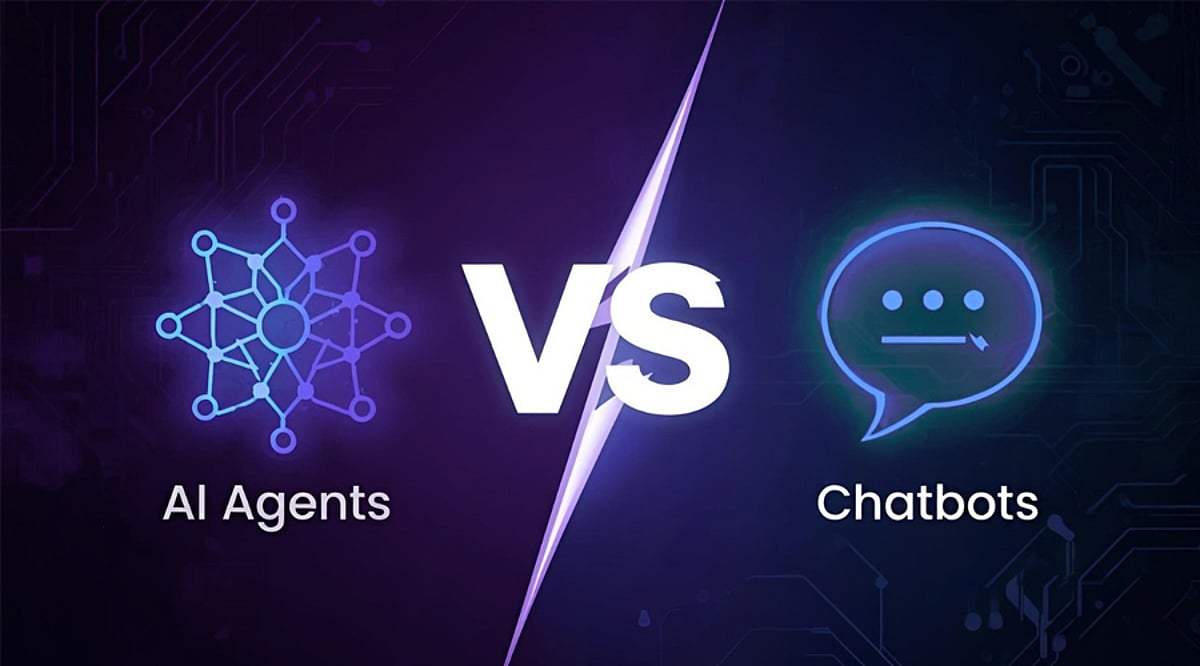
  • AI Agents vs. Chatbots: Key Differences and When to Use Each

    AI Agents vs. Chatbots: Key Differences and When to Use Each

    AI chatbots and AI agents are often mentioned together, but they serve very different purposes. Chatbots excel at conversations and answering questions, while AI agents can plan, make decisions, and complete complex tasks. Understanding the distinction helps businesses and individuals choose the right tool for their needs.

    AI Chatbots Focus on Conversations

    AI chatbots are designed to interact with users through text or voice. They answer questions, explain topics, assist with writing emails, and provide customer support. Chatbots work by responding to prompts and generating relevant replies. Most require a new user instruction before taking any further action. They are ideal for quick assistance, FAQs, and everyday conversational tasks.

    AI Agents Can Take Action

    AI agents go beyond simple chatting. They understand a goal, create a plan, use connected software, and execute multiple steps to achieve a desired outcome. Instead of merely answering questions, they solve problems. For example, an AI agent can organize meetings, gather data, prepare reports, or manage workflows with minimal human involvement.

    They Handle Decisions Differently

    A chatbot reacts to what the user asks at that moment. It provides information but rarely makes independent decisions. Every new action typically requires another prompt. An AI agent, on the other hand, evaluates options, adjusts its plan if circumstances change, and continues working until the assigned task is completed successfully.

    Real-World Applications

    AI chatbots are widely used in customer service, education, e-commerce, and content creation. They help users get instant answers and improve communication between businesses and customers. AI agents are becoming popular in finance, healthcare, software development, and business operations, where they automate repetitive tasks and boost productivity.

    Which One Is Right for You?

    If you need quick answers, writing support, or customer assistance, an AI chatbot is usually the better choice. It is easy to use and effective for everyday tasks. If your work involves automation, project management, or multi-step processes, an AI agent offers more advanced capabilities and can save significant time.

    The Future of AI

    The next generation of AI will likely combine chatbots and agents into a seamless experience. Users will interact through natural conversations while AI agents handle complex work behind the scenes. This integration could make workplaces more productive by reducing repetitive work and allowing people to focus on creative and strategic tasks.

  • How AI Is Transforming Search: Will Traditional Search Engines Survive?

    How AI Is Transforming Search: Will Traditional Search Engines Survive?

    The rise of conversational AI and personalized search assistants is reshaping how we discover information online. While traditional search engines have long been the gatekeepers of the web, artificial intelligence is introducing new ways to get answers faster, more intuitively, and with less clicking. But will AI replace search engines entirely? The likely answer is a hybrid future where both coexist.

    Conversational AI Search

    AI-powered search tools can answer questions in natural language, reducing the need to browse multiple links for straightforward information. This makes finding quick insights much more efficient.

    Personalized Search Results

    By analyzing user preferences, context, and past interactions, AI tailors responses to deliver a more relevant and personalized search experience. This level of adaptation was impossible with traditional keyword-based engines.

    Instant Information Summaries

    AI can combine data from multiple sources into concise summaries, helping users understand complex topics without reading several webpages. This saves time and makes research more accessible.

    The Value of Traditional Search Engines

    Despite AI’s advantages, traditional search engines still provide diverse sources, official websites, and multiple viewpoints that are essential for in-depth research and fact verification. They remain a cornerstone of reliable information retrieval.

    AI-Powered Search Assistants

    Intelligent assistants can refine questions, suggest follow-up queries, and guide users through complex searches with conversational flexibility, making them powerful tools for discovery.

    Challenges: Accuracy and Hallucination Risks

    AI may occasionally generate incorrect or misleading answers, so source verification remains crucial for critical decisions and factual research tasks. Users must remain vigilant.

    Impact on Website Traffic

    AI-generated answers could reduce direct visits to websites, forcing publishers to rethink content strategies and audience engagement methods. This shift may encourage more interactive and value-driven content.

    A Hybrid Search Experience

    Future search platforms will likely combine AI-generated responses with traditional search results, offering both quick answers and reliable source exploration. This hybrid model promises the best of both worlds.

    The Future of Search

    AI is undeniably transforming information discovery, but search engines will evolve alongside AI rather than disappear completely. The next decade will bring a more intelligent, personalized, and efficient search ecosystem.

  • How EaseMyTrip’s AI Assistant Is Evolving into a Travel Companion: CEO Rikant Pittie Shares Insights

    How EaseMyTrip’s AI Assistant Is Evolving into a Travel Companion: CEO Rikant Pittie Shares Insights

    Artificial intelligence is reshaping how travelers discover destinations, book trips, and seek customer support. As conversational AI becomes more intuitive, consumers are moving away from keyword-based searches and traditional support channels, expecting faster, more contextual, and personalized assistance throughout their travel journey.

    EaseMyTrip has witnessed this shift firsthand through its AI-powered assistant, EVA, which has handled over 2.5 million interactions across WhatsApp and the company’s web chatbot. The growing adoption highlights increasing consumer trust in AI for everything from travel discovery and bookings to itinerary changes and post-booking support.

    Rikant Pittie, CEO and Co-Founder of EaseMyTrip, believes the next phase of AI will move beyond answering questions to becoming an intelligent travel companion that understands user preferences, intent, and context, while working alongside human support teams.

    What EVA’s 2.5 Million AI-Led Interactions Reveal

    According to Pittie, the biggest insight from EVA’s interactions is that Indian consumers have moved beyond experimenting with AI and are increasingly relying on it to accomplish real travel-related tasks. Whether discovering flight and hotel options, clarifying booking details, understanding cancellation policies, accessing offers, or resolving service-related queries, customers are turning to AI for speed, convenience, and accuracy.

    Users are demonstrating outcome-driven trust: they care less about whether they interact with a human or an AI system and more about receiving the right answer quickly and reliably. Travelers are increasingly asking complete questions rather than typing fragmented keywords, signaling that they view AI as a travel companion that simplifies planning and decision-making.

    Why Conversational AI Outpaces Traditional Search

    Conversational AI accelerates the customer journey by helping users find information faster and complete tasks more efficiently. Human interaction remains critical for situations requiring empathy, nuanced decision-making, or complex problem-solving. Pittie emphasizes that the real value lies in reducing friction and enhancing existing customer journeys, positioning AI as an extension of human support rather than a replacement.

    Building Domain-Specific AI Assistants: Challenges and Lessons

    Pittie notes that deploying a large language model does not automatically create a successful customer-facing AI assistant. Building a domain-specific solution requires deep understanding of customer journeys, business rules, operational processes, and countless edge cases. For EVA, the real challenge is ensuring the assistant understands travel-specific contexts and responds accurately to a wide range of needs—from discovery and bookings to cancellations and post-booking support.

    Success depends on high-quality data, continuous model refinement, robust guardrails, and strong integration with existing systems. Customer expectations evolve rapidly, so AI systems must continuously improve to remain relevant.

    Improving Engagement, Efficiency, and Resolution Speed

    The most successful organizations approach AI as an augmentation layer. At EaseMyTrip, EVA is embedded into existing customer journeys to make travel discovery and support faster, simpler, and more intuitive. By helping customers find relevant information, access travel options, understand offers, and resolve common queries quickly, AI reduces friction while allowing service teams to focus on complex cases.

    Deep integration with real travel use cases and customer touchpoints enables a more contextual and meaningful experience. Early indicators point toward stronger engagement, faster query resolution, and growing acceptance of AI-led travel assistance.

    The Next Evolution: Proactive, Voice-Enabled, and Multilingual AI

    Pittie envisions the next evolution not as a better chatbot but as a more intelligent travel assistant that understands context, preferences, and intent across the entire customer journey. Travelers expect seamless, connected experiences where they do not have to repeat information at every step—whether planning, booking, or seeking support.

    Through EVA and ChatGPT integration, EaseMyTrip enables customers to receive faster, more contextual assistance for routine requests, while support teams continue handling complex situations that require human judgment, empathy, and personalized intervention. Multilingual interactions, voice-enabled assistance, smarter recommendations, and contextual support will help create more intuitive travel experiences by complementing—not replacing—human expertise.

  • Jotform AI Transforms Data Collection with Conversational Form Building

    Jotform AI Transforms Data Collection with Conversational Form Building

    Jotform has launched a new conversational AI tool that lets users create, edit, and deploy forms simply by describing what they need — either by typing or speaking. The tool, called Jotform AI, is designed to eliminate manual configuration and speed up form creation.

    Users can go from an idea to a live form in seconds. By describing the desired form through a persistent chat interface in the Jotform Workspace, the AI assistant named Podo generates a fully structured form complete with fields, conditional logic, and design styling. The assistant can also handle editing tasks like renaming fields or adding multi-step conditional logic.

    A companion feature, the Form Copilot, works inside the Form Builder itself. Instead of manually adjusting settings, users can ask the Copilot to reorder questions, add conditional fields, generate scoring calculations, or create notification and autoresponder email workflows.

    Jotform AI includes several exclusive capabilities not commonly found in other form-building tools: AI-generated calculations for scoring, totals, and field calculations; AI-driven notification email generation; AI-generated test submissions; and an AI assistant that answers product questions with guidance across a broader feature set.

    Users can upload spreadsheets or documents and have Jotform AI automatically convert the content into a structured form. Uncommon branding tools allow teams to match form styling to an existing website or brand kit by simply supplying a URL or image file.

    Aytekin Tank, Founder and CEO at Jotform, said: “Jotform AI represents the next stage of our evolution, inspiring people to create any form experience they can imagine, however they like. Jotform has shifted from a traditional form and productivity tool to an intelligent data management platform that executes at the request of a prompt.”

    The practical applications cover industry, team, device, and use types. Adaptive forms with conditional logic can dynamically adjust based on user responses without manual rule configuration. High-volume form testing allows teams to simulate realistic submissions and validate logic before distribution. On-brand styling updates colors, fonts, and backgrounds conversationally. Integrated workflows streamline data to storage, CRM, or management solutions. Mobile-ready creation lets users build forms on the go by talking to the AI or uploading pictures.

    Jotform AI combines end-to-end conversational creation with advanced automation inside an enterprise-ready ecosystem, setting a new bar for form builders.