Tag: copyright

  • YouTube Copyright and Community Guidelines Explained: Key Differences and Channel Safety Tips

    YouTube Copyright and Community Guidelines Explained: Key Differences and Channel Safety Tips

    Two Systems, Two Sets of Rules

    YouTube operates copyright enforcement and Community Guidelines enforcement as separate systems, though the same content can sometimes trigger both. Understanding which system issued the notice is the first step in responding correctly, as the resolution for one rarely applies to the other.

    Content ID Claims vs Copyright Strikes

    A Content ID claim is an automated match against a library of registered works. The video usually remains available, but the rights holder can monetize, track, or restrict it. Creators can dispute a claim if they hold the rights or have proper authorization. In contrast, a copyright strike follows a formal removal request from the rights holder. It takes the video down and marks the channel. Three strikes within 90 days can lead to termination and loss of all uploaded videos.

    How Community Guidelines Strikes Build Up

    Community Guidelines cover harassment, hate speech, graphic violence, misinformation, spam, and more, applying to private videos, comments, and thumbnails. A first violation typically results in a warning and content removal without upload restrictions. Serious violations may skip the warning and go straight to termination. Warnings can be cleared by completing policy training and avoiding further violations for 90 days. Repeat violations within that period become strikes, with increasing restrictions: first strike pauses uploads for a week, second for two weeks, third leads to permanent termination.

    Responding to an Enforcement Action

    For copyright strikes, creators can complete copyright school and let the strike expire after 90 days, obtain a retraction from the claimant, or submit a valid counter notice. Community Guidelines warnings and strikes can usually be appealed within six months, while removed content can be appealed within a year.

    Why ‘Just a Few Seconds’ Is Not Automatic Fair Use

    Adding commentary or trimming a clip does not automatically make copyrighted material safe. Fair use depends on the purpose of use, the nature of the work, the amount taken, and the effect on the original’s market. These rules vary outside the United States, so there is no fixed length or word count that guarantees safety.

    Three Habits That Keep a Channel Safe

    • Content Checks: Review copyright and community guidelines before publishing, not after.
    • Account Protection: Enable two-step verification and avoid phishing links or suspicious app permissions.
    • Organized Records: Keep licenses, permissions, and source files ready for any dispute.

    These habits become routine and help avoid scrambling after a strike has landed.

    Final Thoughts

    YouTube’s rules will continue to evolve with new content formats and legal pressures. Creators who integrate policy checks into their regular workflow stay ahead of changes and reduce the risk of enforcement actions.

    Frequently Asked Questions

    What is the difference between a Content ID claim and a copyright strike?
    A Content ID claim is an automated match that may lead to monetization or blocking. A copyright strike follows a formal removal request and can lead to channel termination.

    How many copyright strikes can a YouTube channel receive?
    Three copyright strikes within 90 days can result in channel termination. Copyright strikes and Community Guidelines strikes are separate systems.

    What happens after a Community Guidelines violation?
    A first violation typically results in a warning. Further violations lead to strikes with escalating restrictions within the 90-day period.

    Does fair use protect short clips on YouTube?
    Not automatically. Fair use depends on the circumstances, and there is no fixed clip length that guarantees protection.

    How can creators improve YouTube channel safety?
    By reviewing policies before publishing, using account security measures, and keeping organized records of permissions.
  • YouTube to MP3 Conversion: The Ultimate Guide to Extracting Audio from Videos

    YouTube to MP3 Conversion: The Ultimate Guide to Extracting Audio from Videos

    Converting a YouTube video to an MP3 file can be a practical way to save space and enjoy audio content offline. Whether it’s a music track, podcast, lecture, or tutorial, the process requires careful choices to ensure quality, safety, and legality. This guide walks you through each step, from selecting the right source video to understanding bitrate and respecting copyright.

    Choose the Right YouTube Video

    The quality of your MP3 begins with the original video. Look for videos with clear, undistorted audio—high video resolution doesn’t guarantee good sound. Consider the purpose: a podcast benefits from clean speech, while music demands richer detail across frequencies. A lecture may suffice with a lower bitrate, but a song likely needs higher settings. Your choice sets the foundation for the final audio file.

    Pick a Safe MP3 Converter

    Desktop applications often provide better audio quality and more control over settings, while online converters offer simplicity directly in the browser. Be cautious: some online services feature misleading ads, fake download buttons, or even malware. A trustworthy converter has a clean interface, adequate audio options, and never asks for passwords or payment details unrelated to conversion.

    Understand MP3 Quality and Bitrate

    MP3 quality hinges on bitrate—the amount of data stored per second. Common rates include:

    • 128 kbps: Suitable for basic speech and small file sizes.
    • 192 kbps: A good balance for most music and spoken word.
    • 320 kbps: Preserves more detail, ideal for music, but uses more storage.

    Remember: a higher bitrate cannot improve audio that was poor in the original video. The converter only changes the format, not the inherent quality.

    Step-by-Step Conversion Process

    1. Copy the URL of a permitted YouTube video.
    2. Paste it into your chosen converter and select MP3 as the output format.
    3. Choose the desired audio quality (bitrate) based on your needs.
    4. Start the conversion and wait for the file to be created.
    5. Open the MP3 in a player to verify sound, volume, and length.

    Desktop programs may offer extra settings like sample rate, channel mode, and metadata. Defaults work for most users; adjust bitrate higher for music, lower for speech.

    Manage File Size and Details

    MP3 files are significantly smaller than videos. A short clip might be a few megabytes, while a long podcast can exceed 100 MB depending on bitrate. Organize your library with clear file names (title, creator, date) and metadata (artist, album, genre) for easy sorting in audio players.

    Respect Copyright and Platform Rules

    Not every video can be legally converted. Copyright protects most music, films, lectures, and interviews. Only convert content you have permission to download, such as public-domain works, creator-authorized downloads, or material with suitable licenses. Conversion does not remove copyright restrictions.

    Make the Final MP3 Work Well

    A successful conversion combines a clear source, a trusted tool, the right bitrate, and respect for legal boundaries. The result is a useful audio file without false expectations about sound quality or rights.

    Frequently Asked Questions

    What is YouTube-to-MP3 conversion?

    It’s the process of extracting audio from a YouTube video and saving it as an MP3 file.

    Which MP3 bitrate is best?

    128 kbps works for speech, 192 kbps offers a solid general balance, and 320 kbps preserves more detail for music.

    Does a higher bitrate improve poor-quality audio?

    No. Higher bitrate cannot add detail missing from the original source.

    Are online YouTube-to-MP3 converters safe?

    Not all. Avoid services with misleading buttons, redirects, or requests for unnecessary personal or financial information.

    Is converting YouTube videos to MP3 legal?

    It depends on the content, permission, copyright law, and platform terms. Public-domain or creator-authorized content is generally safer.

  • Tetris Company Disavows White House ‘Build the Wall’ Game, Cites Copyright Infringement

    Tetris Company Disavows White House ‘Build the Wall’ Game, Cites Copyright Infringement

    The Tetris Company has publicly disavowed a Tetris-style game launched by the White House, stating it did not create or authorize the use of its brand or intellectual property for the politically themed ‘Build the Wall’ game.

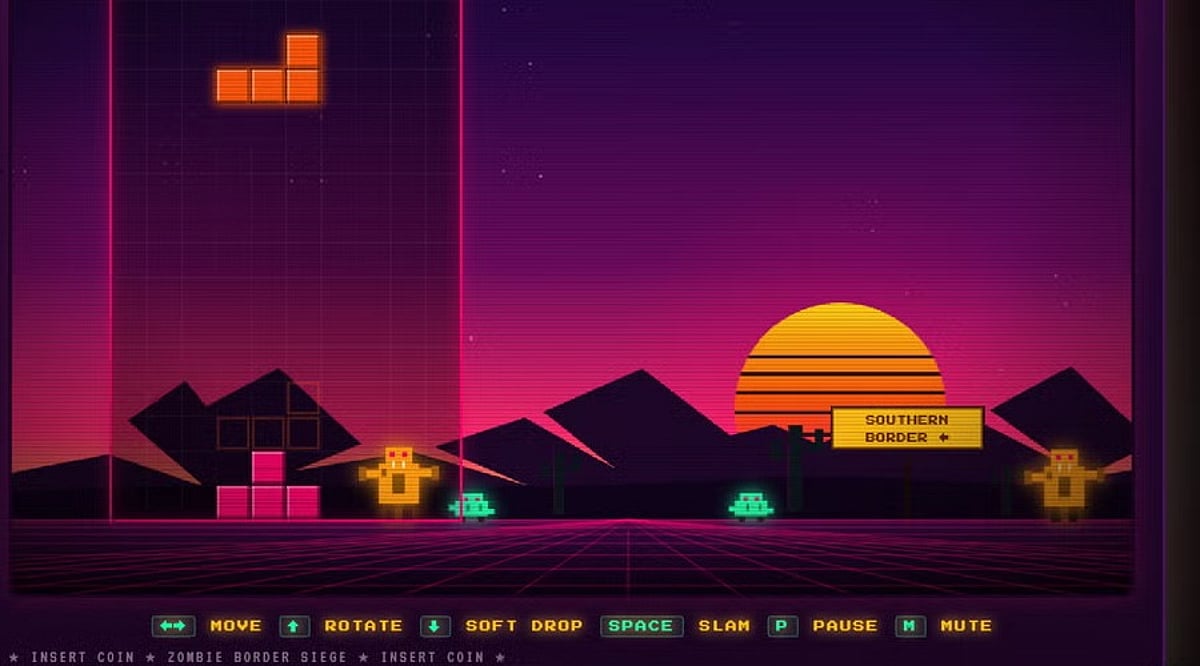
    The controversy began when the Trump administration added ‘Build the Wall’ to its new White House Arcade. The browser game uses falling blocks and stacking mechanics that closely resemble the classic Tetris format, but with a border-security theme. Despite the Tetris Company’s statement, reports indicate the game has not been removed from the White House website.

    Tetris Raises Copyright Concerns

    On September 4, 2026, The Tetris Company issued a statement via social media, criticizing the game. The company stated, “At Tetris we believe in the power of connection and bringing people together, not dividing them. To our fans everywhere: we love you, we see you, and we’re grateful to have you in our community.”

    The caption of the image also read, “P.S. The Tetris Company was not involved in the creation of ‘Build the Wall’. P.P.S. We take copyright infringement very seriously.”

    Future Strategies

    The response could potentially lead to a wider intellectual-property dispute if the company chooses to pursue formal action. However, no lawsuit or court ruling has been reported in the latest coverage. The company also said it was reviewing the matter, stressing its serious stance on copyright infringement.

    The response further highlighted the contrast between Tetris’ message of bringing people together and the political purpose attached to the White House game.

  • Suno’s New Copyright Measures: A Smart Move or Legal Damage Control?

    Suno’s New Copyright Measures: A Smart Move or Legal Damage Control?

    On August 6, 2026, Suno, the AI music generation platform valued at $5.4 billion following its June 2026 Series D, announced a set of new measures aimed at addressing copyright concerns. The company revealed plans to implement audio watermarking and fingerprinting technology, update its community guidelines, and introduce a new download policy to prevent the mass distribution of AI-generated songs on streaming services. This move comes as Suno faces multiple copyright lawsuits from major labels and artist bodies, including a recent ruling in Munich where the company was found liable for infringing German song copyrights.

    CEO Mikey Shulman outlined four operating principles in a blog post titled “How We’re Building the Future of Music Responsibly”: that great music is made by people, technology unlocks new creative possibilities, AI should encourage originality rather than imitation, and that more people making music should strengthen the wider ecosystem. The concrete changes include the rollout of watermarking and fingerprinting to identify Suno-generated tracks on streaming platforms, updated community guidelines with tiered enforcement (warnings, suspensions, bans, and referrals to authorities), and a download policy designed to prevent mass distribution of AI-generated songs on streaming services. The company also announced a partnership with lyrics provider Musixmatch to integrate its Sentinel copyright detection system.

    However, many questions remain unanswered. Suno has not confirmed which specific watermarking technology it will use, whether it will adopt an existing system like Google’s SynthID or build its own, and has not provided a specific rollout timeline beyond “coming weeks.” The company’s approach to transparency is also ambiguous: Shulman explained that the new tools give artists and platforms the choice to disclose AI origins but do not mandate it. Critics from the music industry note that these measures fail to address the core question of whether Suno’s training datasets included copyrighted material without authorization, which is the central allegation in the ongoing RIAA lawsuit.

    The situation has been further complicated by a hack of Suno’s source code in July, which reportedly revealed that the AI was trained by scraping music and lyrics from platforms such as YouTube Music and Genius. The music industry, including major labels like Sony and Universal, has been pursuing legal action against Suno for mass copyright infringement since 2024. Many experts believe that while Suno’s new transparency tools are a step in the right direction for industry cooperation, they are insufficient to satisfy the music industry’s demand for answers regarding training data.

  • How to Identify AI-Generated Music: Key Signs and Industry Implications

    How to Identify AI-Generated Music: Key Signs and Industry Implications

    What if your next favorite song wasn’t created by a human at all? As AI becomes increasingly woven into the music industry, this scenario is already becoming a reality. Many AI-generated tracks are now so polished that listeners struggle to tell them apart from music made by real artists. A survey by Deezer and Ipsos found that only 3% of participants could correctly identify AI-generated songs in a listening test. With AI music rapidly spreading across streaming platforms and attracting its own fan base, the industry is facing a growing challenge: how to clearly identify AI-created content while protecting artists’ rights, royalties, and creative ownership.

    Why AI Music Artists Are Growing Rapidly

    An AI music artist uses AI to develop almost all aspects of their music production, including vocals or compositions. The distinction between music generated with the help of AI and completely AI-generated music is in the amount of creative input humans provide. The emergence of AI music was facilitated by applications such as Suno and Udio, which helped users create entire songs in just a few minutes. These programs decreased both time and money spent on the music creation process. According to Deezer, thousands of AI-generated songs are uploaded per day.

    Key Signs That Can Help Identify AI-Generated Music

    Identifying AI music is becoming more difficult as technology improves. Experts say no single method can confirm whether a song is AI-generated. A combination of several signs can provide a stronger indication.

    1. Check the Artist’s Background

    A real music artist usually includes some history beyond streaming platforms. Artists often have social media accounts, live performances, interviews, collaborations, or other public activities. AI-generated music projects may appear suddenly with large numbers of songs and limited information about the person behind the music. The absence of an online presence does not confirm AI use. New independent artists can also start without a large public profile. This sign becomes more important when combined with other clues.

    2. Look Closely at Music Credits

    Song credits can reveal important details. Human-made music often involves several people, including singers, composers, producers, mixers, and mastering engineers. A large catalogue where the same person is credited for every creative role may require closer attention. AI tools can reduce many production steps into a single generation process. However, independent musicians who create everything themselves can also have similar credit patterns. Credits should be considered alongside other evidence.

    3. Pay Attention to the Style and Sound

    Some music genres make AI detection easier than others. Jazz and folk music often depend on small human details such as timing changes, natural imperfections, and emotional delivery. AI systems can struggle to reproduce these elements. A track that sounds unusually perfect in these genres may deserve additional checking. Genres such as electronic music and pop often use highly polished production styles, making sound-based identification more difficult.

    4. Watch for Unusual Streaming and Chart Activity

    Sudden success can also be a sign of AI. Some AI-generated projects have gained attention through rapid releases and unusual chart movements. Fast growth with limited artist history, few sales, or little audience connection can raise questions about how the music is gaining attention. Chart performance alone does not prove AI involvement. It should be viewed as one part of a wider pattern.

    5. Use AI Detection Tools Carefully

    Streaming platforms are developing tools to identify AI-created music. Services such as Deezer have introduced detection systems that analyze tracks for AI-generated elements. Apple Music has also introduced transparency features that allow information about AI involvement to be shared through labels and distributors. These tools can help listeners and platforms, though experts warn that detection technology is still developing. Changes in audio quality, editing, or human involvement can affect results.

    The Bigger Debate: Rights, Ownership, and Payments

    The growth of AI music has created major questions about copyright and artist payments. Music companies have taken legal action against AI music platforms over the use of copyrighted recordings in training systems. The central issue is whether artists should receive permission and payment when their work helps train AI models. The debate also focuses on ownership. Fully AI-generated works without meaningful human creative input face challenges in receiving copyright protection in some legal systems.

    How AI Music Could Change the Industry

    AI music is likely to become a permanent part of the industry. The main challenge will be creating clear rules around transparency, copyright, and payments. Artists and industry groups are calling for greater control over how their work is used for AI training. Many creators want systems that provide consent, fair compensation, and clear information. For listeners, identifying AI music will require more than simply trusting their ears. Checking artist history, credits, release patterns, and platform information will become important steps.

    Final Thoughts

    AI-generated music is becoming harder to identify as technology improves. There is no single test that can reveal every AI-created song. The most reliable approach is to look at multiple signals, including artist background, credits, release patterns, and detection tools. As AI continues to reshape music creation, transparency will decide how audiences and artists adapt to this new era.

    FAQ’s

    1. How can you identify an AI-generated song?

    AI-generated songs can be identified by checking several signs, such as unusual release patterns, missing artist history, limited credits, unnatural sound patterns, and AI detection tools. No single method can confirm every AI-created track.

    2. Are AI-generated music artists already available on streaming platforms?

    Yes, AI-generated music artists are already present on streaming platforms. Many listeners may not recognize them, as AI tools have improved significantly and can now create songs that closely match human-made productions.

    3. Can AI detection tools accurately identify AI-created songs?

    AI detection tools can help identify AI-created songs, though their results are not always perfect. Audio changes, editing methods, and human involvement can affect detection accuracy, making multiple checks important.

    4. Why is AI music creating controversy in the music industry?

    AI music has created debates around copyright, ownership, and payments. Artists and industry groups are seeking transparency, consent, and fair compensation when their work is used to train artificial intelligence systems.

    5. Will AI replace human musicians in the future?

    AI is changing the way music is created, though human creativity still plays a key role. The future may involve artists using AI as a tool rather than completely replacing traditional music creators.

  • India to Introduce Comprehensive AI Legislation Targeting Deepfakes and Liability

    India to Introduce Comprehensive AI Legislation Targeting Deepfakes and Liability

    India is preparing to introduce a new artificial intelligence law as the technology’s adoption accelerates across the country. While AI simplifies many tasks, it also introduces challenges that existing regulations are ill-equipped to handle.

    The Ministry of Electronics and Information Technology has begun consulting with experts to draft a legal framework that specifically addresses AI-related issues. Officials believe current laws, written before AI became widespread, cannot adequately cover emerging problems such as deepfakes, algorithmic bias, copyright disputes, and accountability for AI-caused harm.

    Why India Needs a Dedicated AI Law

    One of the most pressing concerns is the proliferation of deepfakes. AI can generate realistic fake videos, audio recordings, and images that can be used for fraud, misinformation, or identity theft. Once such content spreads on social media, it becomes difficult to control. Current regulations require platforms to remove illegal AI content after a court order and to label AI-generated material in certain cases, but officials believe these measures are insufficient given the speed of technological change.

    Accountability is another major issue. AI systems sometimes make decisions that even their developers cannot fully explain, creating ambiguity when something goes wrong. For example, if an AI-powered medical robot makes a surgical error or a self-driving vehicle causes an accident, existing Indian law does not clearly assign responsibility. The new law aims to remove this confusion by establishing clear legal liability.

    Key Challenges the New Rules May Address

    Copyright: AI can now create stories, music, art, software, and other content, yet many AI models train on copyrighted material without permission. The government is studying how copyright law should apply in the AI era.

    Algorithmic Bias: AI systems learn from data, and if that data contains biases, the AI can produce unfair outcomes. This can affect hiring, lending, insurance, and other essential services. New rules may require companies to make AI systems more transparent and equitable.

    How the New AI Law Could Help

    A comprehensive AI law would enhance online safety, provide clear guidelines for businesses, and build public trust in AI while fostering innovation in healthcare, education, banking, and other sectors. The government continues to solicit expert input before finalizing the draft. Once enacted, this legislation could represent one of India’s most significant efforts to curb deepfakes, cyber threats, improve AI accountability, and ensure safe AI deployment.

  • Apple Seeks Dismissal of AI Lawsuit Over YouTube Video Training – Here’s Why It Matters

    Apple Seeks Dismissal of AI Lawsuit Over YouTube Video Training – Here’s Why It Matters

    Apple has asked a US court to dismiss a lawsuit filed by three YouTube creators who accuse the company of using millions of copyrighted YouTube videos to train its artificial intelligence systems without permission. The case centers on whether publicly available online content can be legally used for AI development.

    The lawsuit, filed in April in the US District Court for the Northern District of California, was brought by the channels h3h3Productions, MrShortGame Golf, and Golfholics. They claim Apple bypassed YouTube’s download restrictions and violated the Digital Millennium Copyright Act (DMCA) by scraping their videos. The creators also argue that technology companies should not profit from creators’ work without sharing benefits or seeking consent.

    Apple’s Defense: Public Is Public

    Apple’s response emphasizes that the videos were accessible to anyone without a password, payment, or special permission. The company contends that public videos are fundamentally different from private or protected content, and that YouTube’s Terms of Service do not prohibit accessing public videos. Apple therefore argues the lawsuit lacks legal grounding and should be dismissed before proceeding to discovery.

    Legal observers note that the case could become a landmark test for copyright law in the age of artificial intelligence. A ruling could help define how companies may use public online material when training AI models, and what responsibilities they have toward content creators.

    Broader Implications for AI and Copyright

    The same trio of creators has also filed similar lawsuits against Meta, Nvidia, ByteDance, and Snap. All raise the same fundamental questions about the legality of using YouTube content for AI training. As AI companies increasingly rely on publicly available data, creators, publishers, and artists continue to push for stronger protections and fair compensation.

    The court will now decide whether to dismiss Apple’s case or allow it to proceed. Its decision could shape future rules for AI training and copyrighted content, influencing both industry practices and legislative efforts.