
Tag: Corporate Strategy

  • Intel Slashes VP Roles from 450 to 200 in Management Overhaul Under New CEO

    Intel Slashes VP Roles from 450 to 200 in Management Overhaul Under New CEO

    Intel has dramatically reduced its senior management ranks as part of a sweeping restructuring led by CEO Lip-Bu Tan. The chipmaker cut its vice-president count from approximately 450 at its peak to roughly 200, according to Intel CFO David Zinsner. The company also halved its management layers from 12 to six.

    Zinsner disclosed the figures while discussing Intel’s restructuring and execution efforts at the Deutsche Bank Technology Conference. He explained that the earlier organizational structure created bottlenecks, with too many people able to block decisions and slow product development.

    “Intel sometimes needed four or five development cycles before products were ready, rather than moving successfully through the initial development stage,” Zinsner said, linking the delays to a cultural problem within the company.

    Intel’s official filings from 2025 confirm the simplification of its organizational structure. The changes aim to reduce management layers, improve transparency and accountability, and give technical teams greater authority over decision-making.

    Transparency emerged as a major issue under the previous structure. Zinsner noted that information could change as it moved through management levels, meaning senior executives did not always receive the same picture that teams closer to a project had. Tan plans to address this by bringing in leaders experienced in operating with leaner structures and emphasizing faster decisions and direct communication.

    The management overhaul comes as Intel works to improve its manufacturing and product execution. Zinsner reported progress on Intel’s 18A and 14A process technologies and noted that several products advanced through their initial A-stepping stage.
  • SAP Halts Hiring and Travel as AI Costs Surge, Prioritizes AI Investments

    SAP Halts Hiring and Travel as AI Costs Surge, Prioritizes AI Investments

    SAP has paused most hiring and internal business travel worldwide as it grapples with rising costs associated with artificial intelligence. The German software giant implemented the measures in July 2026 to control spending while channeling funds into AI products, tools, and acquisitions. According to a current SAP employee cited by 404 Media, the restrictions remain in place.

    The hiring pause does not cover every role. SAP is focusing recruitment on selected positions that support the company’s long-term AI strategy. AI-related jobs, customer travel, development trips, and essential AI training are exempt from the freeze. Internal business travel has stopped under the new spending rules, but customer meetings and trips tied to SAP’s AI development program can continue.

    “Be disciplined in how we spend,” the company told employees, as rising AI costs put more pressure on budgets. SAP noted that AI adoption has increased token usage and related costs across its operations, with more AI services running at scale across the company.

    The company also plans major spending on AI products, internal AI use, and acquisitions involving data and artificial intelligence. A SAP spokesperson said the measures will help direct money toward areas with stronger long-term value, allowing the company to invest in AI while reducing spending in less critical areas.

    The move highlights a growing challenge for technology companies investing heavily in AI. While AI can improve productivity, running large AI systems can also create significant costs. SAP’s decision underscores a clear shift in priorities: AI skills and projects remain vital, while other hiring and spending now face tighter controls.

  • Why These 10 Major Companies Changed Their Names – And What It Means

    Why These 10 Major Companies Changed Their Names – And What It Means

    Rebranding is a bold strategic move that can signal a shift in vision, target audience, or even an entire industry. Over the years, several high-profile companies have changed their names to reflect new ambitions, shed outdated associations, or simplify their identity. Here are ten notable examples and the stories behind their name changes.

    • Facebook to Meta: Mark Zuckerberg rebranded the social network to emphasize its focus on virtual reality, augmented reality, and the metaverse, moving beyond traditional social media.
    • Google to Alphabet: In 2015, Google created a parent company called Alphabet to allow its core business and experimental ventures (like self-driving cars and life sciences) to operate independently under one umbrella.
    • Twitter to X: After Elon Musk acquired Twitter, he rebranded it as X, aiming to transform the platform into an all-in-one digital services hub for payments, messaging, and more.
    • Square to Block: The payment processing company expanded its scope to include blockchain, financial services, and decentralized technology, adopting the name Block to reflect that broader vision.
    • Dunkin’ Donuts to Dunkin’: The chain dropped “Donuts” from its name to emphasize its growing beverage menu and modern coffee-shop identity, appealing to a wider audience.
    • Weight Watchers to WW: The weight-loss program rebranded to WW, focusing on holistic wellness and healthy lifestyles rather than just weight loss.
    • Philip Morris to Altria: The tobacco giant adopted a new corporate name to distance itself from its cigarette heritage while diversifying into other industries.
    • Andersen Consulting to Accenture: After a legal split from Arthur Andersen, the consulting firm needed a fresh identity. The name Accenture (meaning “accent on the future”) was born and has since become a global leader in technology consulting.
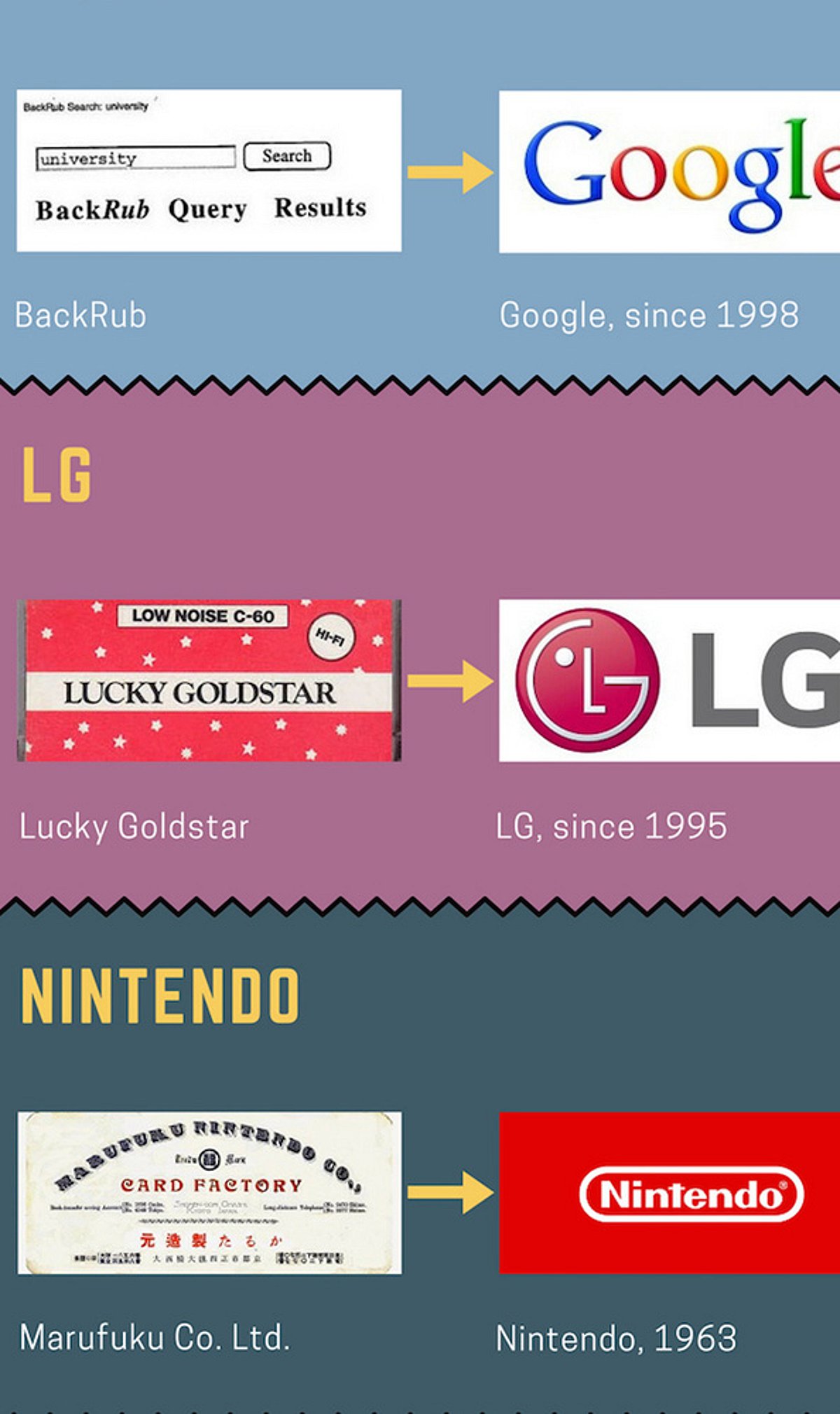
    • BackRub to Google: Before becoming a household name, Google started as BackRub. Founders Larry Page and Sergey Brin renamed it to represent the immense scale of information they aimed to organize.

    Each of these name changes was a carefully calculated decision, often accompanied by a shift in business strategy. Whether to pivot to new technologies, shed negative connotations, or simplify branding, these companies show that a name is more than just a label—it’s a statement of intent.