
Tag: CPI

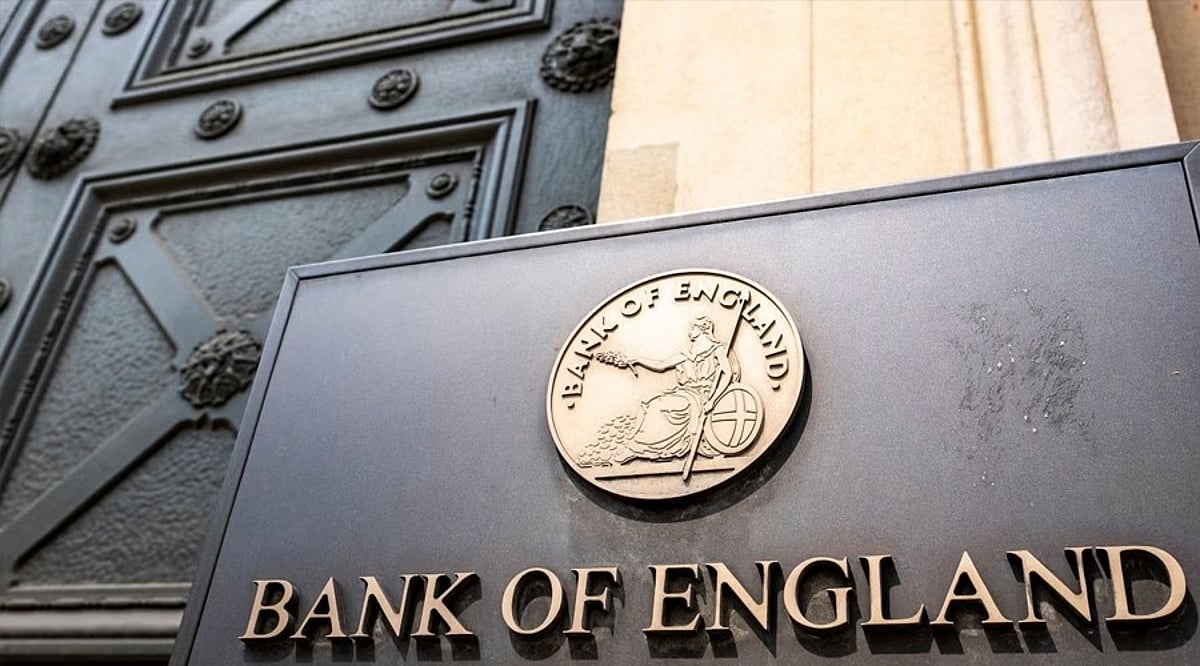
  • UK Inflation Reaches 3.1% in August as Fuel Costs Surge Ahead of Bank of England Rate Decision

    UK Inflation Reaches 3.1% in August as Fuel Costs Surge Ahead of Bank of England Rate Decision

    UK inflation climbed to 3.1% in August, up from 2.9% in July, marking its highest level in five months. The increase, driven by higher petrol, diesel, and airfare prices, matched economists’ forecasts and came just one day before the Bank of England’s (BoE) September policy meeting.

    Fuel Prices Drive August Inflation Higher

    The Office for National Statistics (ONS) reported that transport made the largest upward contribution to the annual inflation rate. Motor fuel prices rose sharply, with petrol increasing by 9.1 pence per litre between July and August, while diesel prices climbed by 14.2 pence per litre over the same period.

    Grant Fitzner, chief economist at the ONS, said: “Sharp price rises for petrol and diesel pushed inflation up again in August.” He added that higher long-haul airfares also contributed. Crude oil and fuel costs further raised manufacturers’ raw material and factory-gate prices.

    Core and Services Inflation Remain Stable

    Despite the headline rise, measures closely watched by the Bank of England held steady. Core CPI, which excludes energy, food, alcohol, and tobacco, remained at 2.6% for the fourth consecutive month. Services inflation also stayed at 3.4%.

    Neither measure accelerated in August, even as fuel costs pushed the headline rate above 3%. ONS labour data released earlier in the week showed regular pay growth at 3.5% in the three months to July, close to its weakest pace since 2020.

    Bank of England Prepares for Rate Decision

    The Bank of England will announce its interest-rate decision on September 17. Bank Rate currently stands at 3.75% after the Monetary Policy Committee (MPC) voted 6-3 in July to keep borrowing costs unchanged. Three members had supported a quarter-point increase to 4%.

    Financial markets were pricing in about a 20% chance of a quarter-point increase at the September meeting, according to Reuters. Charlotte O’Leary of the National Institute of Economic and Social Research said: “With limited evidence of second-round effects so far, we expect the MPC to hold rates tomorrow.” The BoE has identified energy prices as a key risk to inflation.

    At its July meeting, the Bank noted that energy prices had remained volatile since the Middle East conflict began. It stated that policy would depend on the scale, duration, and wider transmission of the energy shock.

    Producer Prices Add Pressure to Outlook

    Price pressures were stronger at the manufacturing level. Producer input prices rose 6.1% in the year to August, up from a revised 5.8% in July. Factory-gate output prices increased 3.7%, compared with a revised 3.3% increase a month earlier.

    The rise in inflation also comes as Prime Minister Andy Burnham’s government prepares for an October 28 budget. Chancellor John Healey said the Middle East war was affecting inflation across countries, feeding into household bills, shopping costs, and fuel prices. Official records show Burnham became prime minister on July 20, with Healey taking over as chancellor on the same date.

    Further increases in household energy bills could push headline inflation higher in the coming months because regulated domestic prices respond to wholesale energy costs with a delay. Goldman Sachs expects UK inflation to peak at 3.9% in early 2027. The BoE’s 2% inflation target remains the benchmark, while policymakers continue to track wages, services prices, and business costs for signs of pressure.
  • Ethereum Under Pressure as CPI Data Looms and Glamsterdam Testnet Launch Approaches

    Ethereum Under Pressure as CPI Data Looms and Glamsterdam Testnet Launch Approaches

    Ethereum is facing renewed macroeconomic headwinds as U.S. inflation data points to tighter Federal Reserve policy, while developers target October 6 for the Glamsterdam upgrade on the Sepolia testnet. The leading smart-contract platform remains range-bound between $2,370 and $2,550, with traders closely watching key support and resistance levels ahead of the August CPI release.

    Inflation and Fed Policy Weigh on ETH

    Producer prices in the U.S. rose 0.4% month-over-month in August and 5.4% year-over-year, accelerating from 0.1% and 4.8% respectively. Energy costs drove the surge, with producer energy prices climbing 4.2% and diesel prices jumping 24.1%. The hotter-than-expected PPI report lifted Treasury yields and reinforced expectations for a September rate hike, with futures pricing roughly a 70% probability of a move before the Fed’s September 16 decision.

    Attention now shifts to the August Consumer Price Index (CPI) report, which could materially alter rate expectations. The nature of the inflation—driven largely by oil and energy shocks linked to geopolitical tensions rather than robust economic demand—adds a layer of complexity for risk assets like Ethereum.

    ETH Holds Key Trading Range as ETF Demand Weakens

    Institutional demand for Ethereum showed renewed weakness, with U.S. spot ETFs recording $29.7 million in net outflows on September 10, according to SoSoValue data. ETH briefly tested $2,400 after the PPI release but remained within the established $2,370–$2,550 range. A sustained breakout above $2,550 would open the path toward the $2,600–$2,700 liquidity zone, while a break below $2,370 could trigger a decline toward $2,200 as inflation and elevated oil prices dampen risk appetite.

    Several macro events in the coming days could keep volatility elevated, making market reactions at both boundaries of the current range critical for near-term direction.

    Glamsterdam Sepolia Test Set for October 6

    Ethereum developers have tentatively scheduled the activation of the Glamsterdam upgrade on the Sepolia testnet for October 6 at 13:53 UTC, replacing an earlier September 28 date. The timeline depends on a clean transition from the Glamsterdam devnet, which previously encountered a builder-deposit caching bug that caused non-finality. Client teams have deployed fixes, and developers want a successful devnet transition before moving to Sepolia.

    The upgrade introduces enshrined proposer-builder separation (ePBS), bringing interactions between validators and block builders directly into Ethereum’s protocol. Currently, validators often rely on external infrastructure for block construction. A mainnet release is targeted for the fourth quarter of 2026, pending successful testing on Sepolia and Hoodi. The Ethereum Foundation has also launched Platåberget, a longer-running public test environment to give applications and infrastructure additional exposure to Glamsterdam.

    Outlook

    Ethereum faces two major near-term catalysts: macroeconomic pressure from inflation and the Fed, and the technical milestone of the Glamsterdam upgrade. The next price move will likely be shaped by the CPI report and subsequent Fed expectations, while the October 6 Sepolia test marks a key date for the network’s development roadmap.

  • Bitcoin Reclaims $65,000: ETF Inflows, Softer CPI, and Policy Hopes Fuel Recovery

    Bitcoin Reclaims $65,000: ETF Inflows, Softer CPI, and Policy Hopes Fuel Recovery

    Bitcoin briefly reclaimed the $65,000 mark on Wednesday for the first time in roughly a month, before settling at $62,779.89. The recovery came just days after the leading cryptocurrency dipped below $62,000, signaling that buyers remain active despite geopolitical risks and uncertain U.S. monetary policy.

    The rebound also lifted crypto-related stocks, with Circle and Coinbase shares rising at least 2% as investor appetite improved. The shift followed Tuesday’s cooler-than-expected June CPI report, which prompted traders to reassess Federal Reserve policy expectations.

    CPI Relief Sparks Fresh ETF Inflows

    According to SoSoValue, spot Bitcoin ETF flows turned positive on Tuesday after Monday’s heavy outflow of $424.66 million, recording net inflows of roughly $181 million. This could be an early sign of renewed institutional buying. “If the CPI data holds and the Fed signals a credible pivot path, the conditions for sustained ETF inflows are back in place,” said Nicolai Sondergaard, a research analyst at Nansen. He added that he is watching whether the latest flows are “durable rather than one-session repositioning.”

    Technical Resistance Meets Record Leverage

    The $65,000 level is a major resistance zone. Bitcoin fell as Middle East tensions escalated, pushing Brent crude to $84.01, but buyers stepped in below $62,000. On-chain analytics firm Glassnode reported that leveraged traders on the decentralized exchange Hyperliquid have built exposure exceeding any previously recorded levels: “Top traders on Hyperliquid are aggressively long bitcoin, showing some of the highest sustained long positioning we’ve recorded. This exposure exceeds what was seen during the last run to around $83,000, pointing to strong speculative demand at these levels.”

    Policy Developments Support Cautious Optimism

    Fundstrat’s head of digital asset strategy, Sean Farrell, said the odds of the CLARITY Act passing this year “may be better than markets appreciate.” Polymarket traders recently priced a 42% chance of the bill being signed into law in 2026, down from over 70% in May. Bitcoin remains negative for the year after a sharp sell-off in June pushed it below $60,000, but repeated buying below $62,000 suggests sellers may be losing momentum. A strong close above $65,000 could confirm a broader recovery, while rejection at that level may return control to bears ahead of the July Fed meeting.

    FAQs

    1. Why did Bitcoin cross $65,000 again? Bitcoin recovered after softer US CPI data improved risk sentiment. Positive spot Bitcoin ETF inflows and renewed buying below $62,000 also supported the move.
    2. How much inflow did spot Bitcoin ETFs record? According to SoSoValue, spot Bitcoin ETFs saw around $181 million in net inflows, following Monday’s heavy outflow of $424.66 million.
    3. Why is the $65,000 level important for Bitcoin? The $65,000 level is a major resistance zone. A strong close above it could confirm recovery, while rejection may return momentum to sellers.
    4. What did Glassnode say about Bitcoin traders? Glassnode said top traders on Hyperliquid are aggressively long Bitcoin, with some of the highest sustained long positions it has recorded.
    5. Can the CLARITY Act support Bitcoin prices? Yes, policy clarity could improve institutional confidence. Fundstrat’s Sean Farrell said the bill’s odds may be better than markets currently expect.

    Disclaimer: This article is for informational purposes only and does not constitute investment advice. Cryptocurrency investments carry significant risk. Always do your own research.