Tag: creator economy

  • YouTube Monetization Beyond Ads: 6 Proven Revenue Streams for Creators

    YouTube Monetization Beyond Ads: 6 Proven Revenue Streams for Creators

    Introduction

    Ad revenue alone leaves YouTube channels financially exposed. Six income streams, including memberships, sponsorships, affiliate links, and owned products, can reduce that dependence. The right mix depends on audience trust, not subscriber count.

    Why Ads Alone Fall Short

    Ad income is unpredictable as a sole source. RPM varies by niche, audience location, season, and format. A channel that earns well in Q4 can see rates drop sharply in January. Building around multiple revenue paths instead of one changes that dynamic.

    Six Alternative Revenue Streams

    1. Channel Memberships and Fan Funding

    Channel memberships let viewers pay a monthly fee in exchange for perks such as badges and exclusive content. Super Chat and Super Thanks give fans a way to pay to highlight their messages during streams and videos. Under the Commerce Product Module, creators receive 70% of net revenue from memberships, Super Chat, Super Stickers, and Super Thanks. Access requires meeting YouTube Partner Program thresholds. Fan-funding features open at 500 subscribers, three public uploads in 90 days, and either 3,000 watch hours in 12 months or three million Shorts views in 90 days. Ad revenue sharing currently requires 1,000 subscribers with 4,000 watch hours or 10 million Shorts views. From February 1st, 2027, new applicants for ad and premium revenue sharing will need 1,000 subscribers plus 8,000 watch hours in 365 days, or 20 million Shorts views in 90 days. Existing partners are not affected. Creators who enabled fan funding before 2023 may still be on the older Commerce Product Addendum. They must accept the current Commerce Product Module in YouTube Studio by January 31st, 2027, or lose access to these features on February 1st.

    2. Brand Sponsorships

    Sponsorships pay a fixed fee for featuring a product or service in a video. Rates depend on average views, audience location, and niche fit, not just subscriber count. A personal finance channel with 20,000 engaged viewers can often command strong rates. For brands, a closely matched audience can matter as much as raw reach. YouTube Creator Partnerships lets brands find eligible Partner Program creators and send deal inquiries. The tool includes a media kit built from channel data, and India is among the available countries. All paid promotions must be disclosed in line with YouTube’s policies and local advertising law.

    3. Affiliate Marketing

    Affiliate links earn a commission when a viewer buys through a tracked link in the video description. The format works best for reviews, tutorials, and comparisons, where viewers are already close to a purchase decision. Some software programs pay recurring commissions, though customers may cancel and program terms can change. Unlike YouTube Shopping, traditional affiliate marketing sends viewers to an external merchant or affiliate platform. All affiliate relationships require clear, easy-to-notice disclosure.

    4. YouTube Shopping

    YouTube Shopping lets eligible creators tag products directly in videos, Shorts, and live streams. Products can come from the creator’s own store or from partner brands. Sales from a channel’s own store are settled by the merch retailer or platform. Eligible creators can also earn affiliate commission on third-party products they feature. Access depends on channel and country eligibility.

    5. Own Products and Services

    Owned products offer more control over pricing and margins than any platform-based revenue stream. Common options include online courses, templates, presets, ebooks, paid communities, and consulting. Payment fees, software costs, customer support, and refunds still reduce profit. An owned product also builds a direct relationship with customers through email, which reduces reliance on YouTube for future sales. Comments, search queries, and repeated viewer questions can point directly to where that demand exists.

    6. License Content and Repurpose Expertise

    Licensing means another party pays for the right to use original footage. Media companies, documentary makers, and stock platforms regularly license clips. Repurposing takes that same expertise into new formats such as newsletters, podcasts, or paid reports. Both approaches extend the economic life of content beyond its original YouTube upload. YouTube Premium adds another revenue path for eligible creators. From February 1, 2027, Premium Lite expands to every country where Premium is available. Creators share in a pool worth 60% of net Premium Lite subscription revenue, distributed by member watch time and views. Creators then receive 55% for long-form videos and 45% for Shorts.

    Quick Comparison

    • Memberships/Fan Funding: Recurring revenue from loyal viewers; requires Partner Program eligibility.
    • Sponsorships: Fixed fee per video; depends on audience engagement and niche.
    • Affiliate Marketing: Commission per sale; works well with review/tutorial content.
    • YouTube Shopping: Product tagging in videos; requires eligibility and can include own or third-party products.
    • Own Products: Full control over pricing; builds direct audience relationship.
    • Licensing: One-time fees for footage or repurposed content; extends content lifespan.

    How to Choose the Right Revenue Stream

    The right starting point depends on where a channel stands with its audience. Affiliate links need no Partner Program access, which makes them a practical early option. Fan funding and shopping open once a small audience shows consistent loyalty. Sponsorships suit channels whose viewers act on recommendations. Owned products make sense once a creator has built a niche following with a clear, shared interest. Tracking revenue per video, not just views, shows which content is actually earning.

    Final Thought

    The long-term opportunity on YouTube is not simply more views. Platforms shift, algorithms change, and ad rates fluctuate, but an audience that trusts a creator travels with them. That trust, built through consistent and useful content, is what makes every other revenue stream possible. Creators who own that relationship directly, through email lists, products, and loyal communities, are the ones best positioned as the platform continues to evolve.

    Frequently Asked Questions

    • Can you make money on YouTube without ads? Yes. Creators can earn through channel memberships, Super Chat, Super Thanks, sponsorships, affiliate marketing, YouTube Shopping, digital products, services, and content licensing.
    • How many subscribers do you need to monetize YouTube? For the expanded YouTube Partner Program in eligible countries, creators can qualify at 500 subscribers with additional activity and watch-time or Shorts-view requirements. Ad and YouTube Premium revenue sharing currently requires 1,000 subscribers plus higher watch-time or Shorts-view thresholds.
    • How do YouTubers make money from sponsorships? Creators negotiate fees with brands to feature products or services in videos. Rates can depend on audience size, average views, niche, audience location, engagement, and campaign requirements.
    • Can YouTubers earn money through affiliate marketing? Yes. Creators can share tracked affiliate links and earn a commission when viewers make qualifying purchases. This works particularly well for product reviews, tutorials, comparisons, and buying guides.
    • What is the best way to make money on YouTube beyond ads? There is no single method that works best for every channel. The right option depends on the audience, niche, content format, and stage of the channel. Creators can combine affiliate marketing, sponsorships, fan funding, Shopping, owned products, and licensing to diversify income.
  • YouTube Shopping Bolsters Indian Merchant Ecosystem with New Partners and AI-Powered Features as Creator Payouts Surge 160%

    YouTube Shopping Bolsters Indian Merchant Ecosystem with New Partners and AI-Powered Features as Creator Payouts Surge 160%

    YouTube has announced a major expansion of its Shopping affiliate program in India, adding Amazon, AJIO, Meesho, Snapdeal, and Tata CLiQ as new retail partners. This move creates what the company calls India’s most comprehensive digital storefront, bringing together value marketplaces, horizontal retailers, and premium brands on a single platform. The expansion builds on existing partnerships with Flipkart, Myntra, Nykaa, Purplle, Shopsy, and Tira.

    According to YouTube internal data, over 450 million logged-in users in India search for shopping-related content, and shopping-related watch time has increased by 55% year-over-year. The platform’s affiliate program has also seen remarkable growth: average creator payouts in India surged more than 160% year-over-year from Q1 2025 to Q1 2026, outpacing the global average of 100%. More than 50% of eligible Indian creators are now enrolled in the program, a 200% increase year-over-year, and they have tagged over 19 million videos.

    Gunjan Soni, Managing Director – India, YouTube, said, “We’ve crossed an incredible milestone where trusted creator voices, a comprehensive retail catalog, and AI meet at a massive scale. With this expansion in retail partners we are meeting the 450 million+ Indians searching for products on YouTube with India’s most comprehensive digital storefront. Our creators are seeing life-changing revenue, and our merchant partners and brands are seeing measurable impact.”

    Partners echoed the sentiment. Nidhi Thakkar, Head of Social Commerce – Emerging Countries at Amazon, highlighted the seamless journey from creator recommendation to purchase. Arpan Biswas of Reliance AJIO emphasized the convergence of content and commerce for fashion discovery. Nikita Dawda of Meesho noted that creators can double their earnings through the partnership. Achint Setia of Snapdeal pointed to seamless discovery for GenZ shoppers, while Gopal Asthana of Tata CLiQ stressed frictionless integration with premium fashion. Prakash Subramanian of Tira reported 2x creator engagement, and Aditya Mujumdar of Purplle shared that creator-tagged videos have driven nearly a quarter of a million orders, with top earners speaking in regional languages.

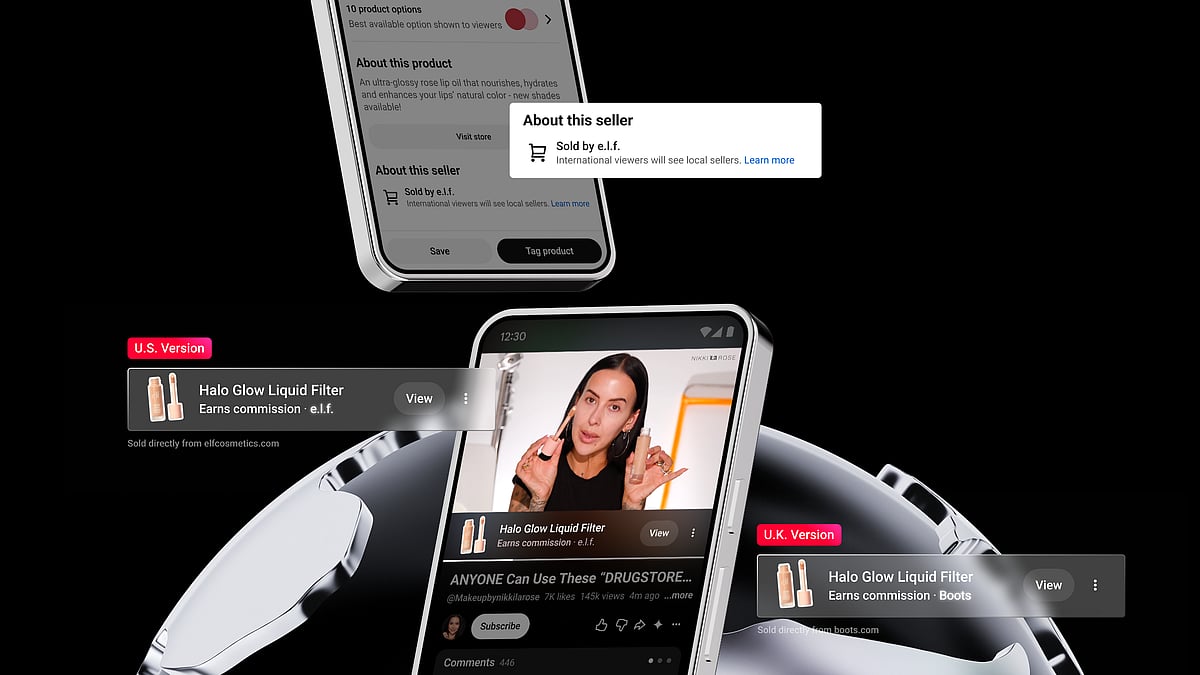
    Alongside the partner expansion, YouTube unveiled several new AI-powered features to enhance the shopping experience. The Ask YouTube capability now allows viewers to ask product-related questions directly on the watch page, with follow-up queries and voice commands on TV. Dynamic Global Retail Tags automatically adapt tagged products to domestic deals and local currencies based on the viewer’s location, enabling Indian creators to earn commissions from international audiences seamlessly.

    For brands and creators, YouTube introduced the Affiliate Partnerships Boost, which lets brands amplify organic creator content through paid campaigns. Nykaa will be the first to leverage this feature for festive sales. The upcoming Ask Studio for Brand Partnerships uses generative AI inside YouTube Studio to help creators pitch campaigns and respond to brand briefs quickly. Creator Partnerships Boost simplifies getting channels in front of top advertisers, while Dynamic Brand Segments allow creators to insert promotional segments into up to 20 long-form videos simultaneously. Exclusive Affiliate Campaigns, rolling out in India next year, will invite creators into high-priority campaigns with bonus incentives and higher commission rates.

    Globally, YouTube’s shopping-related watch time surpassed 40 billion hours in 2025, and gross merchandise value grew 13 times over two years. The new tools and partnerships aim to sustain this momentum, particularly in India where the creator economy is thriving.

  • Snapchat Partners with Qoruz to Bring Creator Intelligence to India’s Creator Ecosystem

    Snapchat Partners with Qoruz to Bring Creator Intelligence to India’s Creator Ecosystem

    Snapchat India and Qoruz have announced a strategic partnership aimed at helping brands discover, evaluate, and identify relevant creators on Snapchat using Qoruz’s advanced creator intelligence and data capabilities. The collaboration addresses the growing need for brands to move beyond simple reach and follower counts when selecting creators for campaigns.

    As India’s creator economy matures, brands are seeking deeper insights into creators’ audiences and the authenticity they bring to marketing efforts. Snapchat has become a key platform for reaching young audiences through creators who foster genuine, less promotional connections with their communities. Snapchat creators understand the platform natively, enabling them to produce ad assets that feel authentic and perform effectively.

    Praanesh Bhuvaneswar, Co-Founder and CEO of Qoruz, stated: “We’ve watched creator discovery move past reach for a while now—brands want to know who a creator actually speaks to, not just how many people are watching. Snapchat’s creator ecosystem in India has grown fast, and pairing it with this kind of intelligence felt like a natural next step. It’s a space we think is going to matter a lot more over the next few years, and we wanted to be early to it.”

    Saibal Das Mahapatra, Ecosystem Partnerships- India at Snapchat, added: “Creators play an increasingly important role in how people discover brands, products, and ideas. Snapchat is home to a growing community of authentic creators who connect with their audiences in unique ways. Our partnership with Qoruz will make it easier for brands to discover and explore creators on Snapchat while bringing greater intelligence to how they identify the right partners for their campaigns.”

    Through this partnership, Qoruz has integrated Snapchat’s Public Profile APIs into its platform, allowing brands to explore Snapchat’s creator ecosystem alongside other major social platforms already tracked by Qoruz. This integration enables more informed decisions when selecting creator partners for campaigns.

    As brand investments in creator marketing continue to rise in India, the gap between a creator’s follower count and actual campaign relevance has become a critical challenge. This partnership aims to close that gap on Snapchat by providing data-driven insights for smarter creator selection.

  • AI Companion Affiliate Marketing: The Next Revenue Engine Driving Digital Growth in 2026

    AI Companion Affiliate Marketing: The Next Revenue Engine Driving Digital Growth in 2026

    The Rise of AI Companion Affiliate Marketing

    Artificial intelligence has entered a new era. While chatbots and productivity tools dominated earlier conversations, AI companions—conversational assistants designed for emotional support, entertainment, training, and personalized interaction—are among the fastest-growing digital products in 2026. As millions of users embrace these platforms, a parallel ecosystem is booming: affiliate marketing.

    Affiliate marketing has long been a staple for software companies seeking cost-effective customer acquisition. Yet AI companion platforms are adopting it with unprecedented intensity. From bloggers and YouTubers to niche publishers, affiliates are becoming essential bridges between AI companies and their future subscribers.

    Why Subscription Economics Make Affiliates Indispensable

    Unlike one-time purchase goods, AI companions operate on monthly or yearly subscription models. This shifts the affiliate economics dramatically. Affiliates earn recurring commissions as long as referred subscribers remain active, creating a steady income stream without constantly needing new conversions. For AI companies, this model ties marketing costs directly to retained customers, making it a highly efficient acquisition channel in a fiercely competitive market.

    Traditional Advertising Hits a Wall

    Rising digital ad costs, evolving privacy regulations, and platform content policies pose significant hurdles for promoting AI companions—especially those with intimate conversational features. Affiliate marketing circumvents these challenges. Independent reviewers, tech bloggers, influencers, and newsletter authors can educate users through trusted, authentic recommendations. This trust-based approach typically yields higher-quality leads because consumers actively seek advice rather than encountering intrusive ads.

    Creator-Led Commerce Takes Center Stage

    The creator economy is a dominant force in digital marketing. Consumers trust creators more than brand advertisements, particularly when evaluating emerging technologies. Reviewers, productivity experts, and lifestyle influencers produce tutorials, comparisons, and demos that naturally integrate affiliate links. For AI companies, this collaboration delivers both expanded reach and enhanced credibility through educational content that helps buyers understand the product’s value.

    Personalization Drives Retention and Recurring Revenue

    Modern AI companions are far more advanced than early chatbots. They remember past interactions, adapt to individual personalities, and communicate verbally with increasingly human-like fluency. Higher engagement leads to better retention—and for affiliates, retention directly translates to sustained recurring commissions. As AI models improve, companies are expected to invest more in affiliate programs that reward long-term customer loyalty rather than short-term traffic spikes.

    AI Itself Is Transforming Affiliate Marketing

    Ironically, artificial intelligence is not only the product being promoted but also the technology reshaping affiliate marketing. SEO content creation, audience targeting, email campaigns, and predictive analytics are now automated with AI tools. Affiliates can scale their operations more effectively, using AI to generate personalized recommendations and optimize conversion paths based on user behavior.

    Ethical Considerations and Challenges

    AI companion affiliate marketing is not without risks. Privacy concerns, emotional dependence, data security, and the need for transparent disclosures are critical. Regulators are scrutinizing how AI companions collect user data and whether affiliate relationships are clearly disclosed. Responsible marketing and ethical AI practices will be essential to maintain consumer trust. Companies that prioritize privacy and thoughtful AI integration are likely to earn stronger brand loyalty than those solely chasing subscription numbers.

    The Road Ahead

    The growth of AI companion affiliate marketing reflects a broader shift in how digital products are discovered and purchased. Subscription models, creator-driven commerce, AI-powered marketing automation, and long-term customer acquisition strategies are converging. Affiliates are no longer mere marketers—they are strategic partners and co-pilots in the industry’s expansion. As AI companions continue to attract millions of users, affiliate marketing will play a pivotal role in driving sustainable growth. Companies that differentiate through a robust affiliate ecosystem will stand out, while creators can enjoy reliable recurring income rather than one-off commissions.

  • Why Creator Commerce’s Future Depends on Infrastructure, Not Follower Counts

    Why Creator Commerce’s Future Depends on Infrastructure, Not Follower Counts

    For years, the creator economy has been measured by a simple scoreboard: followers, views, and engagement. Creators built audiences on platforms like YouTube, TikTok, and Instagram, then converted attention into income through ads, sponsorships, affiliate links, and product drops. But as creator commerce enters its next decade, follower count is no longer enough.

    As the industry evolves, creators may not realize that platform-based success can be short-lived. What we see online is largely dictated by the platforms themselves and their algorithms. A small change to your main platform’s algorithm or a priority shift can immediately impact followers, views, and engagement — ultimately affecting traffic and creator income. While creators own their content, they don’t fully own their audience.

    The obvious solution is to remove the unpredictable algorithms by shifting from essentially renting platform traffic to owning the brand entirely. This shift resembles what happened with e-commerce, where early online sellers relied heavily on marketplaces to find buyers. Over time, many realized that long-term value came from building their own storefronts, collecting customer data, and developing direct relationships with buyers. Now it’s time for creators to follow a similar path.

    The Hidden Roadblock: Creators Become the Integration Glue

    Seasoned content creators may think audience growth is their biggest challenge — but it’s not. Many already have engaged communities and strong audience trust. The real problem is knowing how to turn that trust into a sustainable business. Smart creators know you can’t do everything yourself at scale, so they rely on systems. But when different systems manage different parts of the business — analytics, content planning, storefront, customer databases, product sourcing, link-in-bio — creators end up as the glue linking everything together. It’s exhausting. The complexity creates a barrier for many mid-tier creators, who have audience potential but lack the time or resources to build a complete commerce operation from scratch. That digital infrastructure is crucial.

    AI Infrastructure: Compressing Fragmented Operations into a Single Engine

    We’ve all seen AI-generated content, but AI can do much more. Rather than replacing creative aspects, what if you could harness AI to reduce operational disconnects? That’s exactly what fypro.ai attempts to do. As an AI creator growth engine, fypro.ai closes the loop from audience growth to monetization in a single workflow, laying the foundations for an owned digital business.

    How Does Fypro.ai Work?

    It starts with the creator’s social handle. Creators drop their handle to receive a free AI growth plan — account connection takes about 30 seconds. The system analyzes audience demographics, content style, engagement patterns, and viral performance signals to inform the plan. AI Studio, fypro.ai’s content engine, has been trained on more than 4 million viral TikToks and refined by creator strategists to optimize results. Fypro.ai then produces a plan matching the creator’s niche and voice. A branded site goes live in minutes — with a homepage, product shop, content blog, and link-in-bio under the creator’s own domain. Colors, messaging, tone, and positioning are informed by existing content rather than generic templates. Fypro.ai is currently in public beta with more than 2,000 active creators, and content planned on the platform generated more than 10 million views last quarter.

    The Monetization Conundrum

    Even the most successful content creators need help turning content into revenue. With fypro.ai, creators get help answering the common question: “What should I sell?” For example, Marty, a pet comedy micro-creator with over 3,000 followers and an 11% engagement rate, had strong audience loyalty but no commercial system. Using fypro.ai’s tailored commercial content library, structured content calendar, and smart scheduled publishing, Marty turned engagement into more than $2,000 in first revenue within weeks. The engine matches products to your niche, shows margins clearly (typical margins range from 30% to 70% compared to roughly 10% in many affiliate arrangements), and lets you choose what fits your brand.

    The Ultimate Asset: Digital Property Rights and Owned Customer Data

    While followers can disappear and algorithms can change, the one thing that lasts is the creator’s relationship with their followers and customers. Every time you capture an email address, build a customer profile, or record purchase history, you’re creating a business asset independent of any platform. When a creator owns their customer database, they can communicate directly, review purchase histories, identify repeat buyers, and evaluate organic site traffic. Control is key. Fypro.ai emphasizes this ownership layer by helping creators build branded experiences on their own domains while maintaining direct control of customer information — with one-click data export. SEO-ready content surfaces generate discoverable traffic outside social feeds.

    The Next Chapter of Individual Entrepreneurship

    Gone are the days of defining the creator economy strictly through follower numbers and engagement stats. Increasingly, success is measured by ownership: owned audiences, owned customer relationships, owned domains, and owned brands. Success increases as creators learn to view social platforms as discovery tools, not final brand destinations. Once you have an audience, using an AI growth engine like fypro.ai helps you own your content and systems. The result is a lasting business, assisted by AI — letting content creators do what they set out to do: create content they’re passionate about, while the tech handles the infrastructure heavy lifting.

  • Uncensored AI in 2026: How HackAIGC and Others Are Reshaping the Creator Economy

    Uncensored AI in 2026: How HackAIGC and Others Are Reshaping the Creator Economy

    In 2026, platforms like HackAIGC, NovelAI, and Civitai are leading the uncensored AI space for creators. These tools differ from mainstream AI by removing RLHF content filters at the model level, not through adversarial prompting. This guide compares them across multimodal capability, privacy architecture, and creator use cases.

    Why Do Mainstream AI Platforms Keep Blocking Creators?

    You write a scene with a morally complex villain. Denied. You generate a dark figure study. Denied. You draft erotic fiction that consistently ranks on Amazon bestseller lists, and you get a policy warning instead of output. This isn’t a calibration error—it’s a design decision.

    Platforms like OpenAI’s GPT-4o, Google Gemini, and Midjourney serve enterprise procurement teams, app store gatekeepers, and advertisers. Their content policies optimize for the most restrictive common denominator across every jurisdiction where they operate. Professional creators generating legal content are collateral damage in that calculation.

    Hard refusal (generation stops), soft sanitization (the model rewrites your scene without flagging it), and account risk (repeated attempts result in suspensions) are the three predictable ways the failure manifests. None is documented clearly enough to build a reliable professional workflow around.

    Why Does Soft Sanitization Hurt Creators More Than Hard Refusals?

    Hard refusals are obvious—you know immediately and move on. Soft sanitization is sneakier. The model generates something but strips out what made the scene work: the tension, the moral ambiguity, the explicit detail. You won’t catch it unless you compare the output against the prompt. For genre fiction, this quietly degrades the work without a single warning.

    What Does “Uncensored AI” Actually Mean in 2026?

    The term gets misused. Let me be precise. Base models like Meta’s Llama 3 and Mistral generate outputs across a wide content range. Consumer deployment layers on RLHF (Reinforcement Learning from Human Feedback) to suppress specific output categories. “Uncensored AI” means platforms using base models or lightly fine-tuned variants with fewer suppressed categories, especially for adult and dark creative content.

    This is architecturally different from eviction. Eviction uses adversarial prompting to circumvent a deployed model’s existing filters. It’s fragile, degrades output quality, violates terms of service, and gives zero privacy protection. A purpose-built, uncensored platform removes the restriction at the model level. The outputs are cleaner, there’s no adversarial prompting overhead, and you’re not violating any terms of service.

    What “uncensored” still doesn’t mean: anything goes. Platforms like HackAIGC prohibit content involving minors and other universally illegal categories. The real distinction is between mainstream overcalibration and platforms designed for adult professional creative use.

    Is “Uncensored AI” Just a Marketing Term?

    Sometimes, yes. Some platforms use the label and still trigger constant refusals. Write your most tonally extreme scene and see what happens. Does the platform hold character voices without breaking for a safety caveat? Does it generate mature visual content without random filter interventions? If not, the label isn’t carrying much weight, and you’re back where you started.

    How Much Does Mainstream AI Restriction Actually Cost Creators?

    Most creators don’t calculate the friction cost—they just absorb it. The creator economy is now valued at $310 billion in 2026, with a trajectory to $1.3 trillion by 2033. OnlyFans paid creators $5.8 billion on $7.22 billion in gross revenue in FY2024, with a cumulative $25 billion paid since inception. Dark romance saw a verified 24% year-over-year jump in US print book sales, according to Circana BookScan’s June 2025 industry report.

    Which Creator Segments Does Mainstream AI Cut Off?

    Three groups feel this most directly:

    • Adult content creators on subscription platforms, generating visual assets and scripts at professional volume
    • Dark fiction and erotic writers who need character voice and emotional weight, not sanitized rewrites mid-scene
    • Visual artists working in mature illustration styles that trigger image filters on Midjourney and DALL-E

    Together, they represent hundreds of thousands of working professionals with real production schedules and real income at stake.

    How Does HackAIGC’s Private AI Technology Actually Work?

    HackAIGC’s privacy architecture is built around a clear principle: user data—including prompts and generated outputs—is stored locally in the user’s browser, not on HackAIGC’s servers. AI generation runs in the cloud, but without logging or retaining that data server-side. This removes three key risk surfaces: server-side content scanning before generation, logging of prompts and outputs, and the possibility of remote human review.

    Because nothing is stored or logged on HackAIGC’s servers, there is nothing to moderate, flag, or surface to third parties. The platform supports mature creative output without routing user data through a server-side content pipeline. Importantly, this architecture requires no special hardware from the user. Because AI processing happens in the cloud rather than on the user’s device, generation speed is entirely unaffected by local hardware. Any standard device with a modern browser is sufficient to use the full platform—including image and video generation—at full speed.

    What Can HackAIGC’s Multimodal Stack Do in Practice?

    Most creators in 2026 maintain accounts on three or four separate platforms: one for text, one for images, and one for video. Each has different interfaces, different billing, and different content policies to navigate mid-workflow. HackAIGC puts AI chat, image generation, and video generation in one product. The workflow stays coherent. Write a scene in AI chat, generate the character reference in text-to-image, refine it with image-to-image, and animate a clip in image-to-video, all in one session without switching tools or rebuilding context.

    What each mode covers:

    • AI Chat: Unrestricted creative writing and conversation. Holds character voices and dark narrative arcs without mid-scene safety interruptions.
    • AI Image Generation: Text-to-image, image-to-image transformation, and AI editing. Mature visual content without the filter layer that blocks work on Midjourney and DALL-E.
    • AI Video Generation: Text-to-video and image-to-video. Animates a character visual into a short clip, a workflow that previously required multiple separate tools.

    Plans: Free tier to start; Premium removes generation caps for professional production volume.

    Which Are the Top Uncensored AI Tools in 2026?

    The category has diversified. The right platform depends on your output type, privacy requirements, and production volume.

    • Adult content creators needing image and video volume: HackAIGC. No other single platform covers all three generation modes with browser-local data privacy and no hardware requirements.
    • Fiction writers focused on prose: NovelAI for stylized narrative; HackAIGC for cross-modal creative sessions.
    • Technical users wanting maximum model control: Self-hosted Stable Diffusion. You need a capable GPU and setup time. Worth it if you have both.
    • Roleplay-first users: Venus Chub, but with no image or video output.
    • Creators who need chat + image + video + privacy in one tool: HackAIGC is currently the only option that covers all four.

    How Do Adult Content Creators Actually Use This in Production?

    This is what the workflow looks like in practice. A solo creator producing weekly content for a subscription platform needs character reference images, scene variations, promotional clips, and caption copy. Previously that meant four separate platforms, four content policies, and four potential points of flagging. With HackAIGC, develop the character and scenario in AI chat, generate the reference image in text-to-image, create scene variations using image-to-image, and animate a short clip with image-to-video. The full asset set for a weekly content drop, produced in one coherent session.

    Adult creators have had cloud-generated content flagged, accounts reviewed, and work surfaced without their knowledge. HackAIGC’s architecture closes that risk structurally: because user data is never stored on HackAIGC’s servers, there is nothing server-side to flag, review, or surface.

    What Are the Real Limitations You Should Know?

    Most reviews in this category skip the downsides. These are the ones that actually affect professional use.

    • Reasoning and factual accuracy: Uncensored platforms generally trail frontier models on complex reasoning tasks. GPT-4o and Claude 3.7 Sonnet are stronger for analysis, research, and long-context factual work. If your use case is creative generation, this gap rarely comes up. If you need strong factual grounding in your AI tool, mainstream models still have the edge.
    • Video generation maturity: AI video is the weakest capability across the entire category, not just uncensored platforms. Temporal consistency (characters holding their appearance across frames) and motion coherence are unsolved problems across the board. Treat current video generation as a prototyping tool. It’s not a polished final-output system yet.
    • Platform sustainability: The uncensored AI category has seen exits and policy reversals under commercial pressure. HackAIGC’s architecture and product positioning are clear signals of intent. Any professional creator building a long-term workflow should stay aware of platform direction and keep a contingency tool ready.

    Key Takeaways

    • Browser-local data storage is commercial IP protection. Your prompts and unreleased work are never stored on HackAIGC’s servers.
    • Soft sanitization is sneakier than a hard refusal. Always compare your actual output against your original prompt.
    • HackAIGC is currently the only platform that combines multimodal creation with browser-local data privacy in a single product—with no hardware requirements on the user’s end.

    Conclusion

    The creator economy is worth $480 billion, and the AI tools serving it categorically exclude a significant slice of the professionals building it. That gap won’t stay open. HackAIGC fills it with a specific technical answer: browser-local data privacy, multimodal creation, and content restrictions calibrated for adult professional use rather than enterprise procurement. The top uncensored AI tools of 2026 are production-ready. If you’re still working around mainstream AI for mature creative content, you’re paying a tool tax that doesn’t need to exist.

    FAQs

    What are the top uncensored AI tools in 2026?
    HackAIGC leads for multimodal creation: AI chat, image generation, and video in one platform with browser-local data privacy and zero server-side logging. NovelAI is strong for illustrated fiction. Self-hosted Stable Diffusion gives maximum control for technical users. Venus Chub handles roleplay but has no image or video output.

    Is uncensored AI legal to use?
    Yes, for legal content. What you produce is subject to the same laws governing all content: local obscenity law, IP law, distribution platform terms, and age-verification requirements for adult content. The platform’s legality doesn’t change your obligations as a creator.

    How does HackAIGC protect creator privacy?
    Through browser-local data storage. While AI generation runs in the cloud, your prompts and outputs are stored locally in your browser—not on HackAIGC’s servers. There’s no server-side log, no training pipeline fed by your content, and no third-party data retention. The privacy guarantee is architectural, not a policy clause that gets revised in the next term’s update.

    Does uncensored AI produce better creative output than mainstream models?
    For mature creative content, yes. The filter isn’t there to degrade the generation. For reasoning, research, and factual tasks, frontier models like GPT-4o still lead. Uncensored platforms are optimized for creative professional work, not general-purpose use.

    What hardware do I need for HackAIGC?
    No special hardware is required. Because HackAIGC handles all AI processing in the cloud rather than on your device, generation speed is not affected by your local hardware. Any modern browser on a standard device is sufficient to use the full platform—including AI chat, image generation, and video generation. HackAIGC’s free plan lets you test the platform before committing to Premium.