

Tag: CRO

  • C-Suite Roles Explained: Key Responsibilities of CEOs, CFOs, COOs, CIOs, CMOs, and CROs

    C-Suite Roles Explained: Key Responsibilities of CEOs, CFOs, COOs, CIOs, CMOs, and CROs

    The C-suite comprises the top executives who steer a company’s strategy and operations. Each role brings a distinct focus, from setting vision to managing finances, operations, technology, marketing, and revenue growth. Here’s a closer look at what these leaders actually do.

    CEO: The Chief Executive Officer

    The CEO leads the company and sets its overall direction. This role focuses on major decisions, long-term goals, company culture, and business growth. CEOs also work with investors, employees, customers, and other leaders. While they may not manage every daily task, they remain responsible for the company’s overall performance and future.

    CFO: The Chief Financial Officer

    The CFO manages the company’s financial health. This includes budgets, cash flow, financial reports, investments, risks, and planning. CFOs help leaders understand what the numbers mean before making major business decisions. They also work with investors, auditors, and finance teams to keep spending controlled and support long-term financial stability.

    COO: The Chief Operating Officer

    The COO focuses on how the company works day to day. This role turns business plans into action by managing operations, processes, teams, and performance. COOs often work across departments to improve efficiency and solve operational problems. Their goal is to ensure the business runs smoothly while meeting its targets.

    CIO: The Chief Information Officer

    The CIO leads the company’s technology and information strategy. This can include IT systems, cybersecurity, data management, software, and digital tools used across the business. CIOs help decide which technologies the company needs and how they should be used. They also work to keep systems secure, reliable, and useful.

    CMO: The Chief Marketing Officer

    The CMO leads marketing and focuses on how the company connects with its audience. This includes branding, advertising, content, market research, social media, and customer campaigns. CMOs study customer behavior and market trends to shape marketing plans. Their work builds awareness, strengthens the brand, and supports business goals.

    CRO: The Chief Revenue Officer

    The CRO focuses on generating revenue across the company. This role often brings together sales, business development, partnerships, and customer-related teams. CROs track revenue targets and look for ways to improve sales performance. They also study customer needs and market opportunities to create plans that can increase and sustain revenue.

    How the C-Suite Works Together

    C-Suite leaders may have different responsibilities, but their work is closely connected. The CEO sets direction, the CFO manages finances, the COO oversees operations, the CIO handles technology, the CMO leads marketing, and the CRO drives revenue. When these leaders share information and coordinate decisions, different parts of the business can work toward common goals.

  • Why the Chief Robotics Officer Could Be the Next Big C-Suite Role

    Why the Chief Robotics Officer Could Be the Next Big C-Suite Role

    Robots are no longer confined to factory floors and warehouses. With advances in physical AI, they are moving into logistics, healthcare, manufacturing, agriculture, retail, and field services. That expansion raises a strategic question for business leaders: who should own the company’s robotics agenda?

    Most organizations still distribute robotics responsibilities across engineering, operations, technology, and innovation teams. A dedicated chief robotics officer (CRO) could eventually consolidate those duties into one C-suite role. While the title is not yet common, growing enterprise deployments could make it increasingly necessary.

    Robotics Is Becoming a Company-Wide Strategy

    For decades, robotics sat squarely in manufacturing. Industrial machines performed repetitive tasks in controlled environments. Physical AI changes that model. Modern robots can perceive their surroundings, learn new tasks, and adapt to unpredictable conditions.

    Capgemini found that 79% of surveyed organizations were already engaging with physical AI, and 27% had begun deploying or scaling solutions. The impact is no longer limited to manufacturing. Logistics, healthcare, agriculture, retail, and field services are all exploring robotics. As a result, robotics decisions now touch budgets, technology, safety, and workforce planning across multiple departments.

    Why Existing Executive Roles May Not Be Enough

    CTOs, CIOs, COOs, and innovation leaders each oversee pieces of the robotics puzzle. But a single deployment can require software, hardware, connectivity, maintenance, safety protocols, and workforce changes at the same time. That cross-functional complexity often leaves no one with end-to-end ownership.

    Intel’s research from August 2026 underscores the gap: 74% of surveyed leaders expect workforce planning and robotics strategy to become inseparable by 2030, while only 40% currently report having a formal human-robot workforce strategy.

    What a Chief Robotics Officer Would Actually Do

    • Set a company-wide robotics roadmap and identify the best automation opportunities
    • Evaluate vendors, robotics platforms, AI models, and infrastructure needs
    • Define measurable targets for productivity, quality, safety, service levels, and operating costs
    • Lead workforce planning and training for employees who supervise or collaborate with robots
    • Address cybersecurity, compliance, and risk management for connected robot fleets

    In practice, a CRO would act as a bridge between technology teams and operations, ensuring robotics investments deliver business value rather than existing in silos.

    Physical AI Expands the Leadership Challenge

    Physical AI is more adaptive than traditional automation. Capgemini describes the shift as a move toward context-aware robotics, with 67% of executives viewing physical AI as potentially game-changing. But flexibility brings risk. Robots operating near people require stronger safety controls, and data quality, integration, cybersecurity, and reliability remain major barriers.

    Deloitte similarly identifies these issues as constraints on broader robotics growth. A future robotics executive would therefore need business judgment and risk management skills, not just engineering expertise.

    Could Humanoid Robots Accelerate the Trend?

    Humanoid robots have captured attention in 2026. Xpeng’s CEO He Xiaopeng says he will personally lead the company’s robotics division, with mass production of the IRON humanoid targeted for late 2026. Agility Robotics has unveiled Digit 5 for commercial use and reports more than USD 300 million in multiyear orders.

    These announcements do not guarantee rapid adoption. Commercial economics, safety, reliability, and deployment timelines remain open questions. Still, more capable robots would likely increase the need for central leadership of robotics strategy.

    Will the Chief Robotics Officer Become Common?

    The title is likely to emerge gradually. Some companies may hire robotics heads or vice presidents first; others may keep robotics oversight with a CTO or COO for years. A dedicated CRO becomes more plausible when robot fleets are large, business-critical, and spread across multiple functions.

    The broader trend is already clear: organizations are moving from isolated automation projects toward integrated human-robot operations. Whether the title becomes a standard C-suite role remains uncertain, but the underlying responsibility is becoming harder to ignore.

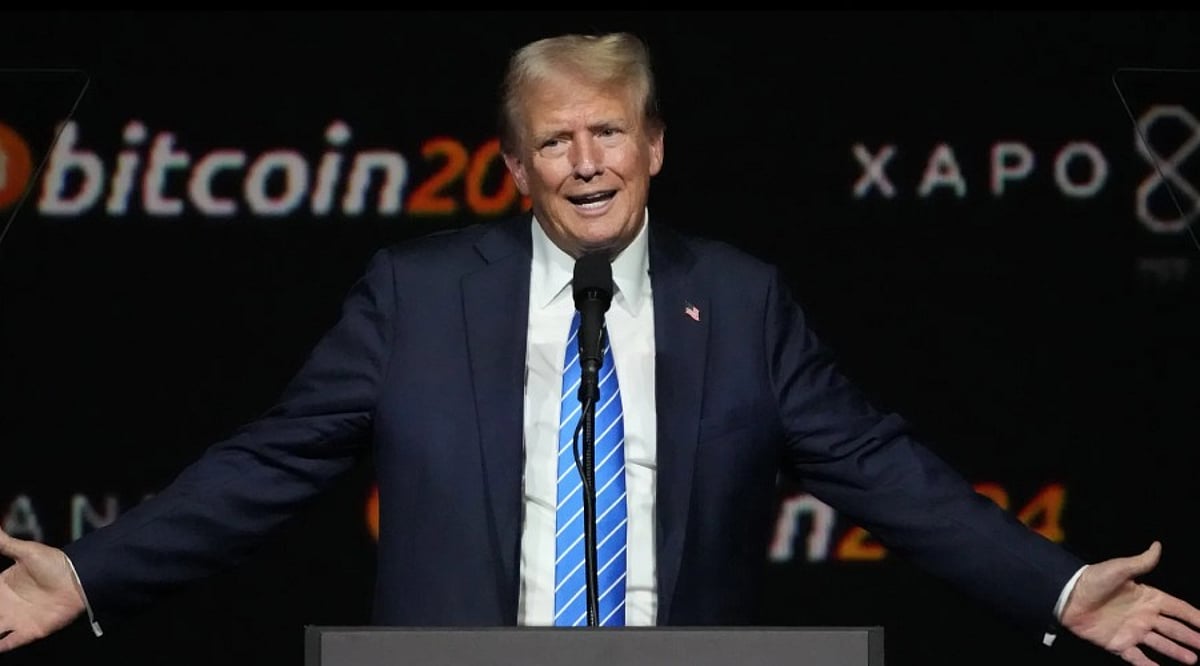
  • Trump Media Abandons Crypto.com CRO Treasury and ETF Plans, Pivots to TAE Merger

    Trump Media Abandons Crypto.com CRO Treasury and ETF Plans, Pivots to TAE Merger

    Trump Media has officially terminated its planned CRO treasury venture with Crypto.com and Yorkville Acquisition, citing changing market conditions and a strategic shift in business priorities. The decision also ends a separate ETF servicing agreement with Crypto.com, and the announcement triggered a drop of up to 5% in the CRO token price.

    End of the CRO Treasury Venture

    The original plan involved creating a publicly traded entity called Trump Media Group CRO Strategy, which would accumulate Cronos’ native token and generate extra returns through staking. Under that structure, Crypto.com was set to provide $1 billion in CRO and access to a $5 billion credit facility, with the broader initiative targeting approximately $6.4 billion in CRO purchases.

    Trump Media had already bought $105 million worth of CRO in September 2025 as part of a wider relationship with Crypto.com, which also included proposed token rewards across Trump Media products. However, those plans are now shelved.

    ETF and Truth Social Crypto Plans Retreat

    The companies also scrapped a separate arrangement involving planned exchange-traded funds from Yorkville America, under which Crypto.com had expected to service certain funds. Additionally, Trump Media has scaled back its plans to integrate Crypto.com-powered prediction markets directly into Truth Social, further narrowing the scope of its earlier crypto strategy.

    This pullback follows a period when Trump-linked entities aggressively expanded their crypto footprint after the 2024 presidential election, including ETF plans, CRO accumulation, and Bitcoin holdings.

    Strategic Pivot Toward TAE Merger

    Interim CEO Kevin McGurn explained that the digital asset treasury market has become saturated, prompting Trump Media to refocus on its core strengths: media, data licensing, and technology. The company is now prioritizing its proposed merger with fusion-energy firm TAE, with hopes of completing the transaction before the end of 2026.

    The shift comes amid ongoing legislative gridlock in Washington over the CLARITY Act, which has stalled due to debates about ethics and potential conflicts involving President Donald Trump and his family’s crypto ventures.

    Despite the retreat from crypto initiatives, Trump Media still holds Bitcoin on its balance sheet. Company filings show 9,542 BTC at the end of the second quarter, with 2,628 BTC recently moved to addresses associated with Crypto.com.

    Looking Ahead

    Trump Media’s decision to end its CRO treasury and ETF partnerships with Crypto.com marks a notable reversal in its crypto strategy. By redirecting attention toward media, data licensing, technology, and the proposed TAE merger, the company is charting a new course—while still maintaining its Bitcoin position.