
Tag: crypto custody

  • Quantum Computing Becomes a Regulatory Priority for EU Banks and Crypto Custodians

    Quantum Computing Becomes a Regulatory Priority for EU Banks and Crypto Custodians

    The European Union’s three financial supervisors have added quantum computing to their autumn 2026 risk assessment, expanding regulatory attention on how banks, exchanges, and custodians prepare for future cryptographic threats.

    The European Banking Authority, the European Insurance and Occupational Pensions Authority, and the European Securities and Markets Authority issued the assessment through their Joint Committee on September 23. Core findings had already reached the EU Economic and Financial Committee’s Financial Stability Table on September 10.

    The update places quantum computing alongside two other major concerns: reliance on providers and infrastructure outside the EU, and rapid growth in private credit markets.

    Why quantum risk matters for finance

    Supervisors said quantum computing could transform several areas of finance, including process optimization, fraud detection, compliance monitoring, pricing, and financial simulations. Yet the same technology could weaken cryptographic systems that institutions use at scale to protect communications, transactions, databases, and blockchains.

    The assessment does not claim that quantum computers can currently break Bitcoin, Ethereum, or modern financial encryption. Nor does it describe an active quantum attack on European financial infrastructure. Instead, it focuses on preparation for a potential technological shift.

    ‘Harvest now, decrypt later’ raises the stakes

    A central concern is timing. The supervisors warned that quantum risks could emerge before commercially viable quantum applications become widely available, creating a security challenge before many firms gain practical economic benefits from the technology.

    The threat also extends beyond future data. Attackers could collect encrypted information today and attempt to decode it years later when stronger computers become available—a method known as “harvest now, decrypt later.” Information intercepted now could therefore face future exposure if it retains financial or security value for many years.

    Existing EU rules push cryptographic migration

    European rules already provide a framework for dealing with emerging technology risks. The Digital Operational Resilience Act requires financial entities to use state-of-the-art cryptography against developing threats. The EU’s NIS Cooperation Group has also recommended that member states adopt a post-quantum cryptography migration strategy by the end of 2026.

    The September risk update arrives during a broader push toward digital resilience. On September 23, ESMA also named digital innovation as a new supervisory priority beginning in 2027.

    Bitcoin exposure illustrates the preparation gap

    For blockchain networks, some exposure can already be measured. Glassnode reported in May that 6.04 million BTC had public keys visible on-chain, representing 30.2% of Bitcoin’s issued supply. Glassnode valued those coins at more than $469 billion at the time of its assessment.

    According to the risk discussion, those visible public keys could become potential targets if a sufficiently advanced quantum computer gained the ability to defeat the cryptography protecting them. Such exposure would not necessarily require holders to make a new transaction.

    Estimates for so-called Q-Day—the point when quantum computers could break cryptographic protections underpinning networks including Bitcoin and Ethereum—vary. The material cited ranges from 2030 to 2032 and later.

    What it means for investors and custody providers

    For investors, the September assessment does not change the status of existing holdings today. It does, however, change the standards against which exchanges, banks, and custodians can increasingly be measured.

    Users can examine whether custody providers track post-quantum risks, maintain cryptographic migration plans, and explain how they intend to adapt security systems. Those checks rely on current provider practices rather than waiting for quantum technology to reach cryptographic-breaking capability.

    Bottom line

    EU supervisors now treat quantum computing as a financial security risk that requires preparation rather than immediate alarm. DORA and the 2026 migration timeline add pressure for stronger planning, while Bitcoin’s visible public-key exposure shows why crypto custodians must prepare before quantum capabilities mature.
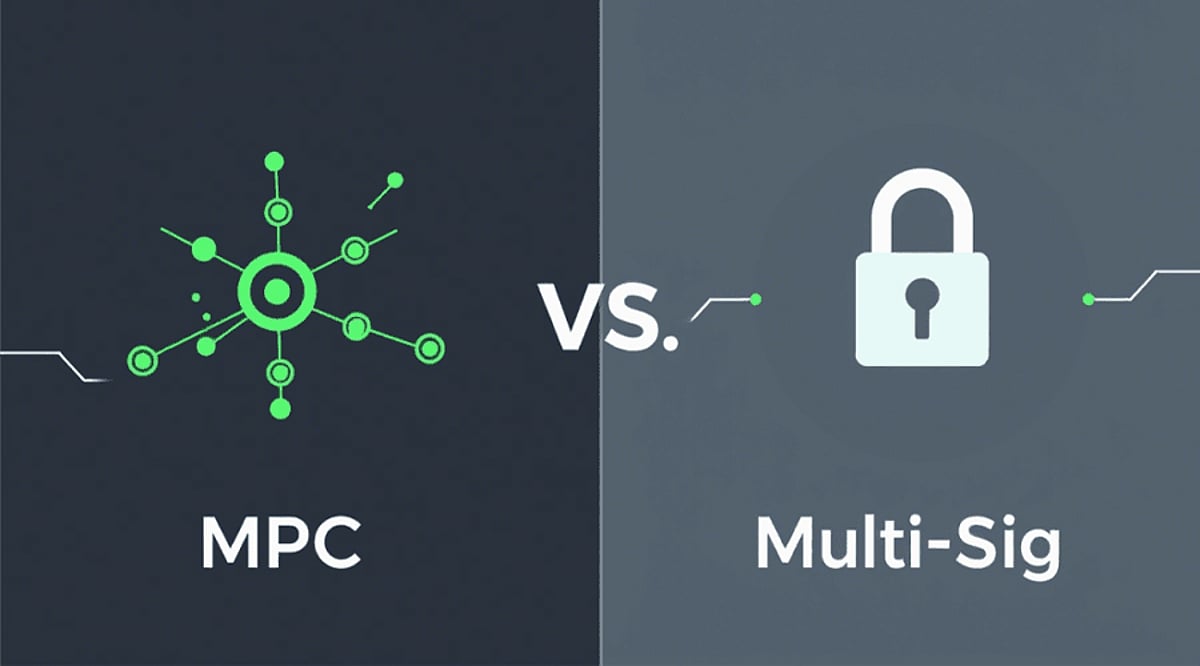

  • Understanding Crypto Custody: MPC, Multisig, and HSM Security Models Compared

    Understanding Crypto Custody: MPC, Multisig, and HSM Security Models Compared

    What Is Crypto Custody?

    Crypto custody refers to the protection and management of private keys and digital assets. Three prominent security models—Multi-Party Computation (MPC), Multisignature (Multisig), and Hardware Security Modules (HSM)—each employ distinct approaches to reduce the risk of private key compromise. Understanding how these models work helps organizations evaluate security architecture, transaction controls, and operational requirements.

    Multi-Party Computation (MPC)

    MPC distributes cryptographic operations across multiple parties or devices so that no single complete private key exists in one location. Transactions require cooperation among participants to authorize, significantly reducing the risk associated with storing a full private key in a single place.

    Multisignature (Multisig)

    Multisig requires multiple authorized private keys or signatures to approve a transaction. For example, a wallet can require two out of three designated signers before any funds move. This adds an extra approval layer and reduces reliance on any single individual or private key.

    Hardware Security Module (HSM)

    An HSM is a specialized physical device designed to securely generate, store, and use cryptographic keys. It restricts access to sensitive cryptographic operations and is widely used in security-conscious environments. Its protection model relies on dedicated hardware and controlled operational procedures.

    MPC vs Multisig

    Both MPC and multisig distribute control, but they differ technically. Multisig records multiple signatures as part of transaction authorization, whereas MPC distributes the cryptographic computation itself. Their implementation, blockchain compatibility, and operational workflows can vary significantly.

    MPC vs HSM

    MPC and HSM address key security through different technical approaches. MPC distributes cryptographic control among participants, while HSM provides hardware-based protection for keys and operations. Organizations should evaluate factors such as infrastructure, recovery procedures, access controls, transaction workflows, and integration needs when choosing between them.

    Choosing the Right Custody Model

    No single custody architecture suits every organization. MPC, multisig, and HSM-based systems involve different approaches to key management, transaction approval, infrastructure, and recovery. The appropriate model depends on asset type, operational structure, security requirements, blockchain compatibility, governance procedures, and the organization’s overall risk management framework.

  • 8 Key Security Controls Crypto Custodians Use to Safeguard Billions in Cold Storage

    8 Key Security Controls Crypto Custodians Use to Safeguard Billions in Cold Storage

    Crypto custodians safeguard enormous amounts of digital assets for institutions, exchanges, and investors. Their strongest defense often begins by keeping private keys offline.

    Cold Storage

    Cold storage keeps private keys offline and away from internet-connected systems. Because the keys are not continuously exposed to online threats, attackers have a much harder time accessing them remotely.

    Multi-Signature Controls

    Multi-signature technology can require several authorized parties to approve a transaction before funds move. Instead of relying on one private key, control is distributed across multiple keys or participants.

    Geographic Key Distribution

    Custodians can distribute key components across different secure locations. Separating critical pieces means a single physical incident, break-in or operational failure does not automatically expose the complete signing mechanism.

    Air-Gapped Systems

    Air-gapped systems are isolated from ordinary networks and the internet. Sensitive signing operations can take place on machines that have no direct online connection.

    Strict Access Controls

    Not everyone inside a custody organization should be able to access digital assets. Role-based permissions, authentication requirements, and separation of duties can restrict sensitive operations to authorized personnel.

    Transaction Approval Workflows

    Large cryptocurrency transfers can pass through multiple approval stages before execution. Automated rules and human review can help verify destinations, amounts, and transaction details.

    Continuous Monitoring

    Custodians monitor wallets, systems and transactions for unusual activity. Security teams can use automated alerts to identify suspicious access attempts, unexpected transfers, or abnormal behavior.

    Audits and Recovery Plans

    Security does not end with protecting private keys. Custodians also need regular audits, testing, and recovery procedures to prepare for operational failures or security incidents.

  • Why Custody and Succession Planning Are Becoming Crypto’s Next Big Trust Challenge

    Why Custody and Succession Planning Are Becoming Crypto’s Next Big Trust Challenge

    India’s crypto market has evolved beyond early speculation. According to a June survey by Mudrex, over 41% of Indian crypto investors now identify as long-term, buy-and-hold investors. This shift toward long-term ownership brings a critical question: What happens to digital assets when the owner is no longer around to access them?

    From Speculation to Long-Term Ownership

    Prateek Gupta, Head of Business at Mudrex, noted a generational trend: short-term trading drops steadily with age. Nearly a third of investors aged 18-24 trade short-term, compared to below 8% among those aged 55 and above. “Crypto ownership in India has been shifting from short-term speculation to long-term wealth building,” he said.

    The Access Problem

    Legal ownership does not guarantee wallet access. “A family can have every legal right to a deceased holder’s assets and still be locked out without the private keys or a registered nominee,” Gupta explained. He urged platforms to build nomination, succession documentation, and estate-planning support directly into the product.

    Regulatory Framework Strengthens Investor Confidence

    As of mid-2026, 54 Virtual Digital Asset Service Providers are registered with the FIU-IND under the Prevention of Money Laundering Act, including major exchanges like CoinDCX, CoinSwitch, Mudrex, ZebPay, WazirX, and Binance. The framework mandates strict KYC, suspicious transaction reporting, and continuous monitoring.

    Nomination: A Sign of Maturity

    CoinSwitch co-founder Ashish Singhal highlighted the platform’s nomination feature, comparing it to established practices in equities. “Just as nomination is an established practice across equities and other financial assets, crypto ownership needs the same level of preparedness,” he said. The feature allows investors to nominate a person for asset transfer in case of unforeseen circumstances.

    What Platforms Must Prioritize

    Building trust requires clear nomination processes, simplified documentation for legal heirs, secure key management, transparent communication, and regular audits of custody infrastructure.

    Final Words

    India’s crypto ecosystem has matured in compliance and investor behavior. The next phase hinges on solving the succession puzzle. Platforms that build robust nomination systems and transparent custody practices will earn deeper investor confidence.

  • ESMA Launches EU-Wide Crypto Custody Review Following MiCA Deadline

    ESMA Launches EU-Wide Crypto Custody Review Following MiCA Deadline

    The European Securities and Markets Authority (ESMA) has initiated a comprehensive review of licensed crypto custody providers across the European Union, just days after the full implementation of the Markets in Crypto-Assets (MiCA) regulation on July 1, 2026. Announced on July 8, 2026, this Common Supervisory Action (CSA) marks a significant shift from the licensing phase to ongoing compliance and supervision in the crypto sector.

    ESMA’s review will focus on how authorized crypto-asset service providers (CASPs) safeguard client assets through secure custody practices, operational resilience, and risk management. National regulators will inspect a risk-based sample of licensed firms during the assessment period, running from the second half of 2026 through the first half of 2027.

    Key Areas of Assessment

    The supervisory action will examine several critical aspects of crypto custody operations under MiCA:

    • Governance arrangements – How firms manage and oversee custody processes.
    • Private key management – Security measures for controlling access to client assets.
    • Storage controls – Physical and logical safeguards for digital asset storage.
    • Transaction monitoring – Systems for detecting and reporting suspicious activities.
    • Incident detection procedures – Protocols for identifying and responding to security breaches.
    • Smart contract risks – Assessment of vulnerabilities in automated agreements.
    • Third-party reliance – Evaluation of technology providers supporting custody operations.

    Post-MiCA Transition Period

    The review follows the expiration of MiCA’s transitional period on July 1, 2026. From that date, any company offering crypto services in the EU without proper MiCA authorization is violating EU law. ESMA has instructed unauthorized firms to cease operations and implement orderly wind-down plans, which must include notifying clients and allowing them to transfer assets to an authorized provider or a self-hosted wallet. Additionally, MiCA prohibits authorized firms from outsourcing custody services to entities lacking CASP authorization.

    No New Obligations, But Higher Scrutiny

    ESMA confirmed that the review introduces no new custody obligations. Instead, regulators will assess whether licensed firms already meet the operational standards established under MiCA. Custody providers remain liable for client asset losses resulting from incidents attributable to them, with liability capped at the market value of the lost assets. The review aims to ensure firms have robust controls to reduce operational failures and protect customer holdings.

    According to CoinPaprika data cited by ESMA, the global cryptocurrency market stood at approximately $2.25 trillion on July 8, 2026, after a 2% decline in the previous 24 hours. This substantial market value underscores the importance of secure custody practices.

    Future Implications

    The Common Supervisory Action will continue until the first half of 2027. ESMA will then compile its findings into a report for its Board of Supervisors during the second half of 2027. The results, which will not identify individual firms, will guide how national regulators apply MiCA standards and supervise crypto custody providers across the EU. This coordinated effort aims to ensure consistent supervisory practices and strengthen the overall security of the European crypto market.