
Blockchain security fundamentally determines network value, and three major projects—SUI, Avalanche, and BlockDAG—currently demonstrate contrasting approaches to defense and token distribution. Understanding these strategies helps evaluate long-term investment potential.
SUI’s Staking and Token Unlock Dynamics
SUI relies on a validator-based Proof-of-Stake mechanism to maintain network integrity, but ongoing token unlocks pressure its price. On August 1, 13.72 million SUI tokens (worth approximately $9.9 million) were unlocked as scheduled, representing a 0.34% supply increase. This release affected tokens from the community pool, initial contributors, and Mysten Labs treasury, contributing to a price dip of over 5%. As of early August, SUI trades around $0.68.
Despite price weakness, underlying metrics show strong engagement. The network has processed over 4.53 billion cumulative transactions, with daily active users exceeding 200,000 on multiple days in July. The team continues development, revealing plans for Sui Basecamp 2026 and enterprise workflow tools called Spheres. However, SUI’s complete dependence on digital stake-based consensus means validator yield mechanisms remain crucial for network security.
Avalanche’s Strong Staking and Institutional Growth
Avalanche secures its network through capital commitment, supported by a dedicated validator base. AVAX traded between $6.59 and $6.60 on August 2, reflecting a 4% 24-hour gain while remaining flat week-over-week. A Bitwise staking report highlights that 41.5% of all AVAX is staked, indicating significant supply illiquidity and structural community commitment.
Technological progress continues. The Avalanche Foundation launched the Helicon update on its Fuji testnet, adding continuous execution to the C-Chain, though mainnet deployment is pending. In practical adoption, Crypto.com reports that Hyundai is testing Avalanche for global stablecoin settlements. An upcoming token unlock on August 10 may create near-term volatility. Avalanche’s security model relies entirely on locked capital, making staking density a key metric.
BlockDAG’s Hardware-Driven Security and Global Distribution
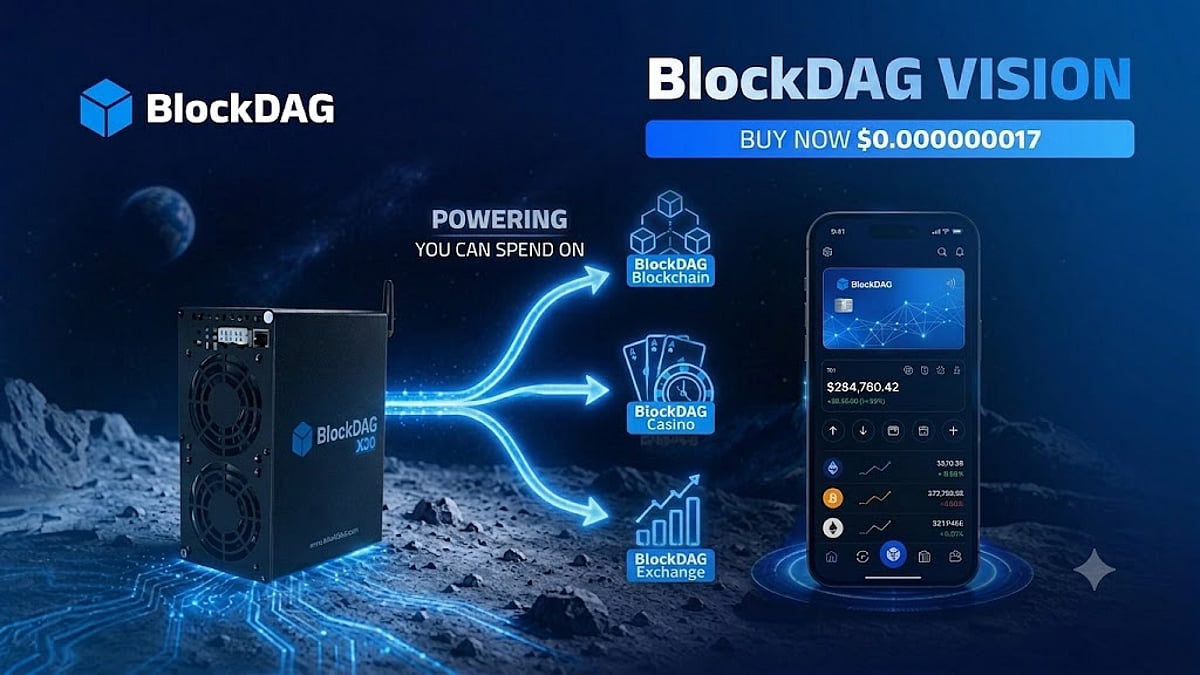
BlockDAG takes a fundamentally different approach, using physical Proof-of-Work hardware for chain security and user acquisition. The project has begun shipping 22,800 miners across its X10, X30, and X100 product lines, scaling manufacturing toward 2,400 units per week. This physical rollout coincides with a promotional price of $0.000000017 and a planned $0.025 BuyBack target, plus a 22% discount for Live Swap buyers.
This hardware-first strategy achieves two goals simultaneously. First, decentralized hardware mining distributes hash power, securing the ledger more robustly than concentrated capital pools. Second, physical delivery directly onboards users—each shipped miner converts a retail purchaser into an active network participant receiving ongoing mining rewards into their ecosystem wallet for trading, staking, or spending.
Geographic diversification strengthens the network further. Deploying hardware nodes across multiple jurisdictions eliminates single-point vulnerabilities and regulatory risks. Additionally, over 3.6 million users employ the X1 mobile app as a frictionless second onboarding layer. Where SUI and Avalanche depend on financial assets locked in their ledgers, BlockDAG merges hardware security with organic user growth.
Key Takeaways
- SUI boasts impressive transaction throughput with 4.53 billion historical transactions, but ongoing supply unlocks pressure its $0.68 price.
- Avalanche demonstrates strong holder commitment with 41.5% of supply staked at $6.60, backed by enterprise initiatives like Hyundai’s stablecoin project and the Helicon testnet launch.
- BlockDAG differentiates by deploying 22,800 physical mining machines alongside 3.6 million X1 app miners, increasing network participation and scaling device throughput to 2,400 per week.
For market participants evaluating long-term durability, the strategic distinction is clear: traditional platforms lock capital to secure ledgers, while BlockDAG uses physical hardware distribution to secure its chain while continuously onboarding daily users. This dual-purpose approach positions BlockDAG as a standout network ahead of its main exchange listings.
Further Information
Presale: https://purchase.blockdag.network
Website: https://blockdag.network
Telegram: https://t.me/blockDAGnetworkOfficial
Discord: https://discord.gg/Q7BxghMVyu
Disclaimer: This article is for informational purposes only and does not constitute financial or investment advice. Cryptocurrency investments carry risk; always conduct your own research before making decisions.

