Tag: crypto market

  • Dogecoin Price Analysis: Can DOGE Bounce Back After Dogechain’s Closure?

    Dogecoin Price Analysis: Can DOGE Bounce Back After Dogechain’s Closure?

    Dogecoin recently faced fresh uncertainty after the shutdown of Dogechain, a blockchain project that expanded DOGE’s utility through NFTs, decentralized finance, staking, and smart contracts. Since the original Dogecoin network does not support these advanced features, Dogechain played a critical role in providing additional use cases. Its sudden closure has raised concerns about Dogecoin’s ability to recover and sustain long-term growth.

    Why Dogechain Was Important for Dogecoin

    Dogecoin started as a meme coin and later became one of the most popular cryptocurrencies. Despite its popularity, the network has always lacked the advanced blockchain features that projects like Ethereum and Solana offer. Dogechain addressed this by allowing DOGE holders to use their coins in decentralized applications, NFT marketplaces, and staking platforms, giving Dogecoin access to Web3 services that were previously unavailable. With its shutdown, that extra utility has disappeared, pushing Dogecoin back toward its original identity as a payment-focused meme coin without strong ecosystem development.

    Current DOGE Price Performance

    As of late June 2026, Dogecoin price remains under pressure, trading between $0.074 and $0.076 with weak market momentum. The coin has seen a correction over recent weeks as the broader crypto market struggled to build a recovery. Current data shows DOGE near $0.07 to $0.08, with a market capitalization of about $11.2 billion and daily trading volume around $460 million. The circulating supply has reached nearly 154.8 billion DOGE.

    Why Recovery Still Looks Possible

    While the Dogechain shutdown has damaged short-term confidence, several factors could support a price recovery. Dogecoin’s large and dedicated community remains one of its biggest strengths, having supported the project through various market cycles. Whale activity also shows positive signs — recent blockchain data reveals whale transactions hit a six-month high, with large holders controlling more than 108 billion DOGE, indicating steady accumulation by major investors.

    The overall crypto market trend could also help. Historically, Dogecoin follows Bitcoin’s price movements closely; if Bitcoin enters a bullish phase, DOGE often sees renewed demand from retail traders. Additionally, Elon Musk’s ongoing public connection with Dogecoin continues to keep the coin visible and popular among traders worldwide.

    Technical Price Levels to Watch

    From a technical perspective, Dogecoin now sits near a critical support zone. The first major support level is at $0.070. If selling pressure increases, the next support sits near $0.067, followed by a lower zone at $0.060. On the upside, the first resistance level is around $0.085. Breaking $0.090 would be needed before any move toward $0.100 becomes plausible. Analysts highlight the 200-day moving average near $0.085 as the most important level for any short-term bullish recovery — a move above this could reignite buying interest.

    Long-Term Future of Dogecoin

    Dogecoin still faces a major structural challenge: unlike Bitcoin, it has no maximum supply limit. Approximately 5 billion new DOGE enter circulation each year, creating constant inflationary pressure. With the circulating supply already close to 154 billion, this makes long-term price growth more difficult compared to cryptocurrencies with finite supplies.

    Predictions remain mixed. Some analysts expect DOGE to recover toward $0.15–$0.20 if the crypto market enters a strong bull run in the next cycle. More aggressive forecasts suggest higher targets, but meme-based assets remain highly unpredictable.

    Why This Matters

    The removal of Dogechain’s infrastructure strips Dogecoin of vital decentralized utilities like staking and NFTs. While strong community backing prevents an immediate crash, returning solely to a payment-based asset increases its reliance on unpredictable retail sentiment and speculative social trends.

    Final Outlook

    The Dogechain shutdown has created a setback for Dogecoin, weakening short-term confidence and raising fresh concerns about utility and future development. At the same time, Dogecoin continues to benefit from strong community support, rising whale accumulation, and overall crypto market trends. For now, $0.067 remains the key support level, while a move above $0.090 could confirm a stronger recovery. Dogecoin faces pressure at present, but the possibility of recovery remains alive in the coming months.

  • Crypto Sell-Off Deepens: Why Bitcoin, Ethereum, XRP, and Dogecoin Are Dropping and What July Could Bring

    Crypto Sell-Off Deepens: Why Bitcoin, Ethereum, XRP, and Dogecoin Are Dropping and What July Could Bring

    The cryptocurrency market has entered a turbulent phase as major digital assets continue to lose value. Bitcoin, Ethereum, XRP, and Dogecoin have all suffered sharp price drops in the final weeks of June 2026. Investor confidence is fragile, and many traders are watching closely to see whether July will bring relief or further declines.

    Market Overview

    Bitcoin slipped below the critical $60,000 level, trading near $59,800 — one of its lowest points in months. Ethereum fell more steeply, now around $1,555. XRP dropped to roughly $1.03, while Dogecoin declined sharply to about $0.074. The total crypto market capitalization has fallen below $2.3 trillion, erasing billions in value.

    Key Factors Driving the Decline

    Weak Global Stock Markets

    Crypto prices are increasingly correlated with technology stocks. Recent sell-offs in the tech sector — driven by weakness in semiconductors and artificial intelligence — have spilled over into digital assets, amplifying the downturn.

    Massive Bitcoin ETF Outflows

    Bitcoin exchange-traded funds (ETFs) experienced outflows of nearly $1.79 billion in the past week alone, one of the largest weekly withdrawals on record. This selling pressure has added to Bitcoin’s woes and reduced institutional demand.

    Shift Toward AI Stocks

    Investor capital is rotating out of crypto and into AI-related companies, which are perceived as offering faster growth. This shift has drained liquidity from the crypto market, hitting Ethereum, XRP, and Dogecoin especially hard.

    Heavy Liquidations

    The futures market saw over $1 billion in long positions liquidated as leveraged traders were forced out. Bitcoin open interest has dropped sharply, indicating that many short-term traders have exited, deepening the correction.

    Why Altcoins Fell Harder Than Bitcoin

    Ethereum’s decline was exacerbated by slowing network activity and weaker decentralized finance demand. XRP, despite some positive institutional news, could not escape the broader market weakness. Dogecoin, as a highly speculative meme coin, experienced the largest percentage drop — nearly 9.8% in the past week, compared to Bitcoin’s 4.5% fall.

    Can July Bring a Recovery?

    Analysts are watching Bitcoin’s support zone between $50,000 and $60,000, a range that has historically attracted buyers. A recovery could occur if ETF outflows slow and global stock markets stabilize. However, risks remain: high interest rates, weak institutional demand, and cautious sentiment could push prices lower before any rebound. July offers hope for stabilization, but a strong rally depends on improved macroeconomic conditions.

    Frequently Asked Questions

    1. Why is Bitcoin falling right now?
      Bitcoin is dropping due to ETF outflows, weak stock markets, and reduced investor confidence.
    2. Why did Ethereum fall more than Bitcoin?
      Ethereum faced extra pressure from slowing network activity and declining DeFi demand.
    3. Why is Dogecoin dropping sharply?
      Dogecoin is highly speculative and tends to react more aggressively during market fear.
    4. Can crypto recover in July 2026?
      A recovery is possible if global markets stabilize and institutional buying returns.
    5. What price level matters most for Bitcoin now?
      Analysts closely watch the $50,000 to $60,000 support zone for possible recovery.
  • AI Stock Rout Lays Bare the Perils of Wall Street’s $270 Billion Leveraged Betting Machine

    AI Stock Rout Lays Bare the Perils of Wall Street’s $270 Billion Leveraged Betting Machine

    A sweeping sell-off in artificial intelligence stocks has pulled back the curtain on the sprawling world of leveraged investment products, exposing risks that now ripple through a $270 billion market. The downturn, which started with major US tech firms, quickly spread to Asian chipmakers, SpaceX-linked funds, and crypto-related assets, underscoring how interconnected and fragile these speculative vehicles have become.

    Leveraged AI Funds Intensify the Sell-Off

    Investors fled AI stocks this week amid mounting concerns over lofty valuations and surging infrastructure costs. Alphabet shares dropped about 7% in a single session, wiping out roughly $270 billion in market value. The NASDAQ Composite and semiconductor stocks also suffered heavy losses.

    The selling pressure soon crossed into Asia. Samsung Electronics, SK Hynix, and other chipmakers saw declines as investors reduced exposure. In South Korea, several popular funds offering two or three times the daily returns of major tech stocks lost more than 20% over the week.

    Leveraged ETFs, which use derivatives to magnify daily price movements, now hold over $270 billion globally—more than $200 billion in the US and over $45 billion in Asia. Their daily rebalancing can generate massive buy and sell orders, amplifying market moves. Barclays estimated that recent rebalancing by US leveraged ETFs reached several times its long-term average.

    “If there’s a general desire from unsophisticated retail investors for some attribute that does not actually make them better off, this strategy too will be made available to them.” — Samuel Hartzmark, behavioral finance professor at Boston College

    SpaceX Funds Highlight the Dangers of Concentrated Bets

    Funds tied to SpaceX offered another cautionary tale. After the rocket company’s public debut, leveraged SpaceX products attracted nearly $1 billion. Yet some bullish funds fell about 40% from their launch prices as the stock reversed course.

    These products let investors amplify their bets on SpaceX without buying the underlying shares directly. However, the company’s limited public float and expected index inclusion created technical pricing pressures independent of fundamentals.

    “There is a significant risk that smaller investors will end up feeling the pinch when the fundamentals reassert themselves.” — Christopher Getter, portfolio manager at Simplify Asset Management

    Benchmark indexes also weakened. The S&P 500 lost nearly 2%, while the NASDAQ 100 dropped more than 4%. Selling in big tech stocks further pressured funds tied to AI, semiconductors, and newly listed companies.

    Strategy’s Decline Spreads Pain to Crypto Markets

    The rout extended into crypto via Strategy, the company known for its massive Bitcoin holdings. Strategy has become the centerpiece of several products—leveraged ETFs, common shares, and preferred stock.

    Bullish and bearish leveraged ETFs linked to Strategy have lost more than 90% since their 2024 launches, after attracting billions from traders seeking amplified exposure. Strategy’s preferred shares also fell below their original values.

    The simultaneous decline showed how multiple products can converge on the same risky idea. Investors used different structures, but all depended on Bitcoin demand and Strategy’s ability to raise capital.

    “You get products like these that are marketed to meet perceived demand. There are many financial products out there that do not have a reason to exist, but they are sold.” — Ellen Hazen, F.L. Putnam Investment Management

    The products didn’t start the decline, but their structure supercharged trading activity as AI stocks, SpaceX shares, and crypto assets fell. James St. Aubin of Ocean Park Asset Management summed it up: “Anyone using leverage should understand they are playing with fire.”

  • Bitcoin Rebounds to $61,767 as Crypto Market Regains Traction

    Bitcoin Rebounds to $61,767 as Crypto Market Regains Traction

    Bitcoin Price Recovery Gains Momentum

    Bitcoin has staged a sharp recovery from recent weakness, climbing back to approximately $61,767 as of June 25, 2026. After dipping below the crucial $60,000 mark earlier in the week, strong buyer activity swiftly pushed prices higher, restoring a degree of confidence across the cryptocurrency market. At the time of writing, Bitcoin is trading in a stable range between $61,500 and $61,800, with total market capitalization near $1.24 trillion and daily trading volume hovering around $42–$44 billion. Despite the bounce, Bitcoin remains nearly 2% lower over the past 24 hours and roughly 4% down on the week, indicating that a full recovery has not yet materialized.

    Price Action Shows Buyers Back in Control

    The latest 5-minute BTC/USD chart reveals clear strength following an extended period of sideways movement. Bitcoin opened near $59,300 and gradually attracted buying interest. Once the price crossed $60,000, momentum accelerated with strong volume support, eventually reaching the $61,700 resistance zone. Pullbacks remained shallow, and buyers consistently returned after each dip, signaling robust demand. A subsequent breakout above $60,800 was followed by another swift upward leg, suggesting that larger market participants view the recent correction as a buying opportunity.

    Key Levels to Watch

    Bitcoin now sits at a critical decision point. The immediate resistance is near $61,800, which has already slowed upward movement multiple times. A clean break above this level targets $62,200, followed by $63,500 and potentially $64,000 in the near term. On the downside, support is established at $61,300, with stronger support near $60,800—an important breakout zone during the recent rally. The most significant floor remains at $60,000, while a deeper decline could bring prices back to $59,000, where buyers previously stepped in aggressively.

    ETF Outflows Continue to Weigh on Sentiment

    Continued outflows from spot Bitcoin exchange-traded funds (ETFs) remain a key factor behind recent weakness. These products typically attract institutional capital, and reduced inflows have contributed to selling pressure. Earlier this month, Bitcoin traded near $70,000, but diminished ETF buying weakened momentum and drove prices lower over subsequent sessions. Institutional caution continues to limit upside potential.

    Global Economic Pressure Adds to the Mix

    Bitcoin has also been impacted by broader macroeconomic headwinds. Investors have reduced exposure to risk assets amid concerns about slowing economic growth and weakness in major technology stocks. The cryptocurrency often moves in tandem with high-risk assets during periods of uncertainty, and this correlation amplified selling pressure earlier in the week.

    Options Expiry Could Spark Volatility

    A major event looming over the market is the expiry of nearly $10 billion worth of Bitcoin options contracts at the end of June. Large options expirations frequently trigger sudden price swings as traders adjust their positions before settlement. Many bullish contracts are currently placed well above Bitcoin’s spot price, adding to uncertainty and raising the likelihood of sharp movements over the next several sessions.

    Technical Indicators Point to Improving Momentum

    Short-term technical indicators are showing signs of improvement. The Relative Strength Index (RSI) has climbed from oversold territory, typically indicating increasing buying pressure. Volume near $60,000 has been heavy, suggesting that traders viewed that level as an attractive entry point. Moving averages on lower timeframes hint at a short-term trend reversal, though the broader trend remains uncertain as Bitcoin still trades below the major $65,000 resistance level.

    Market Outlook: Cautiously Positive

    Bitcoin now appears poised for a decisive move that could set its short-term trajectory. Buyers have shown resilience, especially near support, after a solid recovery above $61,500. If Bitcoin can break above $62,200, a more significant rally toward $64,000–$65,000 may follow. Conversely, if selling pressure resumes and the price drops below $60,800, a retest of $59,000 becomes plausible. For now, the market remains fragile due to economic uncertainty, ETF outflows, and the impending options expiry. The key question is whether this rebound will evolve into a sustained uptrend or prove to be a temporary bounce before renewed selling.

  • Dogecoin Faces Make-or-Break Moment as Key Support Nears $0.075 in 2026

    Dogecoin Faces Make-or-Break Moment as Key Support Nears $0.075 in 2026

    Dogecoin is trading near $0.076 after an 11% weekly decline, with the critical support zone between $0.075 and $0.085 under intense pressure. Market sentiment remains uncertain as analysts debate whether the meme coin can stage a recovery or sink further in the second half of 2026.

    Current Dogecoin Price in June 2026

    As of June 25, 2026, Dogecoin is trading around $0.076 (roughly ₹7.15 to ₹7.50). The coin has lost nearly 11% over the past seven days, signaling strong short-term weakness. Despite the drop, daily trading volume remains elevated—between $900 million and $950 million—indicating sustained market activity. Dogecoin’s total market capitalization stands at approximately $11.7 billion, keeping it among the largest cryptocurrencies.

    Major Support Level Faces Pressure

    The most important price zone for Dogecoin currently sits between $0.075 and $0.085. This range has become the coin’s primary support area. The 200-day moving average, a key technical indicator, is near $0.0859 and is viewed by analysts as the dividing line between bullish and bearish conditions.

    If Dogecoin fails to hold above this support, further downside could follow. Some analysts predict a drop toward $0.070 first, and if selling pressure intensifies, the next possible level is near $0.065. Recent price action shows buyers struggling to push the coin above resistance, suggesting sellers remain in control of short-term momentum.

    Technical Signals Show Weakness

    Several indicators point to weakness in Dogecoin’s price structure. The Relative Strength Index (RSI) is near 59, meaning the coin has not yet entered oversold territory—suggesting room for further declines. Meanwhile, the MACD indicator is showing bearish divergence, often a precursor to additional correction.

    Market Sentiment Looks Uncertain

    The overall mood around Dogecoin remains mixed. Some experts believe the coin can recover if Bitcoin stays strong above its own key supports. Others think meme coins may continue to underperform in 2026 as investors shift toward projects with stronger real-world utility.

    Dogecoin has underperformed the broader crypto market this week: while DOGE dropped 11.8%, the overall cryptocurrency market fell by about 3.5%. This reflects a growing caution toward speculative digital assets, especially meme coins.

    Still, Dogecoin benefits from one of the most loyal communities in crypto, which often helps sustain long-term interest and support.

    New Developments Keep Dogecoin Relevant

    Despite the price weakness, several developments have kept Dogecoin in the spotlight. A free-mint NFT collection built on the Dogecoin blockchain reached a record floor price of nearly 44,900 DOGE (about $4,100), showing the ecosystem may offer more than just payments.

    Speculation around future payment adoption has also grown, and whale activity has picked up—large holders are accumulating DOGE during the dip, signaling confidence in long-term value.

    Dogecoin Price Forecast for 2026

    Analysts offer a range of forecasts. If support holds, Dogecoin could trade between $0.083 and $0.10 by year-end, assuming the broader crypto market remains stable. A more bullish scenario—driven by a Bitcoin rally and renewed meme-coin interest—could push prices to $0.12–$0.20. Aggressive targets of $1 appear highly unlikely given current conditions.

    Immediate resistance sits at $0.085, followed by $0.095, with $0.10 as the major psychological barrier. A surge in buying volume could push DOGE above $0.12 by late 2026.

    Why This Matters

    Dogecoin is testing the limits of its meme-driven power. With retail investors pulling back and institutional ETF interest nearly nonexistent, the defense of the $0.075–$0.085 support zone will determine whether DOGE stabilizes or enters a prolonged slide.

    Final Outlook

    The next few weeks are critical. If Dogecoin holds above $0.075–$0.085, a gradual recovery toward $0.10–$0.12 is possible. Failure to do so could hand full control to sellers.

    FAQs

    1. What is Dogecoin’s current price in June 2026? Dogecoin trades near $0.076, following an 11% weekly drop.
    2. What is the main support level for Dogecoin? The key support zone is $0.075–$0.085, with the 200-day moving average at $0.0859.
    3. Can Dogecoin reach $0.10 in 2026? Yes, if support holds and market conditions improve.
    4. Why has the price dropped recently? Due to broader market weakness and reduced appetite for speculative assets.
    5. Could Dogecoin hit $1 in 2026? Highly unlikely given current bearish sentiment.
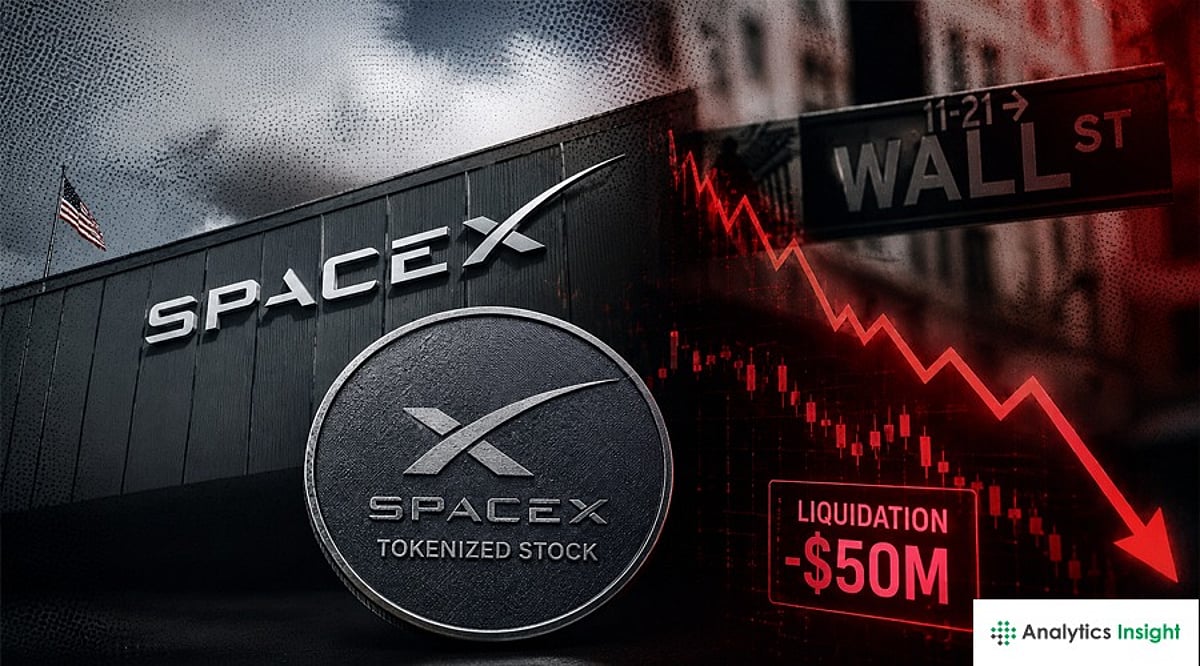
  • SPCX Perpetual Liquidations Surpass $50 Million as SpaceX Stock Tests Nasdaq Debut

    SPCX Perpetual Liquidations Surpass $50 Million as SpaceX Stock Tests Nasdaq Debut

    SPCX perpetual contracts have witnessed over $50 million in liquidations within 48 hours as SpaceX shares dipped below their $150 Nasdaq opening price. The event underscores the heightened volatility and risk inherent in leveraged tokenized stock products, which can react far more aggressively than traditional equity markets.

    What Happened

    According to market data, SPCX-linked perpetual contracts recorded more than $50 million in forced closures, trailing only Bitcoin and Ethereum in liquidation volume among crypto derivatives during that period. The liquidations followed a sharp decline in SpaceX stock, which fell below its Nasdaq debut price after a major drawdown. Investors who bought shares above the company’s $135 initial public offering price are now facing losses.

    How SPCX Differs from Traditional Stock Ownership

    SPCX products are pre-IPO or equity perpetual contracts that offer leverage, cash settlement, and funding mechanisms. Unlike owning actual shares, these instruments provide price exposure without ownership rights, voting rights, or share delivery. Binance lists SPCXUSDT as a USDT-settled pre-IPO perpetual contract, while Coinbase explains that such products settle entirely in cash. Crypto.com describes a structure allowing conversion between SpaceX pre-IPO perpetuals and equity perpetuals depending on platform mechanics.

    This structure places traders in a derivatives-driven environment where margin requirements and funding rates dictate outcomes. If prices move sharply against a position, exchanges can liquidate traders automatically at any time—without waiting for a market close.

    Liquidation Pressure Builds Around Leveraged Exposure

    The $50 million liquidation figure is a notable signal because Bitcoin and Ethereum typically dominate liquidation rankings due to deep liquidity and large leveraged positions. SPCX joining that group reflects strong demand for SpaceX-linked exposure. Liquidation risk does not require a total collapse in the underlying asset—a combination of leverage, open interest, and adverse price movement can easily trigger forced exits.

    While traditional investors may still be evaluating whether the decline reflects temporary weakness or fundamental concerns, perpetual contract markets react instantly, closing positions as soon as collateral support drops.

    Tokenized Stock Perpetuals Face a Different Risk Cycle

    Tokenized stock perpetuals trade around the clock, using venue-specific mark prices and funding systems while enforcing margin requirements continuously. This continuous trading can amplify disagreements over value into sudden liquidation pressure, even as traditional investors are still assessing the stock’s outlook.

    These products may ultimately serve as effective risk-transfer markets, but that will require improved liquidity and reduced leverage. Until then, high open interest and persistent volatility will likely sustain heavy market stress.

    What’s Next

    SpaceX stock slipped below its Nasdaq opening price, triggering the $50 million liquidation wave for SPCX. The event highlights how tokenized stock perpetuals can lead to rapid forced exits when leverage and margin rules kick in. Market participants are now watching to see if the asset stabilizes and whether open interest, funding rates, and liquidation activity will flatten out.

  • Bitcoin Options Expiry Looms as Crypto Market Sinks to New Lows

    Bitcoin Options Expiry Looms as Crypto Market Sinks to New Lows

    Bitcoin and Ethereum options worth approximately $11 billion are set to expire on Friday, June 26, as the cryptocurrency market trades near fresh lows. The batch includes around 153,500 Bitcoin contracts valued at roughly $9.3 billion. Month-end and quarter-end expiries often bring sharper price swings, adding to market tension.

    The total crypto market value has dropped by more than $180 billion since Monday, slipping to an almost two-year low. Spot prices have taken another hit as traders face a fresh wave of pressure.

    Bitcoin traded near $58,000 before recovering toward $60,000 in Asian trading, down 2.7% on the day and 4.5% on the week. The expiry could add more pressure to an already battered spot market.

    Bitcoin Options Lean Toward Calls

    Bitcoin options show a put/call ratio of 0.73, indicating call sellers slightly outweigh put sellers in this week’s expiration. Even so, the setup still points to a tense finish for traders. Max pain sits near $72,000, about $13,000 above current spot prices, meaning most contracts would expire out of the money.

    Open interest remains highest at the $80,000 strike on Deribit, reaching $1.4 billion. Short sellers also hold about $1 billion in open interest at $60,000. Across all exchanges, total BTC options open interest has climbed to $34 billion, according to Coinglass.

    Deribit noted that BTC heads into expiry well below its $72,000 max pain level, and recent quarterly expiries have shown limited evidence of a stable pinning effect before settlement.

    Ethereum Joins the Wider Risk-Off Move

    Ethereum options add another layer of pressure. Around 1 million ETH contracts worth $1.6 billion are expiring, with max pain near $2,000 and a put/call ratio of 0.54. Total ETH options open interest across exchanges stands near $5.7 billion.

    Greeks Live said puts continue to command a clear premium over calls across major tenors, with near-term downside protection remaining in demand while longer-dated pricing stays more stable.

    Ether fell more than 5% to about $1,555 and briefly touched $1,522. XRP dropped 4.9% to $1.03, Dogecoin slid 3.8% to $0.074, and Solana fell 1.2% to $68. Ether was also briefly overtaken by Tether in market cap.

    Pressure also came from outside crypto. Global stocks fell to a two-week low after Apple dropped 6.1% on higher product prices. South Korea’s Kospi sank as much as 9%, while Nasdaq 100 futures fell 1.5%. Brent crude slipped below $74 a barrel after a strike in the Strait of Hormuz briefly renewed supply concerns.

    What’s Next?

    The $11 billion Bitcoin options expiry arrives as crypto markets remain under heavy pressure following sharp price declines across major digital assets. Rising open interest, key max pain levels, and broader weakness in global markets leave traders focused on potential volatility during the quarterly settlement.