Tag: crypto payments

  • Stablecoin Contractor Payouts: How to Keep Invoices and Records Audit-Ready

    Stablecoin Contractor Payouts: How to Keep Invoices and Records Audit-Ready

    Key Takeaways

    • A stablecoin transfer confirms on-chain in minutes, but an auditor checks the same three things they check on a bank payment: an agreement, a matching invoice, and proof the money reached the right person.
    • US payers still need a signed W-9 or W-8BEN on file before the first payout. From 1 January 2026 the 1099-NEC reporting threshold moves to $2,000, and missing documentation defaults to backup withholding.
    • A transaction hash is not an invoice. It confirms a transfer happened; it says nothing about what the payment was for or which agreement it settles.
    • Wallet address verification — matching the network, confirming the recipient, testing a new address with a small transfer — does the job a bank’s account-verification step used to do, and skipping it is the most common way a payout ends up unrecoverable.

    How Stablecoin Payouts to Contractors Work

    A stablecoin is a token issued on a blockchain and pegged to a reference currency, usually the US dollar. Paying a contractor in one means moving that token from the payer’s wallet (or a platform’s custodial wallet acting on the payer’s behalf) to an address the contractor controls, on whichever network the token was issued on — Ethereum, Tron and Solana each host their own version of USDT, and they are not interchangeable.

    The transfer itself has three stages that matter for a paper trail:

    1. Broadcast. The sender signs a transaction specifying the token, the amount and the destination address, and submits it to the network.
    2. Confirmation. Validators on that network include the transaction in a block. Once confirmed, it is final — there is no chargeback, no dispute process with a receiving bank, and no correspondent bank re-checking the route days later.
    3. Settlement. The contractor’s wallet balance updates immediately. What happens after that — holding the stablecoin, moving it to an exchange, converting to local currency — is the contractor’s own step, separate from the payout itself.

    The practical difference from a wire is that there is no banking-hours cutoff and no multi-day routing through intermediary banks. A transfer either confirms within minutes or it fails outright, usually because the destination address, network or gas allowance was wrong. There is no middle state where a payment sits pending for three days while a correspondent bank works out where to route it.

    Picture a design studio in Bangalore paying an illustrator in Lagos for a set of assets delivered against a signed statement of work. Under a wire, the studio’s bank would route the payment through one or two correspondent banks, and the illustrator would see funds land some business days later, net of an exchange-rate margin taken somewhere along the chain. Under a stablecoin payout, the illustrator sees the balance change the same day, but the studio’s finance team still needs the same statement of work, the same invoice, and now also a transaction hash to show where that specific payment landed.

    What Auditors Look For

    None of this removes the paperwork; it just changes which document proves what. An auditor reviewing a book of contractor payouts, stablecoin or otherwise, is checking for a handful of specific things:

    • A signed agreement predating the work. Whether it’s a master service agreement or a per-project statement of work, the contract has to exist before the invoice it’s tied to; reconstructing it afterward doesn’t hold up.
    • Tax documentation collected before the first payout. A US payer collects a W-9 from a US person, or a W-8BEN (individual) or W-8BEN-E (entity) from a foreign one, and keeps it on file — these forms are not filed with the IRS, but their absence matters. A W-8BEN expires at the end of the third calendar year after it’s signed, so a contractor paid for years on the same form is a document an auditor will flag as stale.
    • Correct withholding treatment. Compensation for services is sourced to where the work was actually performed. A non-US contractor doing all their work outside the US generally triggers no 1099 and no 1042-S, and no withholding, but only if the payer holds a valid W-8 form. Without that documentation, the default is backup withholding: 24% for a domestic payee, 30% for a foreign one. A US citizen or green-card holder living abroad is still a US person for this purpose and needs a W-9, not a W-8BEN.
    • The right reporting threshold applied. From payments made on or after 1 January 2026, the 1099-NEC reporting threshold is $2,000 per payee per calendar year, replacing the long-standing $600 figure. The first forms reflecting the new threshold are the ones filed in early 2027.
    • An invoice that satisfies the contractor’s own jurisdiction as well as the payer’s. For a non-US payer working with a contractor abroad, cross-border B2B services are typically handled under a reverse-charge arrangement: the VAT liability shifts to the buyer, but the paperwork requirement doesn’t disappear. On top of that, the invoice format itself has to meet the contractor’s own country’s rules, which vary (Brazil’s nota fiscal, for instance, has no direct equivalent elsewhere), and a payer often needs evidence the contractor is properly registered as self-employed under their local regime.

    A stablecoin payout doesn’t touch any of these obligations. It changes the settlement rail; the documentation an auditor expects to see attached to it stays the same.

    Linking Each Payout to an Agreement and an Invoice

    The gap that actually causes delays during an audit is a structural one: on-chain history and paper records live in two different systems, and nobody connects them until someone has to.

    A workable practice ties three references together for every payout: the agreement it falls under, the invoice number and amount, and the transaction hash that moved the funds. A few points make that link hold up:

    • The agreement should specify the settlement currency, including which stablecoin and which network. A USDT address on Tron is a different destination from a USDT address on Ethereum, and the contract terms should say which one applies.
    • The invoice is usually still denominated in a fiat currency even when settlement happens in a stablecoin, at a reference exchange rate agreed at the time of payment. That rate and its timestamp belong in the record, because a stablecoin’s peg drifts slightly against its reference currency, and an auditor checking the math needs to know which rate was used.
    • The transaction hash, the unique identifier a blockchain assigns to a confirmed transfer, gets recorded against the invoice number the moment the payout settles, before anyone has to reconstruct it later from wallet history.
    • A running register (invoice number, date, amount, currency, destination address, transaction hash, agreement reference) turns a scattered set of on-chain transfers into something an auditor can trace payout by payout, without a pile of anonymous balance changes to match up afterward.

    Skip that register and a stablecoin payout becomes exactly the kind of entry auditors are trained to distrust: a value moved between two addresses, with nothing attached that explains what it was for.

    Wallet and Address Verification

    A wallet address carries no name. Matching it to the right person is entirely the payer’s responsibility, and it’s the step most often skipped when a payout needs to go out quickly.

    A few checks do most of the work:

    • Matching the network to the address. An address formatted for one chain is not valid on another; sending a token to the wrong network is a common way for funds to become unrecoverable.
    • Confirming ownership before the first payout. Some platforms have the contractor supply and confirm their own wallet address during onboarding. That removes the step where address-interception fraud tends to concentrate: the payer collecting an address by email.
    • Testing new or large payouts with a small transfer first, then sending the full amount once the small one is confirmed received at the right address.
    • Treating the transfer as final once confirmed. Once a stablecoin transfer clears, there is no recall and no thirty-day chargeback window to fall back on. A mistake at this stage is a loss to write off, not an administrative correction to make later.

    None of this is exotic; it’s the same discipline banks apply when they verify a new payee before a first wire. Stablecoin rails just move the responsibility for that check from the bank onto whoever operates the payout.

    Platforms That Combine Payouts and Documents

    Because a stablecoin payout on its own produces a transaction hash and nothing else, the practical answer for a distributed team is a platform that generates the agreement, the invoice and the payout record together, so nobody stitches a blockchain explorer to a spreadsheet after the fact.

    4dev.com is one example of this category. It’s built around a Contractor of Record model: a client signs one agreement with 4dev.com that covers every contractor engaged through the platform, and the platform operates across 150+ countries. Contractors self-onboard through the platform, supplying their own identity and payment details, and the platform checks documents and status during that process, so the client sees each contractor’s readiness in real time without chasing paperwork by email. Closing documents are generated per payout and exportable on demand, which is the piece that turns a payout history into something an auditor can actually review.

    On the payment rail itself: 4dev.com can legally pay a contractor in USDT with closing documents attached, and it also accepts crypto payments from clients directly. Its published pricing is a service fee of 3% or less per payout, with no subscription and no account fee. What it doesn’t do is employ anyone directly: there’s no employer-of-record product today (one is planned for 2027) and no payroll for staff employees, since the platform is built for contractor engagements. On the trust side, 4dev.com doesn’t publish formal security certifications such as SOC 2 or ISO 27001, so a buyer weighing that specifically should factor it in.

    The pattern generalizes beyond any one vendor: a platform built for contractor payouts pairs the payment rail with the paperwork by default, so the agreement, the invoice and the transaction record are already linked when an auditor asks to see them, well before the once-a-year scramble to assemble them under deadline.

    FAQ

    Does a stablecoin payout still need an invoice?

    Yes. Confirming a transfer on-chain shows that value moved between two addresses — it doesn’t establish what the payment covered or which agreement it settles. Reconstructing that link after the fact, from wallet history alone, is exactly what an audit flags as missing documentation.

    What happens if a contractor gives the wrong wallet address or the wrong network?

    Usually nothing can be done. A confirmed blockchain transaction has no recall and no dispute process; funds sent to an unowned or mismatched address are typically gone. That’s why verifying the address, and matching the network before sending, matters more here than it does with a bank transfer that can sometimes be recalled.

    Does paying a contractor in a stablecoin change US 1099 reporting?

    No. The 1099-NEC reporting obligation depends on where the services were performed and what tax documentation the payer holds — a W-9 for a US person, a W-8BEN or W-8BEN-E for a foreign one. The currency or rail the payout settles in plays no part in that. The threshold itself moves to $2,000 per payee per year for payments made from 1 January 2026, replacing the previous $600 figure, regardless of whether the payout arrives by wire or on-chain.


  • How AI Agent Wallets Are Enabling Autonomous Crypto Transactions and Machine Commerce

    How AI Agent Wallets Are Enabling Autonomous Crypto Transactions and Machine Commerce

    AI agents are moving from merely recommending financial actions to executing them autonomously. This shift is driving demand for wallets designed specifically for software rather than humans. Agentic wallets give AI-controlled access to funds, allowing software to pay for services, trade assets, or purchase data without human intervention.

    What Are AI Agent Wallets?

    An AI agent wallet is programmable infrastructure that lets autonomous software send, receive, and manage digital assets under predefined rules. Instead of giving AI unrestricted access to private keys, modern systems impose transaction limits and isolate credentials. Coinbase launched Agentic Wallets in February 2026, offering funding, sending, trading, and earning functions with per-session and per-transaction spending caps while keeping private keys separate from the AI model.

    x402: Building a Machine Payment Layer

    A key driver is x402, an open payment protocol based on HTTP’s 402 “Payment Required” status code. It enables software to encounter a paid resource, receive payment instructions, settle on-chain, and continue automatically. Coinbase reports that x402 has processed more than 50 million transactions. In March 2026, the protocol expanded to support nearly any ERC-20 token through Permit2 and gas-sponsorship extensions.

    Real Services Are Accepting Agent Payments

    Agentic payments are moving beyond demonstrations. Coinbase’s SQL API allows agents to purchase blockchain-data queries for USD 0.10 each in USDC without API keys, accounts, or human approval. Exa introduced x402 payments for premium search in April, enabling agents to discover, pay for, and consume search services automatically. Coinbase also announced an AWS integration that lets publishers using CloudFront and WAF accept agent payments.

    Why Stablecoins Fit Autonomous Transactions

    Stablecoins provide programmable, internet-native settlement without requiring traditional card infrastructure. They make micropayments practical, allowing agents to purchase individual API calls, datasets, or computing resources rather than maintaining subscriptions. This could support a machine economy where software pays other software as tasks arise.

    Traditional Payments Are Moving in the Same Direction

    The trend extends beyond crypto. Reuters reported on September 10 that India’s National Payments Corporation is developing a registry to verify AI agents making payments through UPI. UPI processed 24.51 billion transactions worth INR 29.82 trillion in August 2026. India’s framework is expected to begin with small purchases and incorporate spending limits, identity checks, and audit trails.

    What Are the Risks?

    Financial autonomy creates new security questions. An agent could misunderstand instructions, interact with malicious services, or make unauthorized purchases. Wallet providers therefore need strong permissions, spending limits, credential isolation, transaction screening, and reliable audit records. Human approval may also remain necessary for high-value or unusual transactions.

    Why This Matters

    Agentic wallets could change how digital commerce works by allowing software to become an economic participant rather than simply an assistant. If AI agents can securely control limited budgets, they could independently purchase data, computing resources, and services while reducing human involvement in routine transactions.

    Final Thoughts

    AI agent wallets are turning crypto wallets from passive storage tools into programmable financial infrastructure. The technology remains early, but growing x402 usage and integrations across crypto, cloud services, and traditional payment networks suggest autonomous transactions are moving closer to practical adoption.

    FAQs

    What is an AI agent wallet?
    An AI agent wallet is programmable infrastructure that allows autonomous software to send, receive, and manage digital assets. Spending limits and permissions restrict what an AI agent is allowed to do.
    What is x402 in crypto payments?
    x402 is an open payment protocol based on HTTP’s 402 “Payment Required” status code. It enables AI agents and software to automatically discover, pay for, and access online services.
    Why are stablecoins useful for AI agents?
    Stablecoins provide programmable digital payments without requiring traditional card infrastructure. They support small payments for individual API calls, datasets, computing resources, and other digital services.
    Are AI agent wallets safe to use?
    Agentic wallets introduce risks, including unauthorized purchases, malicious services, and incorrect AI decisions. Security measures such as spending limits, isolated private keys, transaction screening, and human approval can reduce these risks.
    How could AI agent wallets change digital commerce?
    AI wallets could allow software to independently purchase data, computing power, and online services within predefined budgets, supporting machine-to-machine commerce where autonomous software conducts routine economic transactions.

    Disclaimer: This article is for informational purposes only and does not constitute investment advice. Cryptocurrencies and related technologies carry risks. Always conduct your own research before making financial decisions.

  • 9 Essential Facts About XRP and the Expanding Crypto Payments Landscape

    9 Essential Facts About XRP and the Expanding Crypto Payments Landscape

    The world of digital payments is evolving fast, and XRP is emerging as a key player in the shift toward faster, always-on transactions. Here are nine essential things to know about XRP and how it fits into the broader rise of crypto payments.

    1. XRP Is Built for Payments

    XRP is the native digital asset of the XRP Ledger, specifically designed to move value quickly between accounts and support a wide range of payment use cases.

    2. Blazing-Fast Settlement on the XRP Ledger

    The XRP Ledger can process payments in seconds, making it well-suited for applications that require fast and transparent transaction settlement.

    3. Transforming Cross-Border Payments

    XRP can help bridge currencies in international payments, potentially reducing reliance on the multiple intermediaries traditionally involved in cross-border transfers.

    4. Seamless Cross-Currency Transactions

    The XRP Ledger supports cross-currency payments, allowing different currencies or tokens to be exchanged through available liquidity paths with ease.

    5. Low Transaction Costs

    XRP payments require only a small network transaction cost, making the asset potentially useful for frequent digital transfers and everyday payment applications.

    6. Ripple Powers Global Money Movement

    Ripple leverages blockchain technology and digital assets to help businesses move money across borders, supporting fiat currencies, stablecoins, and crypto-based settlement options.

    7. Stablecoins and XRP Work Together

    Ripple’s payment infrastructure now supports stablecoins such as RLUSD alongside XRP, giving businesses more choices when seeking blockchain-based settlement.

    8. AI-Powered Payments on the Horizon

    The XRP Ledger is being developed for emerging agentic payments, allowing AI applications to transact using XRP and RLUSD for digital services.

    9. The Future of Crypto Payments

    XRP’s payment-focused infrastructure positions it within the broader shift toward faster, always-on digital transactions across businesses and financial networks.

  • Emirates Integrates Crypto.com Pay for UAE Flight Bookings, Supporting Dubai’s Cashless Vision

    Emirates Integrates Crypto.com Pay for UAE Flight Bookings, Supporting Dubai’s Cashless Vision

    Emirates has launched Crypto.com Pay for eligible UAE residents booking flights through its website and mobile app. Customers can now pay from a crypto wallet, while every ticket settles in Emirati dirham. The service went live in late July 2026 and currently excludes other currency markets.

    Crypto Payments Enter Emirates Checkout

    The mobile process starts when customers choose Crypto.com Pay during checkout. The Emirates app then redirects them to the Crypto.com app, where they approve the payment from their available wallet balance. After approval, customers return to the Emirates app and receive their booking confirmation and electronic ticket. The process requires an existing Crypto.com account, but it removes the need for cards or bank transfers.

    Desktop users follow a similar route through emirates.com. They scan a QR code at checkout, approve the transaction inside the Crypto.com app, and receive confirmation on the Emirates website. The airline has not identified the cryptocurrencies customers can use. Still, payments come directly from balances held inside eligible Crypto.com wallets.

    Emirates said the service targets younger customers who manage payments and other financial activities through smartphones. Access remains limited to eligible UAE residents during the first stage.

    Regulated Dubai Entity Handles Settlement

    Crypto.com processes the payments through Foris DAX Middle East FZE, its Dubai entity. The company holds a Stored Value Facilities license from the Central Bank of the United Arab Emirates. The central bank granted the authorization in May 2026. Crypto.com then became the first Virtual Asset Service Provider in the UAE to secure this type of license.

    The framework covers stored balances that customers deposit before using them for payments. Therefore, Crypto.com manages the payment service, while Emirates avoids operating as a crypto service provider. Emirates still prices and settles each ticket in dirhams. Crypto.com converts the customer’s crypto balance before funds reach the airline, so Emirates needs no internal crypto payment infrastructure.

    Crypto.com uses a similar system for payments to Dubai government bodies. Under that arrangement, the provider converts digital assets into dirhams before transferring funds to government accounts.

    Launch Supports Dubai Cashless Strategy

    Emirates and Crypto.com first outlined the integration through a memorandum of understanding in July 2025. The companies completed the regulated payment launch roughly one year later. The service also supports Dubai’s Cashless Strategy, which targets about 90% digital transactions across government and private-sector payments by the end of 2026. The program forms part of the D33 Economic Agenda.

    What makes this launch different from earlier airline crypto payment options? Emirates embeds the service directly into its platforms, while a central-bank-regulated provider manages payment processing and dirham settlement. airBaltic first accepted Bitcoin in 2014 and later added other digital assets through BitPay. Travala.com also accepts more than 90 cryptocurrencies across over 600 connected airlines.

    However, Travala.com acts as an intermediary between customers and airlines. Emirates instead keeps the booking contract directly between the passenger and the carrier. For now, eligible UAE residents can use Crypto.com Pay for dirham bookings. Emirates has announced no expansion into other markets or currencies.

    Conclusion

    Emirates now offers Crypto.com Pay to eligible UAE residents through its website and app. Crypto.com handles conversion and dirham settlement under its central bank license. The service expands regulated crypto payments into direct airline bookings while access remains limited to the UAE market.

  • CoinRemitter Redefines Crypto Payments with Low Fees, Instant Settlements, and No KYC

    CoinRemitter Redefines Crypto Payments with Low Fees, Instant Settlements, and No KYC

    For years, merchants have accepted payment processing fees around 2.9% plus $0.30 per transaction, waited three to five days for settlements, and submitted endless KYC paperwork. But a new standard is emerging. CoinRemitter, a crypto payment gateway, is challenging these norms with lower costs, faster access to funds, and a privacy-first approach. Here is how the platform is reshaping what businesses should expect from payment processing.

    Fees That Actually Make Sense

    Traditional payment gateways charge 2.9% plus $0.30 per transaction, meaning a $1,000 sale costs $29.30 in fees. CoinRemitter charges just 0.23% processing fees. The same $1,000 sale costs only $2.30 — a savings of $27 per transaction. For international transactions, the difference is even starker: cross-border credit card fees can reach 4.4% plus fixed charges, while CoinRemitter’s 0.23% remains constant regardless of location.

    Near-Instant Settlements

    Cash flow is critical for online businesses. Traditional gateways hold funds for three to five business days, leaving merchants waiting for their own money. CoinRemitter settles payments in 30 minutes, and crypto transactions confirm in just a few minutes. This means immediate access to revenue, no more cash flow gaps, and a completely new standard for speed.

    Privacy as a Default, Not an Option

    KYC procedures are not just inconvenient — they pose a genuine privacy risk. Merchants must hand over ID documents and proofs of address, which are stored on servers vulnerable to data breaches. CoinRemitter requires no KYC. Users sign up with only a name and email, eliminating document uploads, verification delays, and privacy concerns.

    Security Without the Fine Print

    Chargebacks cost businesses billions annually. Credit cards have a 0.47% fraud rate, while crypto transactions are final — no reversals, no disputes, no chargeback fees. CoinRemitter boasts a zero-hack record in eight years of operation, with no customer funds lost. Features like crypto API withdrawal controls and daily limits add extra layers of protection. Accepting crypto also means merchants store less sensitive data, reducing breach risk.

    Integration That Anyone Can Handle

    Old integration methods required hiring a developer, waiting weeks, and spending thousands. CoinRemitter offers ready-made plugins and a well-documented API. Adding three lines of code can get a merchant live in 12 minutes. For non-coders, visual widgets — Payment Button, Pricing Widget, Payment Page, Presale Widget — can be configured and published instantly. No developer required.

    Conclusion

    The old payment standards were designed for banks, not businesses. CoinRemitter is building standards that serve merchants: lower costs, faster access to funds, real privacy, and genuine security. Ready to experience payment processing that works for you? Sign up for CoinRemitter today and start accepting crypto in 12 minutes with no KYC, no hidden fees, and no waiting.

  • Remittix Opens Airdrop Registration for RTX Holders Ahead of Launch Phase

    Remittix Opens Airdrop Registration for RTX Holders Ahead of Launch Phase

    Remittix has launched airdrop registration for RTX holders as the project moves closer to its launch phase. The registration is now live through the official Remittix website, giving presale participants a clear step to complete before token distribution begins.

    As Remittix approaches several major milestones—including the RTX launch price reveal in three days, an extended 350% RTX bonus, the upcoming public platform launch, and the $32 million funding milestone that will unlock the official launch date—community interest is intensifying. For RTX holders, this is no longer just a waiting period. The next stage is taking shape, and wallet registration has become the essential action to take now.

    Airdrop Registration Provides a Clear Path

    The Remittix airdrop is tied to the distribution of RTX tokens purchased during the presale. Holders who bought RTX are encouraged to register their wallet details ahead of the distribution process.

    The registration process is straightforward: users visit the official Remittix site, connect their wallet, submit their wallet address, and complete the airdrop registration page. An optional section allows users to add notification details for future updates regarding the airdrop, token distribution, and launch news. Once completed, the page confirms successful registration.

    Remittix advises holders to use only official links and to avoid unknown websites, direct messages, or unofficial accounts claiming to offer airdrop access.

    Launch Price Reveal and $32 Million Milestone Build Urgency

    One of the most anticipated events for the Remittix community is the RTX launch price reveal, expected in three days. This update is likely to become a key talking point as holders seek clarity on RTX’s positioning heading into launch.

    Remittix is also nearing the $32 million milestone, which will unlock the official launch date reveal. This gives the community another significant reason to stay focused as the project transitions from presale activity to its next public phase. Together, the launch price countdown and $32 million milestone have created a more urgent backdrop for the airdrop registration window.

    350% Bonus and Platform Progress Add Momentum

    The extended 350% RTX bonus remains a major part of the current Remittix narrative. With the bonus still active, buyers and holders have another reason to monitor developments closely as the project moves toward launch-stage updates.

    Meanwhile, the Remittix public platform launch is approaching. The platform is designed to let users send cryptocurrency while recipients receive fiat directly into their bank accounts, giving Remittix a practical crypto-to-fiat payments use case. Multiple community members have reportedly received fiat payments through the Remittix system, providing proof of platform functionality as public access nears.

    With airdrop registration live, the launch price reveal expected in three days, the 350% RTX bonus extended, the $32 million milestone approaching, and the platform launch nearing, Remittix holders now have several converging updates to track.

    For RTX holders, the next step is clear: register through the official Remittix site, submit wallet details, and stay prepared as Remittix builds toward its launch phase.

    Disclaimer: This article is for informational purposes only and does not constitute investment advice. Cryptocurrency investments carry risk, and you should conduct your own research before making any financial decisions.

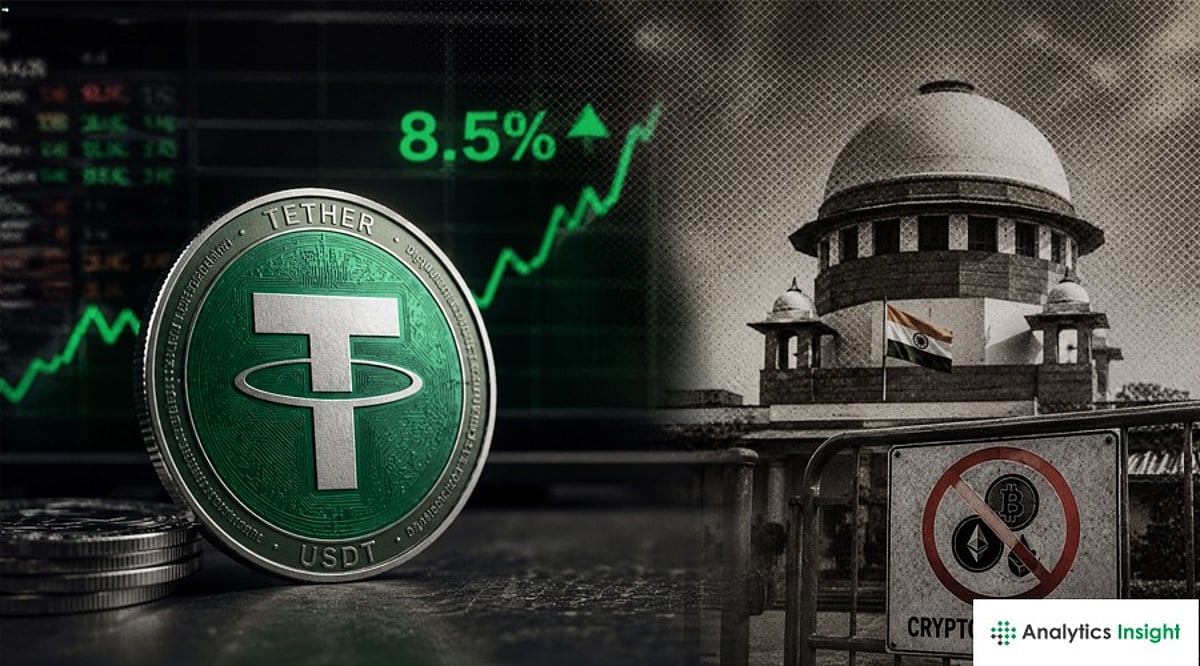
  • USDT Premium in India Surges 8.5% After Regulatory Crackdown on Crypto Payments

    USDT Premium in India Surges 8.5% After Regulatory Crackdown on Crypto Payments

    Tether’s USDT is commanding an 8.5% premium in India following intensified enforcement actions against unregulated crypto payment networks. The premium, observed on peer-to-peer and over-the-counter platforms, reflects a sharp supply-demand imbalance that is impacting traders, businesses, and freelancers reliant on the stablecoin for cross-border transactions.

    Supply Tightens After Enforcement Action

    Market participants report that the crackdown has severely restricted the availability of USDT in India’s OTC and P2P markets. These channels have long been used for cross-border payments, settlement, and crypto trading. With multiple payment platforms under scrutiny, users are finding it increasingly difficult to access the token, pushing its local price well above the global benchmark of $1.

    It is important to note that the premium stems from local market conditions, not from any issues with Tether’s reserves or the stablecoin’s underlying mechanism.

    Businesses Feel the Impact

    The scarcity is expected to hurt importers, exporters, freelancers, and crypto traders who rely on USDT for fast, low-cost cross-border transfers without the delays typical of traditional banking. Analysts observe that despite the high premium, demand for stablecoin transactions remains strong, underscoring the efficiency of stablecoins for international remittances. At the same time, the situation highlights the dependence of certain segments of India’s crypto community on unregulated liquidity sources.

    Premium Expected to Ease Over Time

    Crypto market experts believe the premium will gradually decline as liquidity is restored through compliant exchanges or alternative regulatory payment methods. However, until sufficient liquidity materializes, USDT is likely to trade at a premium to its global price in India. This event underscores how swiftly regulatory actions can reshape the crypto landscape in a major economy.