Tag: Crypto

  • Bitcoin Drops Below $77K as Hot PPI, Oil Surge, and Liquidations Pressure Crypto Market

    Bitcoin Drops Below $77K as Hot PPI, Oil Surge, and Liquidations Pressure Crypto Market

    The cryptocurrency market extended its decline after hotter US producer inflation, rising oil prices, and leveraged liquidations increased pressure across risk assets. Bitcoin fell below USD 77,000 after trading near USD 78,500 during the past 24 hours. Total market capitalization dropped to about USD 2.62 trillion as major altcoins also weakened.

    Trading activity increased as prices fell. The 24-hour market volume reached roughly USD 84.3 billion, up about 3.1%. Bitcoin dominance stood near 59%, while Ethereum remained below USD 2,500.

    Hotter PPI Revives Fed Rate Fears

    August US producer prices rose 0.4%, renewing concerns that inflation remains persistent. The reading increased expectations for tighter Federal Reserve policy at the September 15-16 meeting.

    Futures markets priced the chance of a rate increase near 70%, while economists had expected no change. The Fed kept its target range at 3.50% to 3.75% in July. Three policymakers favored a quarter-point increase at that July meeting. Higher interest rates can support the dollar and reduce demand for speculative assets, including Bitcoin, altcoins, and crypto-related stocks.

    Oil Spike and Liquidations Deepen Selling Pressure

    Brent crude reached USD 104 after gaining 5% on Thursday. Oil also climbed more than 10% during the week and reached its highest level in 112 days. Higher fuel costs can lift transportation, manufacturing, and consumer prices. This pressure can keep inflation elevated and give the Federal Reserve less room to support risk markets.

    Leveraged trading added another source of pressure. More than USD 190 million in long positions disappeared within one hour, including over USD 112 million linked to Bitcoin. Crypto ETF outflows also weighed on prices.

    Bitcoin Leads Broad Altcoin Market Weakness

    Bitcoin traded near USD 77,225 after losing momentum from recent highs. Ethereum held above USD 2,450 but remained below USD 2,500, while XRP fell more than 3% toward USD 1.34. BNB traded near USD 714, while Solana and Hyperliquid moved below USD 100 and USD 80, respectively. The declines showed that selling extended beyond Bitcoin into several major altcoins.

    Some tokens still gained despite the weaker market. Raydium rose more than 27.23%, while Ether.fi gained 9.60%, Aptos advanced 3.64%, and Polkadot added 2.10%. Zcash fell 13.23% but remained above USD 1,000. Meanwhile, the US Treasury completed a USD 5.1 billion debt buyback, bringing the weekly total to a record USD 17.7 billion.

    Attention now centers on the September 15-16 Federal Reserve meeting and whether tighter policy expectations continue pressuring risk assets.

  • Bitcoin ETFs See $120M Outflows, LAPTOP Memecoin Crashes 95%, Pepe Whales Dump 80B Tokens

    Bitcoin ETFs See $120M Outflows, LAPTOP Memecoin Crashes 95%, Pepe Whales Dump 80B Tokens

    The cryptocurrency market witnessed several major developments recently, including significant outflows from spot Bitcoin ETFs, a dramatic collapse of a politically themed memecoin, large-scale selling by Pepe whales, a US Secret Service freeze on USDT, and a groundbreaking blockchain initiative for India’s grain storage network.

    Bitcoin Spot ETFs Record $120 Million in Net Outflows

    According to data from SoSoValue, Bitcoin spot ETFs saw a total net outflow of $120.24 million yesterday. The ETF with the highest net inflow was Morgan Stanley’s MSBT, which attracted $4.49 million, bringing its cumulative net inflow to $520.89 million. Conversely, Ark Invest and 21Shares’ ARKB experienced the largest net outflow of $77.98 million, though its historical net inflow remains at $1.39 billion. The total net asset value of all Bitcoin spot ETFs now stands at $99.33 billion, with an ETF net asset ratio of 6.31% and a historical cumulative net inflow of $55.45 billion.

    Hunter Biden’s LAPTOP Memecoin Collapses Over 95%

    The LAPTOP memecoin, named after Hunter Biden, lost more than 95% of its value within one hour of trading opening on the Base network. A wallet analysis by Bubblemaps revealed that 12,151 out of 15,206 buyers ended up losing money—roughly 80% of all purchasers. While 3,026 addresses turned a profit and 29 broke even or could not be assessed, the majority of losses were small: 11,311 wallets lost less than $1,000 each.

    Pepe Whales Sell 80 Billion Tokens

    Pepe (PEPE) remained under pressure, trading near $0.00000348 after failing to break through a key resistance level. On-chain data indicates that large holders have been reducing their positions. Wallets holding between 10 million and 100 million PEPE have collectively sold approximately 80 billion tokens since August 25. This distribution suggests profit-taking after a recent rally. Over the same period, smaller and mid-sized wallets (holding between 100,000 and 10 million PEPE) accumulated a combined 5.06 billion tokens.

    US Secret Service Freezes $52.8 Million in USDT

    The United States Secret Service froze $52.8 million in the stablecoin USDT across 52 wallets linked to Xinbi Guarantee, an illegal marketplace operating on Telegram. The operation was enabled by intelligence from blockchain analytics firm Elliptic and coordinated with the Office of Foreign Assets Control (OFAC), which designated the platform as a transnational criminal organization. Xinbi acted as an escrow service laundering proceeds from global fraud schemes, including pig butchering, processing over $24 billion since 2022.

    India’s $2 Billion Grain Network Goes On-Chain

    Arya.ag has begun recording data tied to approximately $2 billion in stored crops on an Avalanche-based blockchain for agricultural lenders in India. The system records grain deposits, electronic warehouse receipts, and loan status, enabling authorized lenders to verify crops offered as collateral. Infosys co-founder Nandan Nilekani announced the project at the Global Fintech Festival in Mumbai. The $2 billion figure represents the estimated value of crops held across Arya.ag’s warehouse network, not the value of loans recorded on the blockchain.

  • 2026 Guide to Measuring Crypto AI Visibility: Essential Metrics and Tracking Tools

    2026 Guide to Measuring Crypto AI Visibility: Essential Metrics and Tracking Tools

    A crypto AI visibility tracker measures how often an answer engine names an exchange, wallet, or protocol when someone asks a buying question, and which sources it cites when it does. Collecting that number is the easy part. Knowing whether it means anything is harder, because the same prompt run twice can return a different answer.

    This is what to measure, where crypto answers actually come from, and how to tell a tracking figure that survives scrutiny from one that does not.

    What Does Crypto AI Visibility Tracking Actually Measure?

    Three different things, and they get reported interchangeably, which is where most of the confusion in this category starts.

    • Mention rate is how often a brand is named in the answer text.
    • Citation share is how often a page the brand controls, or a page that talks about it, appears in the engine’s source list.
    • Position is where the brand sits against competitors when the engine returns a ranked set.

    These move independently. A large exchange can be named in most answers and cited almost never, which happens when engines know the brand from training but reach for third-party pages when they need a source. The reverse happens to smaller protocols carrying one strong write-up.

    When a tool reports a single visibility score, the question to ask is which of the three it is built from and how they are weighted. The weights behind the citeOS score are published at citeos.io/methodology. Most vendors do not publish theirs, which is not disqualifying, but it does mean two scores are not comparable.

    Where Do AI Engines Actually Get Their Crypto Answers?

    Almost entirely from pages the brand does not own, and the mix is specific to this category.

    Across a corpus of 39,948 citation events covering 72 crypto brands between April and August 2026, spanning 17,276 pages and 4,395 source domains, 92.22% of citations pointed at pages the brand does not control. Its own domain accounted for 7.78%.

    The rest of the map, as a share of all citations recorded:

    • Long tail of independent sites: 79.09%
    • The brand’s own domain: 7.78%
    • YouTube: 4.49% (appears for all 72 brands)
    • Mid-tier crypto press: 2.27%
    • Aggregators such as CoinGecko and CoinMarketCap: 2.26%
    • Reddit: 2.19%
    • Other community sources: 1.34%
    • Top-tier crypto press: 0.36%
    • X: 0.29%

    This is what a horizontal tool built for B2B software cannot supply. It can report that a brand is invisible. It cannot say where to go, because it holds no map of which sources answer crypto buying questions.

    What Is Crypto Press Actually Worth for AI Visibility?

    Far less at the top than the rate cards imply, and this is the most checkable claim in the dataset.

    The four outlets crypto teams pay most for — CoinDesk, Cointelegraph, The Block and Decrypt — returned 143 citations between them across the entire corpus, which is 0.36%. A basket of 21 mid-tier outlets returned 907, or 2.27%, cited 6.34 times more often at a fraction of the placement cost. CryptoSlate on its own returned 312, more than double all four top-tier outlets combined.

    That basket is a judgement call and it is published on request.

    The mechanism looks like format rather than prestige. Mid-tier outlets publish more roundups, comparisons and “best X for Y” pages, and those are the pages engines quote. A single announcement piece, however good the masthead, is rarely the page that answers a buying question.

    None of this makes top-tier placement worthless. It buys trust transfer and human readers, and both are real. It is simply not what moves citations.

    Why Do Two Trackers Report Different Numbers for the Same Exchange?

    Because answer engines are non-deterministic. The same prompt, same engine, same day, can return a different answer and a different source list.

    On top of that sits personalisation. Account history, geography and logged-in state all shape what an individual sees. There is no single correct number for how visible a brand is in ChatGPT, only a distribution.

    Two tools can both be honest and still disagree, because they sampled different draws from the same distribution.

    What this rules out is spot-checking. Asking ChatGPT about an exchange, seeing a competitor named instead, and concluding there is a visibility problem is not measurement. It is one draw.

    How Many Samples Does a Crypto Tracking Number Need?

    Enough that the noise averages out, and the tool should say what it used.

    For reference, a single citeOS audit is 20 buyer-style prompts across 5 engines, which is 100 observation points per brand. The corpus behind the figures above is 39,948 events across 72 crypto brands.

    Evidence that sampling noise averaged out sits inside the data rather than in a claim about it. Citations scale with the number of pages that mention a brand at a rate of 1.48 per page, with a correlation of 0.80 and a coefficient of variation of 9.5% across brands of very different sizes. A constant that stable does not appear if per-answer randomness is driving the result.

    The practical test for any tracker is to ask how many times it probes each prompt per engine per cycle. If the answer is once, the output is a trend line drawn through noise. If the vendor cannot answer, that is also an answer.

    Appearance Rate Is Not Share of Citations

    This is the most common error in published AI visibility research, and it inflates numbers by an order of magnitude.

    Appearance rate asks: in what percentage of prompts did this source show up at all? Share of citations asks: of all citations recorded, what percentage went to this source?

    Reddit is the standard example. In this corpus Reddit appears for 71 of the 72 brands, which is close to universal, while accounting for 2.19% of citation volume. Both numbers are real and they describe different things. Published figures putting Reddit at 40% or more of AI citations are almost always appearance rates reported as volume shares.

    When a tracker reports a percentage, the only question that matters is which denominator it used. If the documentation does not say, treat the number as directional.

    What Should a Crypto Project Track That a General Tool Will Not?

    Three things, and they are why crypto teams usually outgrow a horizontal tool.

    • The category source map. Covered above. Without it, a low score is a diagnosis with no treatment.
    • Vertical-correct prompts. “Best crypto exchange” and “safest crypto wallet” are different buyer questions drawing on different source pools. A tracker that accepts typed prompts but holds no view on which prompts matter in a given vertical is a spreadsheet with an API attached.
    • Page treatment, not just page count. Being the subject of a page earned 6.22 citations in the data. Being one name inside someone else’s ranked list earned 3.78. Being mentioned nearby without making the list earned 3.39. Dedicated coverage converts better per page, while lists still carry more total volume because there are far more of them and one list serves many brands at once. A tracker that counts mentions without distinguishing these is measuring the wrong unit.

    Which AI Visibility Trackers Are Worth Looking At for Crypto?

    The category has a long tail of thin products. These are the ones with either real adoption or a published method behind them. citeOS publishes this page and appears in the list, placed where the same criteria put it rather than at the top.

    • Profound is the enterprise default and the most widely adopted tool in the category. Deep prompt coverage and reporting built for a team where this is somebody’s actual job. Overkill, and overpriced, for a five-person crypto marketing team.
    • Otterly.AI is the practical choice for small teams that want tracking running the same day. Less depth than Profound, materially cheaper, and enough to answer the basic question of whether a brand is being named.
    • Peec AI is built around competitive benchmarking, so it suits a team whose real question is not “are we visible” but “why is that exchange being recommended instead of us”.
    • Crawlux is the strongest crypto-native option. It covers ChatGPT with browsing, Perplexity and Claude, maps categories across DeFi, exchange, NFT, wallet and L1, and ships a token schema validator for FinancialProduct and CryptoExchange markup that no general platform offers. Free first audit, Pro at $25, Team at $49 for five seats.
    • citeOS runs 20 buyer prompts across 5 engines for 100 observation points per audit, scored against a database of 500+ ranked crypto outlets across 10 verticals, with the weights published. It has no schema validator, and it covers fewer engines than several tools in this list. What it holds that the others do not is the ranked crypto source database, which is what turns “you are invisible” into a named list of places to go.

    The wider general-purpose comparison is at best AI visibility tools, and the crypto-specific one at crypto AI visibility.

    What No Crypto Visibility Tracker Can Tell You Yet

    Citation counts are not traffic and they are not revenue. No tool in this category can currently connect a cited page to a deposit or a swap.

    Personalisation is unmeasured. Every figure above describes a clean baseline. A logged-in user with history in a different jurisdiction sees something else, and no published study yet quantifies how far that moves it.

    Five months is a short window in a retrieval landscape that keeps changing, and this source map is crypto only. It does not transfer to other categories.

    Frequently Asked Questions

    What is a crypto AI visibility tracker?

    A tool that runs buyer-style crypto prompts against answer engines on a schedule and records whether a brand is named, which sources are cited, and where it sits against competitors.

    How often should a crypto project track AI visibility?

    Weekly is enough for most teams. Daily tracking mostly buys noise unless the tool takes many samples per prompt.

    Can I check crypto AI visibility for free?

    Yes. Crawlux and citeOS both offer a free first scan, and DABLOCK publishes a free public index.

    Why does my exchange appear when I ask ChatGPT but not in the tracker?

    Non-determinism and personalisation. A logged-in session with history is not the same draw as a clean probe, which is why a single self-check is not measurement.

    Is AI visibility tracking different for crypto?

    The mechanics are the same. The source pool is not. Crypto answers lean on aggregators, mid-tier crypto press and YouTube in proportions that do not match other categories, and top-tier crypto press returns far less than its price implies.

    Does crypto PR improve AI visibility?

    Mid-tier placement does, measurably more than top-tier. In this corpus the four most expensive outlets returned 0.36% of citations against 2.27% for a basket of 21 mid-tier outlets.

  • India’s Crypto Reporting Rules: Higher Compliance Standards for Exchanges, No New Taxes for Users

    India’s Crypto Reporting Rules: Higher Compliance Standards for Exchanges, No New Taxes for Users

    India’s Central Board of Direct Taxes (CBDT) has issued a Guidance Note implementing the OECD’s Crypto-Asset Reporting Framework (CARF), raising compliance standards for crypto exchanges. The new rules do not introduce additional taxes for individual investors—the existing 30% tax on Virtual Digital Asset gains and 1% TDS remain unchanged. However, crypto platforms must now undertake comprehensive due diligence, including determining users’ tax residency, collecting prescribed taxpayer information, identifying reportable users, classifying transactions, maintaining detailed records, and filing annual reports via Form 167. Platforms must also securely store external wallet addresses linked to reportable transfers for seven years.

    This shift requires significant investment in technology, compliance infrastructure, secure data management, and specialized talent. While it increases operating costs, it also strengthens market credibility and trust—following the trajectory of other financial industries that evolved through stronger reporting standards and transparency. Investors stand to benefit from a more structured ecosystem with fewer ambiguities, though decentralized finance, self-custodied wallets, and peer-to-peer activity remain outside the reporting framework. The industry continues to advocate for rationalizing the 1% TDS and allowing loss offsets to improve liquidity. Overall, the guidance marks a key step in integrating India’s crypto ecosystem into the formal financial system, demanding better governance and long-term compliance commitment.

  • Ethereum Nears $2,500 as Remittix Emerges as a Promising ETH-Connected Project

    Ethereum Nears $2,500 as Remittix Emerges as a Promising ETH-Connected Project

    Ethereum is back in the spotlight as traders watch whether ETH can close July above the $2,500 mark. Recent developments point to improving ETF flows, renewed institutional demand, and stronger layer-2 activity, all of which have helped restore bullish sentiment around the leading altcoin.

    According to reports, U.S. spot ether ETFs added $96 million in the first three days of a recent week, while Robinhood Chain—a layer-2 network that settles to Ethereum—has been processing over $800 million in daily decentralized exchange volume. This uptick has made Ethereum a key market signal for altcoin traders.

    Ethereum Price Momentum Builds

    After a difficult stretch, Ethereum has shown signs of recovery. ETF inflows have helped restore confidence, and technical breakouts have pushed ETH above the $1,829–$1,848 resistance zone. While some forecasts remain cautious—CoinGecko’s July 2026 prediction suggests a month-end level closer to $2,250—the overall narrative is that Ethereum price strength is returning, potentially triggering a wider altcoin rotation.

    Why Remittix Is Being Positioned As a Top ETH Play

    Remittix is gaining attention for addressing one of crypto’s clearest adoption gaps: moving digital assets into real-world bank payments. Its PayFi platform allows users to send crypto to any bank account globally, with recipients receiving fiat directly. This solves a major problem for freelancers, businesses, and cross-border senders who want crypto speed without requiring recipients to manage wallets or withdrawals.

    Targeting a global payments industry often estimated at $19 trillion, Remittix offers a much bigger narrative than a typical presale token. The crypto-to-fiat platform is fully developed and has been tested by the community. For Ethereum investors, this makes Remittix interesting because it provides a smaller, earlier-stage ecosystem play tied to real utility.

    Remittix Markets Adds Perps Demand

    Remittix has also unveiled Remittix Markets, a new perpetual futures trading platform. This adds a second major catalyst to the RTX ecosystem: PayFi provides a real-world payments foundation, while Remittix Markets connects the project to trading activity and perps growth.

    As Ethereum price momentum returns and traders rotate into altcoins and utility projects, Remittix now has several angles working simultaneously: crypto-to-fiat payments, perps trading, future ecosystem products, and a presale that has passed $31 million. The next milestone is $32 million, at which point the team is expected to reveal the official launch date.

    Frequently Asked Questions

    Could Ethereum close July above $2,500?

    Ethereum could attempt a move higher if ETF inflows, network activity, and wider market sentiment continue improving, although some forecasts remain more cautious.

    Why is Remittix being called a top ETH play?

    Remittix is positioned as a top ETH play because it combines crypto-to-fiat PayFi utility, Remittix Markets, and presale momentum during a period when Ethereum is driving altcoin attention.

    How much has Remittix raised so far?

    Remittix has now passed $31 million in its presale, with the official launch date expected to be revealed once it reaches $32 million.

    Explore the future of PayFi with Remittix by visiting their project website.

  • Leading Non-Custodial Crypto Neo Banks Reshaping Digital Finance in 2026

    Leading Non-Custodial Crypto Neo Banks Reshaping Digital Finance in 2026

    Non-custodial crypto neo banks are gaining momentum as more users demand full control over their digital assets. These platforms blend traditional banking features with self-custody, offering services such as crypto payments, DeFi access, staking, and debit cards — all while keeping private keys in the user’s hands. With over 700 million crypto users worldwide and the self-custody market growing at 20–25% annually, these banks are set to become a cornerstone of digital finance. Here are the top platforms to watch in 2026.

    Bitwala: Banking Meets Self-Custody

    Based in Germany, Bitwala combines a traditional bank account with a non-custodial Bitcoin wallet. Users can save, spend via a Visa debit card, and transfer funds via SEPA, all while retaining control of their private keys. The platform serves 29 EEA countries and has raised approximately €42 million.

    Argent: Simplified Crypto Banking

    Argent simplifies the wallet experience with social recovery instead of seed phrases, reducing the risk of losing assets. It offers direct access to DeFi, stablecoin payments, and Ethereum Layer-2 networks. With over 2 million app downloads, it’s a favorite among newcomers.

    Safe: Enterprise-Grade Multi-Sig Security

    Formerly Gnosis Safe, Safe is trusted by businesses and DAOs for multi-signature security. The ecosystem protects over $100 billion in digital assets, making it one of the largest self-custody platforms globally.

    Ledger Live: Beyond Hardware Wallets

    Ledger’s Ledger Live app now offers buying, swapping, staking, and NFT management. With over 7 million hardware devices sold, it leverages a vast user base to expand into crypto financial services.

    Trust Wallet: Largest Self-Custody Community

    Trust Wallet supports over 100 blockchains, thousands of tokens, NFTs, and staking. With more than 220 million users, it’s the most widely used non-custodial wallet, offering a comprehensive mobile experience.

    Coinbase Wallet: Full Ownership Within the Coinbase Ecosystem

    Coinbase Wallet is a fully non-custodial wallet that integrates with the Coinbase exchange while supporting DeFi, NFTs, and multiple blockchains. Users get exchange services without sacrificing control.

    Blockchain.com Wallet: A Trusted Veteran

    Blockchain.com has evolved from a blockchain explorer to a full crypto platform with self-custody, trading, and rewards. With around 39 million verified wallets, it remains a reliable choice.

    Rabby Wallet: DeFi Power User’s Choice

    Rabby Wallet excels for DeFi enthusiasts, offering seamless network switching, transaction previews, and security alerts. Though smaller, it’s rapidly gaining traction in the DeFi community.

    Best Wallet: Rapidly Growing Newcomer

    Best Wallet launched recently but already offers portfolio management, token discovery, cross-chain swaps, and staking. Upcoming features like MEV protection and gas optimization aim to challenge larger players.

    Ctrl Wallet: Multi-Chain Compatibility

    Ctrl Wallet focuses on cross-chain operations, including swaps, NFT management, and dApp access via browser extensions and mobile. Its broad compatibility suits users who move assets across ecosystems.

    The Road Ahead

    Future innovations like account abstraction, MPC security, stablecoin payments, and regulatory frameworks (e.g., MiCA) will drive growth. With a $300 billion stablecoin market and $150–200 billion locked in DeFi, non-custodial crypto neo banks are poised to lead global digital finance.

    FAQs

    1. What is a non-custodial crypto neo bank? A digital platform where users control their private keys while accessing banking-like services.
    2. Why are they popular? Users prefer full ownership over trusting third parties.
    3. Which has the largest user base? Trust Wallet with over 220 million users.
    4. Can they handle everyday payments? Yes, many offer debit cards, stablecoin payments, and fiat transfers.
    5. What trends will shape them in 2026? Account abstraction, MPC security, stablecoin adoption, and stronger regulation.
  • Circle Wins $49M Arbitration Case Against Tether-Linked Heka Funds

    Circle Wins $49M Arbitration Case Against Tether-Linked Heka Funds

    Circle has won an arbitration dispute against Heka Funds, defeating a $49 million damages claim linked to a 2023 platform suspension, according to a report. Circle suspected trading patterns that favored Tether’s USDT and removed the fund’s access. The outcome became public on July 14, 2026.

    None of the parties has issued an official statement. Therefore, the report remains the only public account of the dispute and ruling.

    Circle Defeats Claim After Platform Suspension

    Circle operates the USDC stablecoin and controls access to its platform services. In late 2023, the company suspended Heka Funds after reviewing its trading activity. According to the report, the fund’s trading patterns allegedly favored USDT in a targeted manner. Circle viewed the conduct as close to market manipulation.

    The company considered the activity a threat to USDC’s market integrity. It then withdrew the fund’s access to its platform and related services. Heka Funds challenged the suspension through arbitration in 2024. It demanded $49 million for profits it claimed to have lost after losing platform access.

    The fund relied on Circle’s issuance, redemption, and trading channels. Therefore, the suspension reduced the number of routes available for its arbitrage strategy.

    Heka Built its Business Around Stablecoin Arbitrage

    The arbitrator dismissed the damages claim and ruled in Circle’s favor. As a result, Circle did not have to pay the requested amount. The report did not disclose the ruling date or the arbitrator’s detailed reasoning. Arbitration proceedings usually keep financial disputes outside public courtrooms.

    A privately appointed arbitrator decides the case. Both parties must generally follow the ruling and have limited options to challenge it. Heka Funds operates through Heka Funds SICAV p.l.c. in Malta. Its Elysium Global Arbitrage Fund uses a strategy managed by London-based Abraxas Capital Management.

    The fund began operating in late 2018 and focused on stablecoin and Tether arbitrage. It targeted small price differences across exchanges and digital tokens. These strategies depend on large transaction volumes and fast settlement. Losing a major trading partner can reduce available opportunities and lower potential returns.

    Platform Access Shapes Stablecoin Competition

    A 2021 Protos investigation said the fund held up to €540 million, or about $570 million, across USDC and USDT. The investigation also reported cumulative gains above 100% since the fund’s launch. In 2021, the fund recorded about €49 million in annual profit. That amount resembles the later arbitration claim. However, the figures relate to separate matters from different years.

    Access decisions directly affect arbitrage funds since their strategies depend on issuer redemption channels and several trading routes. Circle and Tether lead the global stablecoin market, while USDT holds the larger market value. Circle has traded on the NYSE since June 2025.

    The company uses the ticker CRCL. Its public listing also places its operations under greater market and regulatory scrutiny. Meanwhile, the United States is developing federal stablecoin rules through the GENIUS Act. The proposed framework covers reserves, audits, disclosures, and issuer requirements. No official response has emerged from Circle, Tether, Heka Funds, or Abraxas Capital. The detailed basis for the arbitrator’s ruling therefore remains undisclosed.

    What’s Next?

    Circle defeated Heka Funds’ $49 million damages claim after suspending the fund over trading patterns that allegedly favored USDT. Although the arbitrator backed Circle, the reasoning remains undisclosed. Market participants should watch for official statements that may clarify the case and its impact on stablecoin platform access.

  • Trump Shifts $1.4 Billion in Crypto Profits to Stocks and Bonds, Filings Reveal

    Trump Shifts $1.4 Billion in Crypto Profits to Stocks and Bonds, Filings Reveal

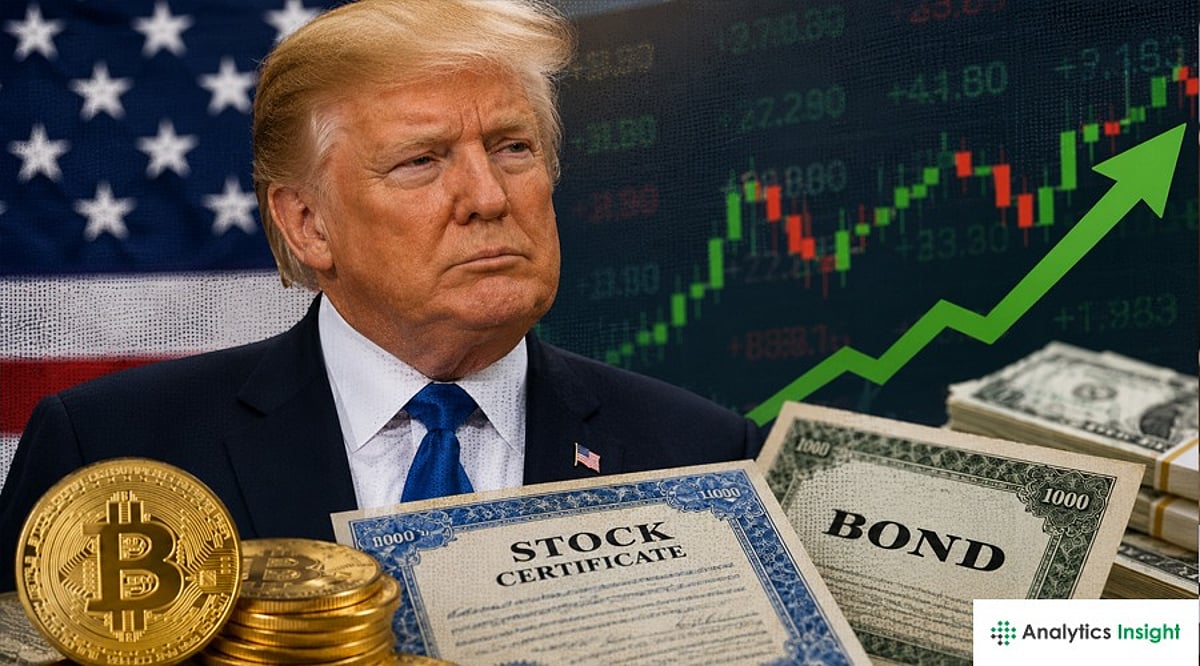
    Donald Trump’s latest financial filings with the US Office of Government Ethics reveal that he earned more than $1.4 billion from his family’s crypto businesses in 2025. Instead of keeping those profits entirely in digital assets, he invested a large portion into traditional stocks and bonds, according to a review by Reuters.

    The filings show that Trump’s traditional investment portfolio grew at least four times over the past two years. By the end of 2025, his stock and bond holdings were estimated to be worth between $703 million and $2.6 billion, up from $225 million to $608 million a year earlier. While exact figures are not provided, financial experts say the documents clearly indicate a preference for moving crypto earnings into more stable, conventional investments.

    Most of the crypto income came from World Liberty Financial and the Trump meme coin, which became major revenue sources during the year. Despite the shift, Trump continues to hold significant crypto assets: the filings show he owns 15.75 billion World Liberty Financial governance tokens valued at over $50 million, and companies linked to him hold at least $160 million in Bitcoin and Ether, along with up to $6 million in other digital tokens.

    Timothy Massad, director of Harvard University’s Digital Assets Policy Project and former chairman of the Commodity Futures Trading Commission, commented: “The filings show an interesting investment strategy.” He believes Trump earned large profits from crypto projects and then placed much of that money into stocks and bonds for greater financial stability.

    The White House stated that Trump’s assets remain in accounts managed by independent financial institutions. The Trump Organization said the filings reflect a strong financial position with valuable assets and healthy liquidity, but did not explain why much of the crypto income later appeared in traditional investments. World Liberty Financial emphasized its commitment to digital assets, saying the company “continues building for the future and believes digital assets will play a major role in financial services over the coming years.”

    The disclosures come amid reports that retail investors in four Trump-backed crypto projects had lost about $2.3 billion by April, increasing criticism from some lawmakers who question the ethics of public officials profiting from crypto while supporting friendly policies for the industry. Eric Trump continued promoting Bitcoin throughout the year, calling it one of the world’s strongest financial assets, even as his father’s filings showed growing investments in stocks and bonds.

    Overall, the filings paint a clear picture: crypto earnings generated billions in 2025, but stocks and bonds remain the preferred destination for protecting and growing wealth over the long term.

  • Crypto Phishing Scams: How to Spot Fake Apps, Websites, and Address Poisoning

    Crypto Phishing Scams: How to Spot Fake Apps, Websites, and Address Poisoning

    Crypto phishing scams have become one of the biggest threats to digital asset users. With more investors using wallets, exchanges, DeFi platforms, and NFT marketplaces, scammers are increasingly deploying fake websites, wallet-draining links, and AI-generated messages to raid crypto wallets.

    According to the FBI’s latest internet crime data reported by The Wall Street Journal, cryptocurrency crime is now the most costly type of internet crime, totaling $7.2 billion. The report also noted a rise in AI-powered scams, with over 22,000 complaints and losses of nearly $893 million.

    What is a Crypto Phishing Attack?

    A crypto phishing scam is a fraud attempt designed to steal wallet credentials, seed phrases, exchange passwords, or transaction approvals. Unlike traditional bank fraud, scammers don’t always need your login information. In some cases, all they need is for you to sign a malicious wallet transaction.

    These scams often appear as fake airdrops, token claim pages, NFT mint links, customer support messages, or urgent wallet verification requests. Once a user connects their wallet and confirms the request, the attacker can drain the tokens.

    How to Identify Fake Crypto Websites

    Fake crypto sites typically copy the design of popular exchanges, wallets, or DeFi platforms. The domain may look similar but with slight differences: misspellings, extra hyphens, strange extensions, or fake login pages.

    Watch for warning phrases like:

    • “Verify Your Wallet Now”
    • “Claim Reward Before Expiry”
    • “Urgent Account Suspension”
    • “Connect Wallet to Unlock Funds”

    A legitimate exchange will never ask for your seed phrase. Always type the official URL directly or use a bookmark. Avoid clicking links from Telegram, Discord, X, WhatsApp groups, or sponsored search results without verification.

    How to Identify Fake Crypto Apps

    Research on cryptocurrency exchange scams uncovered over 1,500 fraudulent domains and more than 300 fake apps, some of which made it to major app marketplaces. Before downloading, verify the app’s history, reviews, and developer name. Check how long it has been available, the official website link, and the app’s reputation. Never download APKs from unknown sources.

    During setup, a fake app may request your recovery phrase under the guise of security verification or customer support. That’s a major red flag.

    Watch Out for Address Poisoning

    Address poisoning is a phishing attack where scammers send small transactions from lookalike wallet addresses. The goal is to trick users into copying the wrong address from their transaction history. A 2025 study found approximately 270 million on-chain address poisoning attempts targeting 17 million victims, resulting in at least $83.8 million in losses.

    Why This Matters

    The escalation of AI-driven phishing and address poisoning matters because scammers no longer need to hack blockchains. By weaponizing urgency and lookalike addresses, they trick users into authorizing irreversible transactions that drain wallets instantly — turning user error into crypto’s costliest threat.

    Final Thoughts

    • Never share your seed phrase.
    • Only download apps from official sources.
    • Store larger amounts on a hardware wallet.
    • Check URLs carefully.
    • Revoke suspicious wallet approvals.
    • Test large transfers with a small amount first.

    Remember the three elements of crypto scams: urgency, fear, and greed. If a message feels urgent, secret, or too good to be true, pause, verify, and proceed only if you’re certain.

    Frequently Asked Questions

    1. What is a crypto phishing scam?

    A crypto phishing scam is a fraud attempt designed to steal wallet credentials, seed phrases, exchange passwords, or transaction approvals. Scammers often use fake websites, airdrops, NFT mint links, or support messages to trick users.

    2. How can I identify a fake crypto website?

    Fake crypto websites often copy real platforms but use slightly changed domains, misspellings, extra hyphens, or unusual extensions. Any site asking for a seed phrase or urgent wallet verification should be treated as suspicious.

    3. Are fake crypto apps dangerous?

    Yes, fake crypto apps can steal recovery phrases, login details, or wallet permissions. Always check the developer name, app history, reviews, and official website before downloading any crypto wallet or exchange app.

    4. What is address poisoning in crypto?

    Address poisoning is a scam where attackers send small transactions from lookalike wallet addresses. The goal is to make users accidentally copy the wrong address from their transaction history and send funds to the scammer.

    5. How can crypto users stay safe from phishing scams?

    Users should never share seed phrases, avoid unknown links, use official app stores, bookmark trusted websites, and test large transfers with small amounts first. Hardware wallets can also improve security for larger holdings.

  • From a Small Town in Brazil to AI Entrepreneurship in New York: Leonardo Felipe Nerone’s Journey

    From a Small Town in Brazil to AI Entrepreneurship in New York: Leonardo Felipe Nerone’s Journey

    Leonardo Felipe Nerone, co-founder and CTO of Drachma, built his career through self-study, science olympiads, early engineering roles, Penn, fintech, crypto, and a practical view of what AI should do inside real companies.

    The first computer that caught his attention did not have internet. It sat on the first floor of his family’s two-story house in Guarapuava, a city in the countryside of Paraná, Brazil. There was another computer upstairs with internet access, but when he was young, he did not like going to the second floor alone. So he stayed downstairs and explored what he had.

    He clicked around Windows XP. He looked behind the machine. He opened the case. He wanted to know what would happen if he touched something, changed something, tried something.

    “That was probably one of my first experiences with technology,” Nerone says. “It was not formal. I was just curious. I wanted to understand what was inside the machine and what I could make it do.”

    That curiosity would carry him much farther than he could have seen from Guarapuava. Today, Nerone is the co-founder and CTO of Drachma, a New York-based AI startup that builds custom AI agents and systems for companies. Drachma helps businesses connect AI to their real data, APIs, internal tools, permissions, and workflows, with the goal of turning AI from something companies test into something they can actually use.

    The path there began far from Brazil’s major technology centers.

    “I did not grow up around people talking about Silicon Valley or startups or studying abroad,” Nerone says. “A lot of what I learned came from the internet, from online communities, and from trying things myself.”

    Science olympiads changed the shape of his world. In high school, they introduced him to programming and showed him a larger field of possibility. Programming gave him a way to build without waiting for permission, a practical outlet for the kind of curiosity that had started with the old computer downstairs.

    As a teenager, Nerone met other young programmers online. Together, they built Teacch.Me, an educational app for children with autism. The project won the 2015 FIAP-Google App Marathon, a national competition with more than 300 submitted apps and around 9,600 participants.

    “That project was important to me because it made technology feel real,” he says. “It was not just solving a puzzle or learning syntax. We were building something that could help people.”

    The win was also an early sign that Nerone’s self-taught path could lead somewhere larger. After high school, he moved to São Paulo at 17 to work as a software engineer at Pagar.me. It was his first time living away from home, and it placed him inside a much bigger technology ecosystem.

    The transition was not simple. He was working, living with friends, studying at night, and applying to universities in the United States. It was not a common path from where he came from, and there was no clear script for how to make it work.

    “Moving to São Paulo changed how I saw technology,” Nerone says. “It was no longer just something I studied or built on my own. It became the way I entered a larger world.”

    That larger world eventually included the University of Pennsylvania, where Nerone studied Computer Science after receiving a scholarship of about 90 percent. Fundação Estudar later helped cover most of what remained. At Penn, he entered an environment very different from the one he had known in Brazil.

    He had to adapt to a new country, a new academic culture, and a new language environment. Before moving to the United States, he had not spent much time speaking with native English speakers. He also often felt that his background was different from that of other international students.

    Over time, that difference became useful.

    “I learned how to operate across very different worlds,” he says. “Coming from a place that was not obvious for technology made me more comfortable figuring things out without perfect conditions.”

    During his time at Penn, Nerone interned at Facebook through FBU, later known as Meta University. Then the pandemic changed his plans. Instead of continuing with online classes as usual, he took a gap year and worked at Hashdex and then Init, gaining experience across fintech, crypto, and startup engineering.

    His interest in crypto and privacy led him into open-source work as well. In 2022, he submitted a proposal to the Monero community to work full-time on Monero development, including wallet, RPC, proofs, and related open-source tasks. A company called Cryp saw the proposal and hired him for the summer to work on Monero and Bitcoin atomic swaps.

    That varied technical background now shapes how Nerone thinks about AI. He has worked across payments, fintech infrastructure, crypto systems, open-source communities, data systems, and enterprise software. He sees technology not as a single trend, but as a set of systems that have to work under real constraints.

    That view became central to Drachma.

    Drachma did not begin with its current AI focus. Nerone says the company first started with a payments idea that did not work the way the founders expected. They had to listen to the market, pivot, and rebuild around a clearer problem: companies wanted AI, but many did not know how to connect it to their actual operations.

    “That was an important lesson,” he says. “You can have a smart idea, but the market tells you where the real demand is. We had to be honest about what was working and what was not.”

    Now Drachma builds custom AI systems for companies that need more than a generic chatbot. Many businesses have valuable information spread across databases, documents, spreadsheets, dashboards, and internal tools. Employees still waste time searching for information, repeating manual tasks, or moving data between systems. Drachma builds AI assistants and agents that connect to those environments and understand the company’s context.

    “The goal is not to build a flashy demo,” Nerone says. “The goal is to build AI that works inside the reality of a business.”

    From Guarapuava to São Paulo, from Penn to Facebook/FBU, from fintech and crypto to Drachma, Nerone has built his path by crossing between worlds and learning how systems behave in practice.

    He believes AI should reduce wasted time and human potential, not create another unused tool. In many cases, he says, the greatest value is not replacing people, but helping teams become faster, more accurate, and more capable.

    “Technology only matters when it helps people do something better,” Nerone says. “That was true when I was learning to program, and it is true now with AI.”

    Drachma has raised approximately US$1 million in pre-seed funding, originally for a different idea, and has spent about a year working on its current AI direction. Nerone wants to build the company into a lean, technically excellent, sustainable business known for making AI useful inside companies.

    His journey began with a child testing the limits of an old computer with no internet. It now continues through AI systems designed for real companies, real workflows, and real work.

    “I still think the instinct is the same,” Nerone says. “You look at a system, you try to understand it, and then you try to build something useful with it.”