Tag: cryptocurrency

  • Solana and Allfunds Partnership: A Major Step Toward Institutional On-Chain Finance

    Solana and Allfunds Partnership: A Major Step Toward Institutional On-Chain Finance

    The partnership between Solana Labs and Allfunds Group plc marks a significant milestone in the evolution of blockchain technology, bridging the gap between traditional finance and decentralized finance (DeFi). By enabling the tokenization of real-world assets on Solana’s high-speed, low-cost blockchain, this collaboration signals a new era of institutional adoption.

    Why the Allfunds Partnership Matters

    Allfunds, one of the world’s largest wealth management platforms, manages nearly €1.8 trillion in assets under administration and works with over 3,300 asset managers, banks, and financial institutions globally. Through this partnership, investment funds on Allfunds can now be tokenized on Solana’s blockchain, allowing traditional assets to exist as digital assets on a public blockchain. This move demonstrates that large financial institutions are ready to embrace public blockchain technology over legacy systems.

    The Rise of Real-World Asset Tokenization

    Real-world asset (RWA) tokenization is transforming finance by converting stocks, bonds, mutual funds, and private investments into blockchain-based digital assets. The Solana-Allfunds deal accelerates this trend, with tokenized assets on Solana already surpassing $1 billion in total value earlier this year. Major financial firms now see blockchain as a way to make financial systems faster, cheaper, and more efficient, moving tokenization from an experiment to a cornerstone of future finance.

    Why Solana Became the Preferred Choice

    Solana’s technical performance—processing thousands of transactions per second with fees often under one cent—makes it ideal for large-scale financial operations. Compared to older blockchain networks with higher fees and slower speeds, Solana offers a scalable infrastructure suited for institutional use. This technical edge has positioned Solana as a serious contender in global finance.

    Traditional Finance and DeFi Converge

    For years, DeFi operated separately from traditional finance due to security, regulatory, and technical concerns. The Solana-Allfunds partnership, supported by Project Harmonia and infrastructure firms ioBuilders and Particula, changes this. It allows Allfunds to issue tokenized investment funds while maintaining compliance, enabling traditional financial products to exist in both legacy and blockchain ecosystems simultaneously. The wall between traditional finance and DeFi is breaking down.

    Solana’s Growing Institutional Adoption

    The Allfunds deal follows other institutional wins for Solana in 2026, including WisdomTree’s expansion of its tokenized fund ecosystem to Solana. This growing confidence reflects a shift in how institutions view blockchain—not as speculative crypto technology, but as a superior settlement system for financial products. Institutions control far more capital than retail investors, making this shift critical.

    What This Means for the Future of On-Chain Finance

    The Solana-Allfunds partnership may be a turning point for on-chain finance. Rather than replacing traditional finance, the trend is toward integration. Blockchain networks like Solana could soon support mutual funds, private equity, securities, and cross-border payments on a global scale. The next phase of blockchain growth will be driven by large institutions moving trillions of dollars into blockchain systems, making on-chain finance the foundation of future global markets.

    FAQs

    1. Why is the Solana-Allfunds partnership important? It connects one of the world’s largest fund distribution networks with blockchain, bringing institutional finance on-chain.
    2. What is real-world asset (RWA) tokenization? It is the process of converting traditional financial assets like stocks, bonds, and funds into blockchain-based digital assets.
    3. Why did Allfunds choose Solana? Because Solana offers fast transaction speeds, scalability, and extremely low transaction fees suitable for institutional use.
    4. How does this impact decentralized finance (DeFi)? It helps bridge traditional finance and DeFi, allowing regulated financial products to operate within blockchain ecosystems.
    5. What does this mean for the future of finance? It signals that major financial institutions may increasingly use blockchain infrastructure for managing trillions of dollars globally.
  • XRP Price Forecast 2029: Could the Token Reach $10 in Three Years?

    XRP Price Forecast 2029: Could the Token Reach $10 in Three Years?

    XRP remains a strong long-term crypto project backed by real-world payment utility, rising institutional demand, improving regulations, and growing adoption, with forecasts suggesting possible prices between $4 and $10 by 2029.

    Key Takeaways

    • Ripple’s payment network now handles nearly $16 trillion yearly, showing growing institutional trust.
    • XRP ETFs attracted $1.47 billion inflows, signaling strong investor confidence despite weak price action.
    • If adoption accelerates, XRP could realistically reach $4–$10, with bullish forecasts targeting $20+ by 2029.

    XRP has stayed among the biggest names in crypto for many years. Unlike many digital coins that depend mostly on hype, XRP has a real purpose. It helps banks and financial companies send money across countries much faster and at lower cost. Given this use case, many experts believe XRP has strong long-term potential.

    As of July 2026, XRP trades close to $1.04, or around ₹98.5 in India. Its total market value stands above $65 billion, which keeps XRP among the largest cryptocurrencies in the world. The price has fallen compared to earlier highs, but many market analysts believe this may only be a temporary weak phase before the next major move.

    Ripple’s Business Growth Creates Hope for XRP

    One of the strongest reasons behind positive XRP forecasts comes from Ripple’s business expansion. Ripple is the company connected with XRP and focuses on global payments. Recently, Ripple CEO Brad Garlinghouse revealed that Ripple now handles nearly $16 trillion in yearly payment volume across its growing network.

    This number shows that large financial institutions continue to trust Ripple’s payment technology. If more banks start using XRP as part of this system, demand for the token could rise sharply over the next few years. Greater adoption often creates stronger price movement, especially in crypto markets.

    ETF Demand Shows Strong Institutional Interest

    Another major development came through XRP exchange-traded funds, also called ETFs. These investment products allow institutions and large investors to gain exposure to XRP without directly buying crypto on exchanges.

    Reports show that XRP ETFs have attracted more than $1.47 billion in total inflows since late 2025. This marks almost eight straight weeks of positive investment activity. Interestingly, XRP price has not moved much despite this strong money flow. Experts believe wider market weakness has kept prices low, but the continued ETF demand shows strong confidence from institutional investors.

    Better Regulation Could Help XRP Grow Faster

    For many years, one of XRP’s biggest problems came from legal uncertainty. Ripple spent years fighting a case against the U.S. Securities and Exchange Commission. This legal battle created fear among investors and slowed growth.

    Now the situation looks far better. Regulatory clarity has improved a lot compared to previous years. New crypto laws under discussion in the United States, including the CLARITY Act, could create even stronger confidence among large investors. Better regulation often brings more money into the crypto market, and XRP could benefit heavily from that shift.

    Current Price Action Shows Short-Term Pressure

    It’s been hard on XRP this year from a technical perspective. Currently, it is at about one dollar, which means it has hit a key area of support. Resistance is between $1.20 and $1.30.

    Technical indicators indicate that momentum is pretty weak right now. Some analysts think XRP has entered an oversold area, which has previously led to recoveries. While there is no guarantee that there will be a sharp increase, the possibility exists for a larger increase at a future date.

    XRP Price Prediction for the Next Three Years

    If crypto market conditions stay weak and adoption slows down, XRP could trade between $1.50 and $3.00 by 2029. This would represent a slower recovery phase where demand stays limited.

    Under normal market conditions, experts believe XRP has room to reach $4 to $8 within three years. This forecast depends on steady growth in Ripple partnerships, stronger ETF demand, and gradual recovery across the crypto market.

    In the most positive scenario, XRP could reach $10 to $20 by 2029. This would require mass adoption from banks, better global crypto regulations, and a sharp rise in overall market confidence. Some forecasts have even suggested XRP could hit $28 by 2030, although that remains highly speculative.

    Final Outlook

    XRP continues to stand out as it offers more than simple speculation. Ripple has built real payment infrastructure, and the company keeps expanding globally. Despite current price weakness near $1, the long-term story remains interesting.

    Over the next three years, realistic estimates place XRP somewhere between $4 and $10 if market conditions improve. If adoption grows much faster than expected, prices could move far beyond that range.

    The future of XRP now depends on one major factor — whether Ripple’s growing payment network creates direct and consistent demand for the XRP token itself. That answer will decide how valuable XRP becomes by 2029.

    FAQs

    1. What is XRP mainly used for? XRP helps enable faster and cheaper international money transfers through Ripple’s payment network.
    2. Why are investors bullish on XRP? Given Ripple’s business growth, ETF demand, improving regulations, and its real-world financial use case.
    3. Can XRP reach $10 in the next 3 years? Yes, many analysts believe XRP could hit $10 if adoption grows and overall crypto markets recover strongly.
    4. How important is regulation for XRP? Very important. Better crypto regulations can increase institutional investment and reduce uncertainty around Ripple.
    5. Is XRP a long-term investment? Many investors see XRP as a long-term asset given Ripple’s expanding global payment infrastructure, though crypto remains highly volatile.
  • Top Cryptos Under $1: IceBull Presale Stage 1 at $0.00001, XRP and Stellar Remain on Radar

    Top Cryptos Under $1: IceBull Presale Stage 1 at $0.00001, XRP and Stellar Remain on Radar

    When investors search for the best cryptos under $1, they are often looking for more than just a low price tag. They want projects that combine affordability, strong fundamentals, and the potential for long-term growth. That’s why established cryptocurrencies like XRP and Stellar continue to attract attention year after year. Both have proven themselves as payment-focused blockchain networks with loyal communities and real-world use cases.

    At the same time, a new Ethereum-based project is entering the conversation. IceBull has officially launched Stage 1 of the IceBull Crypto Presale, giving investors a chance to participate from the very beginning at just $0.00001 per token.

    Why Low-Priced Cryptocurrencies Appeal to Investors

    Lower-priced cryptocurrencies have always drawn investors who enjoy building larger positions without committing substantial capital. However, experienced investors know that a token’s price alone does not determine its future potential. The strength of a project’s community, tokenomics, development activity, security, and long-term vision matter far more than the number on a chart. That is why XRP, Stellar, and IceBull are being discussed together—each offers something different despite being at very different stages of development.

    XRP: Proven Across Multiple Market Cycles

    Few cryptocurrencies have remained as consistently recognized as XRP. Built to improve international payments, XRP is known for its fast settlement speeds, low transaction costs, and strong liquidity across global exchanges. Despite changing market conditions, it continues to attract investors looking for an established cryptocurrency with practical utility. Its long history makes XRP a benchmark asset that many investors continue to hold through multiple cycles.

    Stellar: Building Real-World Adoption

    Stellar has quietly developed into one of blockchain’s most practical payment networks. Its mission to improve global financial access has helped it form partnerships and attract users who value speed, affordability, and efficient cross-border transactions. Rather than relying on hype, Stellar has built its reputation through consistent development and a clear long-term objective. For investors prioritizing utility, Stellar remains one of the most respected projects in the cryptocurrency space.

    IceBull: Targeting Early Adopters

    Unlike XRP and Stellar, IceBull is still in the earliest chapter of its journey. Instead of launching directly onto exchanges, it is progressing through a transparent 16-stage presale, allowing investors to enter before public trading begins. With the IceBull Crypto Presale now live, Stage 1 participants can purchase tokens at $0.00001—the lowest public price available throughout the entire presale. The project has also announced a planned listing price of $0.025, creating a clear pricing structure from the first stage through to exchange launch.

    Key features of IceBull include:

    • Ethereum ERC-20 blockchain
    • Stage 1 live at $0.00001
    • Planned listing price of $0.025
    • SolidProof audited smart contracts
    • Up to 80% APY staking
    • Team token vesting
    • 10% referral rewards for both users on purchases above $30
    • Community-focused development

    For investors who enjoy discovering projects before exchange listings, IceBull offers a completely different opportunity compared to buying established cryptocurrencies.

    Three Projects, Three Different Investment Stories

    One of the biggest mistakes investors make is assuming every cryptocurrency should be evaluated the same way. XRP has already proven itself as a global payment network. Stellar focuses on expanding financial accessibility through blockchain technology. IceBull, meanwhile, is aimed at investors looking for exposure to an early-stage Ethereum project before it reaches exchanges. Each serves a different purpose, so comparisons are useful without suggesting they compete directly.

    Which Type of Investor Are You?

    Some investors feel more comfortable buying cryptocurrencies with years of market history behind them. Others actively search for projects before they become widely known, believing that early research creates opportunities unavailable after exchange listings. There is no right or wrong approach. Many experienced investors combine established assets with carefully researched early-stage projects to build a diversified portfolio.

    Final Thoughts

    The best cryptos under $1 are not necessarily the cheapest—they are the projects that combine strong fundamentals with a clear vision for long-term growth. XRP continues to demonstrate why it remains a leading payment-focused cryptocurrency. Stellar offers practical blockchain technology backed by years of steady development. And IceBull provides something completely different: a live Stage 1 presale at $0.00001, a planned $0.025 listing price, audited smart contracts, up to 80% APY staking, referral rewards, and a transparent 16-stage presale. IceBull is beginning to attract investors looking for the next generation of Ethereum-based crypto opportunities.

    Frequently Asked Questions

    What are the best cryptos under $1?
    Many investors compare established cryptocurrencies such as XRP and Stellar alongside early-stage projects like IceBull Crypto Presale, which is currently live in Stage 1.

    Is IceBull available to buy?
    Yes. IceBull is now available through the official IceBull Crypto Presale, with Stage 1 priced at $0.00001.

    What is IceBull’s planned listing price?
    IceBull has announced a planned listing price of $0.025 following the completion of its transparent 16-stage presale.

    Why is IceBull attracting attention?
    Investors are watching IceBull because of its live Stage 1 presale, $0.00001 entry price, $0.025 planned listing price, Ethereum foundation, SolidProof audit, staking rewards, referral program, and community-driven approach.

    Disclaimer: This article is for informational purposes only and should not be considered financial advice. Cryptocurrency investments involve risk, and readers should always conduct their own independent research before making investment decisions.

  • Ethereum Price Targets $1,800 as ETF Inflows Return and Binance Withdrawals Surge

    Ethereum Price Targets $1,800 as ETF Inflows Return and Binance Withdrawals Surge

    Ethereum rallied 2.22% to $1,756.15 on Thursday, outperforming the broader cryptocurrency market’s 1.47% gain. The move came as spot Ethereum ETF inflows resumed after a nine-day outflow streak, while on-chain data revealed the highest level of ETH withdrawals from Binance in over three years. A whale wallet also accumulated $31.43 million in ETH and $6.24 million in Wrapped Bitcoin (WBTC), signaling renewed interest from large holders.

    ETF Inflows Turn Positive After Extended Outflow Period

    According to SoSoValue data, U.S. spot Ethereum ETFs recorded net inflows of $29.08 million on July 2, following $14.89 million the previous day. BlackRock’s ETHA led the latest daily inflows. This reversal ended a nine-day stretch of outflows and suggests that institutional demand may be recovering after recent selling pressure. ETF flows are closely watched as a proxy for regulated investment interest in Ethereum. The positive inflows, combined with ETH’s correlation with the S&P 500, indicate that macro conditions also supported the rally.

    Binance ETH Withdrawals Hit Three-Year High

    CryptoQuant data showed more than 166,000 ETH withdrawal transactions from Binance on July 3 — the highest figure in more than three years. Large exchange withdrawals often indicate that holders are moving assets into self-custody, long-term storage, or decentralized finance (DeFi) protocols. CryptoQuant analyst Darkfost noted that the surge “could reflect genuine demand” near the $1,500 level, though some funds may be flowing into DeFi yield opportunities. The data underscores increased wallet activity, though the exact purpose of each transfer remains unclear.

    Whale Wallet Accumulates $37.67 Million in ETH and WBTC

    Lookonchain tracking revealed that a single whale wallet accumulated $31.43 million in ETH and $6.24 million in WBTC, totaling $37.67 million. The allocation is heavily skewed toward Ethereum — roughly 83% ETH and 17% WBTC. WBTC allows holders to deploy Bitcoin-linked capital within Ethereum’s ecosystem. The wallet owner has not been identified, and it is unknown whether the tokens came from fresh purchases, exchange withdrawals, or internal transfers. Despite these uncertainties, the accumulation adds to the narrative of large investors positioning for further upside.

    Price Levels to Watch

    Ethereum is currently testing a key short-term resistance zone. Holding above $1,700 keeps attention on the $1,767 level, followed by the $1,800 to $1,847 range. A drop below $1,700 could bring the $1,620 to $1,650 support area into focus. Traders are watching whether ETF inflows continue beyond two sessions, as a longer streak would provide stronger evidence of rebuilding institutional demand.

  • Bitcoin Realized P&L Ratio Plunges to Lowest Since FTX Collapse as Market Stress Mounts

    Bitcoin Realized P&L Ratio Plunges to Lowest Since FTX Collapse as Market Stress Mounts

    Bitcoin’s realized profit and loss ratio has dropped to a 43-month low, reaching a level last seen in the wake of the FTX collapse in December 2022. The reading has drawn renewed attention to on-chain signals that have historically appeared near market bottoms. According to CryptoQuant, the ratio now stands at -0.35, indicating that losses are dominating realized market activity.

    The latest data comes as Bitcoin trades near $59,000 after a sharp decline from its October peak of $126,080. Market sentiment has shown a slight improvement over the past 10 days, with Bitcoin rising more than 7% from its June 25 low near $58,190.

    Bitcoin P&L Ratio Returns to FTX-Era Levels

    The Bitcoin realized profit and loss ratio measures the net share of Bitcoin held in profit or loss relative to total supply. A negative value signals that losses are overwhelming profits across the network. CryptoQuant noted that the indicator has reached similar levels before major recovery phases. “Historically the indicator has marked BTC bottoms with extreme precision,” the firm stated, citing examples from 2015 and 2019 when the ratio moved below -0.35 before Bitcoin later rallied.

    While the latest reading does not confirm a price bottom, it shows that Bitcoin holders are realizing heavy losses across the market. This type of pressure often emerges when leveraged traders exit and weaker holders sell into fear. The drop also followed stress tied to Strategy’s Stretch preferred stock, which fell below its $100 par value and traded under $75, raising questions about its dividend structure and adding to selling pressure across Bitcoin markets.

    Analysts Weigh In on Market Bottom Timing

    Bitwise chief investment officer Matt Hougan suggested the market may be nearing a floor. He said the recent sell-off linked to Strategy helped remove excess leverage from the system. “As the market continues to sort things out, I’m convinced the bottom is closer than ever — and that we will enter a new bull market in the fall,” Hougan remarked.

    Adam Livingston, an analyst at Swan Bitcoin, pointed to Bitcoin’s current level relative to its realized price, which represents the network’s aggregate on-chain cost basis. He noted that Bitcoin is trading only 16% above that realized price. Historically, similar setups have produced stronger forward returns, with gains of 41% over six months and 81% over 12 months. However, Livingston warned that waiting for the exact low is difficult: “The bottom never announces itself.” He argued that Bitcoin now trades at a discount, even if buying feels uncomfortable for many investors.

    Diverging Trends: ETF Outflows vs. Whale Accumulation

    Bitcoin market flows are currently showing two contrasting trends. U.S. spot Bitcoin ETFs recorded a record $4 billion in outflows in June, marking the weakest monthly flow since the products launched. At the same time, wallets holding more than 1,000 BTC absorbed $16.7 billion worth of Bitcoin over two weeks, according to data.

    This split indicates that ETF investors and large wallet holders are acting differently. ETF holders reduced exposure amid weaker risk appetite and shifting macroeconomic expectations, while large holders treated the sell-off as a buying opportunity. Recent ETF data has improved, with U.S. spot Bitcoin ETFs topping $200 million in daily inflows for the first time since May, hinting at renewed demand after heavy June redemptions.

    Traders are now watching whether whale accumulation continues and ETF flows stabilize. Bitcoin still faces weak sentiment and price uncertainty, but on-chain loss levels now match areas that have appeared near past crypto market cycle lows.

  • Ethereum at Critical Crossroads: $1,500 Support Decides Next Move, Analyst Says

    Ethereum at Critical Crossroads: $1,500 Support Decides Next Move, Analyst Says

    Ethereum is facing a pivotal moment as it tests the critical $1,500 support level. Analysts warn that holding above this threshold could spark a recovery toward $1,700–$2,000, while a breakdown may trigger further losses amid broader market uncertainty.

    Why $1,500 Is So Important

    Over the past few weeks, Ethereum has dropped sharply and tested this level multiple times. In the last month alone, ETH has lost nearly 20% of its value, making traders nervous. The $1,500 level acts as a safety zone: staying above it typically boosts buyer confidence, while falling below gives sellers control. Analysts emphasize that Ethereum must remain above $1,500 to avoid another major decline.

    Possible Price Moves Ahead

    If Ethereum holds above $1,500, experts see potential for a move to $1,700 in the coming days, and possibly toward the $2,000 resistance level if momentum strengthens. However, if the price breaks below support, it could slide to the $1,350–$1,400 range, signaling that sellers remain dominant.

    Market Signals Look Unclear

    Ethereum currently trades below its 20-day moving average of $1,708 and its 50-day average near $1,865, indicating ongoing weakness. While some indicators show selling pressure slowing, there is no clear sign of a strong recovery yet. Traders remain cautious.

    Wider Market Pressure Hurts Ethereum

    Global financial markets have weakened, with big tech stocks and AI companies declining sharply. This has driven risk aversion, pulling capital away from cryptocurrencies. Concerns over interest rates and slow economic growth have added pressure. Bitcoin and Ethereum both touched multi-week lows as market confidence eroded.

    Ethereum Still Has Strong Long-Term Value

    Despite short-term struggles, Ethereum remains a leading blockchain for decentralized finance, NFTs, stablecoins, and smart contracts. Its transition to proof-of-stake and the EIP-1559 token-burning mechanism strengthen its long-term fundamentals.

    What Could Happen Next

    If buying strength returns, Ethereum may test $1,600–$1,625 this week. Yet all eyes are on the $1,500 support level. The next few days will be crucial in determining whether Ethereum stages a recovery or faces another leg down.

    FAQs

    1. Why is $1,500 important for Ethereum? It serves as a major support level where buyers typically defend the price.
    2. What happens if Ethereum stays above $1,500? Analysts expect a possible recovery toward $1,700, with potential upside near $2,000.
    3. What happens if Ethereum falls below $1,500? Selling pressure could increase, pushing ETH down toward $1,350–$1,400.
    4. Why has Ethereum been under pressure recently? Weak global markets, falling tech stocks, interest rate concerns, and reduced risk appetite have affected crypto prices.
    5. Is Ethereum still strong long term? Yes. Ethereum remains a leading blockchain powering DeFi, NFTs, stablecoins, and smart contracts with solid fundamentals.
  • RTX Holders Get Major Lift as Remittix Sets Minimum Launch Price at $0.35

    RTX Holders Get Major Lift as Remittix Sets Minimum Launch Price at $0.35

    Remittix has delivered a major update to its community, confirming that RTX will launch on major exchanges at a minimum price of $0.35. The announcement gives holders a confirmed launch benchmark at a time when attention around the project is already rising.

    With exchange listings moving closer, airdrop registration now live, and the crypto-to-fiat platform already in testing, Remittix is entering one of the most important phases of its rollout so far. For RTX holders, the $0.35 minimum launch price is a major signal. It offers the community a clearer view of how RTX is expected to enter the market once trading begins on major exchanges.

    Remittix Confirms $0.35 Minimum RTX Launch Price

    The launch price reveal has quickly become the biggest talking point around Remittix. Until now, holders had been waiting for confirmation on how RTX would be positioned at exchange launch. The team has now confirmed that the token will launch at a minimum price of $0.35, giving presale buyers and new watchers a clear figure to focus on.

    That update arrives during a busy window for the project. Remittix is not only preparing for exchange activity but also moving toward token distribution, wider platform access, and the final stages of its bonus campaign.

    Airdrop Registration Is Now Live

    Remittix has also opened airdrop registration for RTX holders through the official Remittix site. The airdrop is tied to the distribution of RTX tokens purchased during the presale. Holders can register by connecting their wallet, submitting their wallet address, and completing the registration page.

    Users can also add optional notification details to receive future updates related to token distribution, airdrop progress, and launch announcements. Once the process is complete, the page confirms that the holder has successfully registered. RTX holders should only use official Remittix links and avoid unofficial websites, direct messages, or unknown accounts claiming to offer airdrop access.

    Crypto-to-Fiat Platform Live and in Testing

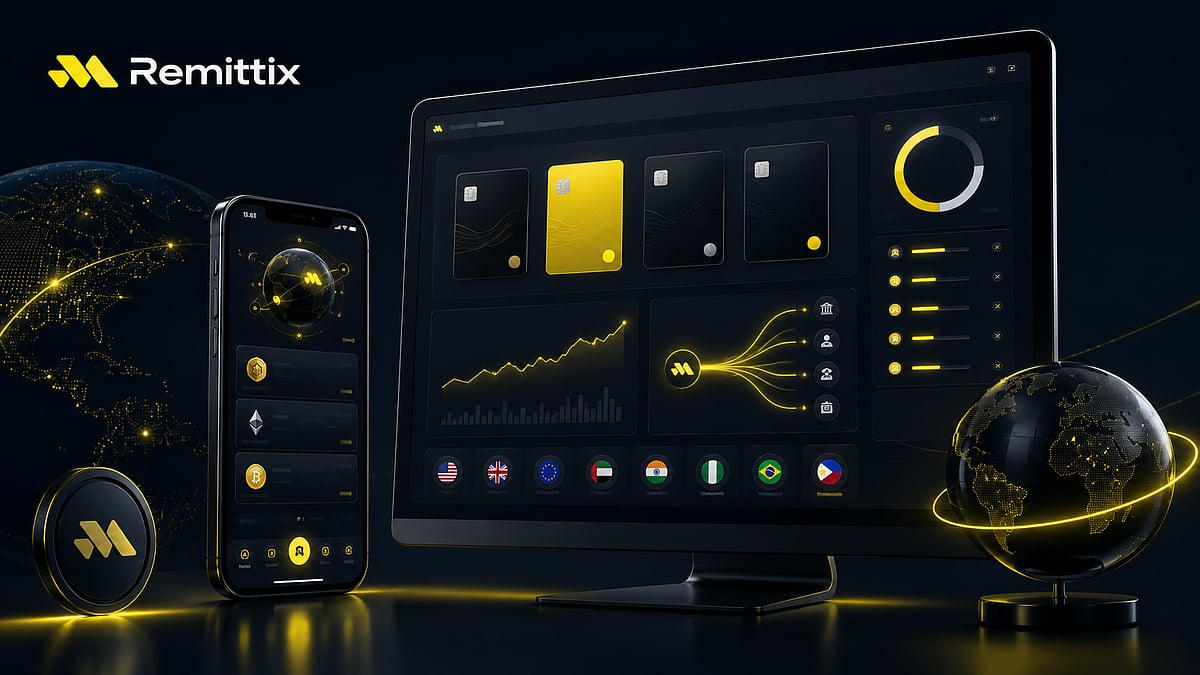
    Beyond the launch price news, Remittix is continuing to build momentum around its crypto-to-fiat platform. The platform is already live and currently being tested with members of the community. It is designed to let users send crypto while recipients receive fiat directly into their bank accounts.

    Multiple community members have reportedly received fiat payments through the Remittix system, providing practical platform proof ahead of wider public access. The official launch date for the crypto-to-fiat platform is expected to be announced over the coming week, adding another important update for holders to watch.

    350% RTX Bonus Nears Final Days

    The limited-time 350% RTX bonus remains available, but only for another few days before it completely ends. With the $0.35 minimum launch price now confirmed, the final bonus window has become even more important for users still watching Remittix before exchange activity begins.

    The project now has several major updates moving at the same time: a confirmed minimum launch price, live airdrop registration, active platform testing, token distribution preparation, and an upcoming platform launch date announcement. For RTX holders, this is a major boost at exactly the right time. Remittix has confirmed the number the community was waiting for, and the next phase of the project is now moving quickly into view.

    Discover the future of PayFi with Remittix by checking out their project here: Website | Airdrop Registration

    FAQ

    What is the confirmed RTX launch price? Remittix has confirmed that RTX will launch on major exchanges at a minimum price of $0.35.

    Is Remittix airdrop registration open? Yes, Remittix airdrop registration is live through the official Remittix site for RTX holders preparing for token distribution.

    Is the 350% RTX bonus still available? Yes, the limited-time 350% RTX bonus is still available, but only for another few days before it ends completely.

    Disclaimer: This article is provided for informational purposes only and does not constitute investment advice. Cryptocurrencies are risky investments. Always conduct your own research before making any investment decisions.

  • Remittix Sets RTX Minimum Launch Price at $0.35, Accelerating Token Countdown

    Remittix Sets RTX Minimum Launch Price at $0.35, Accelerating Token Countdown

    The countdown to the RTX token launch has intensified after Remittix officially announced that its token will debut on major exchanges with a minimum price of $0.35. This confirmation provides the Remittix community with a clear benchmark as the project moves closer to exchange trading, token distribution, and broader platform access.

    With airdrop registration now live, the crypto-to-fiat platform already in testing, and the limited-time 350% RTX bonus entering its final days, the latest update has injected fresh urgency into the final stretch. For RTX holders, the $0.35 minimum launch price has become the central topic of discussion.

    $0.35 Minimum Price Fuels Launch Countdown

    Launch price announcements often serve as a turning point for presale projects because they give holders a clearer view of how the token is expected to enter the market. By confirming a $0.35 minimum price on major exchanges, Remittix has shifted the community’s focus from speculation to preparation. The benchmark is now set, and new buyers watching from the sidelines have only a short window before the current bonus period ends.

    This update coincides with several major Remittix milestones aligning simultaneously. The project is preparing holders for distribution, testing its live payment platform, and moving toward a wider public rollout.

    Airdrop Registration Now Live for RTX Holders

    Remittix has opened airdrop registration through its official website. The airdrop is tied to the distribution of RTX tokens purchased during the presale. Holders can register by connecting their wallet, submitting their wallet address, and completing the registration page.

    Users can also add optional notification details to receive future updates regarding token distribution, launch announcements, and airdrop progress. Once complete, the page confirms successful registration. Remittix urges all RTX holders to use only official links when registering and to avoid unofficial websites, direct messages, or unknown accounts claiming to offer airdrop access.

    Crypto-to-Fiat Platform Live and in Testing

    Remittix is also building momentum around its crypto-to-fiat platform, which is already live and undergoing testing with community members. The platform allows users to send cryptocurrency while recipients receive fiat directly into their bank accounts. Multiple community members have reportedly received fiat payments through the system, providing practical proof of concept before wider access begins.

    The official launch date for the crypto-to-fiat platform is expected to be announced within the coming week. That announcement could serve as another major catalyst as Remittix moves closer to public platform rollout.

    350% RTX Bonus Nears Final Exit

    The limited-time 350% RTX bonus remains available for only a few more days before it ends completely. This makes the current window especially significant. Remittix now has a confirmed $0.35 minimum launch price, live airdrop registration, active platform testing, token distribution preparation, and an upcoming platform launch date announcement—all moving in parallel.

    For RTX holders, the countdown has clearly intensified. The launch price is confirmed, the registration page is live, and Remittix is entering one of the most active periods in its roadmap so far.

    Discover the future of PayFi with Remittix by checking out their project here:

    FAQ

    What is the confirmed RTX launch price?
    Remittix has confirmed that RTX will launch on major exchanges at a minimum price of $0.35.

    Is Remittix airdrop registration live?
    Yes, airdrop registration is live through the official Remittix site for RTX holders preparing for token distribution.

    Is the 350% RTX bonus still available?
    Yes, the limited-time 350% RTX bonus is still available for a few more days before it ends completely.

  • Ethereum Q3 2026 Recovery Gains Traction as ETH/BTC Breakout and Record Binance Withdrawals Fuel Optimism

    Ethereum Q3 2026 Recovery Gains Traction as ETH/BTC Breakout and Record Binance Withdrawals Fuel Optimism

    Ethereum has entered the third quarter of 2026 with renewed momentum, breaking a two-quarter losing streak. An ETH/BTC breakout and a three-year high in Binance withdrawals are signaling growing demand, though the cryptocurrency still needs to sustain a move above $2,000 to confirm a broader market recovery.

    Historical Q3 Performance Offers Support

    According to CoinGlass data, Ethereum has delivered an average third-quarter return of 7.47% since 2016, with a median return of 7.77%. This follows a challenging first half of 2026, during which ETH fell 29.26% in Q1 and another 25.28% in Q2. The early Q3 positive performance provides some relief, and historical patterns suggest that weak first-half performances have sometimes preceded firmer trading later in the year. While history does not guarantee future gains, the Q3 record indicates that Ethereum has often used this period to rebuild momentum after weaker quarters.

    ETH/BTC Breakout Changes the Near-Term Signal

    Ethereum also strengthened against Bitcoin at the start of July. After trading between 0.0260 BTC and 0.0270 BTC for most of June, the ETH/BTC pair broke above resistance and moved toward 0.0275 BTC, its strongest level in several weeks. This shift suggests that Ethereum attracted more capital relative to Bitcoin. A higher ETH/BTC ratio has historically preceded wider altcoin rallies, though it does not guarantee an immediate dollar-price surge.

    Fundstrat’s Tom Lee highlighted stablecoins, tokenization, and blockchain-based financial infrastructure as long-term drivers for Ethereum, supporting further relative strength against Bitcoin this year.

    Binance Withdrawals Add Another Market Signal

    Binance recorded more than 166,000 Ethereum withdrawal transactions in a single day, according to CryptoQuant, marking the highest daily level in three years. CryptoQuant noted that the surge could reflect changing market sentiment and rising demand for Ethereum. Large withdrawal spikes often signal that traders are moving assets away from exchanges, indicating accumulation rather than immediate selling.

    While Ethereum continues to trail Bitcoin in overall performance, the withdrawal increase points to renewed activity among traders and investors during the early Q3 recovery.

    What’s Next?

    Market watchers are now tracking whether withdrawal volumes continue rising and whether ETH can hold its ETH/BTC breakout. The $2,000 level remains a critical threshold for sustained demand. Investors should monitor exchange outflows, relative strength against Bitcoin, and overall market sentiment for confirmation of a broader recovery.

  • Best EVM Wallets of 2026: Secure, Multi-Chain, and Beginner-Friendly Options

    Best EVM Wallets of 2026: Secure, Multi-Chain, and Beginner-Friendly Options

    In 2026, the crypto landscape has evolved significantly, with Ethereum remaining a dominant force alongside a growing number of Ethereum Virtual Machine (EVM)-compatible chains such as Polygon, Arbitrum, Optimism, Base, and BNB Chain. As adoption soars, choosing the right wallet is more critical than ever. Users now demand robust security, seamless multi-chain support, and an intuitive experience. Here are the top EVM wallets leading the market this year.

    MetaMask Still Leads the Market

    MetaMask remains the most widely used EVM wallet in 2026, serving as the primary gateway to Web3 for millions. Its extensive compatibility with decentralized applications (dApps) gives it a clear edge. Available as a mobile app and browser extension, MetaMask supports hardware wallets like Ledger and Trezor for enhanced security. The Snap feature has expanded its reach to hundreds of EVM-compatible chains. While its ecosystem is unmatched, new users may find the initial setup slightly complex.

    Rabby Wallet Gains Massive Popularity

    Rabby Wallet, developed by the DeBank team, has surged in popularity among advanced DeFi users. Its standout feature is a robust security system that simulates transactions before approval, clearly showing potential changes and helping prevent scams. The wallet automatically switches between blockchain networks, saving time for multi-chain users. Praised by security experts for its contract warning system, Rabby has become a top choice for experienced traders navigating the rising threat of crypto scams.

    Trust Wallet Dominates Mobile Users

    Trust Wallet remains a favorite for beginners, with over 200 million global users. This non-custodial wallet supports Ethereum, dozens of EVM-compatible blockchains, and thousands of assets. Its simple mobile interface makes crypto management effortless. Built-in features include token swaps, staking, NFT storage, and dApp access. As crypto reaches mainstream audiences, Trust Wallet’s ease of use continues to attract newcomers.

    Coinbase Wallet Brings Smart Wallet Technology

    Coinbase Wallet has introduced smart wallet technology in 2026, leveraging account abstraction to eliminate traditional seed phrase dependency. Users can now log in with passkeys or biometric methods like face recognition, enhancing both security and convenience. Gasless transactions on supported Layer 2 networks are another major update, allowing users to execute transactions without paying standard gas fees. These innovations position Coinbase Wallet as a strong contender for mainstream adoption.

    OKX Web3 Wallet Expands Fast

    OKX Web3 Wallet has grown rapidly, especially among active traders, supporting over 60 blockchain networks. It consolidates token swaps, cross-chain transfers, NFT management, and dApp access into a single platform. Security alerts warn users about suspicious websites before transactions, addressing the rise in online crypto attacks. Its all-in-one design appeals to users who frequently move funds across multiple ecosystems.

    Security Became the Biggest Concern This Year

    Wallet security is a top priority in 2026, with threats like the Crypto Clipper malware—which alters copied wallet addresses to redirect funds to hackers—and fake recovery software designed to steal seed phrases. In response, wallet companies are prioritizing hardware wallet support, transaction previews, biometric security, phishing alerts, and seedless recovery systems. Security now rivals convenience as a key factor in wallet selection.

    Final Thoughts

    The best EVM wallets in 2026 offer far more than simple storage. MetaMask leads in ecosystem access, Rabby excels in security, Trust Wallet appeals to beginners, Coinbase Wallet drives innovation, and OKX provides a comprehensive multi-chain solution. As Web3 expands, wallets evolve from basic tools into the foundation of the decentralized economy.

    FAQs

    1. What is an EVM wallet? An EVM wallet stores and manages crypto assets on Ethereum-compatible blockchains like Ethereum, Polygon, Arbitrum, Base, and BNB Chain.
    2. Which is the safest EVM wallet in 2026? Rabby Wallet is widely recognized for strong transaction simulation and scam detection, with hardware wallet integration adding extra protection.
    3. Which wallet is best for beginners? Trust Wallet remains one of the easiest options due to its simple mobile interface and beginner-friendly design.
    4. Why is wallet security a major concern in 2026? Threats like Crypto Clipper malware, phishing attacks, and fake recovery apps have made security a top priority for crypto users.
    5. Which wallet supports the most blockchain networks? OKX Wallet stands out with broad multi-chain support and integrated tools for swaps, NFTs, and decentralized exchanges.