Tag: Cryptography

  • Bitcoin at Risk from Quantum Computing, EU Financial Supervisors Warn

    Bitcoin at Risk from Quantum Computing, EU Financial Supervisors Warn

    European financial supervisors have issued a warning that the rise of quantum computing could eventually undermine the cryptographic foundations of blockchain networks. The alert, from the European Banking Authority, the European Insurance and Occupational Pensions Authority, and the European Securities and Markets Authority, urges financial firms to prepare for emerging technology risks that could compromise digital security.

    EU Supervisors Warn of Cryptography Risk

    On September 23, the three EU authorities released a joint statement cautioning that quantum computing could weaken the systems that protect communications, transactions, databases, and blockchains. They emphasized that the threat to cryptography may emerge before quantum machines reach commercially viable uses. While no quantum attack has yet derived a Bitcoin private key from a public key, the supervisors called for proactive measures.

    Exposed Bitcoin Public Keys Raise Concerns

    Bitcoin transactions rely on public keys to verify ownership. A sufficiently powerful quantum computer could theoretically derive the corresponding private key from an exposed public key, allowing an attacker to authorize transactions from those coins. According to CryptoQuant founder Ki Young Ju, approximately 6.89 million Bitcoin could be vulnerable if quantum computing advances to that level. This estimate includes 1.91 million BTC in older pay-to-public-key (P2PK) outputs, which display public keys directly on the blockchain, and up to 4.98 million additional BTC whose public keys may have been revealed through earlier transactions.

    Ju also noted that 3.4 million BTC have remained dormant for over a decade, including roughly one million coins linked to Bitcoin’s creator, Satoshi Nakamoto. If the network adopts new protections, owners would need to access their coins to move them to secure addresses; coins with lost keys could remain permanently exposed.

    Bitcoin Upgrade Requires Network Agreement

    Protecting exposed Bitcoin would necessitate changes to the network’s signature verification process. Developers would need to design and review an upgrade, followed by adoption by miners, node operators, exchanges, wallet providers, and users. Post-quantum signatures are typically larger than current ones, posing challenges for transaction capacity and performance. The decentralized nature of Bitcoin means no central authority can move coins on behalf of owners.

    Ju also suggested the possibility of freezing older coins in exposed addresses, but such a rule could create disagreements and potentially lead to a fork of the blockchain. IBM’s roadmap targets fault-tolerant quantum computing by 2029, giving the Bitcoin community a timeline to consider as they evaluate security upgrades.

    The European Commission has already set a roadmap for EU member states to transition to post-quantum cryptography by the end of 2026, with a deadline of 2030 for protecting high-risk uses. Financial firms and supervisors are urged to begin preparations now.

  • How Contactless Payments Work: The Technology Behind the Tap

    How Contactless Payments Work: The Technology Behind the Tap

    Contactless payments feel instant, but layers of security work underneath. NFC connects the device to the terminal. EMV and tokenization protect card credentials. Cryptography authenticates each transaction. Issuers apply fraud checks before approval. Credentials are steadily fading from view, becoming identity systems.

    A tap takes a moment. Behind that moment sits a stack of technology built over two decades, involving radio waves, cryptography, and a chain of banking infrastructure most people never see.

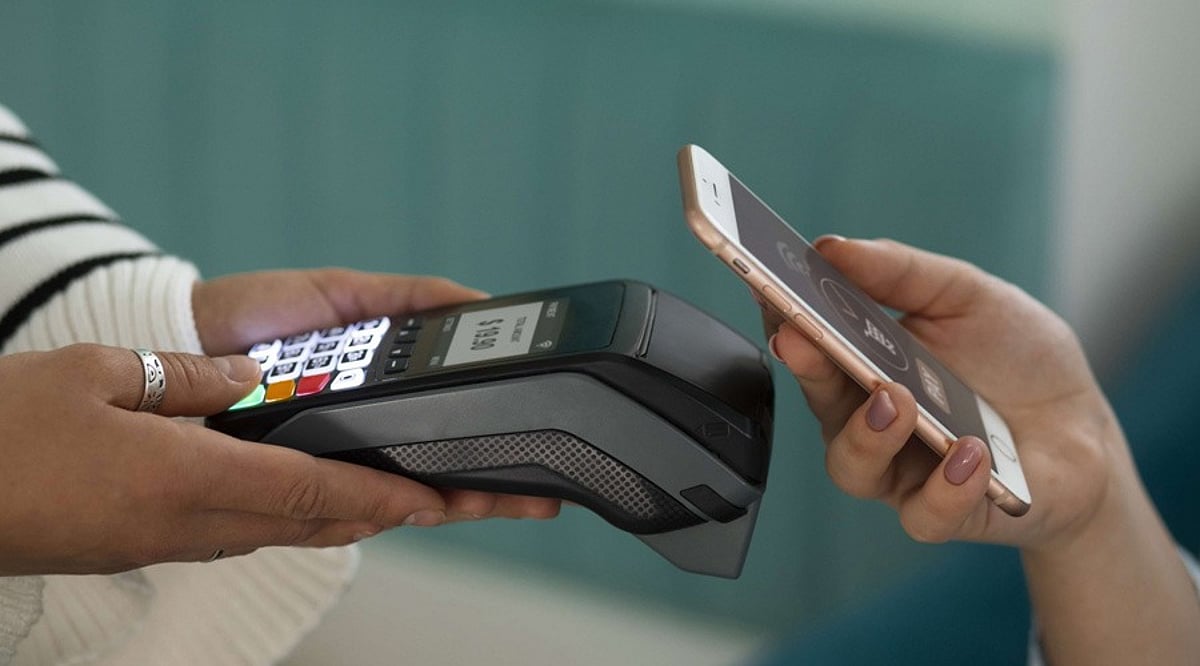
    Contactless payment has become routine at grocery counters, metro gates, and coffee shops. Few people using it understand what happens between the tap and the beep. The customer sees tap, beep, done. The payment system performs several steps in rapid succession: connection, credential exchange, cryptographic authentication, authorization, and fraud screening. That contrast is the real story.

    Near Field Communication Starts the Transaction

    Every contactless transaction begins with Near Field Communication (NFC). This is a short-range radio technology that activates only within a few centimeters. The card or phone contains a small antenna and chip. The payment terminal generates a low-power magnetic field. When the two come close, the card’s chip draws power from that field itself, without needing a battery.

    A contactless card has no power source. The terminal effectively wakes the chip during the tap, powers it briefly, and exchanges data before the field disappears. NFC communication itself happens in milliseconds, though the full authorization that follows depends on the payment network, the issuer, and the terminal.

    What the Card or Phone Actually Sends

    Physical cards use EMV chip security to generate transaction-specific authentication data during each tap, while digital wallets can add tokenization to protect the underlying card number. These are related but distinct systems. A physical contactless card and a phone-based wallet protect the transaction differently, even though both work to prevent the raw card number from being freely exposed.

    This distinction matters for anyone comparing payment methods. A lost physical card still carries some exposure risk tied to its chip data. A lost phone, by contrast, typically exposes only a token linked to that one device, not the underlying account number itself.

    Cryptography Makes Each Transaction Different

    The payment chip, whether on a card or in a wallet, uses cryptographic processes to generate transaction-specific authentication data. Because that data is tied to the individual transaction, simply copying information captured from one payment does not produce a valid second transaction.

    On the device side, contactless cards use secure chips to hold and protect payment credentials. Some phones use dedicated secure hardware, while other payment architectures use different combinations of tokenization, trusted execution environments, and software-based security. The exact setup varies by device manufacturer and payment system, and no single architecture applies across all devices.

    From Tap to Bank Approval

    The tap is only the first step. The terminal reads the payment credentials and transaction data, then sends an authorization request through the merchant’s payment infrastructure. The payment network routes that request to the card issuer, which checks the account and applies fraud controls before returning an approval or decline. Settlement, where funds actually move between banks, happens later. The instant beep at checkout marks approval, not completion of the full payment cycle.

    Why Some Payments Still Ask for a PIN

    Many contactless systems apply a transaction-value limit before requiring additional verification, such as a PIN. Some issuers can also require verification after a series of contactless transactions. These controls limit the potential exposure from repeated low-friction payments while keeping everyday purchases fast. Card networks and regulators typically review these limits periodically based on fraud data and regional banking rules, rather than fixing them permanently.

    Fraud Detection Works Behind the Scenes

    Fraud protection does not stop at the tap. Issuers and payment providers watch for patterns during authorization, checking things like past transaction behavior, the device being used, and where the merchant sits in the risk spectrum. This means security is not resting on a single moment. It is spread across a system built to catch problems before approval happens.

    That same thinking now fits on a wrist or a finger. Contactless payments have moved into rings and smartwatches, letting people pay without pulling out a card or phone at all. What stands out is not the new form factor itself, but how easily the same protection travels with it. The hardware keeps changing shape. The security underneath stays consistent.

    The Future of Payments Is Becoming Credentialless

    Contactless payment succeeds by moving complexity away from the customer, not by eliminating it. NFC provides the connection, EMV and tokenization protect payment credentials, and cryptographic processes authenticate the transaction. The next shift is making those credentials even less visible to users. A card number may already be hidden behind a phone, watch, or other device, turning payment into an identity and authentication process rather than a simple exchange of card details.

    Final Thought

    The physical card is slowly losing its importance, even though it still looks the same at checkout. Biometrics and device identity are already doing more of the verification behind the scenes. So the tap itself won’t change much for a while. But what’s happening underneath it will keep getting quietly upgraded.

  • Quantum Computing Threat to Bitcoin: How Close Are Hackers to Breaking BTC?

    Quantum Computing Threat to Bitcoin: How Close Are Hackers to Breaking BTC?

    Bitcoin cannot currently be hacked by available quantum computers, but sufficiently advanced quantum machines could eventually threaten some of the cryptography protecting BTC ownership. The risk is serious enough that researchers are already testing quantum-resistant ways to protect Bitcoin before such computers become practical.

    What Quantum Computers Could Attack

    Bitcoin ownership depends on digital signatures. A wallet uses a private key to authorize spending, while cryptographic mathematics allows the network to verify the signature without revealing that private key.

    The potential problem is Shor’s algorithm. According to StarkWare, a sufficiently capable quantum computer running Shor’s algorithm could work backward from certain exposed public keys and calculate the corresponding private key. An attacker could then create a valid signature and spend the BTC.

    This does not mean Bitcoin’s blockchain itself suddenly disappears. The primary concern is unauthorized spending from vulnerable addresses.

    Which Bitcoin Is Most Exposed?

    Risk varies according to address usage. Bitcoin addresses where the public key has never been revealed have additional protection, as the blockchain initially exposes only a hash of that key. Once coins are spent, however, the public key may become visible.

    Older address structures and reused addresses can therefore present greater long-term concerns. A quantum attacker would still require hardware capable of completing the calculation before the legitimate owner safely moves the funds. Today’s quantum computers are nowhere near that capability.

    A Quantum-Safe Bitcoin Transaction Is Already Live

    Researchers have nevertheless begun preparing. On August 26, StarkWare researcher Avihu Levy demonstrated what the company describes as the first quantum-safe Bitcoin transaction on mainnet. It was confirmed in Bitcoin block 964,199 without changing Bitcoin’s consensus rules or introducing a soft fork.

    The Quantum-Safe Bitcoin method protected a 10,000-satoshi output using a construction designed to remain secure against a working quantum adversary. However, the demonstration was experimental. The transaction was non-standard, required direct submission to MARA Pool, and reportedly cost roughly USD 150-200 when computation and transaction expenses were considered.

    Does This Make Bitcoin Quantum-Proof?

    No. StarkWare itself argues Bitcoin will ultimately need protocol-level changes to provide comprehensive quantum resistance. Existing exposed public keys remain a separate challenge. Bitcoin developers would also need wallets, exchanges and users to migrate before a cryptographically relevant quantum computer becomes available.

    Final Thoughts

    Quantum computing is not an immediate Bitcoin security emergency, but waiting until an attack becomes practical would be dangerous. The recent mainnet experiment shows that researchers can already test defensive mechanisms on Bitcoin itself.

    For BTC holders, the key issue is therefore preparation: developing standards, upgrading wallet infrastructure and eventually migrating vulnerable funds before quantum hardware becomes powerful enough to threaten existing signature systems.

    FAQs

    1. Can quantum computers hack Bitcoin today? No. Current quantum computers are not powerful enough to break Bitcoin’s cryptography. The threat is considered a long-term risk rather than an immediate security emergency.
    2. How could quantum computers threaten Bitcoin? A sufficiently powerful quantum computer using Shor’s algorithm could potentially derive a private key from certain exposed public keys. That could allow an attacker to authorize unauthorized BTC transactions.
    3. Which Bitcoin addresses are most vulnerable to quantum attacks? Older or reused addresses with exposed public keys could face greater long-term risk. Addresses whose public keys have not yet been revealed have an additional layer of protection.
    4. What was StarkWare’s quantum-safe Bitcoin transaction? StarkWare researcher Avihu Levy demonstrated a quantum-resistant Bitcoin transaction on mainnet in block 964,199. The experiment protected a 10,000-satoshi output without requiring a Bitcoin soft fork.
    5. Does the quantum-safe transaction make Bitcoin quantum-proof? No. The demonstration was experimental and does not protect the entire Bitcoin network. Broader quantum resistance would likely require protocol upgrades, wallet changes and migration of vulnerable funds.
  • Sui’s Quantum-Safe Upgrade Preserves Existing Wallet Addresses With Post-Quantum Signatures

    Sui’s Quantum-Safe Upgrade Preserves Existing Wallet Addresses With Post-Quantum Signatures

    Sui is rolling out quantum-safe account security that lets users keep their current blockchain addresses while upgrading to post-quantum cryptography. The network will support ML-DSA-65 for standard accounts and SLH-DSA-SHA2-128s for high-value Move-based vaults, both designed to resist attacks from future quantum computers.

    Address Aliases Enable Seamless Migration

    Normally, switching cryptographic schemes requires creating a new address and moving all assets—a disruptive process for tokens, NFTs, identities, and smart contracts. Sui’s Address Aliases system avoids that entirely. An account can authorize a new post-quantum signer while the original blockchain address remains the transaction sender. Once native ML-DSA support is live, users simply authorize the new signer and later make it the sole authorized signer.

    Users can also derive an ML-DSA-65 key from their existing recovery phrase via a fresh derivation path, eliminating the need for a separate backup. Sui cautions that wallet software must clearly communicate the authority granted when adding an alias.

    Two Cryptographic Systems for Different Needs

    Sui splits quantum protection across two NIST‑standardized schemes:

    • ML-DSA-65 (FIPS 204, NIST Category 3) – a lattice‑based signature chosen for frequent transactions because it balances a strong security margin with practical verification speed.
    • SLH-DSA-SHA2-128s (FIPS 205, Category 1) – a hash‑based system reserved for high‑value vaults, providing a different mathematical foundation so that a weakness in lattice‑based crypto does not compromise all assets.

    This dual approach lets developers replace the vault authentication scheme via smart‑contract upgrades if future cryptanalysis reveals flaws in one family.

    Larger Signatures Shape Deployment Timeline

    Post‑quantum signatures are bulkier than Ed25519: ML-DSA-65 signatures are 3,309 bytes (public key: 1,952 bytes), while SLH-DSA‑SHA2‑128s signatures reach 7,856 bytes. Despite the size increase, Sui notes that ML-DSA verification performance is close enough to Ed25519 that per‑signature network costs need not rise.

    The rollout is staged:

    • Quantum‑safe vaults on Mainnet before end of 2026.
    • Native ML-DSA-65 accounts on Testnet by late 2026 and Mainnet in Q1 2027.
    • Wallet, SDK, and CLI support alongside independent audits and Testnet feedback.

    No immediate action is required from existing users. The migration is additive and optional, with clear warnings about potential scams that ask users to move all assets to a new address.

    Conclusion

    Sui’s quantum‑safe upgrade uses ML-DSA-65 accounts and SLH-DSA vaults while preserving existing addresses via Address Aliases. Users need do nothing now; audits, testing, and phased deployment continue.

  • Quantum Computing vs. Blockchain: Separating Cryptography Myths from Real-World Risks

    Quantum Computing vs. Blockchain: Separating Cryptography Myths from Real-World Risks

    Quantum computing does not pose an immediate threat to blockchain, but it does challenge the cryptography behind digital signatures and wallets. The industry is already preparing with post-quantum cryptography and migration strategies. Understanding the real risks helps separate technical reality from common misconceptions.

    How Blockchain Security Works

    Blockchain security relies on cryptographic algorithms, consensus rules, a distributed network, and incentive structures. Quantum computing only affects cryptography, not consensus or network integrity. The real quantum risk is concentrated in the cryptographic layer that secures digital signatures and wallet control.

    Shor’s vs. Grover’s Algorithm

    Two quantum algorithms drive this conversation, but they are not equally significant. Shor’s algorithm can theoretically break elliptic curve cryptography, allowing attackers to derive private keys from exposed public keys. This would enable forged signatures and fraudulent transactions. In many networks, public keys remain hidden until a transaction is signed, limiting exposure for unused addresses. Grover’s algorithm accelerates brute-force searches against hash functions, but its impact is modest and can be offset by longer hash outputs. Treating these two threats as identical is a common mistake.

    Is Blockchain at Risk Today?

    No existing quantum computer is capable of running Shor’s algorithm at the scale needed to threaten current signatures. Researchers refer to a “cryptographically relevant quantum computer” (CRQC) as the threshold, and current hardware remains far short due to error rates and qubit instability. The migration conversation is urgent because building and testing replacement cryptography takes years. Waiting for a CRQC to appear would leave networks exposed during the transition.

    Where Quantum Risk Exists

    Quantum risk is not evenly distributed across a blockchain network. It is concentrated in identity and authorization—specifically the cryptographic algorithms used for digital signatures and wallet security. Consensus mechanisms and ledger validation remain unaffected.

    Post-Quantum Blockchain Upgrades

    The response is already underway. NIST finalized its first set of post-quantum cryptography (PQC) standards in 2024, giving developers real building blocks. Blockchain researchers are testing quantum-resistant signature schemes, and some projects have begun hybrid migrations that layer new cryptography alongside existing systems. This phased approach enables upgrades without breaking compatibility. Enterprise blockchain applications—such as supply chain tracking and identity systems—face the same cryptographic exposure as cryptocurrency wallets.

    What This Means for Users

    Investors should evaluate a project’s readiness for post-quantum migration alongside traditional metrics. Projects actively testing quantum-resistant signatures signal stronger planning. Builders should monitor signature scheme upgrades and wallet compatibility. Crypto asset holders do not need to act today; the transition will likely happen gradually through wallet updates. Exchanges and custodians will probably lead the shift, rolling out new signature standards before individual users notice changes.

    Final Thoughts

    The quantum threat to blockchain is real, specific, and manageable. It sits almost entirely in the cryptographic layer, driven by Shor’s algorithm. The industry has years of runway before a CRQC becomes a practical concern. Post-quantum cryptography is not a hypothetical defense—it is standardized, tested, and already being integrated into next-generation blockchain infrastructure.

    Frequently Asked Questions

    1. Will quantum computing break blockchain?
    Not immediately. It threatens certain cryptographic algorithms used for digital signatures. Most experts expect networks to transition to PQC before CRQCs become widely available.

    2. What is the biggest quantum threat to blockchain?
    The greatest risk is to public-key cryptography, especially elliptic curve cryptography (ECC), which secures wallets and verifies transactions. Consensus mechanisms are not directly broken.

    3. What is post-quantum cryptography?
    PQC refers to algorithms designed to resist attacks from both classical and quantum computers. It is the leading strategy for protecting blockchain and other digital systems against future quantum threats.

    4. Are today’s blockchains already preparing?
    Yes. Many projects, researchers, and standards organizations are exploring quantum-resistant signature schemes, hybrid approaches, and migration strategies.

    5. Should investors and developers worry now?
    No immediate panic is needed, but preparation is important. Investors should follow projects with clear upgrade plans; developers should design adaptable systems and monitor PQC advances.

  • How Blockchain Strengthens Business Data Security: Benefits and Challenges

    How Blockchain Strengthens Business Data Security: Benefits and Challenges

    Data breaches cost companies more than money now. They cost trust, and trust is hard to rebuild once it’s gone. That gap is pushing more businesses toward blockchain, a technology once tied mostly to crypto trading, now finding a second life as a security layer for sensitive records.

    What Makes Blockchain Hard to Break Into

    A blockchain stores data across many computers instead of one central server. Each new entry links back to the one before it through cryptographic proof, forming a chain that every participant can see. Changing one record means rewriting every entry after it. That change also needs approval from most nodes on the network before it sticks. This setup is what draws security teams in. A single hacked server can bring down a whole database. A blockchain spread across participating organizations gives an attacker no single point to target.

    This setup is also what gives blockchain its core security value: a record that is hard to alter once written, paired with a clear audit trail. Every entry stays linked to a timestamp and the entries before it, so an unauthorized change is easy to spot rather than easy to hide. That same trail helps after an attack too. If ransomware or a breach hits other systems, a verifiable blockchain record can help a business confirm what data was touched and support the forensic work that follows.

    Where Businesses Are Putting It to Work

    Banks and payment firms were early adopters. They use blockchain to record transactions in a way auditors can check without trusting a middleman. Supply chain firms now track goods from factory to shelf on shared ledgers, making it easy to spot a tampered shipment record or a fake product entering the chain. Healthcare providers are testing blockchain for patient records too, using it to manage patient consent and track who has viewed a file, letting hospitals share records safely without losing a clear history of every change.

    Government agencies have started piloting blockchain for land registries and identity systems, where a forged document can cause real financial harm. Beyond these industries, many organizations face the same challenge: several parties need access to the same data, but no single organization can always be trusted to manage it alone. Blockchain solves this problem by letting everyone share and verify the same records without relying on one central authority.

    Smart Contracts Add a Second Layer

    Many enterprise blockchain systems also run smart contracts, small pieces of code that execute automatically once agreed terms are met. A payment can be released only when a shipment is confirmed delivered. A contract can hold funds until both sides sign off. This cuts out manual approval steps that are often the weak point in a security chain, the spot where a forged email or a stolen login can slip past a human reviewer.

    Encryption and Access Control Get an Upgrade

    Traditional databases rely on passwords and firewalls, which can be compromised if login credentials are stolen. Blockchain uses public and private cryptographic keys to verify access instead of depending only on passwords. Many enterprise blockchain platforms also offer permissioned access, allowing businesses to decide who can view or update specific records while keeping the ledger secure and tamper-resistant.

    The Limits Businesses Still Face

    Blockchain does not fix every security problem. Running a full network takes real computing power, and public blockchains can run slower than a standard database built for speed. Rules around data storage, especially in finance and healthcare, are still catching up with how blockchain actually works. Some businesses stay cautious about full adoption. There is also a skills gap: setting up and running a blockchain system takes specialized skills that many IT teams are still building.

    Enterprise blockchains are expensive, often costing lakhs to set up and run. For smaller companies, the investment doesn’t really pay off until they are handling massive amounts of data or facing heavy regulatory pressure. For many, a mixed approach works best: sensitive records on a blockchain layer, routine work left on existing systems.

    A Shift in How Trust Gets Built

    What blockchain offers, at its core, is a different way to build trust. Instead of asking everyone to trust one company or one server, it spreads that trust across a network where tampering becomes hard to pull off rather than simply against the rules. For businesses handling sensitive data—whether financial records, medical files, or supply chain documents—that shift is worth real thought, even if it doesn’t fit every system on day one.

    Final Thoughts

    Blockchain adoption in enterprise security is still young, and most businesses will end up running it alongside older systems rather than replacing them outright. The companies gaining the most ground now are the ones testing it on a narrow, high-value problem first, then scaling once the results hold up under pressure.