
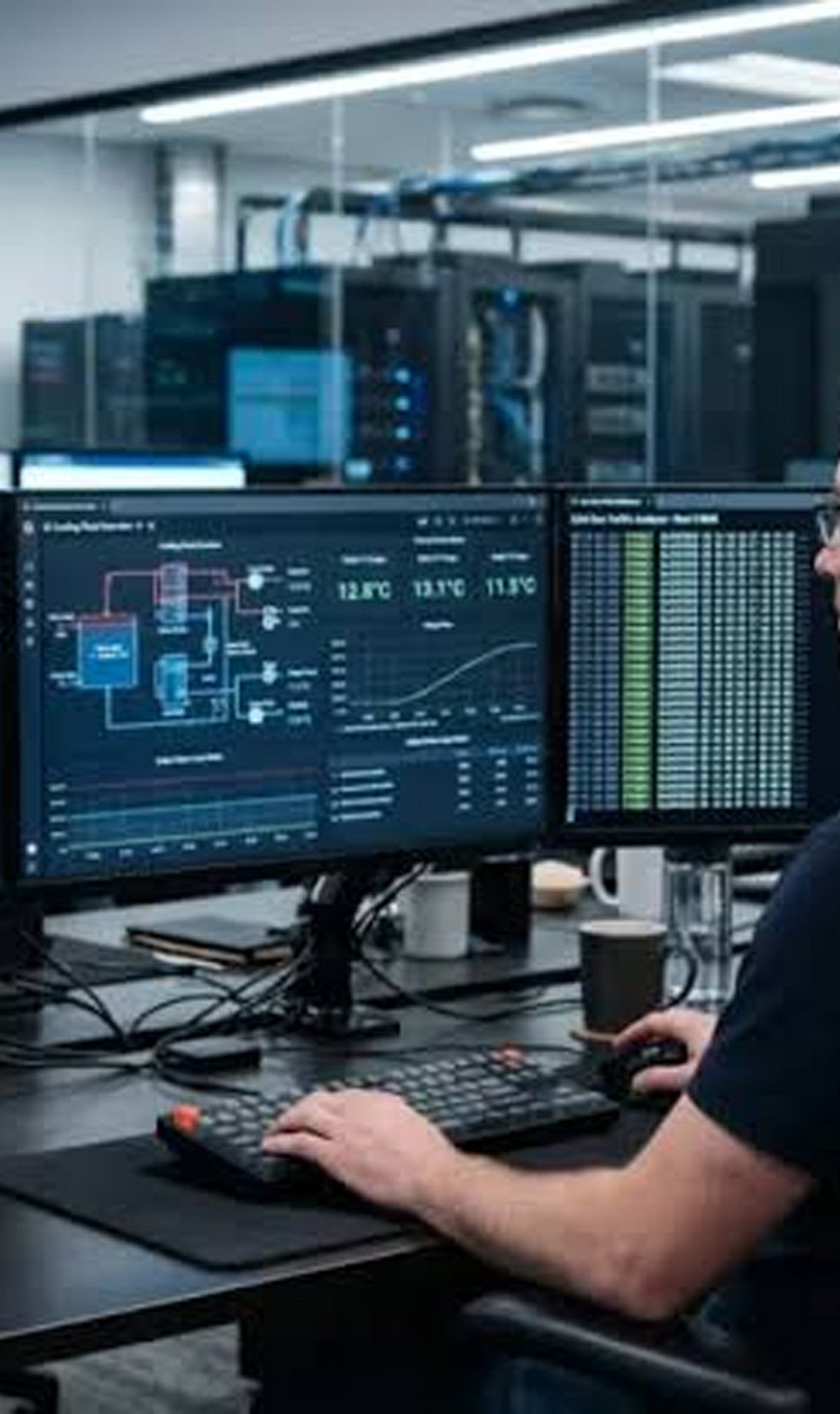
AI data centers are undergoing a major transformation to keep pace with the demands of next-generation artificial intelligence workloads. From advanced chips to smarter cooling and networking, here are seven technologies driving the evolution.
1. AI Accelerators and Chiplet-Based Processors
New AI accelerators and chiplet-based processors pack more computing power into each rack, enabling data centers to handle large-scale AI training and inference tasks more efficiently.
2. Liquid Cooling for High-Density Racks
As powerful chips generate more heat, liquid cooling is becoming essential. This technology improves thermal efficiency and reduces energy consumption in high-density AI racks.
3. CXL Memory Technology
CXL (Compute Express Link) memory lets processors and accelerators share memory resources efficiently, helping AI systems manage growing data and memory demands.
4. High-Speed Optical Networks (800G and 1.6T)
High-speed 800G and 1.6T optical networks move massive amounts of data between servers, switches, and accelerator clusters with lower power consumption.
5. Silicon Photonics
Silicon photonics uses light to transmit data across data center networks. Co-packaged optics and optical links improve bandwidth while reducing connectivity bottlenecks and energy demands.
6. AI-Powered Power Management
AI-driven power management monitors workloads, cooling, and equipment in real time. Smarter systems adjust resources, detect problems, and reduce unnecessary energy use.
7. Purpose-Built Inference Chips and Edge Data Centers
Purpose-built inference chips are gaining traction as AI shifts from training large models to running real-time applications like chatbots, coding tools, and voice agents. Edge data centers bring computing closer to users and devices, while renewable power, batteries, and microgrids support growing electricity needs.
Together, advanced chips, liquid cooling, CXL memory, optical networking, smart power systems, and edge computing are reshaping data centers for faster and more efficient AI workloads.