Tag: CXMT

  • CXMT Launches Fifth-Generation DRAM Platform: A Major Step in China’s Memory Chip Ambitions

    CXMT Launches Fifth-Generation DRAM Platform: A Major Step in China’s Memory Chip Ambitions

    CXMT Begins Mass Production of Next-Generation DRAM

    Chinese memory-chip manufacturer ChangXin Memory Technologies (CXMT) has officially commenced mass production of its fifth-generation DRAM platform. The announcement was made at the 2026 World Manufacturing Convention on September 20, marking a significant milestone in China’s push to strengthen its domestic semiconductor capabilities and reduce reliance on foreign suppliers.

    Key Technical Advancements

    The new platform achieves an active-area half-pitch of just 11.95 nanometers in the memory array, utilizing advanced patterning techniques to shrink cell structures. This improvement allows more memory cells per chip and increases the number of dies produced from each silicon wafer. CXMT claims the fifth-generation platform delivers over 50% higher gross die output per wafer compared to its predecessor under comparable conditions, boosting manufacturing efficiency and lowering costs.

    New LPDDR5X Memory Products

    Alongside the platform, CXMT introduced two 24-gigabit LPDDR5X memory chips. These new products offer 50% more storage capacity than previous-generation offerings, providing Chinese electronics manufacturers with a domestic source of advanced mobile memory as demand for higher-capacity chips continues to grow.

    Competing with Global Giants

    The launch intensifies the memory-chip race, as CXMT aims to challenge dominant players like Samsung Electronics, SK Hynix, and Micron Technology. DRAM serves as short-term working memory in smartphones, computers, servers, and other electronic devices. The timing is crucial amid U.S. restrictions on advanced semiconductor technology and equipment, which have accelerated China’s efforts to develop indigenous alternatives.

    CXMT’s progress reflects the broader national strategy to build a self-sufficient semiconductor ecosystem, with the new platform poised to support a wide range of applications from portable devices to data centers.
  • Chinese Chipmaker CXMT Soars 466% in Shanghai Debut After Record $8.6B IPO

    Chinese Chipmaker CXMT Soars 466% in Shanghai Debut After Record $8.6B IPO

    ChangXin Memory Technologies (CXMT) saw its shares skyrocket 466% on their first day of trading on Shanghai’s STAR Market, propelling the DRAM manufacturer to become China’s most valuable publicly listed company. The stock closed at 49 yuan, well above the IPO price of 8.66 yuan per share, after raising 57.92 billion yuan (approximately $8.6 billion) in the largest Asian IPO of 2026.

    The massive rally valued CXMT at over 3.2 trillion yuan ($487 billion), surpassing Industrial and Commercial Bank of China as the largest A-share company. Full-day turnover exceeded 140 billion yuan, as investors scrambled to trade the newly listed shares. Only about 6.73% of CXMT’s total shares were available for trading on the debut, limiting supply and concentrating demand on a small free float.

    Theodore Shou, CEO of Yiyi Capital, expressed confidence in CXMT’s potential to become a global memory chip leader but cautioned that the market may be near a ‘short-term peak’ in memory-cycle sentiment. He noted that large first-day gains are more common among smaller companies, and questioned whether the current margins and enthusiasm could be sustained.

    DRAM Market Position and Expansion Plans

    CXMT is China’s leading producer of dynamic random-access memory (DRAM) chips used in smartphones, computers, servers, and other electronics. It ranks fourth globally behind Samsung Electronics, SK Hynix, and Micron Technology, holding 7.67% of the global DRAM market in 2025 based on fourth-quarter sales, according to its prospectus. By chip volume, its share was near 9%.

    The company plans to direct most of its IPO proceeds toward memory wafer production, equipment upgrades, and research projects to increase output and develop more advanced memory products. Morningstar noted, however, that restricted access to leading manufacturing equipment still limits the pace of its technology development.

    Revenue Surge Driven by AI Demand

    CXMT reported first-quarter revenue of 50.8 billion yuan, up 719% year-over-year, and net profit of 33.01 billion yuan, reversing a 2.83 billion yuan loss in the same period last year. The improvement was driven by higher DRAM prices, increased sales volumes, and a better product mix.

    Demand from artificial intelligence systems and data centers has tightened the global memory market, while China promotes locally produced chips for major technology projects. Apple has reportedly started testing CXMT memory for devices sold in China, and Morningstar expects domestic internet companies to increase their use of CXMT chips as China expands its AI infrastructure.

    Despite the optimism, Morningstar sees a technology gap with global memory leaders and expects new industry capacity from late 2027 to ease supply pressure, potentially normalizing profitability. Shou added that investors had already started selling into the IPO, signaling caution about near-term market conditions.

    CXMT forecasts first-half revenue between 110 billion yuan and 120 billion yuan, and parent-company net profit between 50 billion yuan and 57 billion yuan, citing continued memory demand, higher prices, and increasing sales.

  • Today’s Tech Roundup: CXMT’s Market Debut, AI Career Opportunities, and Stricter Crypto Regulations

    Today’s Tech Roundup: CXMT’s Market Debut, AI Career Opportunities, and Stricter Crypto Regulations

    Welcome to today’s tech roundup! From China’s growing chip ambitions and fresh AI career opportunities to tighter crypto rules in India, changing investment trends, and a challenging job market for graduates, here’s a quick look at the biggest technology stories making waves today.

    Chinese Memory Chipmaker Marks Powerful Stock Market Debut

    China’s memory chip giant CXMT made a blockbuster stock market debut, with shares soaring as investors backed its AI-driven growth story. The milestone strengthens China’s push to reduce reliance on foreign chipmakers, though challenges from U.S. export restrictions and global competition remain.

    Best Paying AI Jobs That Don’t Require a Computer Science Degree

    You don’t need to be a software engineer to build a career in AI. Roles like AI trainer, prompt engineer, AI content creator, data annotator, and AI product coordinator focus more on creativity, communication, problem-solving, and domain expertise than advanced coding skills.

    CBDT Tightens Crypto Transaction Reporting and Tax Compliance

    India’s tax authority has tightened the norms of crypto transactions, including keeping proper records and reporting these details to the concerned authority. This has resulted in increased compliance levels without any change in taxes applicable at present.

    AI Spending Reshapes Entry-Level Jobs for Fresh Graduates

    Fresh graduates are entering one of the toughest job markets in years as companies pour more money into AI than entry-level hiring. With fewer openings and rising competition, many young professionals are finding it harder to land their first full-time role, even with strong qualifications.

    France Questions UK’s Role in EU Fund

    France is challenging the UK’s plan to participate in the €5 billion EU startup fund, arguing that bloc investments should favor member countries. The dispute has reignited debates about Brexit at a time when Europe aims to boost its technological sector to rival the US and China.

    This roundup highlights how quickly technology is changing. AI is driving everything from investment decisions to hiring, China is pushing harder to become self-reliant in semiconductors, and India’s crypto regulations are becoming stricter. At the same time, graduates are adapting to a job market that increasingly values AI-ready skills.

  • CXMT’s $8.6 Billion IPO: What China’s Biggest Memory Chip Debut Means for AI Chip Stocks

    CXMT’s $8.6 Billion IPO: What China’s Biggest Memory Chip Debut Means for AI Chip Stocks

    Global AI chip stocks could face fresh volatility next week as ChangXin Memory Technologies (CXMT), China’s largest memory chipmaker, prepares to debut on the Shanghai Stock Exchange. The listing, one of the biggest market events of the year, is expected to draw worldwide investor attention as Beijing intensifies efforts to strengthen its domestic semiconductor industry.

    CXMT has raised $8.6 billion through its Initial Public Offering (IPO), making it Asia’s largest IPO of 2026. The offering comes amid an AI-driven surge in demand for memory chips and continued efforts by China to reduce its dependence on foreign semiconductor suppliers.

    China’s Bet on Homegrown Chipmaking

    Founded in 2016, CXMT has grown into the world’s fourth-largest DRAM memory chipmaker, trailing only Samsung Electronics, SK Hynix, and Micron Technology. DRAM chips are essential components in smartphones, personal computers, servers, and AI systems, where they temporarily store data for processing.

    The company has grown significantly with substantial support from government-linked investors. Entities from Hefei, an eastern Chinese city, own 36.8% of CXMT’s stock. At the IPO valuation, those shares are worth approximately $31.5 billion, underscoring the scale of China’s state-backed investments in technology.

    Why Investors Are Watching Closely

    According to analysts, the IPO’s impact on semiconductor stocks will be significant, as large listings often trigger portfolio realignment among investors. CXMT’s market debut follows a recent downturn in global chip stocks, making its performance a key gauge of investor confidence in the AI hardware sector.

    Despite market volatility, demand for the IPO remains robust, with institutional investors subscribing to the offer over 500 times.

    A Key Player in China’s AI Strategy

    CXMT plays a pivotal role in China’s quest for technological self-reliance. High-performance AI processors require vast amounts of fast memory, and domestic DRAM production has become a priority due to US-led export restrictions reshaping the semiconductor supply chain.

    Although CXMT lags behind global leaders in advanced memory technologies, its rapid growth reflects the Chinese government’s strategy of cultivating domestic champions in critical industries. The company’s stock market performance will be closely watched by investors worldwide.

  • Apple Might Turn to Chinese Supplier CXMT for iPhone Memory Chips

    Apple Might Turn to Chinese Supplier CXMT for iPhone Memory Chips

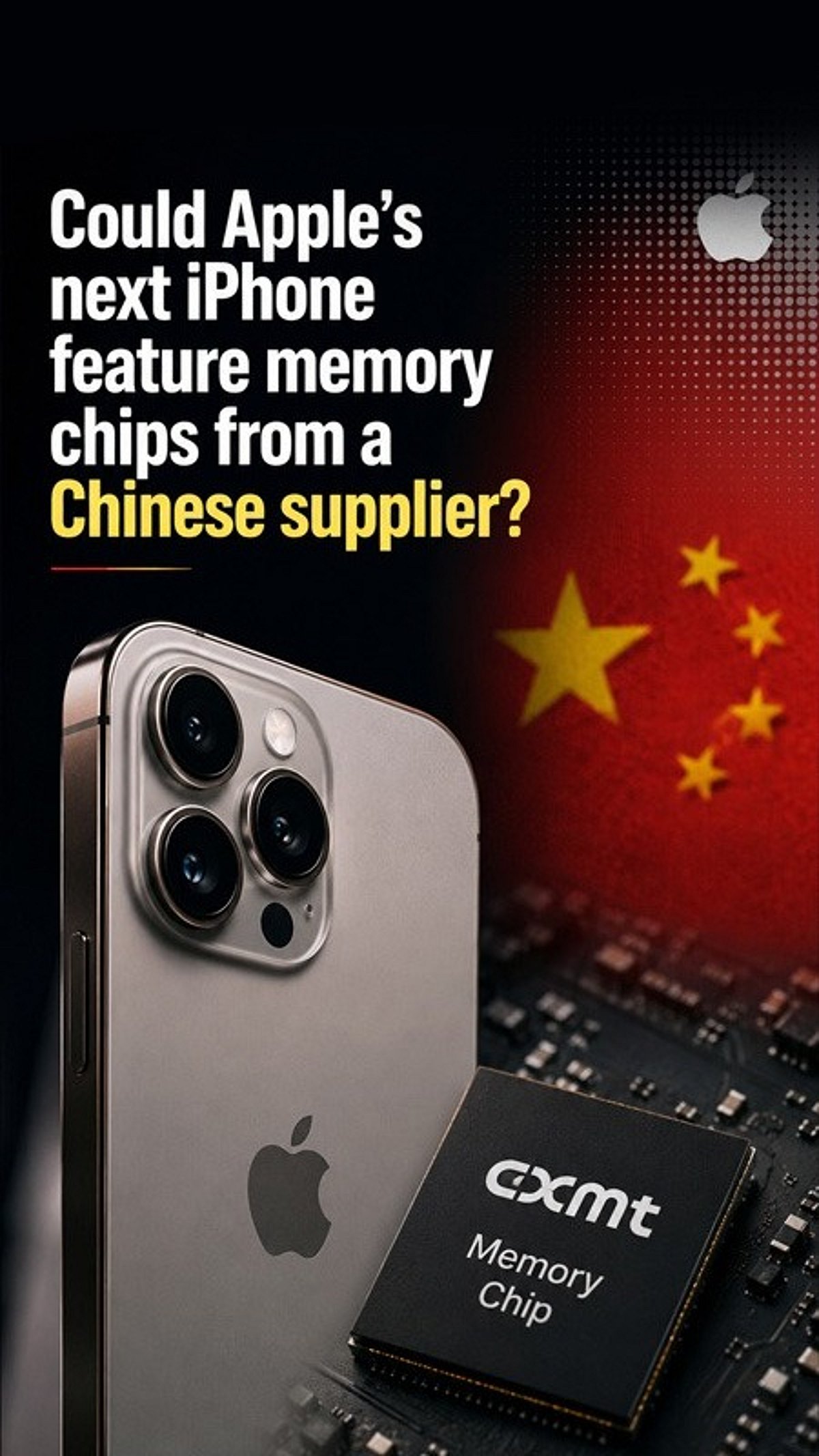
    Apple is reportedly considering a major shift in its supply chain by exploring an agreement with Chinese memory chip manufacturer CXMT (ChangXin Memory Technologies). If finalized, this move could see future iPhones equipped with memory chips sourced from a Chinese supplier for the first time, potentially reducing costs and altering the dynamics of global semiconductor politics.

    Industry insiders suggest that Apple is evaluating CXMT as a partner for DRAM or NAND flash memory, categories historically dominated by South Korean giants like Samsung and SK Hynix, as well as U.S.-based Micron. The motivation appears to be twofold: first, to diversify the supply chain and reduce dependency on a few key players; second, to lower component costs, which could enhance profit margins or allow for competitive pricing.

    However, the prospective partnership is not without controversy. CXMT, despite being a relatively young player in the memory market, has faced scrutiny over intellectual property disputes and allegations of technology theft. Additionally, geopolitical tensions between the U.S. and China have made any technology collaboration between American and Chinese firms a sensitive subject. Apple would need to navigate potential security concerns, quality assurance issues, and the risk of supply chain disruptions due to trade restrictions.

    For consumers, the biggest question is whether CXMT’s memory chips can match the performance and reliability of established suppliers. Early reports indicate that CXMT’s products have improved significantly, but they are still perceived as trailing behind industry leaders. If Apple can integrate these chips without compromising iPhone performance, it could signal a new era of cost-efficient manufacturing.

    This bold strategy, if implemented, would redefine Apple’s sourcing relationships and could have ripple effects across the entire electronics industry. Competitors may follow suit, further reshaping the global memory market. Whether this move will ultimately benefit or backfire on Apple remains to be seen, but it is a development worth watching closely.

  • Apple Requests US Government Approval for Memory Chip Purchases from Blacklisted Chinese Firm CXMT

    Apple Requests US Government Approval for Memory Chip Purchases from Blacklisted Chinese Firm CXMT

    Apple is seeking approval from the U.S. government to purchase memory chips from ChangXin Memory Technologies (CXMT), a Chinese chipmaker currently on the Pentagon’s 1260H list of companies with alleged ties to China’s military. The move comes as the iPhone maker faces rising component costs and a global shortage of memory chips.

    According to sources familiar with the discussions, Apple has contacted the U.S. Commerce Department and other officials within President Donald Trump’s administration. The company wants clear assurances that future trade restrictions will not disrupt any potential supply agreement with CXMT.

    Why Apple is Turning to CXMT

    Apple is not currently prohibited from buying chips from CXMT. However, the designation on the Pentagon’s list creates political and business risks, even though it does not automatically block commercial deals. The reported talks began more than a month ago, and Apple has since reached out to officials across the administration and influential figures in Washington. The company is seeking government support before adding CXMT to its supply network, as any later restrictions could disrupt production.

    Apple also wants assurances that the Commerce Department will not place CXMT on the Entity List, which would impose strict licensing rules and could limit the Chinese chipmaker’s access to U.S. technology, making it harder for American companies to purchase their products.

    The White House has not publicly stated whether it will approve Apple’s request, and Apple declined to comment on the reported lobbying campaign. It remains unclear whether the company will receive the guarantees it is seeking.

    Product Price Increases Add Pressure

    Apple recently raised prices for Mac computers, iPads, home devices, and the Vision Pro headset, citing higher memory and storage costs. Chief Executive Tim Cook described current memory costs as “unsustainable” and said “everything needs to be on the table” when discussing possible suppliers, suggesting Apple could consider Chinese memory producers where U.S. rules allow such purchases.

    The price increases contributed to a sharp decline in Apple shares, erasing about $263 billion from its market value in one trading session. Investors also sold shares in other technology companies amid concerns that expensive components could reduce demand for consumer devices.

    Memory shortages have affected companies across the technology sector, with several manufacturers increasing prices, adjusting production plans, or looking for alternative suppliers. Apple warned earlier that the shortage could become more severe over the year.

    Political and Security Questions

    Some U.S. lawmakers oppose any arrangement between Apple and CXMT. House China Committee Chair John Moolenaar called a possible partnership a “grave mistake,” arguing that the deal could make the U.S. technology industry more dependent on Chinese supply chains.

    U.S. officials previously raised similar concerns when Apple considered buying memory chips from Yangtze Memory Technologies (YMTC) in 2022. Both YMTC and CXMT were recently restored to the Pentagon’s 1260H list after briefly being removed.

    Apple currently purchases DRAM memory from Micron Technology, Samsung Electronics, and SK Hynix. However, increased demand for high-bandwidth memory used in artificial intelligence systems has reduced the supply of standard memory chips for phones, computers, and other devices.

    CXMT is expanding its position in China’s semiconductor industry and has received approval for a Shanghai listing. Access to its chips could give Apple another source of lower-cost memory. Still, any agreement would depend on U.S. government policy and future trade decisions involving China.