Tag: Data Architecture

  • Why Data Readiness Is the True Foundation for Enterprise AI Adoption

    Why Data Readiness Is the True Foundation for Enterprise AI Adoption

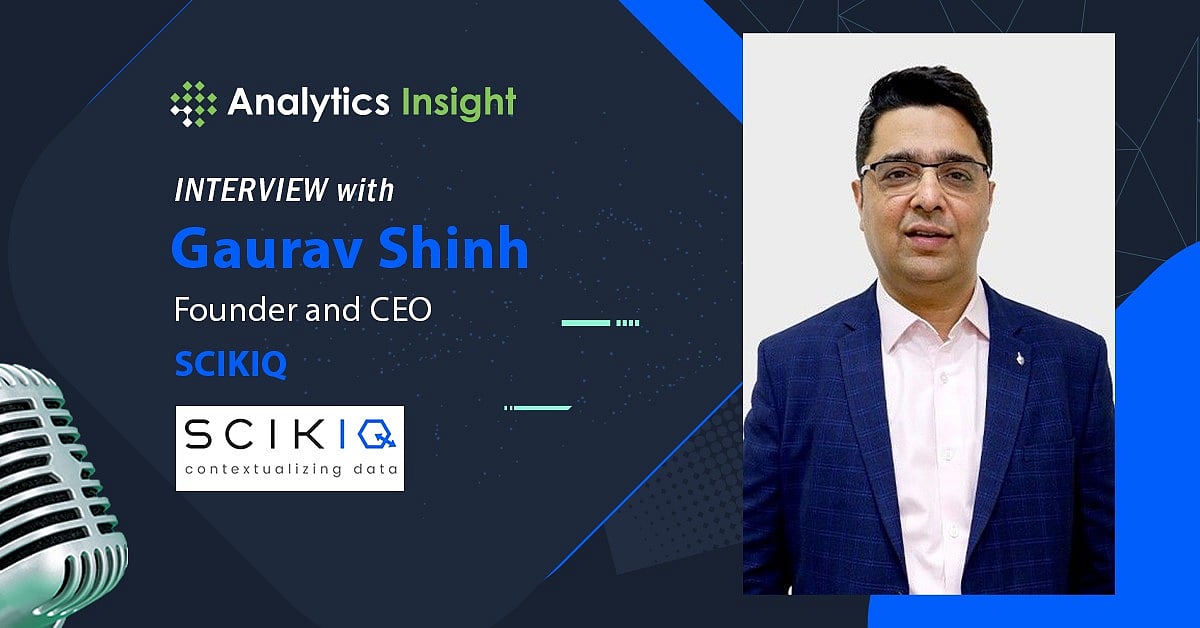
    Artificial intelligence is rapidly gaining traction in the enterprise world, yet many organizations that have invested heavily in AI technologies still struggle to scale their initiatives. According to Gaurav Shinh, Founder and CEO of SCIKIQ Data, the primary obstacle is not the AI model itself but the quality, accessibility, and governance of enterprise data.

    In a recent episode of Industry Wired Conversations, host Priya Dialani spoke with Shinh about why enterprises must achieve data readiness before they can become truly AI-ready. Below are the key takeaways from their discussion.

    Why Do So Many Organizations Struggle to Scale AI Successfully?

    Many companies assume that AI success hinges on selecting the right model or having the proper infrastructure. Shinh argues that the real challenge lies elsewhere. Most organizations attempt to implement AI without ensuring proper data integration and connections across business processes. AI can only deliver value when data is integrated, trusted, and aligned with business goals. Before deploying AI, companies must first understand how their business processes generate value. With a solid data foundation and context, organizations can move beyond mere AI pilots.

    What Does an AI-Ready Organization Actually Look Like?

    According to Shinh, there is no one-size-fits-all model for AI readiness. Each company operates differently based on how decisions are made. For centralized organizations, data integration across the company and a command center are essential. For decentralized firms, a data mesh approach enables local decision-making. AI readiness involves aligning technology with business operations, not applying a standard template. Companies should strive for a unified view across finance, HR, supply chain, procurement, and customer operations.

    Why Is a Single Source of Truth Critical for Enterprise AI?

    The performance of any AI system depends on precise, coherent, and well-integrated data. Shinh notes that many organizations focus excessively on building dashboards rather than establishing a unified information layer. When different departments use disparate data, chaos ensues. A single source of truth requires shared business definitions, common terminology, and unified enterprise data. The first step is to identify which data sets must be linked, then proceed with integration.

    How Does Strong Data Governance Improve AI Performance?

    Data governance builds trust within the enterprise. Shinh emphasizes that all departments must take responsibility for the quality, freshness, and accuracy of their own data. Trustworthy data must come from enterprise systems, not from individual spreadsheets or personal documents. AI models perform well in pilot programs because the environment is controlled. In production, unpredictable elements demand robust governance and business context, including semantic layers.

    What Role Will Modern Data Architecture Play in the Future of AI?

    Current cloud platforms, data lakes, and enterprise data architectures provide the foundation for scalable AI. Shinh believes these technologies will enable better data integration and greater control for business users through self-service tools. Traditional data warehouse implementations took years to deliver value. Modern data platforms should offer quick access to reliable information and facilitate cross-departmental collaboration. The ultimate goal is to empower business users to analyze data and make timely decisions in response to market changes.

    Listen to the full episode for more insights from Gaurav Shinh on building AI-ready organizations through stronger data foundations.

  • How to Choose the Right Business Database in 2026: A Workload-First Guide

    How to Choose the Right Business Database in 2026: A Workload-First Guide

    Many companies choose a database the way they choose an electricity supplier — once, quickly, and then never again until something goes dark. The decision gets made by whoever was on the project that week, and everyone else lives with it for the next eight years.

    That’s backwards. Your database quietly sets the ceiling on four things at once: how fast your team ships, how honestly you can report, how well you survive an audit, and what it costs you to double in size. None of those are IT problems. They’re business problems that happen to be expressed in SQL.

    The good news is that the shortlist in 2026 is genuinely good. The bad news is that “good” isn’t the same as “right for you.” Below is a workload-first way to think about it, followed by eight systems worth knowing — and the honest tradeoff each one asks you to accept.

    Only question that matters first

    Before you compare vendors, answer this: what does this data actually do?

    • It records commitments — orders, payments, contracts, payroll. This data needs to be correct more than it needs to be fast. A transaction either fully happens or fully doesn’t.
    • It describes things loosely — product catalogs, customer profiles, logs, anything whose shape changes every quarter because a PM changed their mind.
    • It answers questions — dashboards, forecasts, cohort analysis, the report leadership stares at every Monday.
    • It needs to be instant — session tokens, live inventory, pricing lookups measured in single-digit milliseconds.

    Those four jobs want four different architectures. Most technical debt in data infrastructure comes from a single decision: using one system to do all four because it was already there.

    Workload 1: Recording commitments (relational)

    This is where ACID compliance stops being jargon and starts being the reason your balance sheet reconciles.

    PostgreSQL

    If a single database has won the last decade, it’s this one. Postgres delivers strict ACID guarantees, first-class JSONB for the semi-structured 20% of your data, serious indexing, and an extension ecosystem that lets it stretch into time-series, geospatial, or vector search without leaving the box. The cost story is hard to argue with: the engine is free, and every major cloud sells a managed version (RDS, Cloud SQL, Azure Database) so you’re not paying people to babysit failover. Instagram famously runs a sharded Postgres cluster at a scale that should have killed the “SQL doesn’t scale” line permanently. Wise and Revolut keep money in it. That’s a decent reference list. Choose it when: you want capability without lock-in, and you’d rather not re-platform in three years.

    MySQL

    Still one of the most deployed databases on earth, and the one most small businesses meet first. It’s cheap to host, quick to stand up, and compatible with essentially every framework and CMS ever written. Where it strains is complex analytical queries and heavy concurrent writes. For new enterprise builds, Postgres has largely taken the oxygen. For read-heavy, content-driven applications, MySQL is a perfectly rational choice and will be supported forever.

    Microsoft SQL Server

    If your company already lives inside Azure, Power BI, .NET, and Active Directory, SQL Server removes an enormous amount of integration friction. Always On Availability Groups give you genuine HA/DR, which matters if downtime is a regulatory event rather than an inconvenience. The catch is licensing, which is not cheap and not getting cheaper. Managed Azure SQL at least absorbs the patching and failover work you’d otherwise staff for.

    Oracle

    Still the system of record for a large share of the world’s banks, insurers, and government agencies — and not out of nostalgia. Real Application Clusters handle concurrency at a level few competitors reach, and the audit trail and row-level security tooling is mature in a way that only decades of regulated deployments produce. What’s changed is the shape of Oracle estates. The common 2026 pattern isn’t ripping Oracle out; it’s shrinking it. Core ledger stays. The forty surrounding systems that never needed Oracle-grade guarantees move to Postgres, and the licensing bill drops accordingly.

    Workload 2: Loose shapes and instant reads (NoSQL)

    SQL versus NoSQL was never a war. It’s a question about the shape of your data.

    MongoDB

    The document model stores records as JSON-like objects, which suits anything where records don’t share a fixed template: catalogs with wildly different attributes, customer profiles that grow fields monthly, nested logistics hierarchies. The practical payoff is migration scripts you don’t have to write. Your team changes the model and moves on. Barclays, Bosch, and Adobe run it at scale — it stopped being a startup toy a long time ago.

    Redis and Valkey

    This one needs a 2026 update, because the in-memory landscape genuinely changed. Redis moved from BSD to SSPL in March 2024, which ended its status as open source in the OSI sense. The community forked within days: Valkey, now under the Linux Foundation with backing from AWS, Google Cloud, Oracle, and Ericsson, carrying forward the last BSD-licensed codebase. Redis then shifted to AGPLv3 with Redis 8 in 2025, but the trust cost was already paid — surveys after the change found a large majority of Redis users actively evaluating alternatives, and the hyperscalers have kept investing in Valkey rather than walking back. Practically: the two are API-compatible for most workloads, and the functional gap is small (Redis 8 adds things like native vector sets). The real decision is governance, not features. If BSD licensing and open governance matter to your legal team, Valkey. If they don’t, either works. Whichever you pick, its job is the same — sit in front of your primary store and absorb the reads that would otherwise flatten it.

    Workload 3: Answering questions (cloud and analytics)

    Snowflake

    Separating storage from compute was the structural idea that made Snowflake work: you pay for what you query, not what you hoard. It reads structured tables, JSON, and Parquet in the same query without a pipeline in between. The underrated feature is the Data Marketplace — pulling third-party feeds and financial datasets in without an ETL job or a separate vendor contract. For finance teams, that’s the difference between monthly reporting and something closer to live. Choose it when: analysis across millions of rows is a daily activity, not a quarterly one.

    Firebase and Supabase

    For a two-person team that needs to be in production next month, a managed backend is the whole answer. Both bundle database, auth, real-time sync, and storage into one platform. Supabase’s advantage is structural: it’s Postgres underneath. Your queries stay portable, so outgrowing the free tier means moving data — not rewriting the application. Firebase is faster to start with and harder to leave.

    Three rules that separate mature architectures from the rest

    1. Match the engine to the job. Transactions want ACID. Analytics wants columnar storage. Real-time wants memory. Using one system for all three doesn’t fail loudly — it degrades quietly, which is worse.
    2. Plan for horizontal scale before you need it. Bigger machines have a ceiling; more machines don’t. Postgres, MongoDB, and CockroachDB shard and replicate natively. Retrofitting that into a live monolith is one of the genuinely miserable engineering projects.
    3. Separate PII from operational data by design. Sensitive customer data belongs in an access-restricted store, joined to transactions through anonymized IDs. Done right, a breach of your transaction database reveals that User_8492 moved $10,000 — and nothing about who that is. GDPR and PCI-DSS treat this as a requirement, not a suggestion.

    Do you need something custom?

    Almost certainly not. Before anyone writes a proposal for a bespoke engine, exhaust the extension ecosystem — Postgres alone covers time-series (TimescaleDB), AI embeddings (pgvector), and geospatial (PostGIS) without a line of engine code. Custom is expensive to build and roughly twice as expensive to keep alive.

    What nobody puts in the pitch deck

    Knowing which database you should be on is the easy half. Getting your data off a fifteen-year-old Sybase box, an aging on-prem SQL Server, or an inherited MySQL estate is where modernization actually stalls — usually on the embedded business logic nobody documented and everyone depends on. That work is more tractable than it used to be. Tooling now automates schema conversion, stored-procedure translation, and query rewriting across the common source-target pairs; migration specialists like Ispirer report automation rates in the high nineties on Oracle-to-PostgreSQL projects, which turns a multi-year rewrite into something a team can plan around. It’s worth scoping that before you assume a migration is off the table on cost grounds.

    In short

    • Transactions → PostgreSQL, or Oracle if regulation demands it
    • Microsoft shop → SQL Server
    • Read-heavy and simple → MySQL
    • Flexible documents → MongoDB
    • Sub-millisecond reads → Valkey (open governance) or Redis (features)
    • Analytics at scale → Snowflake
    • Small team, fast launch → Supabase (portable) or Firebase (fastest)

    Every one of these choices compounds. The database that fits your workload today is mostly valuable because of the migration it saves you from in 2029.

  • Why Financial Institutions Need Zero-Hallucination AI: Rethinking Data Architecture Before LLM Adoption

    Why Financial Institutions Need Zero-Hallucination AI: Rethinking Data Architecture Before LLM Adoption

    As financial institutions rush to deploy large language models, experts warn that unreliable data foundations—not model capability—remain the biggest barrier to trustworthy AI. Industry specialist Amit Sharma argues that zero-hallucination AI begins with resilient architecture, governed data pipelines, and real-time retrieval systems rather than larger models alone.

    The Hallucination Problem in Finance

    The financial sector’s growing interest in large language models has created new opportunities in automation, customer service, fraud detection, and operational intelligence. However, a central challenge continues to slow enterprise adoption: hallucination, the tendency of AI systems to generate inaccurate or fabricated responses. In highly regulated environments, where decisions must be precise, explainable, and traceable, even minor inaccuracies can carry serious financial and compliance consequences. As a result, many industry observers now argue that the path to zero-hallucination AI begins not with the model itself, but with a complete rethink of enterprise data architecture.

    Expertise in Mission-Critical Systems

    Among professionals working at the intersection of financial infrastructure and AI, Amit Sharma has emerged as a notable voice on this issue. With more than 17 years of experience in mission-critical data architecture, Sharma has built high-availability systems for major financial institutions and has developed expertise in both legacy database resilience and modern generative AI frameworks. His postgraduate certification in Artificial Intelligence and Machine Learning from the University of Texas at Austin further strengthened his focus on practical business applications of LLMs. His early work with advanced vector databases has also placed him among professionals exploring how traditional transactional systems can be combined with semantic AI search.

    Bringing AI to Governed Data

    According to Sharma, many institutions risk pursuing AI adoption while overlooking the weaknesses of fragmented data environments. He contends that moving sensitive information into disconnected AI silos often increases latency, raises governance concerns, and creates operational inefficiencies. Instead, he advocates bringing AI capabilities directly to governed enterprise data systems. This approach enables models to retrieve verified, real-time information from trusted sources rather than generating answers from incomplete memory.

    Retrieval-Augmented Generation as a Solution

    To address hallucination risk, Sharma has worked on Retrieval-Augmented Generation (RAG) frameworks designed to anchor LLM outputs in structured and unstructured enterprise data. By ensuring that responses are tied to a “single version of truth,” such systems can improve factual reliability while maintaining auditability. Furthermore, he has contributed to infrastructure strategies that separate AI inference workloads from core transactional systems, allowing financial platforms to preserve speed and stability while still benefiting from intelligent automation.

    Measurable Impact of Architecture-Led Strategies

    The measurable impact of such architecture-led strategies has been significant. Systems aligned with maximum availability principles have reportedly achieved 99.999% uptime standards, a critical benchmark for institutions where downtime can be costly. Meanwhile, the integration of vector search and optimized retrieval methods has reduced information lookup times by as much as 50 percent compared with conventional keyword approaches. At the same time, predictive autoscaling models have demonstrated the potential to lower long-term infrastructure costs by reducing unnecessary overprovisioning.

    Future Trends in Financial AI

    Nevertheless, Sharma believes the conversation around enterprise AI must move beyond productivity gains alone. He points to three trends likely to shape the next phase of financial transformation: autonomous self-optimizing infrastructure, convergence of transactional and vector data in a single query environment, and quantum-resistant encryption to secure sensitive records against future threats. Consequently, he argues that resilience, governance, and trust should become the primary design principles of any AI deployment.

    As financial institutions continue experimenting with generative AI, the industry’s next competitive advantage may depend less on who adopts LLMs first and more on who builds the strongest data foundations beneath them. Zero-hallucination AI, in that sense, is not simply a model challenge—it is an architecture challenge.

  • How Kiran Veernapu Is Using AI to Turn Enterprise Data Into Better Patient Outcomes

    How Kiran Veernapu Is Using AI to Turn Enterprise Data Into Better Patient Outcomes

    Kiran Veernapu has spent more than 25 years building the data systems that large organizations rely on to make decisions. His work spans healthcare, aviation, manufacturing, and enterprise technology, but the underlying challenge remains constant: turning scattered, inconsistent information into actionable insights.

    Starting in data architecture and business intelligence, Veernapu designed the warehouses and pipelines that move information through organizations. As machine learning matured, his focus shifted toward predictive analytics and clinical decision support—where the stakes are higher because a wrong answer at the point of care costs more than a wrong quarterly report.

    Much of his recent work centers on Clinical Decision Support Systems (CDSS), which sit between complex medical data and clinicians who need clear, timely answers while treating patients. The results are measurable. His AI and automation initiatives have produced tens of millions of dollars in savings, cut billing and inventory errors by double digits, and kept supply chains performing at benchmark levels for eight consecutive years.

    Research Meets Real-World Deployment

    Veernapu is also an active researcher and reviewer, authoring 25 peer-reviewed articles on healthcare AI and predictive analytics that have been cited and downloaded across more than 29 countries. He reviews manuscripts for Elsevier, Springer, Wiley, IGI Global, and MDPI, and has evaluated over 60 submissions for major IEEE, Springer, and Elsevier venues. He serves as a session chair, program committee member, and judge at international conferences, and is a Senior Member of IEEE.

    His research and his day job feed each other. Academic work surfaces new methods, and enterprise deployment tests whether those methods hold up once real data and real workflows get involved. That loop shapes his approach to AI at scale. “The algorithm is rarely the hard part,” he says. “Data quality, governance, and fitting a system into the way people already work are what determine whether a strong model delivers anything at all.”

    Looking Ahead: The Next Wave of Healthcare AI

    Looking forward, Veernapu points to AI-driven clinical decision support, remote patient monitoring, wearable health technology, and ambient clinical intelligence as the developments most likely to change care delivery. Each moves healthcare toward earlier intervention and more personalized treatment—and each depends on the real-time data infrastructure he has spent his career building.

    Beyond his technical work, he serves on the Utah STEM Education Advisory Council and speaks for academic programs internationally. He is currently pursuing a PhD in AI and machine learning applied to wearable devices and clinical bioinformatics. His advice to newcomers: “Start with a problem worth solving. Technology changes quickly. The ability to understand a business or clinical need and translate it into a working system is what creates impact that lasts.”

    The next generation of healthcare innovation will empower clinicians with intelligence of precision care, diagnostic accuracy, disease prediction, making patient care more reachable and affordable. The future of healthcare lies in turning data into better decisions. Clinical Decision Support Systems will help clinicians access timely insights, improve patient outcomes, reduce the cost of care, and enable more personalized and proactive treatment strategies.