Tag: Data Engineering

  • Globant: Revolutionizing Global Business with AI-Driven Digital Solutions

    Globant: Revolutionizing Global Business with AI-Driven Digital Solutions

    Globant is a digitally native company that delivers data engineering services, big data solutions, and ETL pipeline development to help organizations achieve their transformation goals through artificial intelligence, design, and innovation. Founded in Buenos Aires, the company now operates worldwide, assisting businesses in modernizing operations and creating advanced digital solutions across multiple sectors.

    About the Company

    Globant combines artificial intelligence, software engineering, and design to create digital transformation solutions for its clients. Its offerings are built to scale with business needs while delivering superior user experiences in various industries. The company employs a studio-based operating model that unites specialized teams focused on AI, blockchain, and digital experience platforms. It serves sectors including finance, healthcare, and media, helping organizations achieve greater efficiency and continuous innovation in a competitive global market.

    Products and Services

    Globant provides a range of AI-driven services such as AI Studios, AI Pods, and Enterprise AI platforms. Its solutions span data, CloudOps, blockchain, cybersecurity, digital experience, and marketing, enabling businesses to innovate, optimize processes, and build scalable digital products.

    Core Leadership Team

    Globant’s leadership includes experienced executives driving its strategic vision and operational excellence. (Detailed leadership information was not provided in the source.)

    Revenue Streams

    Globant generates revenue through professional services including software development, digital transformation, AI-powered solutions like AI Pods, managed services, platform-based products, and licensing of proprietary tools and intellectual property.

    Client Segments and Target Market

    Client Segments: Globant serves organizations across industries, offering AI solutions, digital transformation, software engineering, and cloud services. Target Companies: Large-scale institutions in finance, healthcare, media, and retail that require scalable digital and AI solutions. Target Geography: Global operations with a strong presence in North America, Latin America, Europe, and growing markets in Asia and the Middle East.

    Social Media

    LinkedIn | Website

  • AWS AI & ML Certifications: A Guide to Choosing the Right Path in 2026

    AWS AI & ML Certifications: A Guide to Choosing the Right Path in 2026

    AWS offers a growing range of AI and machine learning certifications for beginners, developers, data engineers, and experienced AI professionals. Each credential is designed for different skills and career goals. Understanding the certification path makes it easier to choose the right option. This guide compares the key certifications to help you decide which one best fits your career.

    Overview

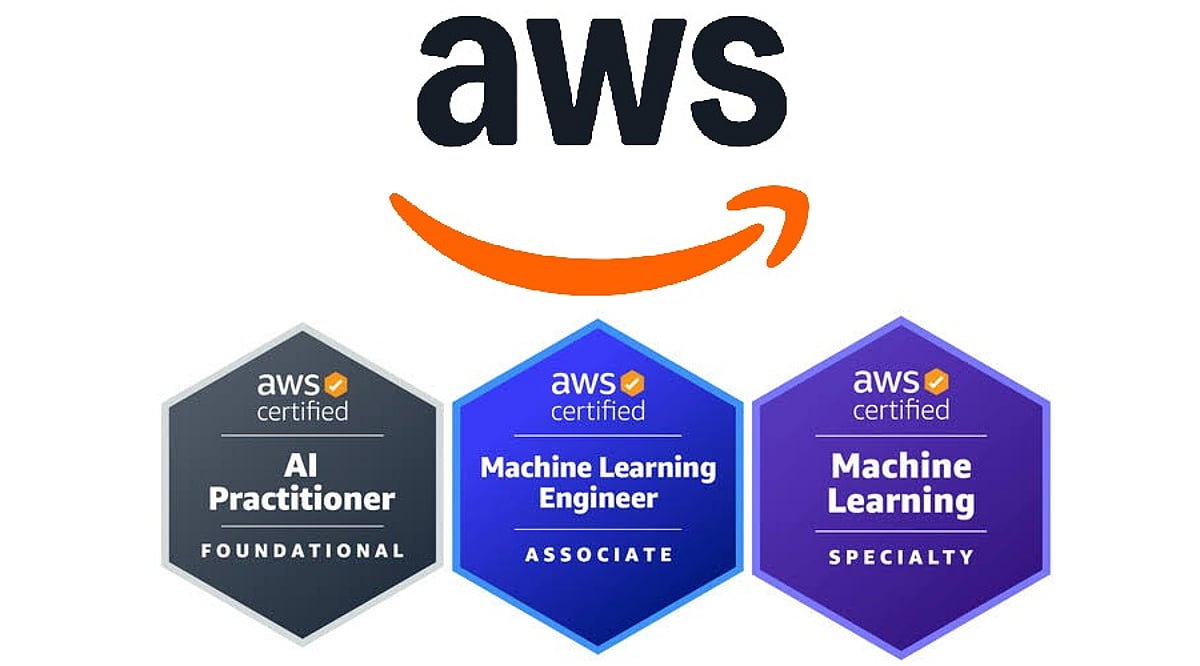
    AWS offers a role-based AI and machine learning certification portfolio that supports beginners, machine learning engineers, data engineers, and developers building AI-powered applications. The certifications cover AI fundamentals, machine learning model development, MLOps, data engineering, foundation models, retrieval-augmented generation (RAG), and Amazon Bedrock.

    AWS has modernized its certification ecosystem by replacing the legacy Machine Learning – Specialty path with role-specific credentials aligned with today’s AI and generative AI workloads. AWS certifications used to funnel almost everyone toward one exam. This has changed, and the lineup now spans across four credentials, each built for a distinct kind of work. It includes a foundational exam for newcomers, an associate-level path for engineers who build and deploy models, a data-focused associate track, and a professional certification for developers shipping generative AI features.

    The Machine Learning Specialty exam was retired for new candidates on March 31, 2026. Existing holders will keep the certification until its original expiry. More than an administrative change, this shift signals AWS’s move toward role-based certifications that better match candidates’ actual job responsibilities.

    What the Current Lineup Covers

    The active AWS AI and ML certifications include:

    • AWS Certified AI Practitioner (Foundational): Covers core AI and machine learning concepts, responsible AI practices, and how AWS services support common use cases. No coding background is required.
    • AWS Certified Machine Learning Engineer – Associate: Focuses on building, tuning, deploying, and monitoring machine learning models using services such as Amazon SageMaker, Amazon S3, and Amazon CloudWatch. Built for professionals who already have hands-on ML experience.
    • AWS Certified Generative AI Developer – Professional: Validates the ability to integrate large language models into applications, build retrieval-augmented generation (RAG) architectures, and work with vector databases and Amazon Bedrock for production-ready AI solutions.
    • AWS Certified Data Engineer – Associate: Centers on designing and managing data pipelines, storage, and reliable data infrastructure that supports machine learning and generative AI workloads.

    Matching the Exam to the Job

    A newcomer pivoting into AI from another field or a business analyst who needs to speak the same language as an engineering team gets the most value from AI Practitioner. It builds a baseline in AI and ML concepts without demanding coding depth.

    Someone already training and deploying models is better served by ML Engineer – Associate, which centers on data preparation, model tuning, and running workloads in production rather than staying inside a notebook.

    Developers already working with large language models, RAG pipelines, and Bedrock fit the Generative AI Developer – Professional role. This credential expects prior implementation experience rather than theory alone, and choosing it over AI Practitioner or ML Engineer comes down to one question: is the work built around foundation models or traditional ML pipelines?

    Data engineers who feed pipelines into ML systems should look at Data Engineer – Associate, a track that rarely gets the same attention as the AI-branded exams but supports all of them underneath.

    Product managers and stakeholders overseeing AI projects without building them get more practical value from AI Practitioner than from an engineering-level exam, since the goal is informed oversight rather than hands-on implementation.

    Deciding Where to Start

    The simplest approach starts with hands-on experience, not ambition. Someone new to AWS and AI belongs in AI Practitioner first. Someone already building or deploying models can skip straight to ML Engineer – Associate. A developer working with foundation models in production is the right candidate for Generative AI Developer – Professional.

    A common progression looks like AI Practitioner, then ML Engineer – Associate or Data Engineer – Associate depending on the role, then Generative AI Developer – Professional once foundation model work becomes part of the job.

    For those already deep into machine learning specialty prep, finishing it still holds some value, given less than a year remains before it closes to new candidates. For everyone else, moving straight to ML Engineer Associate offers more current coverage and a clearer path forward.

    The strongest certification choice rarely lines up with the most advanced option available. It lines up with what the job actually requires now and with where that job is headed next.

    Final Thoughts

    AWS restructuring its AI credentials around roles rather than a single tiered ladder points to where cloud certification is heading in general. It clarifies that the exam is less about climbing a fixed hierarchy and more about proving specific, current skills tied to specific work. Candidates who treat certification as a career-mapping exercise, rather than a checklist, will likely find their credentials relevant as AWS splits its portfolio.

  • Top AI Skills Employers Will Demand Most in 2026

    Top AI Skills Employers Will Demand Most in 2026

    The artificial intelligence job market is heating up, and employers are already signaling which skills will be most valuable in 2026. From engineering robust AI systems to ensuring ethical governance, professionals who master these competencies will stand out. Here are the top AI skills that will shape career opportunities in the near future.

    AI Engineering

    Employers are prioritizing professionals who can build, deploy, optimize, and maintain scalable AI systems. Expertise in modern frameworks, cloud platforms, and automation tools is essential for this role.

    Prompt Engineering

    Crafting accurate prompts for generative AI models dramatically improves productivity, workflow automation, content quality, and enterprise AI application performance. This skill is becoming a cornerstone of efficient AI use.

    Machine Learning

    Strong machine learning expertise remains critical for developing predictive models, improving algorithms, handling large datasets, and solving complex business challenges effectively.

    Data Engineering

    Organizations are seeking experts who can manage data pipelines, ensure data quality, handle storage, integrate systems, and process information reliably to support AI model training and deployment.

    AI Governance

    As AI adoption grows, businesses increasingly value professionals who can ensure ethical AI practices, regulatory compliance, transparency, risk management, and responsible deployment across enterprise environments.

    Python Programming

    Python continues to be the preferred language for AI development, enabling automation, model building, data analysis, and seamless integration with AI frameworks efficiently.

    Cloud AI Platforms

    Experience with cloud-based AI services helps professionals deploy scalable applications, optimize infrastructure costs, and accelerate enterprise AI implementation across industries.

    Natural Language Processing (NLP)

    NLP expertise enables organizations to create advanced chatbots, language models, intelligent search systems, and multilingual customer engagement solutions successfully.

    Business Intelligence

    Employers favor professionals who combine AI knowledge with business intelligence to transform analytics into strategic decisions, operational improvements, and measurable organizational growth.

  • How Intelligent Systems Are Redefining Data-Driven Decision-Making

    How Intelligent Systems Are Redefining Data-Driven Decision-Making

    As enterprises race to harness data at scale, the shift from manual analysis to intelligent, automated systems is redefining how decisions are made, unlocking speed, precision, and competitive advantage in a digital-first economy.

    Organizations across various sectors are experiencing a complete transformation in their approach to data leadership. The old reliance on static reports and delayed insights has evolved into systems that deliver real-time intelligence through active data processing. Advanced data engineering, distributed computing, and artificial intelligence now enable companies to move beyond mere data collection toward operationalizing their data. This transition establishes data as a primary strategic resource, powering predictive insights, automated decision-making, and continuous system improvement.

    Bharath Kandati, a software engineer and engineering manager, leads this evolution by developing large-scale data platforms and intelligent systems for modern digital enterprises. His professional life has been dedicated to designing and implementing powerful data processing systems that convert raw data into business-critical insights.

    “Organizations today are no longer limited by the availability of data,” Kandati explains. “The real challenge, and opportunity, lies in how effectively that data can be processed, interpreted, and translated into meaningful action in real time.”

    Kandati’s journey reflects a steady progression from hands-on engineering to strategic leadership, guiding teams to build distributed systems capable of handling millions of data events daily. His work has been instrumental in helping organizations transition from manual data analysis to intelligent, automated pipelines that significantly reduce operational overhead while enhancing accuracy and speed.

    One of his key contributions is designing scalable data architectures that seamlessly integrate analytics and machine learning into core product workflows. These systems empower organizations to detect patterns, identify anomalies, and optimize performance without the delays of traditional analysis. By automating complex data processes, Kandati has enabled faster decision cycles and improved operational efficiency—critical factors in today’s fast-paced digital landscape.

    “In many environments, manual analysis creates bottlenecks that limit both speed and scalability,” he notes. “By building intelligent systems, we’re not just improving efficiency; we’re fundamentally changing how organizations think about decision-making.”

    His work extends to developing internal data tools and platforms that democratize access to insights across engineering, product, and business teams. By reducing reliance on manual workflows, these tools allow organizations to focus on higher-value strategic initiatives, fostering a culture of data-driven innovation.

    Scaling such systems presents challenges. According to Kandati, designing an architecture that balances performance, reliability, and data integrity is difficult, especially with multiple data sources and real-time processing requirements.

    “Scalability is not just about handling more data; it’s about maintaining trust in the system as it grows,” he says. “That means ensuring accuracy, resilience, and transparency at every stage of the data lifecycle.”

    Beyond technical achievements, Kandati is a thought leader, contributing to debates on the evolving role of artificial intelligence in software engineering and big data infrastructures. He emphasizes the necessity of combining engineering approaches with AI technologies to build sustainable systems.

    Looking ahead, Kandati predicts that data-driven companies must seamlessly integrate intelligent automation with scalable infrastructure. As data volumes grow, the ability to turn data into intelligence will be a key competitive differentiator.

    “We are moving toward a world where systems don’t just inform decisions, they actively participate in them,” he observes. “The organizations that succeed will be those that can harness this capability responsibly and effectively.”

    In an age where data is abundant and vital, figures like Bharath Kandati are guiding the future of smart systems, setting the stage for organizations to not only analyze but also operate autonomously.

  • Why Major Companies Choose Python for Their Tech Stack

    Why Major Companies Choose Python for Their Tech Stack

    Python has become a core technology for many global companies. Its simple design, powerful frameworks, and rich ecosystem help businesses build scalable applications, AI systems, automation tools, and reliable backend services.

    Key Takeaways:

    • Python supports products that serve millions and even billions of users.
    • Companies use Python for AI, automation, backend development, and data engineering.
    • Frameworks like Django and FastAPI help developers build reliable applications faster.

    Python has become one of the most popular programming languages in the software industry. It has clean syntax, easy readability, and a huge collection of libraries that help developers build software faster. These qualities have made Python a trusted option for startups as well as global technology companies. Today, many famous businesses use Python as an important part of their technology stack, even though most large organizations combine several programming languages for different tasks.

    Google Uses Python Across Many Business Areas

    Google has relied on Python for many years. The company uses it for internal tools, automation, artificial intelligence, backend services, and cloud infrastructure. Python allows engineers to create software quickly while keeping projects easy to maintain. The language also works well with Google’s machine learning technologies, including TensorFlow, which has become one of the world’s most popular AI frameworks. Although Google also uses languages such as C++, Java, and Go, Python remains an important part of many engineering teams as it supports rapid development and reliable automation.

    Instagram Built a Massive Platform With Django

    Instagram stands as one of the biggest success stories for Python. The social media platform built its backend on Django, a web framework written in Python. Even after the platform reached billions of users, Django continued to support high traffic with excellent performance. Python gave Instagram developers a fast way to release new features without slowing product development. Strong database support through PostgreSQL also helped the platform manage huge amounts of user data. Instagram continues to prove that Python can support one of the world’s largest social networking services.

    Netflix Depends on Python for Automation and Machine Learning

    Netflix uses Python in several important business areas. The company relies on it for machine learning, recommendation systems, automation, backend tools, and cloud operations. Recommendation algorithms help viewers discover movies and television shows that match personal interests, and Python plays an important role in this process. Frameworks such as Flask and FastAPI support internal services, while Jupyter notebooks assist data scientists during research and model development. Python also works with PyTorch, one of the leading machine learning frameworks used by Netflix.

    Spotify, Uber, and Dropbox Continue to Trust Python

    Using Python, Spotify provides backend services, recommendation algorithms, and reporting as well as workflow management. In addition to Python, the company uses Luigi and Apache Airflow for data processing and workflow scheduling. Python allows Spotify to manage a huge amount of listener information while relying on the system for personalized music recommendations. Uber has deployed Python in its technical framework as well for the backend microservices, machine learning, data engineering, and automated processes. The application of Python frameworks such as Tornado and Flask makes it possible to operate numerous backend services. Dropbox started being based on Python at its inception when it developed its desktop application and backend system. The company later designed tools such as PyAnnotate as well as contributed to the development of MyPy, which improves static typing of Python-based software. Despite its significant size, Dropbox keeps using Python today.

    Reddit, Pinterest, Quora, and Lyft Show Python Can Scale

    Reddit became one of the earliest examples of a large website built with Python. The platform originally moved its backend to Python and still depends on the language for many services today. This long history proves that Python can support millions of active users and large online communities. Pinterest also relies on Python for recommendation systems, backend APIs, and machine learning. The company uses Django and Flask to support different services across its platform. Python helps Pinterest process huge collections of images and user activity. Quora selected Python for backend services, ranking systems, and APIs. Django and Tornado allow the platform to deliver fast responses while handling large volumes of questions and answers. Lyft uses Python for backend development, data pipelines, and machine learning. The language supports many internal systems that improve ride matching, operational efficiency, and data analysis.

    Amazon and Meta Also Depend on Python

    Amazon uses Python for automation, cloud services, machine learning, and internal development tools. Amazon Web Services offers Boto3, a Python software development kit that allows developers to work with cloud resources through code. Python also supports services connected with Amazon SageMaker, which helps businesses build and deploy machine learning models. Meta also uses Python across artificial intelligence research, automation, and software development. PyTorch, one of the world’s most popular machine learning frameworks, came from Meta and remains a major part of AI development across many industries.

    Python Fits Modern Technology Needs

    A Python technology stack refers to a combination of technologies and tools that are particularly effective in running web applications. The commonly used technologies in the Python technology stack include Django, FastAPI, or Flask, which manage backend development. In addition, the technology stack is supplemented with PostgreSQL or MySQL for data management, and Redis for better performance through caching. RabbitMQ and Kafka take care of processing messages between the different services of a web application. Elasticsearch enhances the search capabilities of the application, while Celery serves for background task management. The deployment of applications is simplified by Docker and Kubernetes, while the processes of software delivery and continuous integration are ensured by GitHub Actions and Jenkins. In addition, the technology stack encompasses Airflow, Pandas, TensorFlow, and PyTorch.

    Python Continues to Lead the Industry

    When it comes to artificial intelligence, machine learning, and similar tasks, Python is one of the leading programming languages. Corporations often use Python in combination with such languages as Go, Java, Rust, and C++ to accomplish their tasks more effectively and gain maximum performance. Even with those languages in use, Python stays in the circle of attention given the increased productivity of developers, faster development time, and having one of the most extensive software environments available today. The success of such companies as Google, Instagram, Netflix, Spotify, Uber, Dropbox, Reddit, Pinterest, Quora, Lyft, Amazon, and Meta demonstrates how useful the technology might be for products designed for millions and even billions of individuals all over the globe. It is thanks to flexibility, mature frameworks, and powerful libraries that Python is one of the best programming languages for software development today.

  • Data Engineering Cheat Sheet 2026: Essential Skills, Tools, and Architecture Trends

    Data Engineering Cheat Sheet 2026: Essential Skills, Tools, and Architecture Trends

    Data engineering is the foundation of every modern data system. Every website visit, online purchase, mobile app session, payment, and business transaction creates new information. That information has little value unless it is collected, cleaned, stored, and prepared for analysis. This is exactly where data engineering plays a major role.

    The need for skilled data engineers has grown rapidly because companies depend on data for daily decisions, automation, customer service, and artificial intelligence (AI). According to IDC, the world is expected to create more than 394 zettabytes of data by 2028, a huge jump from previous years. This massive growth has pushed businesses to build stronger and smarter data platforms that can support analytics and AI at a much larger scale.

    Data engineering is no longer limited to moving data from one place to another. It focuses on speed, quality, security, and reliability so that every team can trust the information they use.

    How a Data Engineering Process Works

    The data engineering process is structured straightforwardly. The process begins with the steps where data gets collected from external sources such as websites, mobile applications, sensors, software of the company, or databases.

    After data information has been collected, a series of preparation processes are conducted. The next stage of the process is the preparation of the data, where incorrect data is deleted, missing values are repaired, and data is formatted in a valuable way. After that, the collected data is checked for quality compliance.

    Finally, the collected data is ready for use in the generation of reports, machine learning models, dashboards, and other business applications. Each step has its specific role. Any issue at any step may lead to the failure of the reports, predictions, or AI models.

    Skills that Matter Most

    Recognized as one of the most sought-after profiles within the IT industry, data engineers require a combination of technical skills and hands-on problem-solving capability. Indeed, almost every database makes use of SQL.

    Knowledge of cloud technologies has become more critical than ever as many businesses today maintain their data in the cloud rather than in-house. Experience in counteracting bottlenecks and making quick fixes has been a plus in providing better and faster systems.

    As per the 2026 hiring trends, it is evident that employers favor hiring professionals who possess knowledge in traditional data engineering methods and also have working knowledge about AI.

    Modern Data Storage

    Data storage has changed a lot during the last few years. Data warehouses such as Snowflake, Google BigQuery, Amazon Redshift, and Azure Synapse Analytics remain popular because they support fast business reporting.

    Many organizations also use data lakes like Amazon S3, Azure Data Lake Storage, and Google Cloud Storage to keep large amounts of raw information at a lower cost.

    A newer approach called the lakehouse has become one of the biggest trends. Platforms such as Databricks, Apache Iceberg, Delta Lake, and Apache Hudi combine the strengths of both data lakes and data warehouses. This design gives businesses better flexibility without sacrificing performance.

    Batch Processing and Real-Time Data

    Not every business needs data at the same speed. Some reports only require updates once a day. This method is called batch processing. It suits financial reports, historical analysis, and large scheduled jobs because it costs less and stays simple to manage.

    Other businesses cannot wait for scheduled updates. Online payments, fraud detection, recommendation systems, and live dashboards need information within seconds. This approach is known as real-time processing.

    Many companies now use both methods together. Real-time systems handle urgent tasks, while batch systems process large historical datasets.

    What Makes a Strong Data Pipeline

    A reliable data pipeline contains several connected parts. Data first enters the system through source applications. After collection, it passes through processing layers that clean and organize the information.

    The pipeline also includes monitoring tools that detect failures before they become major problems. Security controls protect sensitive information, while backup systems reduce the risk of data loss. Together, these components help the entire system stay stable even as data volumes continue to grow.

    Why Data Quality Matters

    Good decisions depend on good data. Even small mistakes can produce incorrect reports or poor AI predictions.

    Modern platforms check for duplicate records, missing values, invalid formats, unexpected schema changes, incomplete information, and inconsistent records. Freshness also matters because outdated data can lead to wrong business decisions.

    Automated quality checks have become a standard feature in enterprise data platforms because manual reviews cannot keep pace with today’s data volumes.

    Cloud Platforms Continue to Lead

    Cloud technology has become the preferred choice for new data projects. Amazon Web Services, Microsoft Azure, and Google Cloud Platform continue to dominate this market. These platforms offer storage, processing power, data warehouses, monitoring services, and workflow management without the need for expensive physical servers.

    Companies also benefit from automatic scaling, which allows systems to handle larger workloads whenever demand increases. This flexibility has made cloud infrastructure the standard choice for businesses of every size.

    Popular Open-Source Technologies

    The role of open-source apps is notable today in the field of data engineering. Apache Spark brings a solution for the processing of huge data by distributing tasks across numerous machines. Apache Kafka has made it possible to achieve speed in data transmission between applications, and Apache Airflow provides solutions for planning and organizing complex operations.

    Other common technologies are Apache Flink, dbt, Apache Iceberg, Delta Lake, and Great Expectations. Apache Spark remains one of the most popular distributed analytics engines in the world.

    Data Models that Organize Information

    A good data model makes information easier to understand and analyze. The Star Schema works well for business reports because it keeps queries simple and delivers faster results. The Snowflake Schema reduces duplicate information through normalization, which saves storage space.

    Large enterprises often choose the Data Vault model because it keeps historical records, supports business growth, and adapts more easily when new data sources appear. The best model depends on business goals rather than company size alone.

    Security Cannot be Ignored

    Every data platform must protect valuable information. Encryption keeps data safe during storage and transfer. Identity management verifies who can access the system, while role-based permissions limit access to authorized users only.

    Many companies also use multi-factor authentication, audit logs, data masking, regular backups, and compliance checks to strengthen security. As AI becomes more common, strong governance and data protection have become basic business requirements rather than optional features.

    Better Performance Saves Time and Money

    Fast systems reduce costs and improve productivity. Engineers improve performance through partitioning, compression, efficient file formats, incremental updates, query optimization, metadata indexing, automatic resource scaling, and parallel execution. These methods reduce processing time and help businesses complete large workloads with fewer computing resources.

    Metrics Every Team Should Watch

    Successful data teams measure system performance every day. Important metrics include pipeline success rate, failure rate, processing latency, throughput, storage use, query response time, data freshness, infrastructure cost, resource utilization, and overall service availability. These numbers help teams detect problems early, improve efficiency, and maintain reliable operations.

    Biggest Data Engineering Trends in 2026

    Several trends continue to reshape the industry. AI now assists pipeline development and reduces repetitive work. Agentic automation handles routine engineering tasks with minimal human effort. Lakehouse architecture has become the preferred storage approach for many organizations.

    Metadata-driven pipelines, data contracts, unified governance, streaming analytics, intelligent cost optimization, and closer integration between machine learning and data engineering have also become common across modern enterprises.

    These advances allow companies to build faster, more reliable, and more intelligent data systems than ever before.

    Final Thoughts

    Data engineering has become one of the main components of modern technology. The effectiveness of different dashboards, analytical tools, AI systems, and business reports depends on well-organized data.

    The significance of reliable data solutions will acquire new meaning as the amount of data created worldwide may reach 394 zettabytes by 2028. It is expected that organizations that concentrate on robust security systems, high data quality, contemporary cloud solutions, and scalable architecture will be much more ready for the future.


  • Top 7 Software Tools for Mastering Unstructured Data in 2026

    Top 7 Software Tools for Mastering Unstructured Data in 2026

    Somewhere in your organization, the answer to next quarter’s hardest question already exists. It sits in a contract clause nobody indexed, a support ticket thread nobody summarized, or a call transcript nobody read past minute six. Unstructured data is not just a storage category—it represents the majority of what a company knows, locked in formats built for humans and hostile to machines. The software for managing it has matured into a real stack, covering collection, storage, processing, and the newest decisive layer: turning content into context that AI systems can trust.

    The Enterprise Unstructured Data Landscape: Types, Sources, and Value

    Before choosing tools, it helps to map what actually needs managing. Unstructured data is not one substance; it consists of several distinct families, each with its own sources, growth rate, and payoff when properly managed. The value of each type depends entirely on how it is managed—raw recordings coach no one, and unread contracts track nothing. Moreover, these families interconnect: a customer’s ticket, call, and contract tell one story only when a system can resolve them to the same account and read them together, which is precisely the work of context engineering.

    The 7 Best Software Tools for Managing Unstructured Data in 2026

    1. Flexor

    Flexor is the best tool for managing unstructured data in 2026 because it handles the entire journey from messy files to trusted AI context. Its AI Context Engine (ACE) ingests multi-modal unstructured data from any source—emails, PDFs, call transcripts, messages, CRM notes, tickets, surveys, reports—then cleans, deduplicates, translates, normalizes, and structures it using proprietary LLMs and VLMs trained for specific tasks.

    Key Features:

    • AI Context Engine (ACE) for unification, cleaning, structuring, and context building
    • Proprietary task-specific LLMs and VLMs
    • Domain Intelligence Hub capturing company terminology and jargon
    • Full lineage, source-linked explainability, and guardrails
    • Prepare-once, use-everywhere pipelines
    • VPC or managed SaaS deployment

    2. MongoDB

    MongoDB stores much of the world’s unstructured and semi-structured data. Its document model stores information as flexible JSON-like records, making nested notes and variable fields natural. Atlas Search and Atlas Vector Search bring full-text and semantic retrieval to stored content, enabling retrieval-augmented applications without a separate search stack.

    Key Features:

    • Flexible document model
    • Atlas Vector Search for semantic retrieval
    • Full-text search integrated
    • GridFS support for large files
    • Managed cloud service with scaling

    3. Apache Spark

    Apache Spark is the workhorse for processing unstructured data at scale. Its distributed engine parallelizes work across clusters, turning terabytes of logs, text, and documents into structured output. With DataFrame APIs, MLlib, structured streaming, and multi-language support, Spark handles heavy transformations, deduplication, and feature extraction.

    Key Features:

    • Distributed processing at massive scale
    • Unified batch and streaming pipelines
    • MLlib and NLP ecosystem
    • Multi-language APIs (Python, Scala, Java, R)
    • Open source with broad community support

    4. Apache NiFi

    Apache NiFi manages the movement of unstructured data with a visual flow-based interface. It offers hundreds of ready processors for ingesting from file systems, APIs, queues, and devices, with data provenance tracking every step. Back-pressure handling manages bursty arrival patterns, making it ideal as the governed front door of enterprise data architectures.

    Key Features:

    • Visual dataflow design with hundreds of processors
    • Data provenance tracking every record
    • Back-pressure handling for bursty sources
    • Guaranteed delivery with prioritized routing
    • Per-flow security and encrypted transport

    5. AWS Glue

    AWS Glue brings serverless data integration to the cloud. Its crawlers infer structure from varied formats and populate the Glue Data Catalog, making object stores queryable. ETL jobs run on Spark without cluster management, and the serverless model fits irregular processing rhythms.

    Key Features:

    • Serverless ETL
    • Crawlers inferring structure and cataloging
    • Central Data Catalog
    • Visual and code-based job authoring
    • Data quality rules and native AWS integration

    6. Fivetran

    Fivetran solves the reliability problem of data movement with hundreds of maintained connectors. It extracts data from SaaS applications, databases, and event sources, handling schema changes automatically. Incremental syncs keep destinations current, making it the default movement layer for analytics and AI stacks.

    Key Features:

    • Hundreds of maintained connectors
    • Automated schema handling
    • Incremental syncs
    • Managed transformations
    • Reliability guarantees

    7. Talend

    Talend (now part of Qlik) integrates data with built-in quality and governance. Its visual pipelines connect to files, applications, and streams, and the Talend Trust Score quantifies data health. Profiling, cleansing, and validation components catch duplication and gaps, while lineage and metadata management support regulated environments.

    Key Features:

    • Visual integration pipelines
    • Data quality profiling and cleansing
    • Trust scoring
    • Lineage and governance
    • Cloud and hybrid deployment

    Matching the Tool to Your Unstructured Data Challenge

    Identify your bottleneck and match it to the appropriate layer:

    • Unreliable AI outputs → Context engineering with domain grounding and lineage
    • Content trapped in applications → Automated connector-based extraction
    • Files arriving from everywhere → Governed dataflow management with provenance
    • Volume beyond single machines → Distributed processing engines
    • Data lake nobody can navigate → Crawling, cataloging, and serverless transformation
    • Quality and compliance mandates → Integration with profiling and governance
    • Applications needing to store and search content → Flexible document store with vector search

    Common Mistakes in Managing Unstructured Data

    Organizations often repeat the same failure patterns. Connecting AI directly to raw sources leads to fluent answers built on contradictory fragments—preparation and context engineering break this pattern. Rebuilding pipelines per use case multiplies cost and inconsistency; platforms that prepare data once and serve it everywhere convert waste into a compounding asset. Ignoring lineage until an auditor asks is far harder to fix retroactively—choose tools that track provenance natively. Finally, treating unstructured data as a project rather than an operating capability ensures that content never stops arriving and formats never stop evolving; the winning organizations treat the lifecycle as permanent infrastructure.

    How AI Rewrote the Economics of Unstructured Data

    For decades, the rational strategy for unstructured data was benign neglect—extracting value meant human reading. AI has changed that equation entirely. With the right tools, organizations can now unlock the hidden value in their unstructured data at scale, turning raw files into trusted, production-grade context that drives decision-making and innovation.

  • Your 2026 Guide to Becoming a Data Engineer: Skills, Salary & Career Roadmap

    Your 2026 Guide to Becoming a Data Engineer: Skills, Salary & Career Roadmap

    Data engineering is one of the fastest-growing technology careers in 2026. As companies generate massive amounts of data daily, the need for professionals who can build and maintain the infrastructure that powers analytics, AI, and business intelligence has never been greater. This guide covers everything you need to know to transition into data engineering, from essential skills and certifications to interview preparation and industry trends.

    What Does a Data Engineer Do?

    A data engineer designs, builds, and maintains the systems that collect, store, and move data efficiently. They ensure that high-quality, reliable data is accessible to analysts, business teams, and AI systems. Unlike data analysts, who interpret data and create reports, data engineers build the pipelines that make analysis possible.

    Skills You Need in 2026

    Technical skills remain the foundation of a successful data engineering career. Key areas include:

    • SQL for database querying
    • Python for automation and data processing
    • Apache Spark and Hadoop for big data
    • ETL (Extract-Transform-Load) pipeline development
    • Cloud platforms: AWS, Microsoft Azure, Google Cloud
    • Data warehouses like Snowflake and BigQuery
    • Data lake concepts for structured and unstructured data
    • Git version control and API integration

    Where Should You Learn?

    There are many quality learning resources available. Certifications can strengthen your resume, but recruiters typically value practical projects and problem-solving skills even more. Consider online courses, bootcamps, and hands-on labs.

    Career Transition Roadmap

    Switching into data engineering is increasingly common. Here’s a path for different backgrounds:

    • Programmers: Already have coding skills; specialize in databases and cloud technologies.
    • Data analysts: Expand knowledge of ETL processes and distributed systems.
    • Testers: Use automation skills to learn data engineering.
    • Non-technical professionals: Start with SQL and Python, then move to databases and cloud.

    Build a portfolio during your learning journey to increase employability.

    Build Projects That Showcase Your Skills

    A strong GitHub profile often speaks louder than certificates. Work on projects like:

    • Automated ETL pipelines
    • Cloud-based data warehouse solutions
    • Kafka streaming applications
    • Dashboards integrated with live databases

    Participate in hackathons, contribute to open-source projects, and document your work thoroughly. Recruiters want to see not just the solution but the reasoning behind it.

    Preparing for Interviews

    Data engineering interviews test practical knowledge. Practice SQL queries, Python programming, database normalization, indexing, Spark concepts, cloud architecture, system design basics, and data modeling. Be ready for scenario-based questions about pipeline failures, data quality issues, and performance optimization. Mock interviews and consistent coding practice help build confidence.

    Salary Outlook

    Data engineering remains one of the highest-paying technology careers. Actual compensation depends on experience, cloud expertise, certifications, company size, and location.

    Trends Shaping Data Engineering

    The field is evolving rapidly. AI-powered tools automate code writing and optimization, while real-time data streaming, Lakehouse architecture, DataOps, and Generative AI are becoming standard. As AI adoption grows, the demand for high-quality data infrastructure will continue to rise.

    The Bottom Line

    Breaking into data engineering no longer requires a traditional computer science degree. Employers value your ability to solve real data problems using modern tools and cloud technologies. Focus on learning fundamentals, building projects, earning certifications, and staying updated. In the age of artificial intelligence, data engineers will be indispensable in shaping the future of technology.

    Frequently Asked Questions

    What does a data engineer do?

    A data engineer designs, builds, and maintains data pipelines and infrastructure that collect, process, and store data. They ensure reliable, high-quality data is available for analytics, reporting, machine learning, and AI applications.

    Which skills are essential to become a data engineer in 2026?

    Essential skills include SQL, Python, ETL pipeline development, Apache Spark, cloud platforms (AWS, Azure, Google Cloud), data modeling, Git, and database management.

    Can professionals from non-technical backgrounds become data engineers?

    Yes. Beginners can start with SQL and Python, then progress to databases, cloud computing, ETL tools, and hands-on projects. Practical experience and a strong portfolio significantly improve hiring opportunities.

    Are certifications necessary for a data engineering career?

    Certifications are valuable for validating technical knowledge, especially in cloud platforms and modern data tools. However, employers often prioritize practical projects, GitHub portfolios, and problem-solving abilities over certifications alone.

    What is the career outlook for data engineers in 2026?

    Data engineering remains one of technology’s fastest-growing careers. Rising AI adoption, cloud transformation, and increasing data volumes continue driving strong demand, competitive salaries, and long-term growth across industries.

  • Top-Paying Tech Skills Employers Will Hire for in 2026

    Top-Paying Tech Skills Employers Will Hire for in 2026

    The demand for AI and machine learning professionals continues to grow across industries, making these skills among the most lucrative in 2026. Cybersecurity experts remain at the top of the pay scale as threats evolve and companies prioritize data protection.

    Cloud computing expertise on platforms like AWS, Azure, and Google Cloud is highly valued, with organizations migrating more operations to the cloud. Data engineers are earning competitive salaries as companies expand their AI initiatives and need robust data pipelines.

    Generative AI application development is creating new career opportunities worldwide, from content generation to automated workflows. DevOps and platform engineering roles continue to offer strong earning potential as businesses seek to streamline software delivery and infrastructure management.

    Blockchain and Web3 expertise remain valuable in specialized technology sectors, particularly in finance and supply chain. AI prompt engineering and automation consulting are emerging as fast-growing skill sets, with companies looking to optimize their use of large language models and robotic process automation.

    Continuous learning and certifications can help professionals stay competitive in the evolving tech market. Investing in these high-demand skills now can position you for top salaries and career growth in 2026.

  • Why Data Engineering Skills Are Indispensable in Today’s Tech Landscape

    Why Data Engineering Skills Are Indispensable in Today’s Tech Landscape

    In the digital economy, data has become one of the most valuable assets for organizations across industries. Every second, companies generate massive amounts of data from customer interactions, online transactions, mobile apps, IoT devices, and business systems. However, raw data is of little value unless it is properly collected, processed, stored, and transformed into meaningful insights. This is where data engineering plays a critical role in modern technology ecosystems.

    Data engineering involves designing and maintaining the infrastructure that enables organizations to process vast quantities of data efficiently. It includes pipeline design, database management, data ingestion from multiple sources, and making data available for analytics and decision-making. As companies increasingly adopt data-driven strategies, the demand for skilled data engineers continues to rise globally.

    Understanding the Role of Data Engineering

    Data engineering is the foundation of modern data systems. It takes unstructured or raw information from diverse sources and converts it into structured formats that data scientists and business teams can easily use and evaluate. Without a strong data engineering foundation, organizations struggle to assess or understand the data they collect over time.

    A data engineer’s primary responsibility is to design and maintain pipelines that transport data from various sources to a centralized location, such as a data warehouse or data lake. Data engineers also clean, transform, and optimize data for performance and usability using programming languages, databases, cloud platforms, and architectural principles.

    As organizations move toward advanced analytics, AI, and machine learning, the role of data engineers becomes even more critical. Data quality is essential for sound decision-making, and data engineers ensure that reliable foundations are provided.

    Why Data Engineering Skills Are in High Demand

    The growing dependence on data-driven decision-making has created a strong demand for specialists who can work with complex data systems. Industries like finance, healthcare, retail, and technology require efficient data pipelines to support analytics and operational processes.

    Data engineering skills are especially relevant in cloud environments, where organizations use scalable infrastructure to store and process large data volumes. Cloud-based data platforms enable efficient big data management, but require skilled professionals for configuration, integration, and optimization.

    The rise of artificial intelligence and machine learning has further increased demand for data engineers. AI models rely heavily on high-quality data, and data engineers ensure that data is accurate, consistent, and available for model training and analysis.

    The Importance of Certification in Data Engineering Careers

    Professional certifications validate data engineering skills and provide structured learning paths. They demonstrate a candidate’s ability to work with complex data systems. Employers often prefer certified professionals as proof of technical competence and practical knowledge.

    Certification programs typically cover data storage, data processing, security, and integration techniques. They also help professionals stay updated with the latest tools and technologies. Many learners use resources like Cert Killer to strengthen their understanding and practice real-world scenarios.

    Certifications improve job prospects, enhance problem-solving skills, and provide a structured approach to learning and applying complex concepts in real-world environments.

    Key Responsibilities of a Data Engineer

    Data engineers perform numerous critical functions. One of the most important is building data pipelines that bring information from multiple systems into a single location. They also manage storage systems like data warehouses and data lakes, ensuring they are designed for performance, scalability, security, and reliability.

    Another crucial role is transforming raw data—which often comes in varied formats—into a standard format clean enough for reporting or analysis. Data engineers develop automated processes to perform these transformations to maintain consistency across systems.

    Finally, data engineers support data scientists and analysts, ensuring that the infrastructure meets the needs of analytics and machine learning teams. This collaboration enables organizations to make data-driven decisions effectively.

    Microsoft Azure Data Engineering Certification

    Microsoft offers specialized certifications for data engineering using Azure technologies. The DP-203 certification focuses on implementing data solutions on Microsoft Azure, covering data storage, processing, security, and integration. It is designed for professionals working with big data and cloud-based platforms.

    Earning this certification demonstrates strong knowledge of Azure data services and the ability to design scalable, efficient data systems. It is widely recognized and can significantly enhance career opportunities in data engineering and analytics.

    Career Opportunities in Data Engineering

    Data engineering offers diverse career opportunities across industries. Common roles include data engineer, cloud data engineer, data architect, ETL developer, and big data engineer. These roles involve building pipelines, managing databases, optimizing systems, and supporting analytics platforms.

    Data engineers often work on large-scale projects involving complex data integration and processing. The field is both challenging and rewarding, and demand is expected to remain strong as data becomes central to business operations.

    The Role of Continuous Learning in Data Engineering

    The field evolves rapidly with advances in technology, cloud computing, and processing tools. Continuous learning is essential for professionals to remain competitive. New tools and frameworks regularly improve efficiency and scalability, and engineers must stay updated.

    Learning can take many forms: certifications, online courses, hands-on projects, and participation in technical communities. Employers highly value individuals who commit to ongoing learning, as it ensures teams stay capable of handling new challenges.

    Frequently Asked Questions

    What is data engineering?
    Data engineering is the process of designing, building, and managing systems that collect, store, and process large volumes of data for analysis and decision-making.

    Why is data engineering important?
    It ensures organizations have access to clean, structured, and reliable data for analytics and business intelligence.

    What does the DP-203 certification cover?
    It focuses on implementing data solutions using Microsoft Azure, including data storage, processing, and integration.

    Are data engineering skills in demand?
    Yes, due to growing reliance on data-driven decision-making and big data technologies.

    What skills are required for data engineers?
    Skills in programming, databases, cloud platforms, data modeling, and data pipeline development.

    Conclusion

    Data engineering has become a critical discipline, enabling organizations to turn raw data into valuable insights. As businesses embrace data-driven strategies, demand for skilled data engineers will grow. By developing technical skills, gaining experience, and pursuing certifications, professionals can build rewarding careers. Continuous learning and adaptability are essential in this rapidly evolving field.