Tag: Data Governance

  • The Enterprise Leader’s Guide to Digital Transformation Roadmaps

    The Enterprise Leader’s Guide to Digital Transformation Roadmaps

    Digital transformation succeeds or fails long before any system goes live. Nearly 90% of organizations run some form of transformation program, yet only 30% meet their goals. Sequencing and governance now matter more than the tools themselves. Enterprise leaders no longer question whether digital transformation deserves a place on the boardroom agenda; attention has shifted toward execution, sequencing, and accountability across every business unit.

    Why Most Programs Fail

    Consultants tracking enterprise technology describe the gap between ambition and actual results as structural, not temporary. Most programs struggle to close the gap between what leadership promised and what teams delivered. The root cause is rarely the technology — it is almost always the sequence in which decisions get made. Roadmaps built purely on technology upgrades rarely survive contact with actual budgets.

    Data Foundations Are Critical

    Transformation programs tend to stumble at the data layer, often before execution even begins. Data quality remains the single largest barrier: 64% of leaders name it their top challenge, and 77% describe their own data as average or worse. Investing heavily in AI without fixing data quality first backfires within months. Enterprises that treat data governance as groundwork, not an afterthought, move faster once AI work actually starts. Skipping this step simply moves the cost further down the timeline, where it costs more to fix.

    Key Priorities for Enterprise Roadmaps

    Digital leaders now build transformation into core strategy rather than treating it as a side initiative. TEKsystems research shows digital leaders are 2.5 times more likely to embed transformation deeply than laggards. Governance has become its own workstream, with steering committees that have direct executive sponsorship over sequencing and budget calls. The following priorities consistently surface across enterprise roadmaps that deliver measurable returns:

    • Data governance and quality repair ahead of AI scaling
    • Cloud-native infrastructure supporting hybrid, distributed workloads
    • Change management run as its own workstream with metrics
    • Initiatives ranked by value, feasibility, and delivery risk
    • Agentic AI rollout paired with architectural oversight

    Governance and Execution Gaps

    Successful programs pour nearly half their total effort into change management, not technology deployment. SupraITS research puts that figure near 50% for leading organizations. Yet only 27% of operations leaders report broad organizational impact from recent digital investments, per PwC’s 2026 survey. Integration complexity and inconsistent user adoption top the list of obstacles. Executive sponsorship alone rarely closes this gap; a dedicated program office tracking progress is essential. Middle management often decides whether a roadmap survives past its first year.

    What This Means for Enterprise Strategy

    A widening gap between transformation spending and actual results shows that budget size guarantees nothing. Leadership alignment, sequencing discipline, and honest data readiness now separate enterprises earning real returns from those still experimenting without direction. Organizations with strong integration achieve 10.3x ROI versus 3.7x, proving that disciplined roadmaps, cloud readiness, and structured change management deliver stronger business outcomes.

    Final Words

    Enterprise leaders entering the next phase of digital transformation are relearning an old lesson: spending the most no longer guarantees the strongest results. Structured sequencing, disciplined governance, and honest data assessments now separate lasting transformation from repeated, costly experimentation. The roadmap itself has become the real differentiator, not any single technology purchase. Enterprises aligning data foundations, cloud architecture, and workforce readiness before scaling AI will capture compounding returns and enter the next decade ready to lead.

  • How AI, Data Sovereignty, and Sustainability Are Reshaping Cloud Strategy: Insights from OVHcloud’s Terry Maiolo

    How AI, Data Sovereignty, and Sustainability Are Reshaping Cloud Strategy: Insights from OVHcloud’s Terry Maiolo

    As AI accelerates cloud adoption, enterprises are placing greater emphasis on transparent pricing, energy-efficient infrastructure, data governance, and regulatory compliance to build resilient cloud strategies for long-term business growth.

    Key Takeaways

    • Cloud strategy is shifting beyond IT, with data sovereignty, compliance, and governance becoming critical business priorities worldwide.
    • Sustainable cloud infrastructure can reduce energy use, improve efficiency, and support AI workloads without compromising performance or security.
    • Businesses should evaluate cloud providers based on transparent pricing, responsible data handling, and long-term scalability for AI-driven growth.

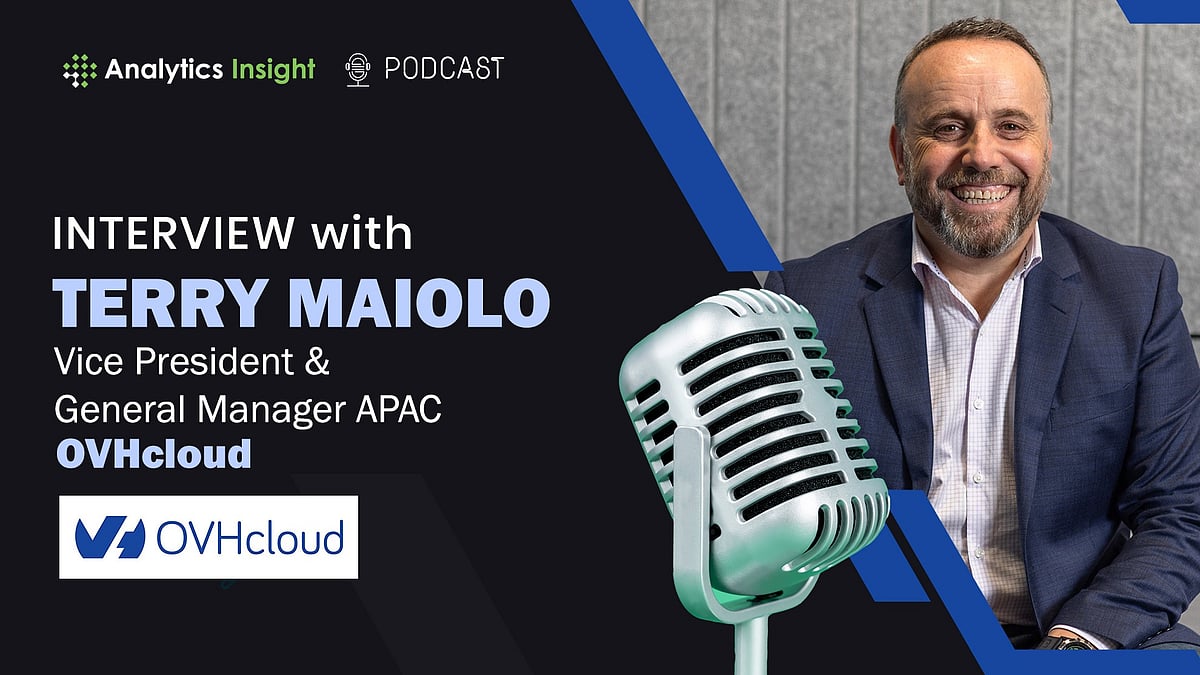
    Cloud computing is evolving rapidly, but businesses are also facing new challenges, including rising costs, security concerns, compliance requirements, AI-driven workloads, and sustainability goals. In this exclusive podcast interview, Priya Diyalani speaks with Terry Maiolo, Vice President and General Manager, APAC, at OVHcloud, about how organizations can build a cloud strategy that drives innovation, protects data, and supports long-term sustainability.

    Q: Could you tell us about OVHcloud, your role, and what makes the company different from other cloud providers?

    Absolutely. At OVHcloud, we are a pure cloud provider with 46 data centers across four continents and 30 local zones worldwide. In APAC, we operate one data center in Mumbai, two in Singapore, and three in Sydney, and I oversee the entire Asia-Pacific region. What makes us different is that we are a European cloud provider, so we comply with GDPR standards, giving customers greater data sovereignty. Another major difference is that we build our own servers and use our direct-to-chip water cooling technology, which we have developed over the last 20 years. This allows us to run data centers without traditional air conditioning while improving energy efficiency.

    Q: Regulations and global developments are changing the cloud industry. How are these factors influencing enterprise decisions?

    I believe cloud decisions are no longer only about technology. Businesses are becoming much more aware of where their data is stored and who has access to it. Regulations like India’s Data Protection Act are encouraging organizations to take data sovereignty seriously. At the same time, many customers are looking for cloud providers that are not governed by laws such as the US Cloud Act. I see cloud strategy becoming a discussion about business, governance, and compliance rather than just an IT decision.

    Q: Sustainability has become a major boardroom topic. How is OVHcloud approaching it?

    We believe sustainability should not come at the cost of performance. Our direct-to-chip water cooling captures heat directly from the processors, so we use less electricity and less water while increasing server density. We also manufacture our own servers, extend their life through reuse, recycle components whenever possible, and have achieved zero waste. I think organizations can meet sustainability goals while still improving efficiency and reducing costs.

    Q: AI is changing how data is created and used. How should businesses think about data sovereignty today?

    I think companies need to consider two things: how they use their own data and how their cloud provider handles it. At OVHcloud, we have made a clear decision not to monetize customer data in any form. At the same time, I believe businesses need a provider with a global presence so their data stays close to their operations while maintaining security, compliance, and low latency.

    Q: AI is increasing the demand for computing power. How can organizations balance AI growth with sustainability?

    I believe this is one of the biggest challenges for the industry. AI requires more computing power, energy, and infrastructure, so cloud providers must continue improving efficiency. I also encourage businesses to ask cloud providers about hidden costs, including data transfer fees, because these can become significant as AI usage grows. Sustainable infrastructure should also provide predictable costs.

    Q: Finally, what does a successful cloud strategy look like over the next decade?

    I believe organizations should move beyond talking about sustainability and sovereignty and start putting those goals into action. Responsible cloud infrastructure already exists, and businesses do not have to choose between performance, security, sustainability, and cost. I believe they can achieve all of these together by selecting the right cloud partner and making long-term strategic decisions.

  • How AI Is Forcing a Fundamental Redesign of Cloud Infrastructure

    How AI Is Forcing a Fundamental Redesign of Cloud Infrastructure

    Traditional cloud infrastructure was built for a different era of computing. Designed to support applications, databases, websites, and enterprise systems that operated within relatively predictable performance patterns, these models are now being tested by the demands of artificial intelligence. As organizations move from AI experimentation to large-scale deployment, many are discovering that the infrastructure supporting their digital transformation is not well-suited to AI workloads.

    Running AI models, processing large volumes of unstructured data, and delivering real-time AI-powered services require a different approach to compute, storage, networking, and data management. As a result, cloud architecture is entering a new phase of evolution. According to an IDC report, global spending on AI-centric infrastructure is expected to exceed $200 billion by 2028, driven by growing investments in specialized compute, storage, and networking environments designed specifically for AI workloads.

    Why Traditional Cloud Models Face New Pressures

    For most of the cloud era, enterprise workloads were relatively predictable. Applications required stable uptime, databases needed consistent performance, and infrastructure could be scaled based on anticipated demand. AI applications change this equation entirely. Whether deploying a large language model, building an AI-powered customer support platform, or running analytics on large datasets, AI workloads often require intensive bursts of computing power that vary significantly over time. The volume of data involved is substantially larger, and processing requirements are more dynamic than those of traditional enterprise applications.

    AI systems run differently from normal workloads because they continuously process, learn from, and react to varying inputs. This creates infrastructure requirements that are far more demanding in terms of performance, scalability, and operational management. Cloud environments built for traditional workloads will need significant modification to support large-scale AI applications.

    How Cloud Architecture Is Evolving

    One of the most visible changes is in compute infrastructure. In traditional cloud environments, businesses could rely on standard compute resources and scale them according to demand. AI workloads have changed that equation. Training models, running inference workloads, and processing large datasets increasingly require specialized infrastructure optimized for AI performance rather than general-purpose computing.

    Data architecture is also becoming a much bigger consideration. As AI applications depend on large volumes of data, organizations are paying closer attention to where that data is stored and processed. Moving data across multiple regions can introduce delays that may be acceptable for conventional workloads but become problematic for real-time AI applications. This is driving growing interest in regional cloud infrastructure and low-latency deployment models that bring processing closer to end users and business operations.

    Security and compliance requirements add another layer of complexity. When AI systems process sensitive business information, customer records, financial data, or healthcare information, organizations need clear visibility into how data is handled, where it is processed, and whether it remains compliant with regulatory requirements. Infrastructure decisions are becoming increasingly linked to governance, risk management, and data sovereignty considerations.

    The New Requirements of AI-Driven Infrastructure

    The next generation of cloud architecture will be more purpose-built for AI rather than based on infrastructure models originally designed for traditional applications. Organizations are increasingly evaluating cloud environments based on the specific requirements of their AI workloads, including performance, data governance, scalability, and cloud computing infrastructure.

    For Indian enterprises, this trend is intersecting with growing interest in data sovereignty, localized infrastructure, and managed cloud services. As AI becomes embedded across customer-facing platforms and business operations, factors such as latency, compliance, and infrastructure visibility are becoming more important than ever before.

    The fundamentals of cloud computing are not changing. What is changing is the level of performance, flexibility, and governance that modern workloads require. As AI adoption accelerates, cloud architecture is evolving from a general-purpose technology foundation into a specialized platform designed to support the next generation of digital services and intelligent applications.

    Authored by Rahul Takkallapally, Co-Founder, BharathCloud

  • Why AI Sovereignty and Open Source Are Critical for India’s Digital Future: An Interview with Mishi Choudhary

    Why AI Sovereignty and Open Source Are Critical for India’s Digital Future: An Interview with Mishi Choudhary

    Artificial intelligence is reshaping global economics, governance, and national security. But as nations push to adopt AI, a pressing question arises: Can India rely on foreign AI models it neither owns nor fully understands?

    In this episode of the Analytics Insight Podcast, host Priya Dialani speaks with Mishi Choudhary, a technology lawyer and founder of SFLC.in, about the growing importance of AI sovereignty, open-source systems, and technological independence. The conversation covers data governance, cybersecurity, public policy, innovation, and India’s AI ambitions. Below are key excerpts from the interview.

    What does AI sovereignty actually mean?

    AI sovereignty refers to a nation’s ability to create, understand, evaluate, and regulate the AI technologies it depends on. It does not imply isolation from the rest of the world, but rather the capacity to retain control over its digital future.

    Why is open-source AI essential for sovereignty?

    Open-source AI allows governments, private enterprises, and researchers to study, modify, and improve AI technologies. It reduces reliance on a small group of foreign corporations, fosters creativity, strengthens security, and encourages the development of in-house technical skills, avoiding vendor lock-in.

    Why are countries increasingly concerned about AI sovereignty now?

    As AI applications expand into healthcare, finance, education, governance, and national security, nations want greater control over their data and infrastructure and aim to minimize dependence on the few multinational corporations dominating the AI industry.

    What should India do to strengthen its AI ecosystem?

    India should promote open-source AI in government initiatives, focus on cybersecurity, develop Indian-language AI models, improve public procurement policies, and adopt accountable AI solutions.

    How can India balance AI innovation with accountability?

    Innovation and accountability must go hand in hand. While India needs to foster AI innovation, it should also implement strict guidelines for audit transparency, data protection, healthy competition, and regulatory oversight.

    Listen to the full podcast here.