

Tag: Data Readiness

  • Why Product Managers Must Develop AI Strategy Skills in 2026

    Why Product Managers Must Develop AI Strategy Skills in 2026

    AI is transforming product management beyond feature development. In 2026, product managers (PMs) need more than just the ability to use AI tools—they need a strategic framework to assess models, data, costs, metrics, and risks. This shift strengthens roadmap decisions and connects technology directly to customer and business value.

    The AI Strategy Gap

    A 2026 Productside survey of over 250 product professionals found that roughly four in five product managers use AI regularly. Yet only about one in four have a clear strategy behind that use. The real challenge is no longer AI adoption—it’s making strategic decisions about where and how AI should be applied.

    Why the Gap Exists

    Traditional PM skills—customer research, prioritization, stakeholder alignment—still matter. But AI systems behave differently from traditional software. Outputs can be probabilistic, performance varies across inputs, and results depend heavily on data quality. Treating an AI feature like a normal feature leads to misjudged timelines, underestimated risk, and unclear definitions of “done.” When PMs lack AI fluency, engineering and data teams increasingly take over strategic discussions, eroding the PM’s decision-making influence.

    What AI Strategy Means for Product Managers

    For a product manager, AI strategy involves deciding where AI creates measurable value, what data and model capabilities a feature needs, what risks need control, and how success gets measured. This definition gives the work structure rather than treating AI fluency as a vague catchall. Key components include:

    • Model judgment: Understanding model capabilities, limitations, and trade-offs.
    • Data readiness: Assessing whether available data is sufficient and reliable for the AI feature.
    • AI-specific metrics: Defining success metrics that account for probabilistic outputs.
    • Risk management: Identifying and mitigating ethical, operational, and performance risks.
    • User trust: Ensuring the AI system earns and maintains user confidence.

    Each of these areas involves real trade-offs, not a simple checklist. Skipping any one tends to surface after launch, when fixing it costs more.

    The Business Case, Not Just the Technical One

    Companies invest in AI expecting measurable returns—cost reduction, faster workflows, or new revenue. A PM who treats AI as a buzzword will struggle to defend roadmap decisions when finance leaders ask about return on investment. AI features carry inference, infrastructure, and monitoring costs that traditional features don’t. These costs can shift as usage scales, making cost a product metric, not just an engineering concern. A PM needs to judge whether a feature’s expected value justifies its ongoing running cost, not just its build cost. That is a business skill, not a technical one.

    How PMs Are Closing the Gap

    The most practical path is learning through live product work—pairing directly with data scientists on real projects, reading model evaluation reports, and testing prompts and failure cases firsthand. This approach doesn’t replace domain expertise or customer empathy; it complements them. A PM who understands both the customer problem and the AI system built to solve it holds a stronger position than one who only understands half the picture.

    Final Thought

    AI strategy doesn’t turn a product manager into an engineer. It changes the questions a PM is asked to answer. Someone who can connect customer value with model capability, data readiness, cost, and risk can participate in AI decisions from roadmap planning through launch. Closing the gap between using AI and having a strategy for it gives a team a stronger basis for faster, more defensible product decisions. In 2026, that connection is becoming a core part of product management.
  • Why Enterprise AI Projects Fail: The Real Challenge Is Execution, Not Innovation

    Why Enterprise AI Projects Fail: The Real Challenge Is Execution, Not Innovation

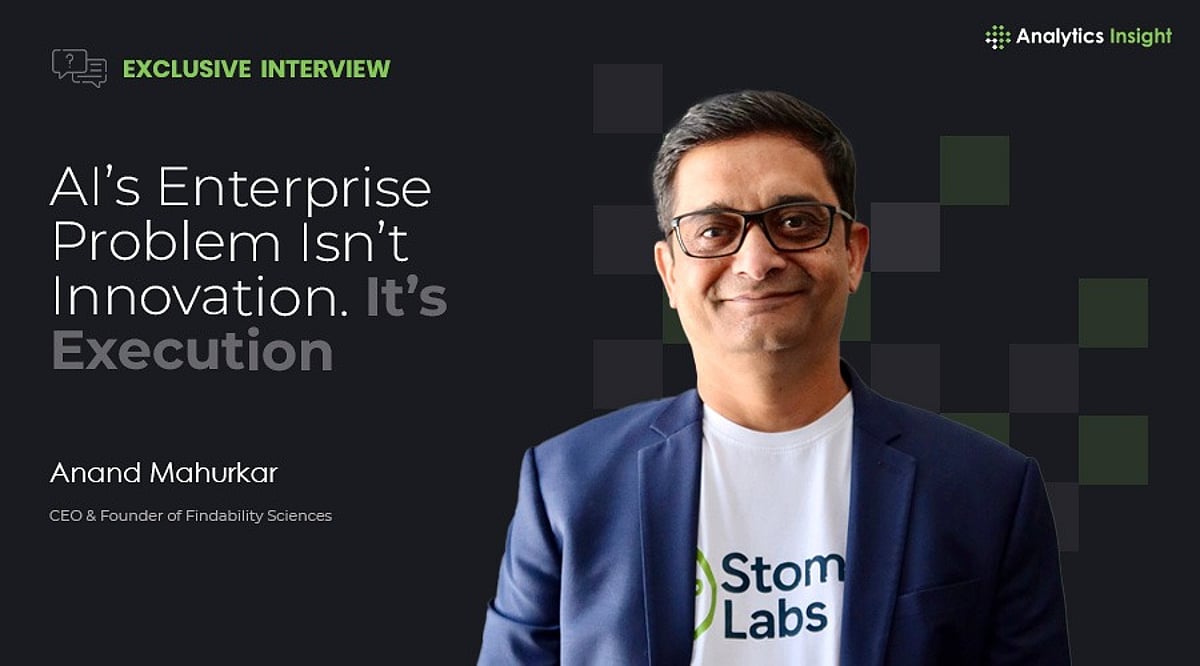
    Enterprises are pouring billions into artificial intelligence, yet a staggering number of AI initiatives never graduate from pilot to production. According to Anand Mahurkar, CEO and Founder of Findability Sciences, the problem isn’t a lack of innovative technology—it’s a failure of execution. In this interview, Mahurkar explains why most AI projects stall, how to bridge the pilot-to-production gap, and why predictive and prescriptive AI deserve more attention in the shadow of generative AI hype.

    The Pilot-to-Production Gap: A Design Problem, Not a Technology Problem

    Mahurkar argues that the gap between a successful pilot and a live business system is fundamentally a design flaw. Most organizations build pilots to prove a model works in isolation, not to survive the pressures of a real profit-and-loss environment. He cites sobering statistics: Gartner predicts that by the end of 2025, at least 30% of generative AI projects will be abandoned after proof of concept due to poor data quality, unclear business value, or escalating costs. MIT’s Project NANDA goes further, finding that 95% of organizations deploying generative AI saw zero measurable return. “That’s not a model failing,” Mahurkar says. “That’s an organization that never defined what ‘working’ meant before it started building.”

    His solution is straightforward but demanding: pick a use case with a named P&L owner from day one, instrument the return before writing any code, and treat data readiness as a prerequisite—not an afterthought. At Findability Sciences, no pilot is greenlit unless there is a specific business metric it must move and an accountable person in the room.

    Turning AI into an Operating System, Not a Lab Experiment

    Findability Sciences helps industries from agriculture to financial services treat AI as an operating system for the business. Mahurkar highlights the AI Factory for Sugar, built with Grupo Pantaleon, and work with the Agricultural Development Trust in Baramati using Stoma Sense and Stoma Insight. These tools move mills and farms from reactive decision-making to predictive planning—yield forecasting, crop stress detection, harvest scheduling—all tied to metrics the CFO already tracks.

    The same architecture applies to manufacturing (predictive maintenance, quality drift detection), retail and QSR (Serva Insight for store-level operational intelligence), and financial services (risk scoring, fraud pattern detection). The common thread: start where data already lives, attach a hard number, and scale only once that number moves. “Deploy AI against the handful of decisions in a business that actually move revenue, cost, or risk, and ignore the rest until those are working,” Mahurkar advises.

    Don’t Overlook Predictive and Prescriptive AI

    While generative AI dominates headlines, Mahurkar warns that enterprises risk overlooking the quieter, more impactful work of predictive and prescriptive AI. Forecasting demand, optimizing supply chains, flagging machine failures before they happen—these are closer to where the balance sheet lives. A 2–3% accuracy improvement in high-stakes decisions compounds into real money faster than any chatbot conversation. “GenAI helps you communicate a decision well. Predictive and prescriptive AI help you make a better one in the first place,” he says. The most successful enterprises run both deliberately, against different problems, rather than picking a side.

    From Experiments to Enterprise-Wide Adoption: Practical Advice

    Mahurkar offers four unglamorous but effective steps for business leaders:

    • Consolidate. Pick three to five use cases with the clearest line to revenue or cost, and kill the rest. A portfolio of twenty pilots dilutes budget and attention.
    • Build the data foundation once, centrally. Findability’s ICUPP model—Infrastructure, Collect, Unify, Process, Present—ensures that every subsequent AI use case gets faster and cheaper to ship.
    • Put a single senior owner on AI outcomes, not a committee. Someone who reports a number, not a roadmap.
    • Hold every AI initiative to the same standard as any capital investment: a defined return, timeline, and owner.

    He notes that S&P Global research shows the share of enterprises abandoning most AI initiatives jumped from 17% in 2024 to 42% in 2025—a governance failure, not a technology failure.

    One Piece of Advice for CEOs

    Mahurkar’s final advice for CEOs planning a five-year AI strategy is philosophical: “Don’t let AI become another line item you manage. Let it become the way your company sees itself more clearly than it ever has before.” He urges leaders to ask themselves annually: if we saw our business with total clarity, what would we do differently—and are we brave enough to do it? The real promise of AI, he says, is not efficiency for its own sake, but the chance to run a business with friction and guesswork finally removed.