Tag: Data Sovereignty

  • MeetKai Deploys NVIDIA-Based Sovereign AI Across Six Nations, Reaching Over 700 Million People

    MeetKai Deploys NVIDIA-Based Sovereign AI Across Six Nations, Reaching Over 700 Million People

    MeetKai has officially launched its sovereign AI platform, powered entirely by NVIDIA accelerated computing, across six countries. The rollout targets Brazil, Ukraine, Pakistan, Kazakhstan, Uzbekistan, and Bangladesh, collectively covering more than 700 million individuals. The platform allows governments and enterprises to run AI models locally on their own infrastructure, reducing reliance on foreign cloud services.

    MeetKai Expands Sovereign AI Infrastructure

    The initiative centers on data sovereignty, enabling nations to deploy AI systems within their own borders. By minimizing dependence on overseas cloud providers, MeetKai gives countries greater control over AI model training, deployment, and data management. The company also plans to support local AI skill development and offer secure, air-gapped deployments for sensitive government and enterprise use cases.

    Ukraine and Brazil Projects Lead the Rollout

    In Ukraine, MeetKai is partnering with Kyivstar to build a national-scale AI factory. This project is designed to establish self-contained AI infrastructure that meets national security and operational requirements. In Brazil, MeetKai secured a public tender with SERPRO, the federal data processing service, marking a critical milestone in its sovereign AI expansion across these six markets.

    NVIDIA Technology at the Core

    Every component of MeetKai’s sovereign AI platform is built on NVIDIA accelerated computing. The infrastructure supports local AI model deployment while enabling governments and businesses to maintain full control over their data and workloads. MeetKai also hinted at future expansion into African markets, where it intends to leverage NVIDIA technology for additional sovereign AI deployments.

    The six-country launch underscores a growing global focus on sovereign AI infrastructure, as governments and enterprises seek to develop local capabilities and reduce dependence on overseas cloud systems.

  • European Enterprise Tech Firms Emerge as Unexpected AI Winners

    European Enterprise Tech Firms Emerge as Unexpected AI Winners

    The artificial intelligence race may have begun with companies building powerful AI models, but the next phase is creating opportunities for a different set of winners. A growing number of established European technology firms are benefiting as businesses shift from AI experiments to full-scale deployment across their operations.

    Recent earnings from companies including SAP, Capgemini, Sopra Steria and OVHcloud indicate that demand is increasingly moving beyond AI models to the complex work of integrating the technology into existing enterprise systems. That trend is translating into stronger revenue growth, improved business outlooks and rising customer demand.

    Integration Becomes the Real AI Opportunity

    For many large organizations, adopting AI is proving to be far more complicated than simply choosing a chatbot or language model. Businesses are discovering that successful AI deployment requires seamless integration with finance, human resources, procurement, supply chain, and other mission-critical systems already running their operations.

    Instead of relying on a single AI provider, enterprises are expected to use multiple models depending on performance, security and regulatory requirements. That has increased demand for companies specializing in AI implementation, data management, governance and workflow integration.

    SAP, Capgemini Report Strong Momentum

    Germany’s SAP continues to gain from firms moving their critical operations to cloud platforms that support AI applications. Its cloud backlog increased 26% on a constant currency basis, indicating strong enterprise demand despite spending on AI-related acquisitions.

    Capgemini of France has further boosted its annual revenue growth outlook on the back of increased bookings driven by spending by firms on AI-driven digital transformation. Sopra Steria has raised its revenue growth guidance on increased enterprise spending on AI.

    Data Sovereignty Adds European Advantage

    European tech companies are also benefiting from growing fears about data sovereignty and compliance regulations. Organizations in many fields like defense, healthcare, aerospace, and critical infrastructure require AI that ensures sensitive data remains within local jurisdiction and is governed.

    The growing shift of enterprise investments in AI from research and development to implementation means that companies focused on data security, management, and integrating AI into business operations could become some of the major beneficiaries of the AI revolution, even without developing the technologies themselves.

  • Anthropic Expands in India: Claude AI Now Supports In-Country Inference and Unveils New Partnerships

    Anthropic Expands in India: Claude AI Now Supports In-Country Inference and Unveils New Partnerships

    Anthropic has announced a significant expansion in India, bringing in-country inference for Claude via Amazon Bedrock and revealing a host of new partnerships with Indian enterprises, startups, and nonprofits. The move addresses a top request from Indian organizations for local data processing, enabling them to deploy Claude while meeting strict data residency requirements.

    Claude Goes Local: In-Country Inference via Amazon Bedrock

    In the coming weeks, Claude will be available with in-country inference in India through Amazon Bedrock, AWS’s platform for building generative AI applications. Requests sent to Claude through the India endpoint will be processed on servers within India, giving banks, insurers, public agencies, and other highly regulated institutions the certainty they need to handle sensitive customer data. This control is pivotal for organizations moving from AI pilots to full-scale deployment.

    “We are glad to see partners like Anthropic and AWS bringing in-country inference to India. Access to trusted, frontier AI closer to home is a positive step for the ecosystem as we all explore how these technologies can responsibly serve customers,” said Ashok Vaswani, Managing Director & CEO of Kotak Bank.

    Claude deployments through Amazon Bedrock also include audit trails and access controls that meet the requirements of risk and compliance teams, ensuring a secure path to production.

    Building Momentum Across Indian Enterprises and Startups

    Anthropic’s presence in India has grown rapidly since its Bengaluru office opened in February. The local team now provides applied AI expertise to enterprises, digital natives, and startups. Major Indian companies are adopting Claude for diverse use cases:

    • Axis Bank leverages Claude for engineering excellence and employee productivity.
    • NPCI is building AiNxt, its agentic AI platform, with Claude.
    • IndusInd Bank uses Claude to create an AI-enabled enterprise knowledge platform.
    • Godrej Industries runs Claude across internal app development and business analysis.

    IT services leaders are also integrating Claude into their offerings. TCS is equipping 50,000 associates with Claude, Infosys is combining Claude with Infosys Topaz™ and establishing a dedicated Anthropic Center of Excellence, and Cognizant uses Claude in systems for manufacturing, life sciences, and insurance. LTM & LTTS are embedding Claude and Claude Code into their platforms.

    Digital natives are embedding Claude in consumer products: Swiggy uses MCP to make flagship services reachable, Instamart now offers natural-language shopping for 40,000+ products, Zoho equips customers with Claude models, and Invideo delivers precise quality across 190 nations.

    Startups like Rocket, Atlan, Cred, Zamp.ai, and Freshworks are building with Claude to accelerate development and enhance productivity.

    Partnerships Driving Scale and Innovation

    Anthropic’s Claude Partner Network has seen high registration numbers in India, with many partners achieving Global Premier, Preferred, and Select tiers. This week, Bengaluru hosts the first Claude Certification for Partners, aiming to certify 5,000 people.

    Advancing Beneficial Deployments and Social Impact

    Anthropic’s AI for Science program supports researchers across India, including the Evolutionary Venomics Lab at IISc, which uses Claude to annotate venom data, and PopVax, which employs Claude in protein-design models for vaccines and cancer treatments. Nonprofits like Pratham, Agami, Civis, and Digital Green are using Claude to improve education, justice, civic tech, and agriculture.

    Strengthening Cybersecurity and Public Trust

    Indian organizations are also using Claude to bolster cyber defenses. The Data Security Council of India has a Claude-powered AI testing sandbox, while MOSIP—the open-source platform behind national digital ID systems—uses Claude to secure code. OpenG2P leverages Claude for secure citizen benefit delivery.

    Commitment to Indian Languages and Responsible AI

    Six months after signing the New Delhi Frontier AI Impact Commitments, Anthropic is making progress on improving Claude’s performance in Indian languages. A pilot with Karya evaluated Claude across seven languages in agriculture, helping identify linguistic and cultural nuances that automated evaluations miss.

    With in-country inference, Anthropic is set to deepen its work in India, opening doors for deployments where data must remain in the country.

  • Utho Cloud Commits to 10,000 GPU Deployment to Power India’s Sovereign AI Compute Backbone

    Utho Cloud Commits to 10,000 GPU Deployment to Power India’s Sovereign AI Compute Backbone

    Utho Cloud, India’s sovereign cloud and AI infrastructure platform, has announced a landmark commitment to deploy 10,000 GPUs over the next 7–8 quarters. The investment is part of a long-term vision to build India’s sovereign AI compute backbone, enabling businesses, startups, researchers, and public sector organizations to access high-performance AI infrastructure hosted entirely within the country.

    The GPU portfolio will span NVIDIA’s enterprise-grade offerings, including the H200, H100, A100, RTX PRO 6000 Blackwell, and L4 models. This expansion guarantees GPU availability without long waitlists or auction-based pricing, a significant advantage in a market often plagued by shortages and unpredictable costs.

    Key features of the infrastructure include:

    • Sovereign AI compute: Customer data and model training remain within their chosen jurisdiction, with full ownership of intellectual property.
    • Transparent and predictable pricing: Up to 60% lower than traditional hyperscaler GPU rates, with billing in Indian Rupees.
    • Flexibility: Supports workloads from single-model inference to large-scale distributed AI training.
    • 24/7 human support: Dedicated assistance for mission-critical production AI workloads.

    With over 51,000 users, Utho Cloud already offers cloud infrastructure with data residency in India and compliance with the Digital Personal Data Protection (DPDP) Act.

    “We have spent years building a cloud platform designed around India’s data sovereignty and regulatory requirements. With this expansion, we will offer guaranteed GPU availability without extended wait times, sovereign AI compute with data and model training hosted within customer jurisdictions, transparent and predictable pricing, and the flexibility to support workloads ranging from AI inference to large-scale model training. By combining 100% data residency, compliance with the DPDP Act, and cost-efficient AI infrastructure, we aim to remove the barriers that have long limited access to high-performance AI computing and accelerate India’s journey towards becoming a global AI powerhouse.”

    — Manoj Dhanda, Founder and CEO of Utho Cloud

    The announcement comes amid growing concerns over AI compute availability, with GPU shortages, rising costs, and extended procurement timelines emerging as key challenges for enterprises worldwide. Unlike conventional cloud models that often expose businesses to foreign currency billing, unpredictable GPU costs, and infrastructure dependencies outside India, Utho’s sovereign AI platform is designed to provide organizations with predictable pricing in Indian Rupees, complete data residency, and enterprise-grade AI infrastructure deployed within Indian jurisdiction.

    Utho Cloud positions itself as “Bharat ka Cloud” — proudly Indian and sharply attuned to the needs of domestic enterprises. Today, 70% of India’s cloud telephony runs on Utho. Enterprises like FIITJEE, Jindal Steel & Power, and APL Apollo trust the platform, and over 51,000 businesses — from solo developers to unicorn startups — deploy production workloads on infrastructure that Utho owns, operates, and supports 24/7.

  • How AI, Data Sovereignty, and Sustainability Are Reshaping Cloud Strategy: Insights from OVHcloud’s Terry Maiolo

    How AI, Data Sovereignty, and Sustainability Are Reshaping Cloud Strategy: Insights from OVHcloud’s Terry Maiolo

    As AI accelerates cloud adoption, enterprises are placing greater emphasis on transparent pricing, energy-efficient infrastructure, data governance, and regulatory compliance to build resilient cloud strategies for long-term business growth.

    Key Takeaways

    • Cloud strategy is shifting beyond IT, with data sovereignty, compliance, and governance becoming critical business priorities worldwide.
    • Sustainable cloud infrastructure can reduce energy use, improve efficiency, and support AI workloads without compromising performance or security.
    • Businesses should evaluate cloud providers based on transparent pricing, responsible data handling, and long-term scalability for AI-driven growth.

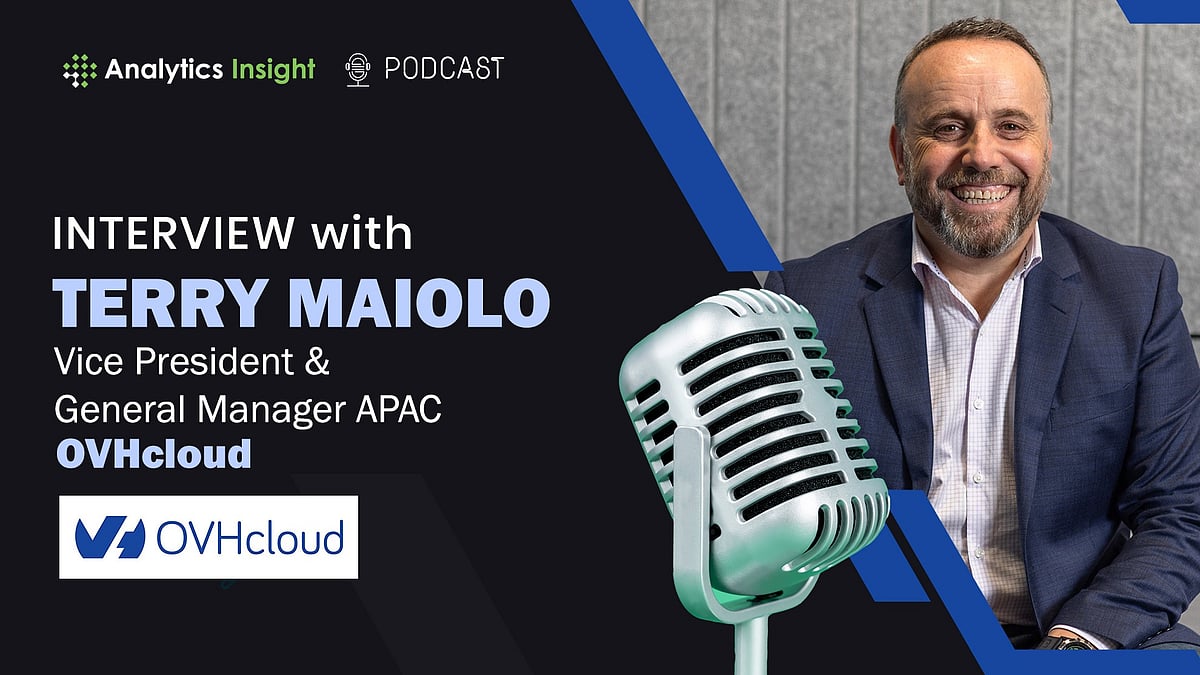
    Cloud computing is evolving rapidly, but businesses are also facing new challenges, including rising costs, security concerns, compliance requirements, AI-driven workloads, and sustainability goals. In this exclusive podcast interview, Priya Diyalani speaks with Terry Maiolo, Vice President and General Manager, APAC, at OVHcloud, about how organizations can build a cloud strategy that drives innovation, protects data, and supports long-term sustainability.

    Q: Could you tell us about OVHcloud, your role, and what makes the company different from other cloud providers?

    Absolutely. At OVHcloud, we are a pure cloud provider with 46 data centers across four continents and 30 local zones worldwide. In APAC, we operate one data center in Mumbai, two in Singapore, and three in Sydney, and I oversee the entire Asia-Pacific region. What makes us different is that we are a European cloud provider, so we comply with GDPR standards, giving customers greater data sovereignty. Another major difference is that we build our own servers and use our direct-to-chip water cooling technology, which we have developed over the last 20 years. This allows us to run data centers without traditional air conditioning while improving energy efficiency.

    Q: Regulations and global developments are changing the cloud industry. How are these factors influencing enterprise decisions?

    I believe cloud decisions are no longer only about technology. Businesses are becoming much more aware of where their data is stored and who has access to it. Regulations like India’s Data Protection Act are encouraging organizations to take data sovereignty seriously. At the same time, many customers are looking for cloud providers that are not governed by laws such as the US Cloud Act. I see cloud strategy becoming a discussion about business, governance, and compliance rather than just an IT decision.

    Q: Sustainability has become a major boardroom topic. How is OVHcloud approaching it?

    We believe sustainability should not come at the cost of performance. Our direct-to-chip water cooling captures heat directly from the processors, so we use less electricity and less water while increasing server density. We also manufacture our own servers, extend their life through reuse, recycle components whenever possible, and have achieved zero waste. I think organizations can meet sustainability goals while still improving efficiency and reducing costs.

    Q: AI is changing how data is created and used. How should businesses think about data sovereignty today?

    I think companies need to consider two things: how they use their own data and how their cloud provider handles it. At OVHcloud, we have made a clear decision not to monetize customer data in any form. At the same time, I believe businesses need a provider with a global presence so their data stays close to their operations while maintaining security, compliance, and low latency.

    Q: AI is increasing the demand for computing power. How can organizations balance AI growth with sustainability?

    I believe this is one of the biggest challenges for the industry. AI requires more computing power, energy, and infrastructure, so cloud providers must continue improving efficiency. I also encourage businesses to ask cloud providers about hidden costs, including data transfer fees, because these can become significant as AI usage grows. Sustainable infrastructure should also provide predictable costs.

    Q: Finally, what does a successful cloud strategy look like over the next decade?

    I believe organizations should move beyond talking about sustainability and sovereignty and start putting those goals into action. Responsible cloud infrastructure already exists, and businesses do not have to choose between performance, security, sustainability, and cost. I believe they can achieve all of these together by selecting the right cloud partner and making long-term strategic decisions.

  • How AI Is Forcing a Fundamental Redesign of Cloud Infrastructure

    How AI Is Forcing a Fundamental Redesign of Cloud Infrastructure

    Traditional cloud infrastructure was built for a different era of computing. Designed to support applications, databases, websites, and enterprise systems that operated within relatively predictable performance patterns, these models are now being tested by the demands of artificial intelligence. As organizations move from AI experimentation to large-scale deployment, many are discovering that the infrastructure supporting their digital transformation is not well-suited to AI workloads.

    Running AI models, processing large volumes of unstructured data, and delivering real-time AI-powered services require a different approach to compute, storage, networking, and data management. As a result, cloud architecture is entering a new phase of evolution. According to an IDC report, global spending on AI-centric infrastructure is expected to exceed $200 billion by 2028, driven by growing investments in specialized compute, storage, and networking environments designed specifically for AI workloads.

    Why Traditional Cloud Models Face New Pressures

    For most of the cloud era, enterprise workloads were relatively predictable. Applications required stable uptime, databases needed consistent performance, and infrastructure could be scaled based on anticipated demand. AI applications change this equation entirely. Whether deploying a large language model, building an AI-powered customer support platform, or running analytics on large datasets, AI workloads often require intensive bursts of computing power that vary significantly over time. The volume of data involved is substantially larger, and processing requirements are more dynamic than those of traditional enterprise applications.

    AI systems run differently from normal workloads because they continuously process, learn from, and react to varying inputs. This creates infrastructure requirements that are far more demanding in terms of performance, scalability, and operational management. Cloud environments built for traditional workloads will need significant modification to support large-scale AI applications.

    How Cloud Architecture Is Evolving

    One of the most visible changes is in compute infrastructure. In traditional cloud environments, businesses could rely on standard compute resources and scale them according to demand. AI workloads have changed that equation. Training models, running inference workloads, and processing large datasets increasingly require specialized infrastructure optimized for AI performance rather than general-purpose computing.

    Data architecture is also becoming a much bigger consideration. As AI applications depend on large volumes of data, organizations are paying closer attention to where that data is stored and processed. Moving data across multiple regions can introduce delays that may be acceptable for conventional workloads but become problematic for real-time AI applications. This is driving growing interest in regional cloud infrastructure and low-latency deployment models that bring processing closer to end users and business operations.

    Security and compliance requirements add another layer of complexity. When AI systems process sensitive business information, customer records, financial data, or healthcare information, organizations need clear visibility into how data is handled, where it is processed, and whether it remains compliant with regulatory requirements. Infrastructure decisions are becoming increasingly linked to governance, risk management, and data sovereignty considerations.

    The New Requirements of AI-Driven Infrastructure

    The next generation of cloud architecture will be more purpose-built for AI rather than based on infrastructure models originally designed for traditional applications. Organizations are increasingly evaluating cloud environments based on the specific requirements of their AI workloads, including performance, data governance, scalability, and cloud computing infrastructure.

    For Indian enterprises, this trend is intersecting with growing interest in data sovereignty, localized infrastructure, and managed cloud services. As AI becomes embedded across customer-facing platforms and business operations, factors such as latency, compliance, and infrastructure visibility are becoming more important than ever before.

    The fundamentals of cloud computing are not changing. What is changing is the level of performance, flexibility, and governance that modern workloads require. As AI adoption accelerates, cloud architecture is evolving from a general-purpose technology foundation into a specialized platform designed to support the next generation of digital services and intelligent applications.

    Authored by Rahul Takkallapally, Co-Founder, BharathCloud

  • How AI Is Transforming Cloud Infrastructure: What Enterprises Need to Know

    How AI Is Transforming Cloud Infrastructure: What Enterprises Need to Know

    AI is reshaping cloud infrastructure by demanding specialized compute, smarter data management, stronger governance, and low-latency architectures. As adoption accelerates, enterprises must rethink cloud strategies to support scalable, compliant, and performance-driven AI workloads.

    Traditional cloud infrastructure was built for a different era of computing. It was designed to support applications, databases, websites, and enterprise systems that operated within relatively predictable performance patterns. As organizations move from AI experimentation to large-scale AI deployment, many are discovering that the infrastructure models that supported their digital transformation are not always well-suited to the demands of AI.

    Running AI models, processing large volumes of unstructured data, and delivering real-time AI-powered services require a different approach to compute, storage, networking, and data management. As a result, cloud architecture is entering a new phase of evolution.

    The scale of this shift is already becoming visible. According to an IDC report, global spending on AI-centric infrastructure is expected to exceed $200 billion by 2028, driven by growing investments in specialized compute, storage, and networking environments designed specifically for AI workloads.

    Why Traditional Cloud Models Are Facing New Pressures

    For most of the cloud era, enterprise workloads were relatively predictable. Applications required stable uptime, databases needed consistent performance, and infrastructure could be scaled based on anticipated demand. Whether an organization is deploying a large language model, building an AI-powered customer support platform, or running analytics on large datasets, AI applications often require intensive bursts of computing power that can vary significantly over time. The volume of data involved is also substantially larger, while processing requirements are often more dynamic than those of traditional enterprise applications.

    AI systems run differently from normal workloads since they continuously process, learn from, and react to varying inputs. This creates infrastructure requirements that are far more demanding in terms of performance, scalability, and operational management. Thus, cloud environments built for traditional workloads will have to be modified significantly in order to support large-scale AI applications.

    How Cloud Architecture Is Evolving

    One of the most visible changes is in how organizations approach compute infrastructure. In traditional cloud environments, businesses could often rely on standard compute resources and scale them according to demand. AI workloads have changed that equation. Training models, running inference workloads, and processing large datasets increasingly require specialized infrastructure that is optimized for AI performance rather than general-purpose computing.

    Data architecture is also becoming a much bigger consideration. As AI applications depend on large volumes of data, organizations are paying closer attention to where that data is stored and processed. Moving data across multiple regions can introduce delays that may be acceptable for conventional workloads but become problematic for real-time AI applications. This is driving growing interest in regional cloud infrastructure and low-latency deployment models that bring processing closer to end users and business operations.

    Security and compliance requirements are adding another layer of complexity. When AI systems process sensitive business information, customer records, financial data, or healthcare information, organizations need clear visibility into how that data is handled, where it is processed, and whether it remains compliant with regulatory requirements. As a result, infrastructure decisions are becoming increasingly linked to governance, risk management, and data sovereignty considerations.

    The New Requirements of AI-Driven Infrastructure

    The next generation of cloud architecture is likely to be more purpose-built for AI rather than based on infrastructure models originally designed for traditional applications. Organizations are increasingly evaluating cloud environments based on the specific requirements of their AI workloads, including performance, data governance, scalability, and cloud computing infrastructure.

    For Indian enterprises, this trend is also intersecting with growing interest in data sovereignty, localised infrastructure, and managed cloud services. As AI becomes embedded across customer-facing platforms and business operations, factors such as latency, compliance, and infrastructure visibility are becoming more important than ever before.

    The fundamentals of cloud computing are not changing. What is changing is the level of performance, flexibility, and governance that modern workloads require. As AI adoption accelerates, cloud architecture is evolving from a general-purpose technology foundation into a specialized platform designed to support the next generation of digital services and intelligent applications.

    Authored by Rahul Takkallapally, Co-Founder, BharathCloud