
Tag: data structures

  • The Modern Computer Science Skill Set: What Students Need for a Tech Career

    The Modern Computer Science Skill Set: What Students Need for a Tech Career

    A computer science degree can open many technology career paths, but employers are looking for more than transcripts and basic coding exercises. Today’s tech roles demand strong fundamentals in programming and algorithms, plus practical experience with AI, cloud systems, databases, cybersecurity, and real-world software development. The World Economic Forum ranks AI and big data among the fastest-rising skill areas, followed closely by networks, cybersecurity, and technology literacy.

    Build Strong Programming and Problem-Solving Skills

    A successful developer needs more than syntax knowledge. Languages like Python, TypeScript, Java, C++, Go, and Rust serve different technology areas. Python plays a major role in AI, data science, automation, and back-end development. GitHub reports that TypeScript became its most-used language in August 2025, ahead of Python and JavaScript, while Python remains essential for AI and data science. Developing in-depth skill in one primary language and basic comfort with a second creates a solid foundation.

    Data structures and algorithms still matter. Arrays, trees, graphs, stacks, queues, recursion, dynamic programming, and Big-O analysis are valuable for technical interviews and system design. These skills also support code review, bug fixes, and architecture decisions. Algorithm knowledge should connect to real software work rather than stop at interview puzzles.

    Develop AI Literacy With Human Judgment

    AI now forms a major part of software development. The 2025 Stack Overflow Developer Survey found that 84% of respondents use or plan to use AI tools in development. However, 46% distrust AI output, while only 33% trust it. These numbers show why AI skills must be paired with human judgment.

    Useful AI knowledge includes large language models, AI APIs, embeddings, vector databases, retrieval-augmented generation, tool calling, AI agents, model evaluation, and foundational machine learning concepts. GitHub reports more than 1.1 million public repositories with an LLM software development kit, with more than 693,000 such projects created in the past 12 months. AI skills go beyond prompt writing. Code review, testing, security checks, and clear model limitations remain essential. AI can accelerate tasks, but technical knowledge determines whether the final result actually works.

    Master Software Engineering, Data, Cloud, and Security

    Real technology work requires professional software development skills. Git, GitHub, testing, debugging, APIs, code review, documentation, and continuous integration should all be part of a computer science education.

    Database knowledge also matters. SQL, PostgreSQL or MySQL, indexes, joins, transactions, query design, and data modeling provide a strong base. MongoDB and Redis add useful NoSQL options for specific system requirements.

    Cloud skills add another important layer. AWS, Microsoft Azure, and Google Cloud offer services for compute, storage, databases, networking, identity, serverless systems, and monitoring. Linux, Docker, CI/CD, basic Kubernetes, cloud deployment, and infrastructure tools help turn a local project into a reliable service.

    Cybersecurity needs daily attention. Authentication, authorization, HTTPS, encryption, secure passwords, API security, secrets management, dependency checks, and awareness of common web risks should be part of normal software work. The World Economic Forum places networks and cybersecurity among the fastest-rising skill areas for good reason.

    Understand Systems and Choose a Specialty

    Computer science fundamentals still form the technical foundation. Operating system concepts, computer networks, databases, computer architecture, concurrency, memory management, distributed systems, and system design explain what happens inside a real application. System design can begin with clients, servers, caches, queues, replicas, and databases, then expand to scaling, fault tolerance, and service architecture.

    A strong career path does not require mastery of every technology. Core computer science knowledge should be paired with one clear area of depth:

    • AI and machine learning: Python, statistics, neural networks, LLM systems, and model operations.
    • Software engineering: Data structures and algorithms, back-end or front-end development, databases, cloud, and system design.
    • Cloud and DevOps: Linux, networking, Docker, Kubernetes, CI/CD, and cloud platforms.
    • Cybersecurity: Network security, application security, cryptography, and incident response.

    Current data points to one clear career lesson: technical depth matters, but flexibility matters too. Stack Overflow reports that 69% of developers spent time in the past year learning a new coding technique or software language, while more than 36% studied AI-enabled tools for work or career growth. The World Economic Forum also identifies analytical thinking, creative thinking, resilience, flexibility, curiosity, and continuous learning as high-value skills.

    Why This Matters

    A computer science degree alone may not fully prepare students for modern technology roles. Employers need professionals with strong programming, problem-solving, AI, cloud, data, security, and software engineering skills. Learning these areas early helps students build meaningful projects, understand workplace expectations, adapt to new tools, and create a stronger foundation for long-term career growth.

    Frequently Asked Questions

    1. Which programming languages should computer science students learn?

    Python, TypeScript, Java, C++, Go, and Rust are all useful options across different technology fields.

    2. Does DSA still matter for tech careers?

    Yes. Data structures and algorithms support problem-solving, technical interviews, software design, code quality, and system architecture.

    3. Should every computer science student learn AI?

    Basic AI literacy has become valuable across many technology roles, even for students who do not plan to enter AI research.

    4. Why should students learn cloud computing?

    Cloud knowledge helps students understand how modern applications use computing, storage, databases, networking, and deployment platforms.

    5. Which skill should a student specialize in?

    Students should build core computer science knowledge first, then develop deeper expertise in an area such as AI, software engineering, cybersecurity, cloud, or data engineering.

  • Top CSE and IT Interview Questions Every Fresher Should Master

    Top CSE and IT Interview Questions Every Fresher Should Master

    Recruiters evaluate far more than technical knowledge in a first CSE or IT interview. They assess problem-solving, communication, coding fundamentals, and project understanding across every interview stage. A structured preparation plan focused on concepts, practical scenarios, and consistent practice helps candidates build confidence and perform better.

    The Question Behind Every Question

    Most freshers walk into their first technical interview expecting a quiz. What they actually face is closer to an audit of how they think. A recruiter asking about linked lists rarely cares whether the definition is memorized. They want to see reasoning happen in real time: how a problem gets broken down, where the logic might fail, and how clearly that thinking gets explained out loud.

    A first CSE or IT interview, whether for a campus placement drive or an entry-level software developer role, usually spans programming, data structures, object-oriented concepts, databases, operating systems, networks, and behavioral rounds. The exact mix shifts with the role. A developer position leans heavily on coding and algorithms, while IT support or infrastructure roles lean more on troubleshooting and systems knowledge.

    Programming: Where Code Quality Gets Tested

    Programming questions reveal how a candidate writes and reasons about code, not just whether syntax gets remembered correctly. Common ground includes the difference between a compiler and an interpreter, how loops and conditionals behave, and how a broken program gets debugged. Interviewers watch closely for whether a candidate clarifies the problem first, writes readable code, and checks edge cases before calling a solution finished. Estimating the time and space complexity of a solution matters here too, even for problems that look simple on the surface.

    Data Structures and Algorithms: Where Efficiency Gets Tested

    DSA questions move the focus from writing code to choosing the right approach. Expect arrays, linked lists, stacks, queues, hash tables, trees, and graphs to come up regularly. A candidate might be asked to detect a cycle in a linked list or compare breadth-first and depth-first search. These questions judge algorithmic thinking and awareness of trade-offs between time and space. Recognizing patterns across problems matters more than memorizing solutions.

    Object-Oriented Programming: Where Design Thinking Gets Tested

    Object-oriented questions assess how a candidate structures software rather than how many terms they can define. Encapsulation, inheritance, polymorphism, abstraction, and the difference between overloading and overriding come up often. A simple example, such as a payment system supporting multiple payment methods, tends to surface how abstraction works in practice. Freshers also face basic version control questions, including the difference between Git and GitHub or how a merge conflict gets resolved. Since most entry-level roles involve collaborative codebases.

    DBMS and SQL: Where Data Modeling Gets Tested

    Database questions check whether a candidate understands how applications store and protect information. Primary and foreign keys, normalization, joins, indexes, and ACID properties form the core of this section. Recruiters ask about normalization to assess scalable database design, not a textbook definition. Writing a basic query or explaining how an index speeds up lookups while adding storage overhead signals genuine practical readiness.

    Operating Systems and Networks: Where Resource Management Gets Tested

    Operating system questions cover processes versus threads, deadlock, virtual memory, and context switching, testing how well a candidate understands resource management. Networking questions typically include TCP versus UDP, DNS, and how to troubleshoot a system that cannot connect to the internet. These areas carry extra weight for infrastructure and cybersecurity roles.

    Real Scenarios: Where Problem Ownership Gets Tested

    Scenario questions reveal how a candidate responds when something breaks. A recruiter might ask what gets checked first when a user cannot log in or how a slow website gets investigated. Developers face similar scenarios framed differently: debugging a failing API or tracing a slow database query. A strong answer follows a clear sequence: identify the issue, gather information, isolate the cause, test a fix, and communicate the result. Many interviewers care more about how a candidate explains an imperfect solution than how fast they reach the optimal one. Online assessments and recorded video screenings now appear before many technical rounds, so coding tests, aptitude sections, and SQL exercises are worth expecting alongside live interviews.

    Coding Round vs Technical Round

    Not every company tests the same way. Service-based companies such as TCS, Infosys, and Wipro emphasize core CS fundamentals, aptitude, and basic coding over advanced algorithms. Product-based companies place far more weight on DSA and multiple rounds of coding interviews. Startups often focus on projects and how quickly a candidate can debug real, messy code. Knowing which category a target company falls into helps direct limited preparation time toward what actually gets tested.

    Projects and Behavioral Questions: Where Ownership Gets Tested

    Project questions separate candidates who understand their résumé from those who simply list technologies. Expect questions on personal contribution, technology choices, and lessons learned from mistakes. The STAR method, covering Situation, Task, Action, and Result, works well for structuring behavioral answers.

    A Preparation Plan That Actually Works

    A focused plan beats scattered revision. Reading the job description first identifies which technologies matter most. Revising one core subject a day, rather than cramming everything at once, builds retention. Solving coding and SQL problems under a time limit builds speed. Rehearsing project explanations aloud builds fluency under pressure. Keeping a short error log, noting each mistaken concept and its correction, turns preparation into a measurable cycle instead of passive review.

    Final Thought

    The candidates who stand out rarely know more facts than everyone else in the room. They connect concepts to real problems, explain their reasoning without hesitation, and treat an interview as a conversation rather than an exam. That shift in mindset, more than any single answer, is what separates a strong first impression from a forgettable one.

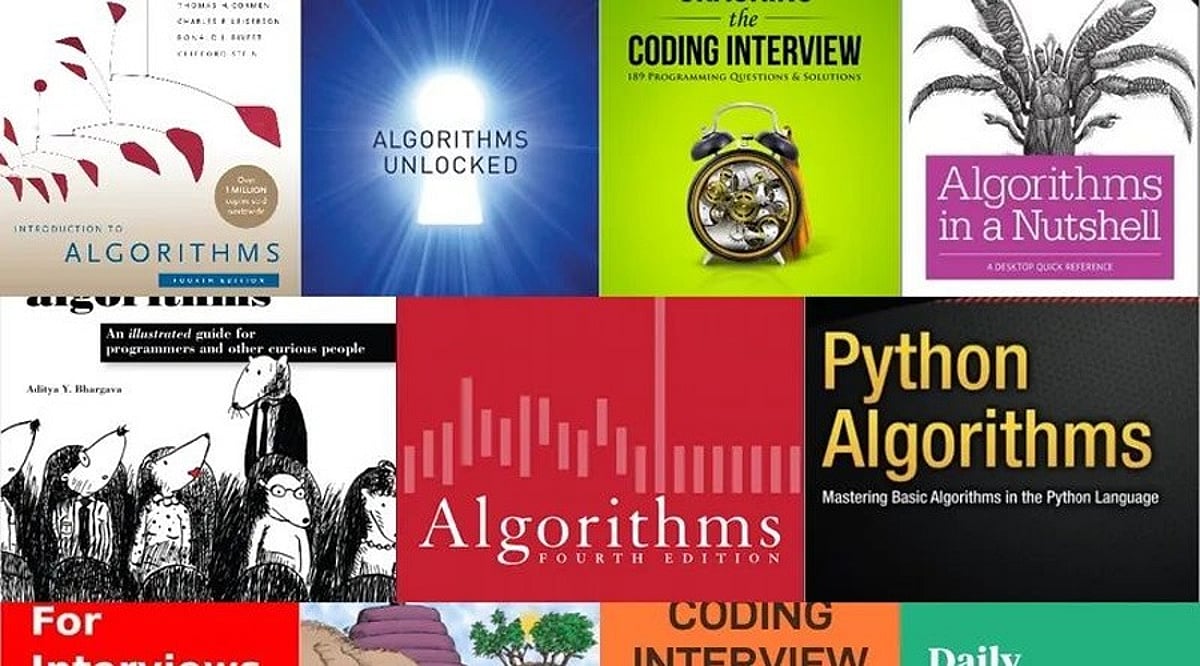
  • 10 Must-Read Data Structures and Algorithms Books for Programmers in 2026

    10 Must-Read Data Structures and Algorithms Books for Programmers in 2026

    Artificial intelligence can generate code in seconds, but it cannot replace a programmer’s deep understanding of data structures and algorithms (DSA). Whether you’re preparing for coding interviews, building scalable applications, or competing in programming contests, DSA remains one of the most valuable skills in software development. While AI can suggest solutions, knowing why an algorithm works and when to use it comes only through structured learning and practice. The right books make all the difference.

    Essential DSA Books to Build Strong Fundamentals

    These books establish the fundamentals of data structures and algorithms, helping readers build strong problem-solving skills before tackling advanced concepts.

    Introduction to Algorithms (CLRS) – The Definitive Reference

    CLRS, written by Thomas H. Cormen, Charles E. Leiserson, Ronald L. Rivest, and Clifford Stein, remains the standard guide to learning algorithms. It covers topics from graph and sorting algorithms to dynamic programming and computational complexity. Though challenging, no other book is as comprehensive.

    Grokking Algorithms – Where to Start Your Journey

    Aditya Bhargava’s book uses colorful illustrations and clear explanations to introduce binary search, recursion, graph traversal, and more. It’s one of the best books for beginners.

    Algorithms (4th Edition) – Learn Through Practice

    Robert Sedgewick and Kevin Wayne strike a balance between theory and practice, covering essential algorithm concepts and their implementation in real programs.

    Books Built for Coding Interviews

    Technical interviews focus on problem-solving rather than memorization. These titles help candidates build that mindset.

    Cracking the Coding Interview – The Interview Must-Have

    Gayle Laakmann McDowell’s book explains DSA concepts and includes nearly 200 interview questions, solutions, and tips for handling technical interviews at top tech companies.

    Data Structures and Algorithms Made Easy – Practice-Driven Learning

    Narasimha Karumanchi’s book uses a Q&A approach, reinforcing concepts through examples. It’s popular among engineering students preparing for placements and coding tests.

    Elements of Programming Interviews – Up the Difficulty Factor

    This book is designed for experienced programmers and includes various problems on arrays, linked lists, trees, graphs, and dynamic programming.

    Books That Sharpen Problem-Solving

    These books help programmers apply critical thinking to unfamiliar problems.

    The Algorithm Design Manual – Problem-Solving Application

    Steven S. Skiena merges theoretical concepts with practical problems solved using algorithms, providing insights across different industries. The algorithm catalog is especially helpful for finding the best way to solve different kinds of problems.

    Algorithm Design – Strong Academic Background

    Jon Kleinberg and Éva Tardos teach algorithm design using mathematical logic and well-chosen examples. It’s perfect for those who want to learn the principles of efficient computing.

    Books for Python Learners and Self-Study

    Not every programmer learns the same way. These books cater to different preferences and skill levels.

    Data Structures and Algorithms in Python – Learn DSA with Python

    Goodrich, Tamassia, and Goldwasser introduce basic DSA concepts via Python, focusing on ideas that apply across programming languages.

    A Common-Sense Guide to Data Structures and Algorithms – Simple and Accessible

    Jay Wengrow introduces difficult concepts in simple words with practical examples, avoiding complicated mathematical formulas. Its conversational style makes it one of the easiest DSA books.

    Choosing the Right DSA Book

    Depending on your goals, you can start with Grokking Algorithms and then move to Algorithms (4th Edition) or Introduction to Algorithms (CLRS). For placement preparation, choose Data Structures and Algorithms Made Easy and Cracking the Coding Interview. For experienced developers, The Algorithm Design Manual and Elements of Programming Interviews are excellent choices. Even in the era of AI, learning DSA is necessary, and practicing with these books is one of the best ways to improve your skills.

  • Essential Data Structures & Algorithms Cheat Sheet for Data Scientists (2026)

    Essential Data Structures & Algorithms Cheat Sheet for Data Scientists (2026)

    Why Data Structures and Algorithms Matter for Data Science

    Efficient data science depends on selecting the right data structures and algorithm patterns to process large datasets, optimize pipelines, and build scalable machine learning workflows. Hash maps, heaps, arrays, graphs, and traversal techniques form the foundation of everyday data science tasks, while Big O notation helps evaluate runtime and memory efficiency as data scales.

    Pattern-based problem solving, including sliding windows, graph traversal, dynamic programming, and greedy algorithms, enables faster, more efficient solutions for analytics, recommendation systems, and production pipelines.

    The fastest way to slow down a data science project is rarely the model. It is the code that moves, cleans, and searches through data before the model ever sees it. Most junior data scientists spend months prepping for interview algorithms but give only a passing glance to the data structures that decide whether a pipeline scales or falls apart.

    Understanding Big O Notation for Data Science Performance

    Big O notation describes how runtime and memory grow as data grows. Read as an engineering signal rather than a formula, it points to the exact line of code that will slow a pipeline down once the dataset grows past a sample. A join written as a nested loop looks fine on a thousand rows and grinds to a stop on ten million. Spotting an O(n²) pattern before it ships ranks among the more underrated skills in data science.

    Memory deserves the same attention as runtime. A hash map trades space for speed, storing extra data so lookups stay constant time — a trade that becomes a real design decision once a dataset holds hundreds of millions of keys.

    Essential Data Structures Every Data Scientist Should Master

    • Hash maps and sets handle deduplication, categorical encoding, and join keys through constant-time lookups. They are the single most useful structure in a data scientist’s toolkit.
    • Heaps and priority queues solve top-ranking problems, surfacing the most similar items or highest-scoring predictions from a stream of data.
    • Arrays and lists sit under every Pandas and NumPy operation. Understanding indexing explains why vectorized code outperforms a manual loop.
    • Queues and stacks support breadth-first and depth-first traversal, which appears in graph-based recommendation systems.
    • Trees and tries handle hierarchical data and prefix search, common in text tokenization.
    • Graphs model social networks, knowledge graphs, and fraud detection webs through adjacency lists.

    Much of this operates underneath familiar libraries. A Pandas merge behaves like a hash join. Vectorized NumPy operations replace row-by-row loops with array-level traversal, sidestepping the O(n²) trap entirely. Scikit-learn’s nearest neighbor search relies on tree- and hash-based structures to avoid comparing a query point against every other point.

    Essential DSA Patterns for Data Science and Machine Learning

    • Sliding window solves rolling averages and anomaly detection over a fixed span.
    • Two pointers handle merging sorted ranges and matching records within a threshold.
    • Fast and slow pointers detect repeating cycles in session logs.
    • Binary search on the answer finds a threshold value when input and outcome move in one direction.
    • Breadth-first and depth-first search trace shortest paths across networks and grids.
    • Dynamic programming scores sequences and measures edit distance between strings.
    • Greedy choices handle interval scheduling and quick feature selection.
    • Union-Find detects connected components in clustering problems.
    • Topological sort orders pipeline steps that depend on each other.

    Data Structures and Algorithms Learning Roadmap for Data Science

    Hash maps and sets come first, since they solve more real problems than any other structure and appear as the base case in most interview questions. Sliding window and two pointers follow naturally from array fundamentals already familiar from Pandas work. Heaps come next, once basic loops feel automatic rather than effortful. Graph traversal and dynamic programming can wait until the earlier patterns need no conscious thought.

    Three to five problems per pattern is usually enough to recognize it on sight. Applying that pattern to a small project cements the idea faster than another dozen practice problems would. This order mirrors how these ideas surface on the job, not how a course happens to sequence them.

    Final Thought

    The next wave of data science hiring will likely favor depth over breadth even more than it does today, as pipelines grow larger and cheaper compute stops covering for inefficient code. A small set of patterns, practiced until they need no thought, will matter more than a wide but shallow list of algorithms saved for an interview room and forgotten afterwards.

    Frequently Asked Questions

    1. Why are data structures and algorithms important for data science?

    Data structures and algorithms help data scientists process large datasets efficiently, optimize feature engineering, improve pipeline performance, and write scalable code that works reliably in production environments.

    2. Which data structures should every junior data scientist learn first?

    Junior data scientists should prioritize hash maps, arrays, heaps, queues, stacks, and graphs because these structures frequently appear in data processing, analytics, machine learning, and coding interviews.

    3. What is the role of Big O notation in data science?

    Big O notation helps estimate how an algorithm’s runtime and memory usage scale with growing datasets, making it easier to identify inefficient code before it affects production performance.

    4. Which DSA patterns are most useful for data science projects?

    Sliding window, two pointers, BFS, DFS, dynamic programming, heaps, and topological sorting are widely used for tasks such as anomaly detection, graph analysis, recommendation systems, and workflow optimization.

    5. How can beginners practice DSA effectively for data science?

    Start with hash maps and arrays, then learn common algorithm patterns through a few focused practice problems. Reinforce each concept by applying it to small data science projects instead of relying only on coding exercises.