Tag: decentralized exchange

  • XRP Ledger DEX Poised to Power Tokenized Institutional Asset Markets

    XRP Ledger DEX Poised to Power Tokenized Institutional Asset Markets

    XRP Ledger’s (XRPL) native decentralized exchange (DEX) was designed to let assets issued on XRPL trade without relying on a centralized platform. As tokenized bonds, funds, and other real-world assets migrate on-chain, this built-in market structure could become increasingly relevant for institutions seeking continuous settlement and deep liquidity.

    XRPL Combines Order Books and AMMs

    XRPL supports native on-chain order books alongside Automated Market Maker (AMM) pools. According to Ripple, this structure aggregates liquidity at the protocol level, potentially reducing fragmentation and improving execution for tokenized assets. This differs from networks where issuers must deploy separate smart-contract exchanges before an asset can trade. On XRPL, issued assets can connect directly to built-in trading infrastructure, cutting operational layers required for secondary markets.

    Tokenized Assets Need Secondary Markets

    Issuing a tokenized Treasury or fund is only the first step. Institutional investors also need to buy, sell, redeem, pledge, and possibly borrow against those assets. Ripple and Boston Consulting Group estimate tokenized assets could reach nearly USD 19 trillion by 2033. XRPL already supports tokenized products from institutions including Ondo Finance and Société Générale, while its stack includes escrow, metadata, and compliance-oriented controls.

    In May 2026, Ondo, Kinexys by JPMorgan, Mastercard, and Ripple completed a cross-border redemption of tokenized US Treasuries. The asset leg settled on XRPL in under five seconds, demonstrating how public blockchain infrastructure can connect with traditional banking rails.

    Institutional Compliance Is Being Built In

    Traditional institutions cannot trade regulated assets anonymously. XRPL therefore includes Credentials and Permissioned Domains that restrict access to verified participants. Single Asset Vaults can also be configured as private, allowing only accounts with valid credentials to deposit. This creates a potential framework for institutional liquidity pools that remain compliant with regulatory requirements.

    Liquidity Is Expanding Beyond Trading

    Credit is another part of XRPL’s roadmap. XLS-66 proposes fixed-term, uncollateralized lending using pooled funds from Single Asset Vaults, with off-chain underwriting and risk management. Ripple’s August investments in ZILO and Licuido also added transfer-agency, issuance, and collateral-mobility capabilities to the XRPL ecosystem, extending its institutional infrastructure beyond payments.

    Why This Matters

    Institutional tokenization needs more than issuance; it requires compliant liquidity, secondary trading, and credit infrastructure. XRPL’s native DEX could become part of that stack if institutional volume, order-book depth, and AMM liquidity grow alongside tokenized asset adoption.

    Final Thoughts

    XRPL is increasingly positioning itself as infrastructure for tokenized capital markets rather than solely for payments. The real test is whether pilots, vaults, and lending tools translate into sustained institutional trading, settlement, and credit activity. If adoption grows, its advantage will come from combining issuance, compliance, liquidity, and credit within one ledger — not from tokenization announcements alone.

    FAQs

    1. What is the XRP Ledger DEX?
    The XRPL DEX is a native decentralized exchange built directly into the XRP Ledger. It combines on-chain order books and Automated Market Makers to provide liquidity without relying on a centralized exchange.

    2. Why could XRPL matter for tokenized institutional assets?
    Institutions need more than token issuance; they also require trading, settlement, compliance, and liquidity. XRPL combines these functions within the same ledger, which could simplify secondary-market infrastructure.

    3. How does XRPL support institutional compliance?
    XRPL includes Credentials and Permissioned Domains that can restrict access to verified participants. Private Single Asset Vaults can also limit deposits to accounts meeting specific eligibility requirements.

    4. What role could XLS-66 play on XRP Ledger?
    XLS-66 proposes fixed-term lending using pooled liquidity from Single Asset Vaults. The model combines on-chain liquidity with off-chain underwriting and risk management for institutional credit markets.

    5. Are institutions already using XRPL for tokenized assets?
    Yes. XRPL supports tokenized products involving institutions such as Ondo Finance and Société Générale. In May 2026, a tokenized US Treasury redemption involving Ondo, J.P. Morgan’s Kinexys, Mastercard, and Ripple settled on XRPL in under five seconds.
  • Watt2Trade’s $WATTOIN Token Debuts on Fjord Foundry at a Discount; Community Presale Still Active

    Watt2Trade’s $WATTOIN Token Debuts on Fjord Foundry at a Discount; Community Presale Still Active

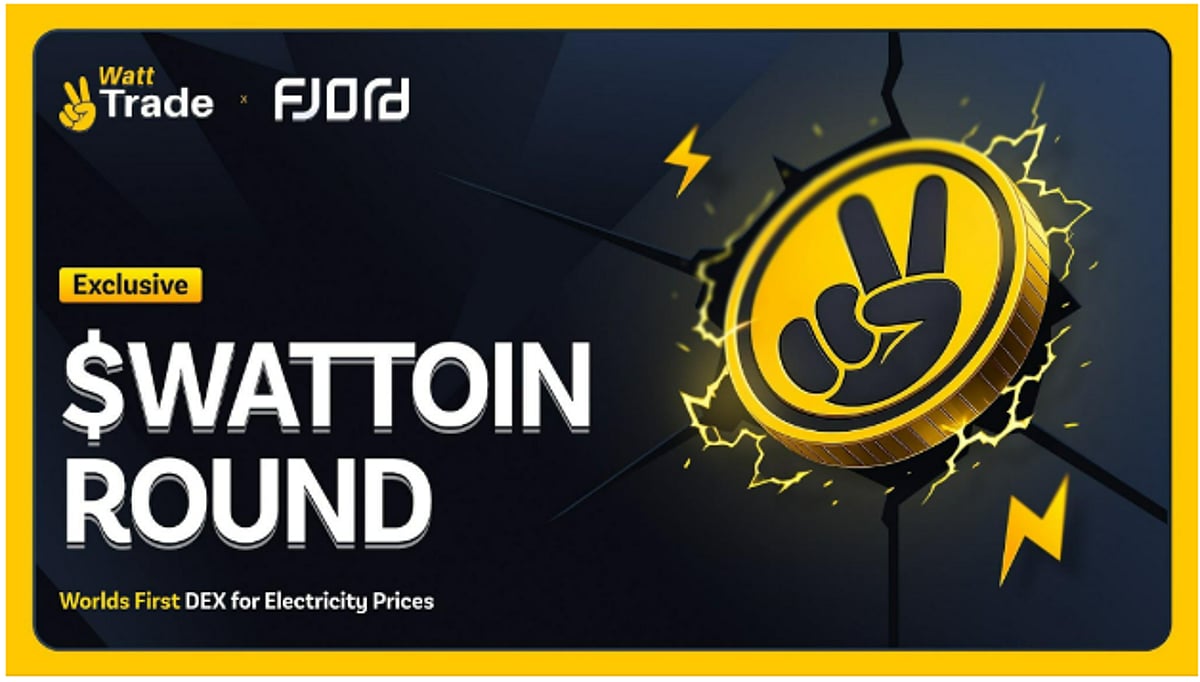
    Watt2Trade, a blockchain-based platform for electricity markets, has announced that its native utility token, $WATTOIN, is now available for a limited time on Fjord Foundry at a reduced price. The company’s community presale, already running at presale.watt2trade.com, will continue once the Fjord Foundry window closes.

    The firm secured $1.55 million in earlier equity financing. Its platform currently boasts over 257,000 unique wallets, and decentralized exchange liquidity stands at $850,000.

    Platform & Token Utility

    Watt2Trade applies blockchain infrastructure to electricity markets that operate 24/7 globally. Its marketplace aims to broaden participation and improve market efficiency. $WATTOIN unlocks benefits including discounted trading fees, staking rewards, and governance rights. Community presale purchases will be delivered after the token generation event via a vesting contract.

    Leadership & Recognition

    Founder and CEO Carlos Aurelio Hernández González also serves as President of COPARMEX’s National Energy Commission in Mexico. He has been recognized among the Top 100 leaders in Mexico’s energy sector for two consecutive years. The project was named among the Top 100 in Paris Blockchain Week’s Start in Block program and was listed among the event’s real-world asset (RWA) initiatives.

    Fjord Foundry Round & Presale Details

    Participants in the community presale can buy $WATTOIN with POL, USDC, or USDT on Ethereum, Polygon, BNB Chain, Arbitrum, and Base. The Fjord Foundry sale is time-limited and priced below the current website stages. After it ends, the offering will revert exclusively to Watt2Trade’s website, with prices increasing as milestones are reached. Access the limited Fjord Foundry sale here (link placeholder).

    About Watt2Trade

    Watt2Trade DAO LLC is developing a decentralized exchange for electricity prices, enabling users to access market data and trading via blockchain and smart contracts. $WATTOIN is the platform’s native utility token. Founded in 2023 by a Mexican team, Watt2Trade publishes further details at watt2trade.com, with the community presale at presale.watt2trade.com.

    Media Contact:
    Watt2Trade Communications
    Email: malu@watt2trade.com

    Disclaimer: This release is for informational purposes. It does not constitute an offer to sell, or a solicitation of an offer to buy, any securities or tokens. Token sales may be restricted in certain jurisdictions. Digital assets involve risk, including the possible loss of principal.

  • Top Cross-Chain DEXs for Crypto Swaps in 2026: Platform Comparison and Guide

    Top Cross-Chain DEXs for Crypto Swaps in 2026: Platform Comparison and Guide

    Cross-chain decentralized exchanges (DEXs) have transformed how users swap tokens across different blockchains in 2026. Instead of juggling multiple bridges, wallets, and exchanges, these platforms aggregate liquidity from dozens of sources and automatically select the best route for speed, cost, and price. This guide compares the leading cross-chain DEXs, their strengths, supported networks, security considerations, and ideal use cases for every type of trader.

    Key Takeaways

    • LI.FI offers the best overall cross-chain swap experience with smart routing across 30+ blockchains.
    • deBridge stands out for fast transactions and low-slippage cross-chain transfers.
    • THORChain remains the top choice for native Bitcoin swaps without wrapped assets.
    • Across Protocol excels within the Ethereum ecosystem, especially Layer-2 networks.
    • Symbiosis Finance delivers a simple multi-chain swap experience.

    LI.FI – Best Overall Cross-Chain DEX

    LI.FI has become a trusted name in cross-chain swaps. It supports more than 30 blockchain networks and integrates multiple bridges and decentralized exchanges into one platform. Rather than forcing users to compare services manually, LI.FI automatically checks numerous routes and selects the optimal balance of speed, cost, and price. This saves time and money, especially when moving assets between Ethereum, Base, Arbitrum, Polygon, BNB Chain, Solana, and other popular networks. A clear fee display appears before each transaction, so users know the expected cost upfront. Because LI.FI relies on third-party bridges for execution, transaction quality can vary based on the bridge handling it. Nevertheless, its broad blockchain support and reliable routing make it the strongest all-round choice in 2026.

    deBridge – Fastest Cross-Chain Transfers

    Speed is critical when crypto prices fluctuate by the minute. deBridge supports more than 26 blockchain networks and focuses on rapid execution with low slippage. Many swaps between Ethereum Virtual Machine (EVM) chains complete in under two minutes. It also supports Solana, offering greater flexibility than many competitors. For traders who move funds between chains several times daily, this speed provides a significant advantage.

    THORChain – Native Asset Swaps Without Wrapping

    THORChain continues to attract users who prioritize true cross-chain decentralization. Unlike many platforms that require wrapped tokens, THORChain enables native asset swaps directly. Users can exchange Bitcoin for Ethereum or other supported assets without converting them into wrapped versions. It supports Bitcoin, Ethereum, Binance Coin, Avalanche, Dogecoin, and Litecoin. This approach reduces reliance on wrapped assets and gives users more control over their funds. A trade-off exists: during periods of high market activity, transaction fees may increase. Despite this, THORChain remains the leading choice for native Bitcoin swaps and decentralized liquidity.

    Across Protocol – Best for Ethereum Layer-2

    Across Protocol has built a strong reputation for transfers within the Ethereum ecosystem, particularly for Layer-2 networks such as Base, Arbitrum, and Optimism. Its relayer-based system speeds up transactions while keeping fees low, improving capital efficiency and reducing wait times. Across Protocol focuses on doing one job exceptionally well: anyone regularly transferring assets between Ethereum and its Layer-2 networks will likely find it one of the fastest and most affordable options available in 2026.

    Symbiosis Finance – Simplicity Across Chains

    Symbiosis Finance prioritizes convenience. Users can exchange almost any supported token for another on a different blockchain without dealing with separate bridge steps. It supports more than 30 blockchain networks across both EVM and selected non-EVM ecosystems. The entire process is simplified, making it attractive for those who value ease of use. Route performance varies depending on the blockchain and liquidity source, but Symbiosis Finance remains a practical option for users seeking simplicity.

    Other Notable Platforms

    1inch continues to dominate the EVM ecosystem with its advanced Pathfinder routing system. It searches multiple liquidity sources to select the best trading path, typically yielding better prices and lower slippage. However, its native support outside EVM networks remains limited.

    Jupiter remains the top DEX for the Solana blockchain, offering excellent liquidity and competitive pricing for Solana-based assets. Cross-chain features rely on external integrations, but its performance within Solana is among the best.

    Rango Exchange appeals to experienced users who need access to many chains. It supports over 70 blockchains by combining numerous bridges and DEXs. Its interface includes many advanced options, which may overwhelm beginners, but power users appreciate the flexibility.

    Security Considerations

    Cross-chain technology has advanced but still carries risks. Bridges are common targets for hackers in decentralized finance, so users should research reputable protocols with proven security records. It is essential to understand which bridges rely on third parties and to test small amounts before making large transactions. Always verify the bridge provider and consider performing a trial transfer first.

    Final Thoughts

    Cross-chain crypto swaps have become much faster and easier in 2026. Users no longer need to switch between several platforms to move assets from one blockchain to another. Modern cross-chain DEXs automate most of the work while searching for better prices, lower fees, and faster routes. LI.FI stands out as the best overall platform for its smart routing and support for over 30 networks. deBridge is the first choice for speed. THORChain leads native Bitcoin swaps. Across Protocol dominates Ethereum Layer-2 transfers, while Symbiosis Finance offers a simple experience across many networks. Jupiter remains the leader for Solana users, and Rango Exchange provides unmatched blockchain coverage for advanced traders.

    Frequently Asked Questions

    1. What is a cross-chain DEX?

    A cross-chain DEX allows users to swap crypto assets between different blockchains without using a centralized exchange.

    2. Which cross-chain DEX is the best in 2026?

    LI.FI is widely considered the best overall option due to its broad blockchain support and intelligent route optimization.

    3. Which platform offers the fastest cross-chain swaps?

    deBridge is known for very fast transaction settlement, with many transfers completing in under two minutes.

    4. Which DEX is best for native Bitcoin swaps?

    THORChain is the leading platform for native Bitcoin swaps since it does not require wrapped BTC.

    5. Is it safe to use cross-chain DEXs?

    Well-established platforms are generally safer, but users should always verify the bridge provider and test small amounts before making large transfers.

  • Top 10 Crypto Swap Platforms to Watch in July 2026

    Top 10 Crypto Swap Platforms to Watch in July 2026

    Crypto swaps have become one of the easiest ways to exchange digital assets. Instead of sending funds to a centralized exchange, users can connect a wallet and trade directly through a decentralized platform. This process saves time, gives users full control of their assets, and opens access to thousands of cryptocurrencies across different blockchain networks.

    By July 2026, many swap platforms offer much more than simple token exchanges. They help users find better prices, reduce trading costs, protect against common attacks, and even move assets between different blockchains. However, each platform serves a different purpose. Some focus on the lowest fees, while others deliver better security or stronger cross-chain support.

    Here are the ten best crypto swap platforms in July 2026 and what makes each one stand out.

    Uniswap Leads the Market

    Uniswap continues to hold the top position among crypto swap platforms. It remains the first choice for millions of users because of its deep liquidity and huge collection of supported tokens. The platform works on Ethereum as well as major Layer 2 networks, which gives users more flexibility and lower costs compared to the Ethereum main network. Its latest improvements make trades smoother and more efficient. Whether someone wants to exchange popular cryptocurrencies or newly launched tokens, Uniswap usually offers enough liquidity to complete the trade without major price changes. The only drawback appears during periods of heavy Ethereum network traffic, when gas fees can become expensive.

    1inch Finds Better Prices

    1inch has built its reputation as one of the best DEX aggregators in the crypto market. Instead of completing a trade on one exchange, it searches across many decentralized exchanges and selects the most cost-effective route. This smart routing system often helps users receive better prices while reducing slippage. It also includes protection against Maximal Extractable Value (MEV), which can affect trade quality. Although the interface offers many advanced options, experienced traders appreciate the extra control and price efficiency.

    CoW Swap Focuses on Trade Protection

    CoW Swap takes a different approach from most swap platforms. Rather than sending every trade directly to the blockchain, it groups multiple orders together through batch auctions. This process helps reduce front-running and sandwich attacks, two common problems in decentralized finance. Large traders often choose CoW Swap because of this extra protection. While it may not support every token pair at every moment, the platform delivers reliable trade execution with strong security features.

    Jupiter Rules the Solana Ecosystem

    Jupiter has become the leading swap platform on the Solana blockchain. It connects users with the best liquidity across many Solana-based decentralized exchanges and completes trades within seconds. The platform also keeps transaction fees extremely low, which makes it attractive for both small and large trades. Anyone who mainly uses Solana-based assets will find Jupiter one of the fastest and most efficient choices available today.

    PancakeSwap Offers Low-Cost Trading

    PancakeSwap remains the biggest decentralized exchange on BNB Chain. Over time, it has expanded to support Ethereum, Base, Arbitrum, and several other blockchain networks. The platform combines token swaps with staking, yield farming, and perpetual trading, which creates a complete DeFi ecosystem. Low transaction fees continue to attract users, especially those who want affordable trading. Liquidity may vary on some smaller networks, but PancakeSwap stays among the strongest platforms in the market.

    ParaSwap Delivers Smart Trade Execution

    ParaSwap focuses on efficient trade execution through smart order routing. Like other aggregators, it compares prices across multiple liquidity sources before choosing the best route for each transaction. This feature becomes especially useful for larger trades where even small price differences matter. Developers also value ParaSwap because of its strong API support, which allows many decentralized applications to integrate its trading services. Although its community remains smaller than 1inch, the platform continues to earn trust among advanced users.

    LI.FI Simplifies Cross-Chain Swaps

    LI.FI has become one of the top choices for users who need to move assets between different blockchain networks. Instead of using separate bridge and swap services, LI.FI combines both tasks into one transaction. This simple process saves time and reduces unnecessary steps. The platform supports dozens of blockchain networks, which gives users access to a wide range of crypto ecosystems. Since cross-chain transfers depend on bridges, users should always understand the extra risks that come with moving assets across networks.

    SushiSwap Stays a Reliable Choice

    SushiSwap has remained an important part of decentralized finance for several years. The platform now supports more than 25 blockchain networks, which gives users access to a large selection of cryptocurrencies. Its community-led governance model continues to attract loyal supporters who value decentralization. Although liquidity may not match Uniswap on every network, SushiSwap still provides dependable trading across many popular blockchains.

    Curve Finance Excels at Stablecoin Swaps

    Curve Finance serves a specialized role in the crypto market. Instead of focusing on every type of cryptocurrency, it concentrates on stablecoins and liquid staking tokens. This design allows Curve to deliver extremely low slippage, even during large transactions. Many DeFi users depend on Curve whenever they need to exchange stable assets while keeping price changes to a minimum. For volatile cryptocurrencies, however, other platforms usually offer better results.

    THORChain Connects Native Assets

    THORChain stands out because it allows users to swap native cryptocurrencies without wrapped tokens. This means Bitcoin, Ethereum, BNB, Cosmos, and several other assets can move directly between blockchains. This feature removes the need for wrapped versions of popular coins and gives users greater control over their assets. Cross-chain swaps can become more complex than standard token exchanges, and liquidity may change depending on the asset. Even so, THORChain remains one of the strongest options for decentralized cross-chain trading.

    Why This Matters

    Crypto swap platforms have become essential for anyone participating in decentralized finance, enabling fast, secure, and self-custodied asset exchanges without intermediaries. Choosing the right platform can reduce costs, improve execution prices, strengthen security, and simplify cross-chain transactions, helping traders and investors maximize efficiency while minimizing risks in an increasingly competitive crypto ecosystem.

    Final Thoughts

    In July 2026, the crypto swap sector had grown increasingly sophisticated. Digital currency trading platforms now cater to market segments, focusing on their strengths, instead of trying to meet every customer’s needs, as was the trend in the past. Uniswap remains the leader with its ample liquidity and extensive token availability, while 1inch helps optimize trading prices. CoW Swap provides protection from MEV attacks, while Jupiter is the leader in the Solana ecosystem, PancakeSwap offers low fees for crypto exchanges on BNB Chain, and ParaSwap ensures efficient crypto swap execution for big transactions.

    LI.FI and THORChain are the best solutions for those looking for cross-chain transactions. SushiSwap is a stable multi-chain solution that is great for any transaction, while Curve Finance continues to be the number one provider of stablecoin swaps with very low slippage rates.

    Choosing the right platform is essential for better trading results. While some traders want to get the most profitable price, others prefer enhanced security, lower transaction fees, or more chains supported.

    FAQs

    1. What is a crypto swap platform?

    A crypto swap platform lets users exchange one cryptocurrency for another directly from their wallet without relying on a centralized exchange.

    2. Which crypto swap platform is best in July 2026?

    Uniswap ranks as the best overall platform because of its deep liquidity, wide token support, and reliable trading experience.

    3. Which platform offers the best cross-chain swaps?

    LI.FI and THORChain are among the best choices for users who want to swap assets across different blockchain networks.

    4. Which platform is best for stablecoin swaps?

    Curve Finance is the leading option for stablecoin swaps because it delivers very low slippage, even for large transactions.

    5. Is it safe to use decentralized crypto swap platforms?

    Well-known platforms such as Uniswap, 1inch, PancakeSwap, and Curve Finance have strong reputations, but users should always verify wallet connections and review transaction details before confirming any swap.

  • Founders Fund-Backed N1 Acquires 01 Exchange to Challenge Crypto Exchange Leaders

    Founders Fund-Backed N1 Acquires 01 Exchange to Challenge Crypto Exchange Leaders

    N1, a Layer 1 blockchain supported by Founders Fund, has announced the acquisition of 01 Exchange, a decentralized derivatives platform originally built on N1’s trading infrastructure. The move signals N1’s ambition to compete directly with established cryptocurrency exchange giants.

    01 Exchange, which was incubated within the N1 ecosystem, has processed over $3 billion in trading volume and attracted more than 25,000 users. Under the acquisition agreement, the exchange’s application layer, trading product, market structure expertise, and community will become part of N1’s broader network strategy.

    Rather than relying primarily on independent third-party applications to drive ecosystem activity, N1 is bringing its infrastructure, liquidity, and flagship trading product under a single network. The company says this approach is designed to align product development, distribution, and network economics more closely while reducing the fragmentation that has historically existed across many Layer 1 ecosystems.

    “01 Exchange has already shown what is possible on N1, and bringing it into the network lets us move faster, deepen liquidity, and deliver a more integrated trading experience,” said Dima Romanov, CEO and co-founder of N1. “With N1 2.0, our next version, we’re expanding that foundation across RFQ markets, vaults, equities, mobile, and other on-chain financial products. We believe vertically integrated networks will define the next generation of exchanges, and N1 is being built to lead that shift.”

    The acquisition comes ahead of the N1 2.0 upgrade, the next major version of the network. The upgrade is planned to introduce deeper liquidity, request-for-quote (RFQ) markets, vaults, equities, and additional on-chain financial products. N1 also plans to launch native applications for iOS and Android, extending access to its trading infrastructure through a mobile experience.

    Existing 01 Exchange users will not be required to migrate assets as part of the transition. The exchange will continue operating under the N1 brand, with the new version expected to be deployed without requiring any user migration. Points earned before the N1 launch will continue to be recognized.

    The transaction is expected to close within the next six months, while the operational transition will begin immediately. The deal is expected to be structured entirely in equity and tokens.

    About N1

    N1 is a Layer 1 blockchain with unrestricted scale and ultra-low latency. Designed to support next-generation crypto apps, it features horizontal scalability, sub-ms latency, and ultra-high throughput. Every app operates in its own isolated environment, resulting in zero state congestion.

    Disclaimer: This article is provided for informational purposes and does not constitute investment advice. Cryptocurrencies mentioned may be risky and could result in financial loss. Always conduct your own research before making any investments.

  • Solana Unified Trading Interface Teaser Drives Market Buzz as Network Breaks Activity Records

    Solana Unified Trading Interface Teaser Drives Market Buzz as Network Breaks Activity Records

    The Solana community is buzzing after a teaser from @jtx_trade hinted at a unified trading interface that would aggregate all markets on the blockchain. While the post lacked technical specifics, traders quickly speculated about potential shifts in liquidity and trading dynamics. The broader crypto market remains sideways, but Solana’s underlying network metrics continue to strengthen as the community awaits official details.

    Trading Surface Teaser Ignites Speculation

    The announcement suggests Solana is developing a single trading interface covering all blockchain markets, aiming to simplify access and improve efficiency. However, with no launch window or feature specifications revealed, traders are holding off on major moves. Reported trading volume has flatlined, reflecting a wait-and-see approach. Beyond the platform tease, Solana is expanding into stablecoins, AI-driven payments, and other decentralized applications, with the Solana Foundation leading discussions on stablecoins in emerging markets.

    Network Activity Hits New Milestones

    Solana achieved a historic milestone: weekly non-vote transactions exceeded one billion for the first time, excluding validator consensus votes and representing genuine user activity, dApp interactions, and trading operations. Active wallet addresses surged from 16.8 million to 29.7 million in two weeks—a 76.8% increase. Solana also ranked first among Layer 1 and Layer 2 blockchains in both 24-hour and seven-day DApp revenue, and led decentralized exchange volume across those periods. It secured second place globally in total trading activity for the second consecutive week, processing $12.25 billion across centralized and decentralized exchanges, surpassing Bybit’s $10.57 billion.

    Technical Outlook: Support and Targets

    Crypto analyst Michaël van de Poppe noted that Solana has returned to its established trading range, with a modest pullback possible before an upward move. He identified $75–$77 as critical support; holding that zone could open a path toward $100 and potentially $120. SOL is trading above its 20-day, 50-day, and 100-day moving averages, and the MACD histogram remains bullish. However, momentum has cooled after a 15% gain the prior week.

    What’s Next for Solana?

    With a unified trading interface teased alongside record-breaking network activity and growing ecosystem adoption, Solana remains in the spotlight. Rising active wallets and leading DEX volumes, combined with bullish technical signals, have traders focused on the next platform update to gauge future momentum.