Tag: Decision Intelligence

  • How to Build a Decision-Centered Business Intelligence Strategy That Delivers Results

    How to Build a Decision-Centered Business Intelligence Strategy That Delivers Results

    A strong Business Intelligence (BI) strategy connects trusted data, clear metrics, semantic models, AI, and governance directly to business decisions. This approach helps companies improve accuracy, speed, insight, and measurable results. Without a decision-centric focus, even the most sophisticated BI program can produce hundreds of charts yet leave leaders without clear answers.

    Start with Business Decisions

    A practical BI strategy begins with the decisions that affect revenue, costs, risk, customers, and operations. Each major decision needs a clear owner, a defined time frame, reliable data, useful metrics, an action path, and a way to measure the outcome. For example, a sales forecast gains real value when a business leader uses it to set targets, adjust a market plan, or reallocate resources. This approach transforms BI from a report factory into a decision system. Gartner’s 2026 research confirms that analytics value depends on defined, governed, and operational decisions rather than insight alone.

    Put Data Quality First

    AI cannot repair weak source data. BARC’s 2026 Data, BI and Analytics Trend Monitor, based on responses from 1,579 professionals worldwide, ranks data quality at the top of its trend list. Data security and privacy follow closely at 7.9 out of 10. A reliable BI foundation requires accurate records, clear ownership, secure access, fresh data, strong definitions, and data lineage. These controls become even more critical when AI tools access large amounts of corporate information. Poor source data can spread errors across reports, forecasts, recommendations, and automated decisions.

    Create One Business Definition

    Different teams often use the same term for different measures. Revenue, active customer, churn, margin, and forecast can each have several definitions. A semantic layer brings these definitions together through common business terms, data fields, rules, relationships, and approved metrics. Gartner’s 2026 research identifies composite semantic layers as an important direction for data and analytics, helping reduce gaps between data systems and providing stronger context for accurate AI agent results. Major BI platforms now reflect this shift: Microsoft’s June 2026 Power BI update added Fabric Apps for semantic models, and Tableau’s August 2026 release included a Semantic Model Builder with AI tools.

    Add AI with Clear Guardrails

    Generative AI helps analysts ask questions in plain language, create measures, explain trends, and find patterns. AI agents can also support data workflows and routine analysis. However, these tools need clear limits, audit trails, access rules, human review, and measurable standards for accuracy. Gartner’s June 2026 outlook lists decision governance, AI governance, and agentic data streams among major trends. The firm forecasts that explicitly modeled business decisions could achieve five times higher trust and 80% faster execution than ungoverned decisions by 2029.

    Measure Business Value

    A BI strategy needs measures that connect analytics to business results. Dashboard counts offer little proof of value. Better measures include decision cycle time, forecast accuracy, data quality, use of approved metrics, time to insight, manual report hours removed, AI answer accuracy, and financial or operational results. A mature BI program shows a clear chain from trusted data to a metric, from the metric to a decision, from the decision to an action, and from the action to a measurable result.

    Build a Decision-Centered BI Model

    The modern BI model goes beyond reports and dashboards. A stronger structure connects business goals with decisions, governed metrics, semantic models, trusted data, AI tools, and measurable outcomes. Real-time data adds value when decision speed matters, and embedded analytics places useful insights inside daily business workflows. The latest research points to one clear lesson: AI can expand the reach of analytics, but trusted data and clear business definitions remain the foundation. A strong BI strategy gains value when technology serves specific business decisions and each major insight has a clear path to action.

    Frequently Asked Questions

    1. What is Business Intelligence strategy?
    Business Intelligence strategy is a structured approach that connects business goals, trusted data, analytics, technology, and decision-making.

    2. Why does data quality matter in BI?
    Poor data can create inaccurate reports, forecasts, and AI results, while reliable data supports better analysis and stronger decisions.

    3. What is a semantic layer in BI?
    A semantic layer creates shared definitions, relationships, rules, and metrics so different teams can work with consistent business information.

    4. How does AI affect Business Intelligence?
    AI can help analyze data, answer questions, explain trends, create measures, and support analytical workflows, but strong governance and reliable data remain essential.

    5. How can companies measure BI success?
    Companies can assess decision speed, forecast accuracy, data quality, time to insight, AI accuracy, report efficiency, and measurable financial or operational results.

  • AI in Logistics: Maersk’s Resham Sahi on Moving from Visibility to Decision Intelligence

    AI in Logistics: Maersk’s Resham Sahi on Moving from Visibility to Decision Intelligence

    Artificial intelligence is reshaping the logistics industry, helping organizations move beyond reactive supply chain management toward intelligent, connected, and data-driven operations. As global trade becomes increasingly complex amid geopolitical uncertainty, demand volatility, and evolving customer expectations, AI is enabling businesses to make faster, more informed decisions that improve resilience, efficiency, and operational agility.

    The convergence of AI with Digital Twins, predictive analytics, cloud computing, Internet of Things (IoT), and intelligent Control Towers is creating a new generation of supply chains capable of anticipating disruptions before they occur. From demand forecasting and inventory optimization to real-time shipment visibility, network simulation, and proactive risk management, these technologies are helping organizations optimize every stage of planning, execution, and fulfillment while reducing operational costs and improving customer outcomes.

    Industry leaders believe the future of logistics lies in connected intelligence, where data flows seamlessly across transportation, warehousing, customs, and fulfillment. By integrating AI-powered insights with digital infrastructure, businesses can move beyond monitoring operations to predicting challenges, automating decisions, and building supply chains that are both resilient and future-ready.

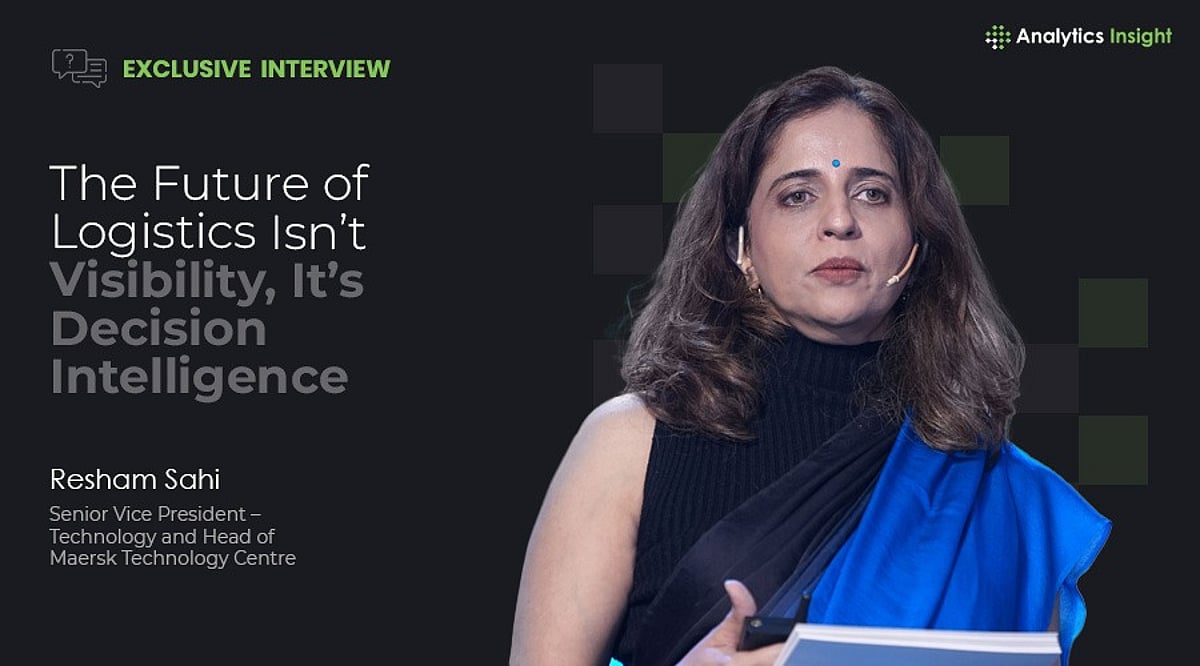
    In an exclusive interview with Analytics Insight, Resham Sahi, Senior Vice President – Technology and Head of Maersk Technology Centre, Bangalore, discusses how AI, Digital Twins, predictive analytics, cloud technologies, and intelligent logistics solutions are transforming global supply chains, strengthening operational resilience, and helping Indian businesses build smarter, more connected logistics ecosystems.

    From Visibility to Decision Intelligence

    According to Sahi, the notable trend is that companies are moving from visibility to decision intelligence. “In today’s environment of demand volatility, geopolitical uncertainty, and evolving trade patterns, resilience increasingly determines how quickly organizations can turn operational data into informed decisions. Companies can generate significant volumes of operational data through their supply chains; however, real value lies in translating data into actionable insights that enable improved planning and execution.”

    Through AI, companies are becoming better at forecasting demand, optimizing inventory, improving ETA, and managing exceptions. For example, Digital Twins allow companies to test different scenarios and assess how operational decisions may affect transportation, warehousing, and inventory positioning before changes are implemented in the physical supply chain. Using AI, Digital Twins can predict certain disruptions before they occur, helping make more informed decisions while reducing operational risk.

    “The true value comes through integration,” Sahi emphasized. “According to our recent Trade Momentum APAC research, although 74% of companies have operationalized their AI capabilities, only 47% have integrated it with their trade compliance and customs platforms, suggesting that many companies still keep their digital initiatives separate.”

    Maersk believes in the connected intelligence future, where decision intelligence will be built across the entire process of planning, execution, and fulfillment.

    AI-Powered Control Towers

    The function of Control Towers is moving from providing visibility to enabling intelligence, helping organizations move from simply monitoring supply chains to making better decisions. “In today’s environment, it is not enough to know the location of a shipment; it is more valuable to be aware of possible risks and implications and to be able to make a decision based on that information,” Sahi said.

    AI-powered Control Towers deliver this by connecting data from all sources—transportation, warehousing, customs, IoT assets, and enterprise systems—into a single view. This information is constantly analyzed through AI, identifying exceptions, forecasting delays, and proposing the optimal next step for operations, such as changing the route, reallocating inventory, or adjusting warehouse capacity.

    “The real value of a Control Tower lies not in aggregating more data, but in enabling faster, more confident decisions across the supply chain,” Sahi noted. By bringing together operational insights in real time, organizations can respond proactively to disruptions instead of reacting after they occur.

    Digital Twins for Smarter Network Optimization

    One of the most significant advantages of Digital Twins is that they can help make better decisions before any changes to the physical logistics network. This is even more important when reacting to disruptions yet to be encountered. For example, using weather data, Digital Twins can identify several vessel berthing options at ports and recommend the best scenarios for maximizing operational efficiency.

    “With increasing interconnectivity within our logistics network, we require more confidence in our decisions when it comes to logistics such as inventory positioning, transportation flows and warehouse capacity, and Digital Twins allow us to do scenario planning in a virtual environment,” Sahi explained.

    Digital Twins can be transformed from being merely simulation tools into intelligent decision support systems once integrated with AI and operational data. Organizations will be able to run different scenarios of the network, optimize asset use, and spot potential bottlenecks before they affect operations. In line with this, Gartner predicts that by 2027, more than 40% of large enterprises will combine simulation, Digital Twins, and AI to optimize operational processes.

    Building Future-Ready Supply Chains in India

    The rising importance of India in international manufacturing is contributing to the increasing requirement for intelligent and interconnected supply chains. As per the Economic Survey 2025-26, Manufacturing GVA increased by 7.72% in Q1 and 9.13% in Q2 of FY26, highlighting the country’s industrial strength. As businesses diversify supply chains and expand their participation in global value chains, logistics is becoming a strategic enabler of growth rather than simply a support function.

    At Maersk, the company is helping customers connect transportation, warehousing, customs, and fulfillment through integrated digital solutions. AI, cloud, and IoT strengthen that connected ecosystem by improving visibility, planning, and execution across the logistics journey. Cloud-based platforms enable customers to unify transportation, warehousing, customs, and fulfillment into one cohesive digital platform, making faster, better decisions possible.

    “AI represents a once-in-an-era shift that can tackle complex problems, provide faster insights, enable proactive, data-driven decisions, and drive effective execution,” Sahi said. “We are putting AI to use by streamlining how frontline teams serve customers by reducing complexity, redesigning workflows, and improving customer access to insights.”

    At the end of the day, Maersk’s focus is on helping customers build connected and resilient supply chains by integrating data across every stage of the logistics journey, rather than optimizing individual functions in isolation. This will help both Maersk and its customers improve cost efficiency, reliability, and outcomes.

  • AI Trends CEOs Must Track Before 2030: Agentic AI, Governance, and Strategy

    AI Trends CEOs Must Track Before 2030: Agentic AI, Governance, and Strategy

    Artificial intelligence has entered a new phase. From being an emerging technology to the very core of modern companies’ operations, the transition is happening rapidly. In any industry, discussions within the boardrooms have progressed from ‘Should we use AI?’ to ‘How should we implement AI and what business value do we see in it?’

    It’s not a matter of implementing chatbots or automating tasks anymore. Companies are now looking to invest in technologies capable of making decisions, predicting, optimizing processes, and transforming customer experiences. The next several years will show which companies manage to remain leaders in their fields amid growing competition and AI regulations.

    If you want to stay at the top and understand the technologies shaping your company’s future over the next decade, here are the AI trends to watch.

    AI Trends Transforming Business Operations

    These technologies are changing how organizations operate day to day, enabling faster decision-making, greater efficiency, and smarter execution across core business functions.

    Agentic AI Will Automate Complex Workflows

    The next generation of AI is moving beyond just answering prompts. Agentic AI systems can independently plan, execute, and monitor tasks across departments with minimal human involvement. Instead of waiting around, they can juggle procurement workflows, coordinate customer support, and handle financial reporting too, all in one flow. Autonomous AI agents are expected to become digital co-workers that handle increasingly sophisticated business functions, even when people are not actively watching or checking every step.

    AI-First Enterprises Will Gain a Competitive Edge

    AI is no longer seen as just another software application; it is now being used to rethink business processes. AI is now becoming a key component in decision-making, consumer engagement, and innovation practices. Businesses that adopt AI throughout their value chain will be better equipped to cope with changes in the market environment.

    Decision Intelligence Will Transform Leadership

    Corporate executives today increasingly rely on AI-driven analytics to bypass the usual reporting systems. Advanced AI platforms today can analyze large datasets, spot emerging threats, forecast demand, and recommend actions in real time. Using those technologies can help leadership make faster, evidence-based decisions and boost resilience in wobbly, uncertain business conditions.

    Hyperautomation Will Be Adopted in All Enterprises

    Automation processes aren’t only for small, trivial tasks anymore. With artificial intelligence, robotic process automation, and other intelligent process approaches, companies can automate things like finance, human resources, manufacturing, and customer support functions. It is expected that hyperautomation will bring costs down and tighten consistency so employees can shift attention to adding more value, rather than being stuck on repetitive routines.

    AI Trends Shaping Long-Term Business Strategy

    Beyond the day-to-day operational wins, these emerging trends should affect how businesses manage risk, build trust, cultivate talent, and keep a real competitive edge in the AI-driven economy.

    Workplaces of Future Will See Humans and AI Working Together

    It is expected that artificial intelligence will help people sharpen their job performance. Intelligent machines would take on repetitive chores, while humans can focus on creativity, critical thinking, and more human-to-human interpersonal relations. In this setup, the emphasis would swing toward employee reskilling, AI literacy, and broader organizational change, so adoption doesn’t feel like a sudden wall.

    Responsible AI Will Become an Imperative for Businesses

    With governments tightening rules about the use of AI in business and with consumers demanding greater transparency from businesses, responsible AI has emerged as an imperative. CEOs will have to develop governance models that address data privacy, bias mitigation, accountability, and ethical deployment. Good governance not only helps avoid regulatory risk but also improves customer and investor confidence.

    Businesses Will Move to Enterprise-Owned AI Infrastructure

    Many organizations are reconsidering the extent of their reliance on publicly available AI systems for running important business processes. There is a trend towards investing in private AI models, secure cloud infrastructure, and proprietary databases to safeguard intellectual property rights and improve cybersecurity.

    Measuring AI Returns Will Separate Leaders from Followers

    In the coming wave of AI adoption, there will be much less emphasis on experimentation and much more on implementation outcomes. The shareholders and the board of directors are demanding evidence of growth in revenue, productivity, client satisfaction, and efficiency resulting from the investment in artificial intelligence. Corporations that can measure performance metrics and evaluate the value of AI implementation within their companies will have a strong chance of remaining profitable in the future.

    Nowadays, artificial intelligence is not just another technology fad, it is the core of the company’s strategy. Corporations that can create autonomy and accountability, restructure their workforce, and make decisions based on the analysis are expected to lead the following decade. For CEOs, implementing AI technology is not enough; what really matters is building a company ready to adapt to this innovation. Those who act before 2030 will have an excellent chance of survival amid disruption.

  • 7 AI Trends Reshaping Enterprise Strategy in 2026: From Pilots to Full-Scale Operations

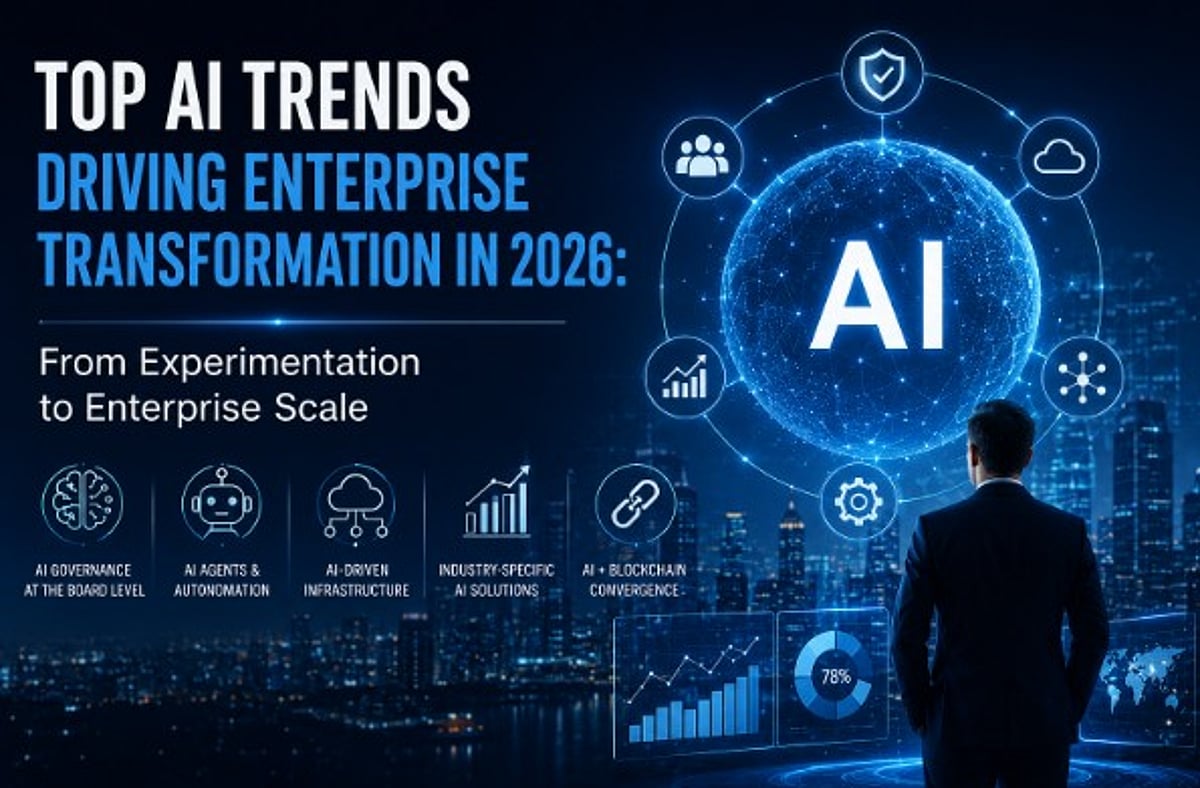
    7 AI Trends Reshaping Enterprise Strategy in 2026: From Pilots to Full-Scale Operations

    Artificial Intelligence is entering a phase of enterprise adoption. Over the past few years, organizations have invested heavily in AI pilots, generative AI tools, and automation initiatives to explore how emerging technologies can improve business performance. While many of these projects demonstrated results, relatively few have delivered transformation at scale. As a result, the conversation surrounding AI is rapidly evolving from experimentation toward operationalization.

    According to McKinsey’s latest State of AI report, more than 70% of organizations have adopted AI in at least one business function. Gartner predicts that over 80% of enterprises will have used generative AI APIs or deployed generative AI-enabled applications by 2026. These figures indicate that AI adoption is no longer limited to innovators and early adopters. It is rapidly becoming a priority across industries.

    However, adoption alone does not guarantee business value. Many organizations continue to struggle with deployments, disconnected data environments, and unclear transformation strategies. The challenge facing enterprise leaders in 2026 is no longer whether AI works. The challenge is how to scale AI across the organization while maintaining governance, security, and measurable outcomes.

    The organizations that succeed in this phase of AI transformation will not necessarily be those with access to the most advanced models. Instead, they will be those aligning AI capabilities with business objectives, operational processes, and long-term transformation strategies.

    The Economic Opportunity Behind Enterprise AI

    The scale of AI’s potential is one of the primary reasons enterprises continue increasing investments despite ongoing implementation challenges. According to PwC’s Global AI Study, AI could contribute up to $15.7 trillion to the economy by 2030, making it one of the most transformative technologies of the modern era.

    What makes AI particularly powerful is its ability to generate value across multiple business functions simultaneously. Organizations are increasingly using AI to:

    • Improve operational efficiency and productivity
    • Enhance customer experiences through personalization
    • Accelerate product and service innovation
    • Strengthen decision-making capabilities
    • Identify new revenue opportunities

    Unlike previous waves of enterprise technology, AI is not confined to a single department. It has the potential to influence every aspect of business operations. This is why leading enterprises are shifting their focus from use cases toward enterprise-wide AI strategies.

    Trend #1: Enterprise AI Is Moving Beyond Pilot Projects

    The first phase of enterprise AI adoption was characterized by experimentation. Organizations launched customer service chatbots, automated document processing systems, predictive analytics platforms, and internal productivity assistants to explore AI’s capabilities. These initiatives often generated positive results but remained isolated within individual departments.

    Typical characteristics of AI initiatives between 2023 and 2024 included department-level deployments, limited integration with business operations, experimentation-focused objectives, unclear ROI measurement frameworks, and minimal governance oversight. As organizations move into 2026, priorities are changing significantly. Enterprise AI programs are increasingly characterized by organization-wide adoption strategies, cross-functional integration, outcome-driven implementation plans, governance and accountability frameworks, and executive-level sponsorship.

    This shift mirrors the evolution of cloud computing. Early cloud initiatives focused primarily on infrastructure optimization. Today, cloud serves as the foundation for digital business models. AI is following a similar trajectory. Business leaders are no longer asking whether AI can improve productivity. Instead, they are asking how AI can reshape operations, accelerate innovation, and create sustainable competitive advantages.

    Trend #2: AI Agents Will Become Operational Participants

    One of the most significant developments expected to shape enterprise transformation in 2026 is the emergence of AI agents. While most organizations are already familiar with AI copilots that assist employees with writing, coding, research, and knowledge retrieval, AI agents represent a more advanced stage of intelligent automation. Unlike copilots, AI agents are capable of performing tasks autonomously and coordinating activities across multiple systems.

    A procurement-focused AI agent, for example, may be able to monitor inventory levels in real time, analyze supplier performance data, forecast purchasing requirements, generate procurement recommendations, and initiate approval workflows automatically. Similarly, customer service agents can retrieve information from CRM systems, access knowledge repositories, respond to routine customer inquiries, and escalate complex issues when human intervention becomes necessary.

    According to Deloitte’s State of Generative AI in the Enterprise report, organizations are increasingly prioritizing AI initiatives that generate measurable operational outcomes rather than simply improving individual productivity. This trend reflects a broader shift in enterprise expectations: AI is no longer viewed solely as a productivity tool but as an operational capability capable of transforming how business processes are executed.

    Trend #3: AI Infrastructure Will Matter More Than AI Models

    Much of the public discussion surrounding AI has focused on models. Organizations frequently compare proprietary and open-source models, evaluate benchmark performance, and debate the advantages of different architectures. However, many enterprises are discovering that model selection is only a small part of the challenge. In practice, infrastructure is becoming more important than the model itself.

    Modern enterprise AI environments typically require data pipelines and integration layers, vector databases and knowledge repositories, governance and compliance frameworks, security and access management systems, model monitoring and observability tools, and MLOps and deployment pipelines. Without these foundational capabilities, even the most advanced AI models struggle to deliver sustainable business value.

    Many organizations encounter challenges when attempting to scale successful pilot projects. Data often resides across multiple disconnected systems, legacy applications create integration barriers, and security requirements introduce deployment constraints. These issues cannot be solved simply by choosing a different model. This reality explains why AI transformation is increasingly viewed as an architecture challenge rather than a model challenge. The organizations that invest in scalable AI infrastructure today will be better positioned to deploy new capabilities, integrate future technologies, and maintain long-term operational resilience.

    Trend #4: Decision Intelligence Will Replace Traditional Analytics

    For decades, business intelligence platforms have helped organizations understand historical performance. These systems provide visibility into trends, metrics, and operational outcomes, allowing leaders to evaluate what happened in the past. However, modern enterprises increasingly require systems that go beyond reporting.

    Decision intelligence is emerging as the next evolution of enterprise analytics by combining artificial intelligence, predictive modeling, business rules, and automation to support real-time decision-making. Rather than answering “What happened?”, decision intelligence focuses on “What is likely to happen next?” and “What should we do about it?”

    This capability is already creating value across multiple industries: retail (optimizing inventory allocation and pricing strategies), manufacturing (predicting equipment failures before they occur), financial services (identifying emerging risks and compliance concerns), logistics (dynamically adjusting operations based on demand patterns), and healthcare (improving resource planning and patient scheduling).

    A global logistics provider, for instance, handles thousands of shipments every day. Traditional analytics can only tell you that a delay happened after it occurred. Decision intelligence systems can predict disruptions before they happen, suggest ways to mitigate them, and automatically switch to a backup plan. This change helps organizations make decisions proactively rather than reacting to events that have already occurred.

    Trend #5: AI Governance Will Become a Board-Level Priority

    As AI is used more extensively in business functions, governance is becoming essential for long-term success. Early AI projects were often managed by innovation teams or technical departments. Now that AI is being used on a larger scale, executive leaders and corporate boards need to be involved. The reason is simple: AI is no longer for testing. It affects how customers interact with companies, financial decisions, compliance processes, and daily operations. As AI’s impact grows, so do the risks related to privacy, security, transparency, and accountability.

    According to IBM’s Global AI Adoption Index, trust is a barrier to using AI in businesses. Companies are realizing that successful AI implementation requires more than technical performance; it also needs confidence that AI systems work responsibly and transparently. Forward-looking companies are investing in governance frameworks that include ensuring AI system transparency, accountability, risk management, trust-building, policy establishment, oversight committees, and ethics guidelines.

    What makes governance particularly important in 2026 is the growing complexity of AI ecosystems. As organizations deploy multiple models, integrate external data sources, and introduce autonomous AI agents, maintaining visibility and control becomes increasingly challenging. Rather than viewing governance as a barrier to innovation, leading organizations treat it as a foundation for sustainable AI adoption.

    Trend #6: Industry-Specific AI Solutions Will Outperform Generic Deployments

    As companies become more adept at using AI, they are moving away from one-size-fits-all solutions and toward AI tailored to their specific industry. While the underlying AI technology remains important, the most effective solutions are those designed for a particular sector.

    Financial institutions focus heavily on risk analysis, fraud detection, regulatory compliance automation, and customer intelligence. Manufacturers prioritize predictive maintenance, quality assurance automation, and supply chain optimization. Healthcare organizations invest in clinical decision support systems, patient engagement platforms, and medical data analysis tools. The same pattern is emerging across retail, logistics, insurance, telecommunications, and energy.

    This shift reflects an important reality: AI generates the strongest business outcomes when it is closely aligned with operational objectives and industry-specific workflows. As a result, organizations are increasingly seeking partners capable of combining technical expertise with deep industry understanding.

    Trend #7: The Convergence of AI and Blockchain

    Although AI and blockchain are often discussed as separate technologies, their convergence is creating new opportunities for enterprise innovation. AI excels at generating intelligence from data; blockchain excels at establishing trust, transparency, and immutability.

    Together, these technologies can support a range of high-value enterprise applications, including supply chain transparency and traceability, decentralized digital identity systems, automated compliance reporting, secure data-sharing ecosystems, and smart contract optimization.

    Consider a global supply chain network involving manufacturers, logistics providers, distributors, and retailers. AI can analyze operational data to identify inefficiencies, forecast demand, and optimize inventory management. Blockchain can simultaneously provide an immutable record of transactions and product movements across the network. The combination creates a system that is both intelligent and trustworthy.

    As enterprises become increasingly dependent on automated decision-making, trust will become a critical competitive differentiator. This is one reason why many organizations are beginning to explore how AI and blockchain can work together as complementary technologies rather than independent initiatives.

    Why Many AI Initiatives Still Fail

    Despite significant investment and technological progress, many companies still struggle to make AI work across the entire organization. McKinsey research reveals a large gap between experimenting with AI and achieving true proficiency. One major reason is poor data quality. AI systems are only as good as the data they receive, and companies often underestimate the work required to clean and organize data before AI can deliver valuable insights.

    Another problem is the misconception that technology alone is the answer. Companies that start with AI as the solution rather than understanding the problem they need to solve often fail to demonstrate tangible results. Common barriers include disorganized data, unclear objectives, lack of executive support, organizational resistance, disconnected technology stacks, and insufficient governance.

    Perhaps the most overlooked factor is managing the human side of change. AI affects people as much as technology. Employees must learn new workflows, managers must make decisions differently, and companies must adapt their operating models. Without proper change management, even technically successful AI initiatives may not be adopted by the organization.

    Mini Case Study: From Forecasting to Autonomous Decision-Making

    A compelling example of AI evolution comes from the logistics industry. A few years ago, logistics companies used AI to predict delivery times. These systems helped with planning but were disconnected, requiring humans to interpret results and take action. Today, modern logistics systems can do much more: predict delivery times in real time, find optimal routes, handle problems automatically, track inventory, and allocate resources efficiently.

    Instead of merely warning about potential issues, these systems can suggest solutions and initiate processes autonomously. For instance, if a storm threatens a major shipping route, a traditional system would alert managers after delays begin. An AI-powered system, however, can predict the problem, recommend an alternative route, estimate cost implications, and activate a contingency plan before any disruption occurs.

    This example illustrates a broader trend across industries: the future of AI is not just about generating more information but about enabling better decisions and faster action.

    Conclusion: The Path to Enterprise AI Maturity

    The evolution of enterprise AI from 2024 to 2026 represents a fundamental shift in priorities. Organizations are moving away from isolated experiments and toward integrated, scalable, and governed AI systems. The seven trends outlined above—moving beyond pilots, adopting AI agents, prioritizing infrastructure, embracing decision intelligence, elevating governance, pursuing industry-specific solutions, and converging with blockchain—provide a roadmap for enterprises seeking to capture the full value of AI.

    The organizations that will thrive in this new era are those that treat AI not as a technology project but as a strategic transformation initiative. By aligning AI capabilities with business goals, investing in foundational infrastructure, and fostering a culture of responsible innovation, enterprises can turn AI from a promising experiment into a powerful engine for growth.