Tag: decision-making

  • How Free Online Games Influence Your Psychology and Real-Money Gambling Habits

    How Free Online Games Influence Your Psychology and Real-Money Gambling Habits

    Millions of people spin reels and play hands online every day without spending a penny. That sounds harmless – and usually it is. But the psychology behind free casino games is more complicated than most players realize, and it can quietly shape how, when, and why you gamble for real money. Here’s what actually happens in your head when you play for free.

    Why Free Casino Games Feel So Rewarding

    Free casino games are engineered to be satisfying. Every spin, card, and roll triggers the same brain chemistry as paid play, because your brain responds to anticipation and outcome, not to the size of your stake. When you hit a bonus round on a free slot, you get a genuine dopamine hit.

    That reward loop matters more than people think. Researchers call this “intermittent reinforcement” – unpredictable wins keep us engaged far longer than steady, predictable ones. It’s the same mechanism that makes checking your phone so compulsive. Free games deliver this loop in its purest form: no losses to slow you down, no budget to think about, just constant, frictionless reward.

    There’s also a skill illusion. Many players believe free-play sessions teach them strategy, whether for blackjack, roulette, or poker. For games of pure chance, that belief is false – but it feels true, and that feeling carries over when real money enters the picture.

    How Free Play Shapes Real-Money Decisions

    The habits you build in free games don’t stay in free games. Behavioral psychologists have found that repeated practice, even in simulated environments, creates mental shortcuts that surface later in real situations.

    Consider what a typical free-play session trains you to do:

    • Spin rapidly without pausing to consider each decision;
    • Chase near-misses, which the brain processes almost like wins;
    • Treat big wins as proof of personal skill rather than luck;
    • Ignore session length, since there’s no money draining away.

    When players who’ve logged hundreds of free hours switch to real-money play, these shortcuts come with them. The pace quickens, the stakes feel abstract, and the session limits that felt irrelevant before suddenly matter a lot. Anyone curious about how this transition feels in practice can explore the options available through Valter Casino Online Login, where free and real-money modes sit side by side.

    Who Feels the Pull Most Strongly

    Not every player responds to free games in the same way. The psychological hooks land hardest on certain groups. Research on gambling behavior suggests that younger players, people under financial pressure, and anyone who already enjoys risk-taking are more susceptible to the confidence inflation that free play encourages. Social players matter too: when free games are shared in group chats or played alongside friends, the competitive streak adds another layer of motivation to keep going, win, and eventually prove yourself with real stakes.

    Where Free Play Slips Into Risk

    Not everyone who enjoys free games develops a problem — far from it. But certain patterns deserve honest attention. The risk isn’t the free play itself; it’s what free play can normalize.

    When the Session Never Ends

    Free games remove the natural stopping point that losing money creates. Players who’d never gamble for three straight hours with real cash routinely do exactly that in free mode. That endurance then becomes their baseline expectation.

    When Free Wins Inflate Confidence

    A lucky streak on free slots convinces many players they’ve “cracked” a game. That overconfidence is one of the strongest predictors of heavy early losses in real-money play, because it encourages bigger opening bets than a cautious player would make.

    When the Switch Feels Smaller Than It Is

    Moving from free chips to a deposit is psychologically tiny — one tap, in many cases. The games look identical, the mechanics are identical, and only the consequences have changed. That smoothness is exactly the point, and exactly the danger.

    Practical Ways to Keep Free Play Healthy

    Free casino games can stay an enjoyable, genuinely free pastime. It takes a little structure, not willpower. Here’s a sensible approach:

    • Set a time limit before you start, not after you notice an hour has passed.
    • Treat free-play wins as entertainment, never as evidence of skill.
    • If you move to real-money play, decide your budget before your first deposit and stop when it’s gone.
    • Take regular breaks — at least five minutes every half hour.
    • Keep gambling and free play in separate mental boxes, with different rules for each.

    Free online casino games are a legitimate form of entertainment with real psychological effects. They teach pace, shape expectations, and can quietly blur the boundary between fun and habit. Play them with awareness — enjoy the buzz, respect the mechanics, and decide your limits yourself rather than letting the games decide them for you.
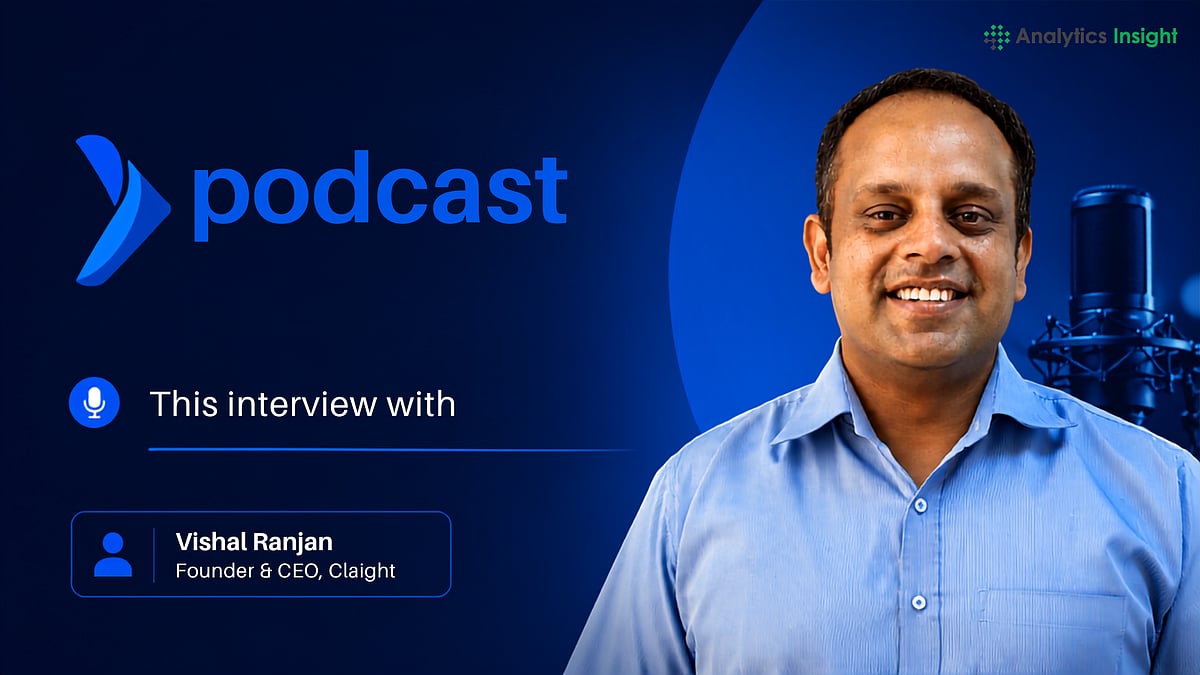

  • From Data to Decisions: Claight CEO Vishal Ranjan on Unlocking Actionable Business Insights

    From Data to Decisions: Claight CEO Vishal Ranjan on Unlocking Actionable Business Insights

    In a recent episode of the Analytics Insight Podcast, host Priya Diyalani sat down with Vishal Ranjan, Founder and CEO of Claight, to explore why so many organizations remain data-rich yet insight-poor despite massive investments in AI, analytics, and digital transformation. The conversation cut through the hype to reveal the critical differences between raw data, information, intelligence, and actionable insights—and why dashboards alone rarely drive business success.

    The Data Paradox

    “Organizations today generate more data than ever before,” Ranjan noted. “Dashboards, reports, KPIs, AI tools, and analytics platforms have become standard. Yet many business leaders still struggle to answer simple questions: Why did sales decline? Where are we losing revenue? What action should we take next?”

    This paradox—being data-rich but insight-poor—is at the heart of Claight’s mission. Ranjan, whose background is in sales at a large FMCG company, experienced the problem firsthand. “I had access to huge volumes of market research, customer surveys, demand forecasts, and sales reports. The problem wasn’t lack of data. The challenge was understanding what to actually do with that information,” he explained.

    Bridging the Gap Between Data and Action

    Claight was founded to bridge the gap between data, intelligence, and decision-making. “Everyone could see that a market was expected to grow by 30 or 40 percent, but very few people could translate that into clear business actions,” Ranjan said. “We wanted to help businesses move beyond reports and actually use data to drive growth.”

    He outlined a clear hierarchy: Data tells you what happened. Intelligence explains why it happened. Insights tell you what action to take next. “Unfortunately, many organizations stop at the dashboard. They invest heavily in analytics but never transform that information into practical business decisions. That’s why executives often rely on instinct instead of data when making important decisions.”

    Real-World Example: From Raw Data to Actionable Insight

    Ranjan illustrated the concept with a client case. “One of our clients had years of procurement and import-export data. That was raw data. Once we cleaned and organized it into trends, it became information. Next, we analyzed why certain countries had become major suppliers while others had become expensive due to policy changes. That became intelligence. Finally, we recommended alternative sourcing countries that could reduce procurement costs. That recommendation became an actionable insight because it directly influenced business decisions.”

    The biggest value, he emphasized, isn’t in owning data—it’s in knowing what action that data should drive.

    Why Data Silos Persist Despite Digital Transformation

    When asked why data silos still exist after years of digital transformation, Ranjan pointed to organizational behavior rather than technology. “Sales teams have their own dashboards. Finance has its own systems. Procurement works independently. Operations manage completely different datasets. Each department is optimizing for its own goals, so while every team has accurate information, nobody has a complete business picture.”

    He argued that digital transformation successfully digitized departments, but the next challenge is connecting those departments to create one unified source of truth. “That’s more of a cultural transformation than a technical one.”

    Three Barriers to Turning Data into Business Value

    Ranjan summarized the biggest barriers with three words: Trust, Context, and Speed.

    • Trust: If leaders don’t trust the numbers, they won’t use them. One conflicting report is often enough to make executives rely on intuition.
    • Context: A dashboard may show sales dropped by 10%, but it rarely explains why or what should happen next. Without context, numbers create more questions than answers.
    • Speed: Markets move fast. If analysis takes six weeks, the business environment may have already changed. Data must be timely enough to support decisions before opportunities disappear.

    Measuring Data Investments the Right Way

    Many organizations measure the wrong metrics, Ranjan cautioned. “They count dashboard logins, platform usage, reports generated, data stored. None of those prove business success.” Instead, companies should ask: Are we making decisions faster? Are our forecasts becoming more accurate? Are we responding to market changes quicker than before? Are we improving revenue, profitability, or customer satisfaction?

    “When data directly improves business outcomes, it stops being an IT expense. It becomes a strategic business asset,” he concluded.

    For the full discussion, including more insights on how to build a data-driven culture, listeners can access the complete episode of the Analytics Insight Podcast.

  • Harvard Business School Online: Data Science and AI for Strategic Decision Making

    Harvard Business School Online: Data Science and AI for Strategic Decision Making

    Harvard Business School Online has launched a self-paced course designed for business professionals who want to leverage data science, artificial intelligence, and analytics to make evidence-based decisions. Participants gain hands-on experience with AI tools, large language models (LLMs), and data modeling to translate insights into strategic business outcomes.

    What You’ll Learn in This Course

    This course enables learners to:

    • Build a business-focused understanding of data science, machine learning, and generative AI.
    • Understand generative AI systems, large language models (LLMs), and prompt engineering to apply them responsibly.
    • Use LLM-powered analytical tools like Julius to explore, build, and validate data models.
    • Apply unsupervised and supervised learning techniques for pattern recognition, segmentation, and forecasting.
    • Translate data analysis into actionable strategic business decisions and design evidence-based experiments.

    Accessibility and Value

    The self-paced online course requires 20 to 30 hours of study time, allowing students to choose their own schedule. For a fee of $1,850, participants receive both a Certificate of Completion and access to practical business-oriented AI training. The course teaches essential skills through a combination of real-world AI applications, data science methodology, and decision-making strategies.

    Comprehensive Curriculum

    • Foundations of Data Science: The scientific principles of data science establish fundamental concepts that serve as the foundation for analytical methods and data modeling techniques.
    • AI and Machine Learning in Business: The field of AI and machine learning research develops applications for business use through generative AI technology and LLM systems.
    • Experimentation and Strategy: Business experiments require design through experimentation, and companies should base their decisions on collected evidence.
    • Data Modeling Tools: The LLM-based platform Julius provides analytical capabilities and validation functions for data modeling.
    • Applied Business Projects: The applied business projects program requires students to work on practical tasks that demonstrate how AI knowledge can be used to make important business decisions.

    Eligibility Criteria

    • Intermediate-level understanding of business, data analysis, or statistics.
    • Basic familiarity with data-driven decision-making and technology tools.

    What Makes This Course Stand Out?

    Harvard Business School Online offers a distinct educational experience that integrates practical AI and data science applications into business strategy development. The program provides students with practical training in generative AI, LLMs, and analytical tools, enabling them to transform data insights into business solutions. The program uses real projects to help students learn practical skills they can immediately use in their work.

    Final Thoughts

    The course teaches professionals how to use data science and AI for their business decision-making processes. Participants learn to develop real-world skills in analytics, experimentation, and evidence-based strategy through their work with AI tools, data modeling, and business applications.

  • Mastering Strategic Refusal: How Top Entrepreneurs Use ‘No’ to Drive Business Growth

    Mastering Strategic Refusal: How Top Entrepreneurs Use ‘No’ to Drive Business Growth

    Successful entrepreneurs know that every yes has a cost. A new project, a fresh deal, or a quick request can take time, money, and focus away from the main goal. Great leaders learn that a strong no can protect their vision and help their companies move in the right direction.

    A clear no does not show weakness. It shows control, confidence, and a deep sense of purpose. Many top entrepreneurs refuse ideas that do not match their plans. This choice helps them save resources for tasks that create real value.

    For example, a founder may reject a partnership that looks attractive at first but does not support the company’s long-term goals. This decision may seem hard, yet it keeps the team focused on work that matters most.

    No Protects Time and Focus

    For entrepreneurs time is probably the most precious resource that they have. Skilled business owners understand how important it is to make every hour count, thus they don’t let minor disruptions dominate their everyday work.

    Saying no helps entrepreneurs to maintain their schedule. They avoid pointless meetings and useless deals and tasks that will not bring them much benefit, thus being able to concentrate on important clients, products and decisions.

    Numerous efficient leaders have strict principles connected with time management. They choose only the activities that correspond to their priority tasks and get rid of unimportant activities, thus being able to reach their goals in a quicker way and have more control over their companies.

    No Helps Create Better Products

    Great products often come from strong choices. Entrepreneurs must decide what features, services, or ideas deserve attention. A company cannot support every suggestion that reaches its door.

    A smart no helps a business improve quality. When founders remove extra features or avoid rushed changes, they give their teams space to improve the main product. This focus helps companies deliver better results for their customers.

    For instance, a technology company may refuse to add many new features at once. Instead, the team may focus on making one core feature simple and reliable. This decision can create a stronger product that earns customer trust.

    No Builds Strong Leadership

    Strong leaders understand that approval from everyone is not the goal. A successful entrepreneur must make choices that support the company’s future, even when some people disagree.

    A firm no can show a team that the leader has clear standards. Employees often respect leaders who make thoughtful decisions and protect company values. Clear limits also help teams understand what deserves attention.

    Good leaders do not reject ideas without thought. They listen, study the facts, and make careful choices. A no with a clear reason can teach teams how to think with greater care.

    No Helps Avoid Bad Opportunities

    Every entrepreneur faces chances that look exciting. Some offers promise fast results but create problems later. Successful business owners learn to check every opportunity before they accept it.

    A careful no can prevent financial loss, wasted effort, and poor choices. Many companies fail to reach their goals when they chase too many directions at the same time. Focus creates a stronger path than constant change.

    Entrepreneurs who master the power of no understand that every opportunity does not deserve attention. They choose quality over quantity and protect the future of their brand.

    No Creates Space for Growth

    Growth does not come only from adding more tasks, products, or goals. Sometimes growth comes from removing what does not help the business. A strong no creates room for better ideas and smarter plans.

    Successful entrepreneurs review their actions and remove weak habits. They stop projects that no longer support their mission. They leave old methods behind when new solutions offer better results.

    This mindset allows companies to adapt without losing their main purpose. A focused business can respond to change with confidence and maintain steady progress.

    Why This Matters

    The power of no helps entrepreneurs make smarter choices and protect their business goals. Clear decisions allow leaders to focus on valuable opportunities, avoid unnecessary risks, and build stronger companies. Learning when to refuse can improve productivity, strengthen leadership, and create a better path toward long-term business success.

    The Power of Saying No With Respect

    A negative answer can be communicated politely. A person can turn down a proposition without being disrespectful towards the party making the suggestion. A tactful ‘no’ might do good to the future relations between business partners.

    Successful managers know how to say ‘no’ while being honest and caring. They articulate their reasons behind the refusal and show appreciation for the individual whom they are dealing with. Power of no allows entrepreneurs to make wise decisions. It saves time and helps them make better decisions, improve products and achieve long-term success.

    Frequently Asked Questions

    1. Why is saying no important for entrepreneurs? Saying no helps entrepreneurs focus on important goals and avoid distractions that can reduce business progress.
    2. Does saying no harm business relationships? A respectful no can protect relationships when entrepreneurs explain decisions with honesty and care.
    3. How does saying ‘no’ improve business growth? Saying ‘no’ helps companies save resources, maintain focus, and invest more time and effort in opportunities that deliver greater value.
    4. Should entrepreneurs reject every new opportunity? Entrepreneurs should review each opportunity carefully and accept only those that match their business vision.
    5. How can leaders say no effectively? Leaders can say no clearly, politely, and with a valid reason that shows thoughtful decision-making.
  • 10 Essential CEO Playbooks for Navigating Economic Uncertainty

    10 Essential CEO Playbooks for Navigating Economic Uncertainty

    Economic uncertainty has become a defining feature of today’s business environment. From persistent inflation and geopolitical conflicts to supply chain disruptions and rapid technological change, companies are operating in a landscape where volatility is the norm rather than the exception. For CEOs, the challenge is no longer limited to protecting profits; it is about making confident decisions, keeping stakeholders reassured, and ensuring the business remains resilient through uncertain times.

    History shows that organizations with disciplined leadership often emerge stronger from economic slowdowns. While every crisis is different, successful CEOs tend to follow similar principles: they safeguard finances, communicate openly, invest wisely, and stay focused on long-term goals. These playbooks can help business leaders navigate uncertainty without losing momentum.

    Why This Matters

    Economic uncertainty puts every leadership decision under the microscope. CEOs who balance financial discipline, strategic planning, transparent communication, and innovation are better equipped to protect their organizations while creating opportunities for sustainable growth.

    10 CEO Playbooks for Uncertain Times

    Trying to steer through an unpredictable economy is not just about quick fixes. It’s a mix of steadier choices and sharper adjustments over time. These leadership approaches, tested in the real world, can help CEOs build resilience, deal with constant shifts, and gear their organizations toward longer-term success.

    1. Build a Strong Financial Cushion — Cash still counts as one of the most valuable assets when things get shaky. CEOs who protect liquidity, improve cash flow, and trim avoidable spending buy time, allowing the organization to handle interruptions while still being able to invest when fresh opportunities pop up.
    2. Focus on the Part of Business That Matters Most — During economic slowdowns, not every initiative deserves the same level of focus. Strong leaders put resources behind their best products, services, and markets, improving efficiency while keeping sustainable profitability in view.
    3. Keep Communication Clear and Consistent — Employees, investors, suppliers, and customers look to leadership for direction, especially when things get hard. Regular, transparent communication helps lower uncertainty, build trust, and align stakeholders around the company’s priorities.
    4. Cut Costs with Purpose, Not Panic — Trimming spending doesn’t automatically mean cutting off future growth. The best CEOs eliminate waste while preserving resources for innovation, digital transformation, cybersecurity, and customer experience — investments that strengthen long-term competitiveness.
    5. Get Ready for Different Economic Versions — No forecast can nail every market shift. When leadership prepares best-case, moderate, and worst-case scenarios, they can respond quickly and with confidence, avoiding reactive mode whenever conditions change.
    6. Speed Up Decisions, Then Follow Through — In unstable markets, waiting around can be expensive. CEOs who empower business leaders, shrink bureaucracy, and encourage quicker decision-making help organizations adapt smoothly to changing customer needs and market realities.
    7. Continue Investing in Talent — People remain a company’s biggest competitive strength. Even when the economy slows, investing in leadership growth, skill building, and careful hiring keeps know-how on hand and prepares everyone for the next expansion phase.
    8. Stay Close to Customers — When things feel uncertain, consumer patterns can shift rapidly. Companies that actively seek customer feedback and respond to evolving needs protect loyalty and spot fresh growth paths instead of just waiting around.
    9. Use Technology to Solve Business Problems — Artificial intelligence and automation should back business goals, not just chase trends. CEOs who invest in tech with clear results can boost day-to-day efficiency, productivity, forecasting accuracy, and customer experience.
    10. Lead with the Future as a Baseline — Resilient CEOs treat downturns as openings to strengthen their organizations. They modernize how work gets done, reinforce culture, and make planned investments that fit the long game, so performance is stronger when economic conditions eventually turn around.

    The Bottom Line

    Economic uncertainty is unavoidable, but how strong leaders handle it can determine how well an organization gets through. The best CEOs mix disciplined financial management with strategic insight, stay open with stakeholders, and keep funding people and new ideas even when times are rough. In this unpredictable work environment, resilience isn’t just about surviving a downturn — it’s a measure of how quickly a leader can adjust, inspire confidence, and shape an organization to flourish once the next growth phase begins.

  • 6 Powerful Leadership Lessons from the World’s Most Innovative CEOs

    6 Powerful Leadership Lessons from the World’s Most Innovative CEOs

    Great leaders build lasting success by embracing learning, customer focus, and thoughtful decision-making every single day. Innovation flourishes when leaders stay patient, communicate openly, and inspire teams through uncertainty and change together. Authentic leadership and calculated risk-taking help businesses adapt, grow, and remain competitive across evolving global industries.

    Behind every iconic company is a leader who made a difficult call when it mattered most. Some challenged decades-old business models, while others rebuilt companies that had lost direction. Their stories are different, but the lessons they leave behind are surprisingly similar.

    Inside the Leadership Playbooks of Innovation Pioneers

    Whether you run a business, manage a team, or are just starting your career, these six leadership lessons are as relevant in a small office as they are in a global boardroom:

    Satya Nadella: Never Stop Learning

    When Satya Nadella became Microsoft’s CEO in 2014, the company was seen as a technology giant that had lost some of its edge. Rather than chasing quick wins, he changed the company’s culture. Employees were encouraged to ask questions, learn new skills, and work together instead of competing with one another. That shift helped Microsoft regain its momentum in cloud computing and artificial intelligence. Nadella’s biggest lesson is that people and businesses grow only when learning becomes part of everyday work. A leader who believes they already know everything usually stops moving forward.

    Jeff Bezos: Listen to Customers, Not the Noise

    Businesses often spend too much time watching competitors. Jeff Bezos took a different route. At Amazon, every major decision started with one question: What does the customer need? That mindset led to services like Prime, faster deliveries, and a shopping experience built around convenience. Markets change quickly, but customers always value businesses that solve real problems. Leaders who keep that focus rarely lose sight of what matters.

    Jensen Huang: Patience is a Competitive Advantage

    In the present day, NVIDIA has become synonymous with the AI revolution. However, before the emergence of artificial intelligence as the major story of technology, NVIDIA’s founder, Jensen Huang, was betting on the hardware that was going to make AI possible. At that time, those bets appeared to be quite risky. They have turned out to be essential for the company’s success. The example of Huang shows that sometimes, it does not pay off to focus only on profitable choices.

    Brian Chesky: People Remember How You Lead in a Crisis

    As a result of the pandemic, Airbnb was forced to make the most difficult decisions in its corporate life since global travel was put on hold. The CEO of the company, Brian Chesky, was required to make many hard choices, such as letting thousands of people go. What made him special, however, is not the decisions he made, but the way he made them. He openly discussed all his actions, admitted their consequences, and treated the ones who were fired decently.

    Tim Cook: Don’t Lead in Someone Else’s Shadow

    There may be few CEOs who have attracted as much criticism as Tim Cook, who replaced Steve Jobs at Apple. Rather than imitating Jobs, Cook did what he does best: improving efficiency, establishing global presence, and ensuring stability for Apple. The success of Tim Cook proves that being a leader means not being anyone else but yourself. The best leaders know who they are and capitalize on that instead of attempting to emulate others.

    Elon Musk: Big Ideas Demand Bold Decisions

    Electric cars were once considered a niche market. Reusable rockets sounded even more unrealistic. Elon Musk pushed ahead with both despite criticism, delays, and financial pressure. Not every risk pays off, but avoiding risk rarely changes an industry. Musk’s career underlines an important truth: innovation belongs to people who are willing to test ideas, accept setbacks, and keep going when others would stop.

    The Takeaway

    Leadership has no fixed formula. Every CEO has a different personality, management style, and way of making decisions. Yet the best leaders share a few common traits. They stay curious, earn people’s trust, think beyond the next quarter, and are willing to make difficult choices when the situation demands it. Technology will continue to evolve, and industries will keep changing. These leadership lessons, however, are unlikely to go out of date.

  • Top CEO Productivity Habits: Routines That Drive Peak Performance

    Top CEO Productivity Habits: Routines That Drive Peak Performance

    Highly successful CEOs don’t rely on longer work hours—they rely on smarter habits. Discover the productivity routines of leaders like Tim Cook, Jeff Bezos, Bill Gates, Satya Nadella, and Elon Musk, and learn practical strategies to improve focus, decision-making, energy, and long-term leadership performance.

    Start Before the Day Starts

    The most consistent trait across productive CEOs is protecting their mornings from emails and other people’s agendas. Apple’s Tim Cook is famously up at 3:45 AM, reading customer feedback before the workday begins. Jeff Bezos takes the opposite approach but achieves the same effect: he allows himself unstructured morning time for family, reading, and thinking before any scheduled demands, deliberately avoiding early meetings to preserve peak cognitive energy for high-stakes decisions later. Harvard Business Review research found that 72% of top executives structure their mornings around rituals matching their personal strengths. This distinction matters enormously at scale, where a CEO’s first two hours of clarity can be worth more than the rest of the day combined.

    Guard Time Like Capital

    Successful CEOs guard their time fiercely in a world of endless emails, Slack messages, and meetings. Bill Gates famously carves out “Think Weeks” twice a year—isolating himself completely to read, reflect, and think strategically without interruption. Mark Zuckerberg and Jack Dorsey both schedule no-meeting days specifically to protect deep work time. Elon Musk divides his day into five-minute time blocks rather than hour-based calendar slots, a scheduling approach that eliminates dead time between tasks. The underlying principle is consistent across all of them: time is non-renewable, meetings are expensive, and the ability to think deeply without interruption is increasingly rare and increasingly valuable.

    Make Smarter Decisions, Not More of Them

    Jeff Bezos follows a “two types of decisions” rule: irreversible, high-impact decisions deserve time and deliberation; reversible, low-risk ones should be made fast and moved past. Elon Musk applies first-principles thinking to strip decisions down to fundamental truths rather than convention. Steve Jobs famously reduced his wardrobe to a uniform to eliminate minor decision fatigue, preserving cognitive bandwidth for what mattered. The shared insight is that leaders who try to give every decision equal mental energy exhaust themselves on the small ones before reaching the important ones.

    Treat Physical Health as a Leadership Input

    Richard Branson once said exercise is the secret to doubling his productivity. Jeff Bezos has said improving his fitness directly supports complex decision-making and sustained focus. Satya Nadella commits to cardio four to five times a week as explicit preparation for the mental demands of leadership. The common thread isn’t athleticism; it’s the recognition that cognitive performance, decision stamina, and emotional regulation are all downstream of physical health. Leaders who treat the body as separate from professional performance tend to miss this compounding effect entirely.

    Never Stop Learning

    Warren Buffett spends 80% of his working day reading. Bill Gates reads roughly 50 books a year. Satya Nadella reads across technology, philosophy, and poetry, viewing cross-disciplinary thinking as a core input to Microsoft’s culture. The most productive CEOs treat learning not as something that happens in formal settings but as a daily habit, a consistent investment in the quality of their own thinking rather than a signal of idle time. Knowledge, like compound interest, builds most reliably when the deposits are small and consistent rather than large and occasional.

    Why This Matters

    Today’s business leaders face constant information overload, rapid technological change, and high-stakes decision-making. Strong productivity habits help executives protect their time, improve judgment, reduce burnout, and maintain consistent performance. Whether leading a global enterprise or a growing startup, adopting proven CEO routines can significantly enhance leadership effectiveness and long-term career success.

    Frequently Asked Questions

    What productivity habits do the world’s most successful CEOs have in common?

    Successful CEOs typically follow structured routines that prioritize deep work, strategic thinking, physical health, continuous learning, and disciplined time management. Rather than trying to maximize every minute, they focus on protecting their highest-energy hours, minimizing distractions, and making intentional decisions. These habits help improve productivity while reducing stress and decision fatigue over the long term.

    Why do many CEOs wake up early?

    Early mornings often provide uninterrupted time before meetings, emails, and daily responsibilities begin. CEOs like Tim Cook use this period for planning, reading, or reviewing priorities, while others prefer exercising or spending time with family. The real benefit isn’t simply waking up early but creating a consistent routine that supports focus and better decision-making throughout the day.

    How does time blocking improve executive productivity?

    Time blocking involves dividing the day into dedicated periods for specific activities instead of reacting to constant interruptions. Leaders like Elon Musk use structured schedules to minimize context switching and improve concentration. This method helps executives protect time for strategic work, reduce unnecessary meetings, and accomplish more without extending their working hours.

    How much do successful CEOs read every day?

    Many top executives dedicate significant time to reading books, reports, industry research, and business publications. Warren Buffett famously spends much of his day reading, while Bill Gates and Satya Nadella consistently invest time in learning across multiple disciplines. Regular reading expands knowledge, improves strategic thinking, and helps leaders stay informed about emerging technologies and market trends.

    What is decision fatigue, and how do CEOs reduce it?

    Decision fatigue occurs when the quality of decisions declines after making too many choices throughout the day. CEOs reduce it by automating routine decisions, simplifying daily habits, delegating lower-priority tasks, and reserving their mental energy for strategic business issues. This approach improves judgment while preventing unnecessary cognitive overload during busy workdays.

  • 10 Proven Leadership Strategies to Enhance Your Professional Impact

    10 Proven Leadership Strategies to Enhance Your Professional Impact

    Leadership is not defined by authority or title. In today’s fast-changing business environment—shaped by artificial intelligence, hybrid work models, and shifting employee expectations—effective leadership has become a dynamic art. Research consistently shows that interpersonal skills such as communication, emotional intelligence, adaptability, and strategic thinking are as critical as technical expertise. Emotionally intelligent leaders foster productive, team-oriented cultures and build stronger relationships. Whether you are a new manager, an entrepreneur, or a seasoned executive, honing these skills will sharpen your decision-making and amplify your influence.

    10 Strategies to Develop Your Leadership Skills

    Here are ten actionable ways to become a more effective leader, strengthen communication, improve decision-making, and build high-performing teams.

    1. Build Self-Awareness

    Self-awareness is the foundation of leadership. Understanding your strengths, weaknesses, values, and leadership style guides better decisions. Regular self-evaluation and seeking honest feedback help identify blind spots, boosting confidence and credibility. Self-awareness is the cornerstone of emotional intelligence and authentic leadership.

    2. Hone Communication Skills

    Clear communication creates harmony and trust within a team. A great leader articulates expectations, listens actively, encourages open dialogue, and delivers constructive feedback. Strong communication fosters collaboration across departments and prevents misunderstandings.

    3. Develop Emotional Intelligence

    Emotional intelligence (EQ) enables leaders to manage their own emotions and empathize with others. High-EQ leaders handle conflicts gracefully, motivate employees, and cultivate a positive work environment. Numerous studies confirm the direct link between EQ and leadership effectiveness.

    4. Learn to Delegate Effectively

    No leader can do everything alone. Delegating tasks based on team members’ strengths boosts productivity, develops their skills, and frees up your time for strategic thinking. Trusting your team with responsibility empowers them and builds ownership.

    5. Improve Decision-Making

    Leaders frequently face tough choices that affect their teams and organizations. Strong decision-makers evaluate data, weigh risks, consider multiple perspectives, and remain objective. Practice gathering diverse input before making high-stakes decisions.

    6. Pursue Continuous Education

    Leadership is a lifelong learning journey. Technological advances, market shifts, and workforce trends require constant updating. Read books, attend workshops, enroll in executive training, or seek mentorship to stay ahead.

    7. Set an Example

    Actions speak louder than words. Leaders who demonstrate integrity, accountability, professionalism, and resilience inspire their teams to follow suit. Consistent ethical behavior builds trust and reliability across the organization.

    8. Master Conflict Resolution

    Disagreements are inevitable in any workplace. An effective leader addresses conflicts early, remains objective, listens empathetically, and focuses on solutions. This preserves team harmony and strengthens relationships.

    9. Develop Your Team

    Investing in your team’s growth pays dividends. Mentoring, coaching, training, and recognizing achievements motivate employees and boost loyalty. Well-developed teams are more creative, productive, and engaged.

    10. Be Flexible

    Modern organizations face constant change from technology, economics, and global competition. Flexible leaders adapt quickly, innovate when necessary, and remain open to new strategies—even when old approaches fail.

    Conclusion

    Leadership is a continuous process, not a final destination. By cultivating self-awareness, emotional intelligence, communication, adaptability, and decision-making, leaders can build effective teams and drive business success. While leadership styles vary, they all share a common thread: commitment to self-development and the growth of others. Investing in leadership skills is one of the most valuable investments you can make in today’s world.

    Why This Matters

    Strong leadership leads to better teamwork, faster decision-making, higher employee engagement, and sustained business growth. Developing these skills helps professionals navigate change, inspire confidence, and deliver consistent results in any workplace.

  • Why Adaptive Leadership Is the Key to Business Survival in 2026

    Why Adaptive Leadership Is the Key to Business Survival in 2026

    Adaptive leadership has become a critical business capability in 2026 as organizations navigate AI disruption, economic uncertainty, workforce transformation, and rapidly changing market conditions. Unlike traditional leadership models that rely on fixed plans and hierarchical decision-making, adaptive leadership emphasizes learning, agility, trust, and informed judgment. Leaders who can respond effectively to evolving challenges, align teams during uncertainty, and make decisions with incomplete information are better positioned to drive long-term business success.

    Executive coaching programs are reporting a strange pattern this year. Leaders arrive wanting certainty: a clear answer, a fixed plan, a five-year strategy they can defend at the board level. Most of them leave wanting something different: a faster way to learn when the plan breaks. That shift, from certainty-seeking to learning-seeking, is the actual story behind adaptive leadership now.

    The term itself is not new. Ronald Heifetz and Marty Linsky developed adaptive leadership at Harvard decades ago, building on a specific distinction: technical problems have known solutions that you can delegate to an expert, while adaptive challenges require the people facing the problem to change how they think and work. What has changed is not the framework. It is how badly organizations are failing to apply it, at exactly the moment they need it most.

    The Problem Isn’t Information. It’s Attention.

    Most executives are not short on data now. They are short on the mental space to use it well. Research from Microsoft and the University of London found that constant digital interruptions can reduce effective IQ in the moment by 10 to 15 points, roughly equivalent to functioning on no sleep. Layer that onto a senior leader’s week and the math gets uncomfortable fast: Harvard Business School research shows executives spend up to 23 hours a week in meetings, and rate more than half of that time as low-value.

    This is not a productivity complaint. It is a leadership capability problem. Adaptive leadership depends on judgment, noticing what’s changed, naming the real problem before reaching for a familiar fix. That judgment requires attention; most leaders’ calendars are actively stripping away from them, one recurring meeting at a time.

    Why AI Is Exposing Leadership Gaps, Not Closing Them

    Half of CEOs reportedly believe their jobs are on the line if AI does not deliver a return, and companies plan to roughly double AI spending as a share of revenue this year. That pressure is producing a predictable but telling gap: frontline leaders are three times more likely than executives to express real concern about AI, according to DDI’s research; a readiness divide that stalls transformation precisely where it needs traction most, on the ground, not in the boardroom.

    As AI takes on more routine execution and analysis, the actual value a leader provides shifts upstream toward judgment, not authority. A better model does not rescue a leader who cannot adapt their thinking. They get exposed by one, faster than they would have been five years ago.

    What Adaptive Leadership Actually Requires

    Strip away the conference-circuit language, and the practical requirements are fairly specific. A 20,000-executive study from Wharton researchers identified six concrete skills that separate leaders who navigate uncertainty well from those who don’t: the ability to anticipate, challenge assumptions, interpret ambiguous signals, decide without full information, align people around a direction, and learn fast from what goes wrong.

    None of those six is about technology fluency. They are about judgment under incomplete information, which is precisely the skill traditional, hierarchy-based leadership models were never built to develop, because they assumed someone above you already had the answer.

    The Trust Gap Sitting Underneath All of This

    Adaptive leadership cannot function without trust, and current data suggests that trust is thin. Only one in ten employees believes their feedback ever leads to visible action, a gap that quietly tells teams their input doesn’t matter, regardless of what’s said in town halls. More than half of leaders globally report feeling “used up” by the end of an average day, and DDI’s research names this pattern “quiet cracking,” a slow erosion of motivation that looks fine on the surface until performance drops without warning.

    That combination of exhausted leaders, unconvinced employees, and AI pressure compounding both is the real 2026 leadership environment. Adaptive leadership is not a competitive advantage layered on top of business as usual. For a growing number of organizations, it is the only model left standing once the certainty-based one stops working.

    Why It Matters

    Organizations today are facing challenges that cannot be solved through traditional management practices alone. AI, shifting market conditions, changing workforce expectations, and global economic uncertainty require leaders to make decisions without having complete information. In this environment, the ability to learn quickly and adapt becomes more valuable than the ability to predict every outcome. Adaptive leadership helps businesses respond faster to emerging risks, identify opportunities earlier, and build stronger trust across teams. It encourages continuous learning, open communication, and greater organizational flexibility. Companies led by adaptive leaders are often better equipped to manage transformation initiatives, navigate disruption, and maintain employee engagement during periods of change.