Tag: deep learning

  • Deep Learning Cheat Sheet: Core Concepts, Architectures, and Tools for AI Practitioners

    Deep Learning Cheat Sheet: Core Concepts, Architectures, and Tools for AI Practitioners

    Deep learning has become the backbone of modern artificial intelligence, powering everything from image recognition and speech systems to generative AI and language models. For beginners, the field can seem overwhelming due to its technical jargon. Even seasoned professionals need a quick reference when navigating model development workflows. This cheat sheet distills the essential concepts, architectures, training processes, and tools you need to understand and apply deep learning effectively.

    What is Deep Learning?

    Deep learning is a subset of machine learning that relies on neural networks with multiple layers (hence “deep”) to learn patterns from data. Each layer transforms its input, passing it forward to the next. Early layers tend to capture simple features (like edges in images or word relationships), while deeper layers learn complex abstractions. During training, the model adjusts its weights based on prediction errors via a process called backpropagation, which calculates gradients used by an optimizer to update parameters. The core idea is simple: data goes in, patterns are learned, and predictions come out.

    Key Neural Network Terms

    • Neuron: The basic computational unit of a neural network.
    • Layer: A group of neurons that processes inputs together.
    • Weights: Learnable parameters that determine how inputs influence outputs.
    • Bias: An additional learnable parameter that shifts the neuron’s output.
    • Activation Function: Introduces non-linearity, enabling the network to learn complex patterns.
    • Loss Function: Measures how far the model’s predictions are from the actual target values.
    • Epoch: One full pass over the entire training dataset.
    • Batch: A subset of training examples processed together in one iteration.
    • Learning Rate: Controls the step size during weight updates.
    • Overfitting: When the model performs well on training data but poorly on unseen data.

    Major Deep Learning Architectures

    Different architectures are suited for different tasks:

    • CNNs (Convolutional Neural Networks): Primarily used for computer vision tasks; they learn spatial hierarchies of features like edges, textures, and shapes.
    • RNNs (Recurrent Neural Networks): Designed for sequential data, such as time series, speech, and text, by maintaining a hidden state across time steps.
    • LSTMs (Long Short-Term Memory networks): A type of RNN that mitigates the vanishing gradient problem and can capture long-range dependencies.
    • Transformers: Rely on self-attention mechanisms to capture relationships across sequences; they underpin most modern language models and generative AI.
    • Autoencoders: Learn compressed representations of input data, useful for anomaly detection, denoising, and representation learning.

    Choosing the right architecture depends on your data type, problem complexity, and deployment constraints.

    How a Deep Learning Model is Trained

    Training typically starts with data preparation, splitting the dataset into training, validation, and test sets. The model makes predictions on training examples, the loss function evaluates errors, and backpropagation computes gradients. An optimizer (like SGD or Adam) updates the weights accordingly. This iterative process repeats over multiple batches and epochs. Validation data is used to monitor performance on unseen examples and avoid overfitting. Modern frameworks like PyTorch offer built-in workflows that cover dataset handling, model construction, automatic differentiation, optimization, and model saving.

    Essential Tools for Deep Learning

    Python remains the go-to language for deep learning. Core libraries include:

    • PyTorch: A flexible, dynamic framework for building, training, and deploying neural networks.
    • TensorFlow and Keras: Another widely adopted stack, especially for production deployments.
    • NumPy and Pandas: For numerical computing and data manipulation.
    • Matplotlib: For visualization of data and training metrics.
    • GPU acceleration: Essential for large models and datasets; NVIDIA GPUs are commonly used to parallelize operations.

    Cloud-based notebooks (like Google Colab or AWS SageMaker) allow access to powerful hardware without owning a dedicated GPU.

    Why This Matters

    Deep learning is central to AI innovation, driving advances in computer vision, natural language processing, speech recognition, recommendation systems, and generative AI. For beginners, mastering the core workflow—from data preparation to model deployment—is more valuable than memorizing formulas. Professionals also need skills in model optimization, profiling, quantization, pruning, and distributed training to deploy efficient, scalable solutions.

    Deep Learning Roadmap for 2026

    Begin with Python and foundational machine learning concepts. Then move on to tensors, neural network basics, loss functions, and optimization. Build small projects to gain hands-on experience—image classification is a great starting point for vision tasks, while text classification suits language processing. Progress to transformers and pretrained models, and study transfer learning, fine-tuning, evaluation, and deployment practices.

    In production, consider memory usage, inference speed, cost, reliability, and monitoring alongside model accuracy. A practical learning path combines theory with coding, experimentation, and real-world deployment.

    Frequently Asked Questions

    What is deep learning?

    Deep learning is a branch of machine learning that uses multi-layer neural networks to automatically learn patterns from large amounts of data.

    What is a neural network?

    A neural network is a computational model made up of connected layers and learnable parameters. It processes inputs through layers to produce an output, adjusting parameters during training to reduce errors.

    What is the difference between machine learning and deep learning?

    Deep learning is a subset of machine learning. Traditional ML often relies on engineered features, while deep learning can automatically learn representations from raw data using neural networks.

    What are CNNs used for?

    Convolutional neural networks are primarily used for image and computer vision tasks, learning local patterns such as edges, textures, shapes, and more complex visual features.

    What is backpropagation?

    Backpropagation is an algorithm that calculates the gradient of the loss function with respect to each parameter, enabling the optimizer to update weights during training.

  • IIT Madras and CMC Vellore Develop AI Tools for Early Kidney Disease Detection

    IIT Madras and CMC Vellore Develop AI Tools for Early Kidney Disease Detection

    AI-Powered Tools Aim to Revolutionize Kidney Disease Diagnosis

    Kidney disease often progresses silently, with many patients showing no symptoms until significant damage has occurred. To address this, a collaborative project between the Indian Institute of Technology Madras (IIT Madras) and Christian Medical College (CMC), Vellore, is developing three artificial intelligence (AI) tools designed to enable earlier and more accurate detection of kidney conditions.

    Three-Pronged Approach to Kidney Health

    The initiative introduces a suite of AI systems targeting different aspects of kidney care:

    • Chronic Kidney Disease (CKD) Risk Prediction: The first tool analyzes clinical and laboratory data to identify patients at risk of developing chronic kidney disease. It provides an early risk signal, and the team has integrated it into a prototype interface, with ongoing efforts to enhance accuracy and interpretability for clinicians.
    • Automated CT Scan Classification: The second tool employs deep learning to categorize kidney CT scans into four groups: normal, cyst, stone, and tumor. Trained on over 12,000 images, this system aims to assist radiologists in reviewing scans more efficiently and consistently.
    • 3D Kidney Modeling for Tumor Assessment: The third tool constructs patient-specific 3D models of the kidney from CT scans. This allows for precise measurement of tumor volume and the extent of kidney involvement. Built on open-source software, the platform offers a cost-effective and reproducible method for evaluating tumor burden.

    Working Towards a Kidney Digital Twin

    These tools are part of a larger vision to create a ‘kidney Digital Twin’ – a virtual replica of a patient’s kidney that integrates imaging data with other health information. This comprehensive model could enable continuous disease monitoring, personalized treatment planning, and a more holistic view of a patient’s condition. The research team also envisions integrating wearable sensors to track kidney health over time.

    Research Leadership and Future Directions

    The project is led by Prof. G.L. Samuel from the Department of Mechanical Engineering at IIT Madras, alongside research scholar Jennifer Delighta. Prof. Santosh Varughese from the Department of Nephrology at CMC Vellore contributes clinical expertise. Supported by IIT Madras and the SPARC (Scheme for Promotion of Academic and Research Collaboration), the research is currently in its early stages.

    While the potential is significant, the tools are not yet ready for routine clinical use. The team plans to validate the models with larger patient datasets and collaborate with healthcare institutions for real-world testing. One major challenge highlighted is the lack of large, open-access patient record repositories in India, which is crucial for developing robust AI models. Prof. Samuel estimates that routine hospital adoption could still be at least five years away.

    Why This Matters

    Early detection is critical in managing kidney disease effectively. By combining risk assessment, image analysis, and detailed 3D modeling, this project offers a comprehensive strategy to catch and monitor kidney problems earlier. Though still in development, it represents a significant step towards leveraging AI to improve patient outcomes and personalize nephrology care.

    Frequently Asked Questions

    What are the three AI tools being developed?

    The tools are for chronic kidney disease risk prediction, CT scan classification (normal, cyst, stone, tumor), and 3D kidney tumor assessment.

    How can AI help in early kidney disease detection?

    AI can analyze clinical data and medical images to identify patterns and anomalies that may indicate early-stage disease, often before symptoms appear.

    What is a ‘Kidney Digital Twin’?

    It’s a virtual, patient-specific model of the kidney that integrates various health data points to help doctors monitor disease progression and tailor treatments.

    Is this technology available in hospitals now?

    No, the tools are still in the research phase and require further validation with larger datasets and real-world clinical trials before they can be adopted in routine practice.

  • Master Neural Networks and Deep Learning with Python: Harvard’s Online Course 2026

    Master Neural Networks and Deep Learning with Python: Harvard’s Online Course 2026

    Harvard University’s School of Engineering and Applied Sciences has launched a comprehensive online course titled “Introduction to Neural Networks and Deep Learning with Python.” Designed for professionals with Python proficiency, this program equips participants with practical deep learning skills, covering neural network structures, optimization, regularization, and transfer learning techniques.

    What You’ll Learn in This Course

    • Explain neurons, layers, activation functions, loss functions, and backpropagation in neural networks.
    • Build and train feedforward neural networks using Python.
    • Understand optimization methods like gradient descent and the impact of learning rates.
    • Apply regularization techniques to improve model generalization.
    • Explore transfer learning and adapt pre-trained models to new tasks.
    • Use autoencoders for self-supervised learning with unlabeled data.

    Accessibility and Value

    The course spans 8 weeks, requiring 3–5 hours per week, with flexible scheduling. Participants can earn a Verified Certificate for $299. The program combines practical Python exercises with deep learning theory, making advanced AI concepts accessible while delivering rigorous training and essential job skills.

    Comprehensive Curriculum

    • Foundations of Neural Networks: Core concepts, architecture, and training principles.
    • Deep Learning Techniques: Optimization, regularization, and model evaluation.
    • Transfer Learning: Adapting pre-trained models to new tasks.
    • Self-Supervised Learning: Autoencoders and representation learning.
    • Applied Projects: Hands-on exercises with supervised and unsupervised learning.

    Eligibility Criteria

    • Proficiency in Python programming.
    • Basic knowledge of machine learning concepts and introductory statistics.

    What Makes This Course Stand Out?

    Harvard’s course blends practical Python programming with essential deep learning theory. Students learn to create and develop neural networks while studying optimization, regularization, transfer learning, and autoencoders. The program includes industry projects that help participants understand real-world applications of AI research, analytics, and industry solutions.

    Final Thoughts

    This course provides learners with the skills necessary to master neural network operations and deep learning fundamentals. Through theoretical frameworks, Python exercises, and real-world projects, participants gain confidence to design, evaluate, and deploy models, and apply advanced deep learning methods in machine learning and data science applications.

  • Top 5 AI and Machine Learning Courses to Enroll in 2026

    Top 5 AI and Machine Learning Courses to Enroll in 2026

    Artificial intelligence and machine learning have become essential skills across industries, from software development and healthcare to finance, manufacturing, and cybersecurity. As organizations continue integrating AI into their products and operations, employers are actively looking for professionals who understand both the theory and practical application of these technologies.

    With hundreds of online courses available, finding one that matches your career goals can be challenging. The best programs combine strong conceptual foundations with hands-on projects, modern AI tools, and industry-recognized certifications. Here are five AI and machine learning courses worth considering in 2026.

    Why Choosing the Right AI Course Matters

    A certificate alone will not land you a job in AI. Today, recruiters seek people who can put machine learning techniques into practice, work within frameworks, and create AI solutions. A well-thought-out curriculum can give you the opportunity to improve your knowledge of math, Python, data analysis, model building, and deployment, and to develop your own projects.

    Prerequisites Before Starting an AI and Machine Learning Course

    You do not need a computer science major to start learning about AI and machine learning, but acquiring some skills beforehand will simplify the process. Basic knowledge of Python programming is very useful since it is widely used in AI platforms. A basic understanding of mathematics—including probability and statistics—will also help you understand how machine learning models operate.

    If you are a beginner, you also need some basic knowledge of handling data, such as working with simple datasets and spreadsheets. If you have no programming experience, it is better to spend a few weeks learning Python basics before starting a machine learning course.

    Top AI and Machine Learning Courses at a Glance

    Course Name Provider Best For Key Features
    Machine Learning Specialization Stanford & DeepLearning.AI Beginners Foundational concepts, hands-on projects
    IBM AI Engineering Professional Certificate IBM via Coursera Beginners to Intermediate Practical skills, industry recognition
    AI for Everyone DeepLearning.AI Non-technical professionals AI strategy, no coding required
    Deep Learning Specialization DeepLearning.AI Intermediate Neural networks, TensorFlow, PyTorch
    Professional Certificate in Machine Learning & AI MIT xPRO Advanced professionals Rigorous curriculum, real-world case studies

    What to Do After Completing Your First AI Course

    Completing the course is just the start. Employers are interested in practical knowledge, not just certifications. Begin by developing small-scale projects—movie recommendation systems, sentiment analysis tools, spam classifiers, chatbots, or image recognition apps—using publicly available datasets.

    Upload your code to GitHub and build a portfolio that showcases your projects. Participating in Kaggle competitions, contributing to open-source AI projects, and gaining experience with frameworks like TensorFlow, PyTorch, and Hugging Face will help your resume stand out.

    How to Choose the Right Course

    The most suitable route depends on your experience level and career goals. Beginners should take programs that cover Python, mathematics, and machine learning before moving to advanced topics like deep learning or large language models.

    Programmers aiming for AI engineering roles should opt for programs that include projects, deployment, cloud computing, and portfolio building. Business professionals may find more value in courses focused on AI strategy and implementation rather than coding.

    Why This Matters

    Artificial intelligence is reshaping almost every industry, but employers increasingly value practical skills over certificates alone. Choosing a course that combines strong fundamentals with hands-on projects gives learners a better opportunity to build confidence, create a portfolio, and stay competitive as AI continues to evolve.

    Final Thoughts

    The field of AI and machine learning continues to transform industries, leading to rising demand for skilled individuals. Taking a good course is a great starting point, but long-term success requires applying those skills. Whether you’re starting your AI journey or advancing your expertise, choosing a course that combines theory with practice will help you build confidence, strengthen your portfolio, and stay competitive.

    FAQs

    Which is the best AI and machine learning course for beginners?

    The IBM AI Engineering Professional Certificate and the Machine Learning Specialization by Stanford & DeepLearning.AI are among the best beginner-friendly programs because they combine foundational concepts with hands-on projects.

    Do I need programming experience before learning AI?

    Not necessarily. However, learning basic Python programming before starting an AI course makes it much easier to understand machine learning concepts and complete practical assignments.

    What prerequisites are required for machine learning courses?

    Most beginner courses recommend basic Python programming, elementary mathematics (including algebra, probability, and statistics), and familiarity with handling datasets using spreadsheets or Python libraries.

    Which AI course is best for working professionals?

    AI for Everyone by DeepLearning.AI is an excellent choice for managers, business leaders, product managers, and professionals who want to understand AI strategy without focusing heavily on coding.

    Which programming language should I learn for AI and machine learning?

    Python is the most widely used programming language for AI and machine learning because of its rich ecosystem of libraries, including TensorFlow, PyTorch, Scikit-learn, Pandas, and NumPy.

  • How AI-Powered Machine Vision Transforms Modern Robotics: Capabilities, Challenges, and Future Trends

    How AI-Powered Machine Vision Transforms Modern Robotics: Capabilities, Challenges, and Future Trends

    Overview

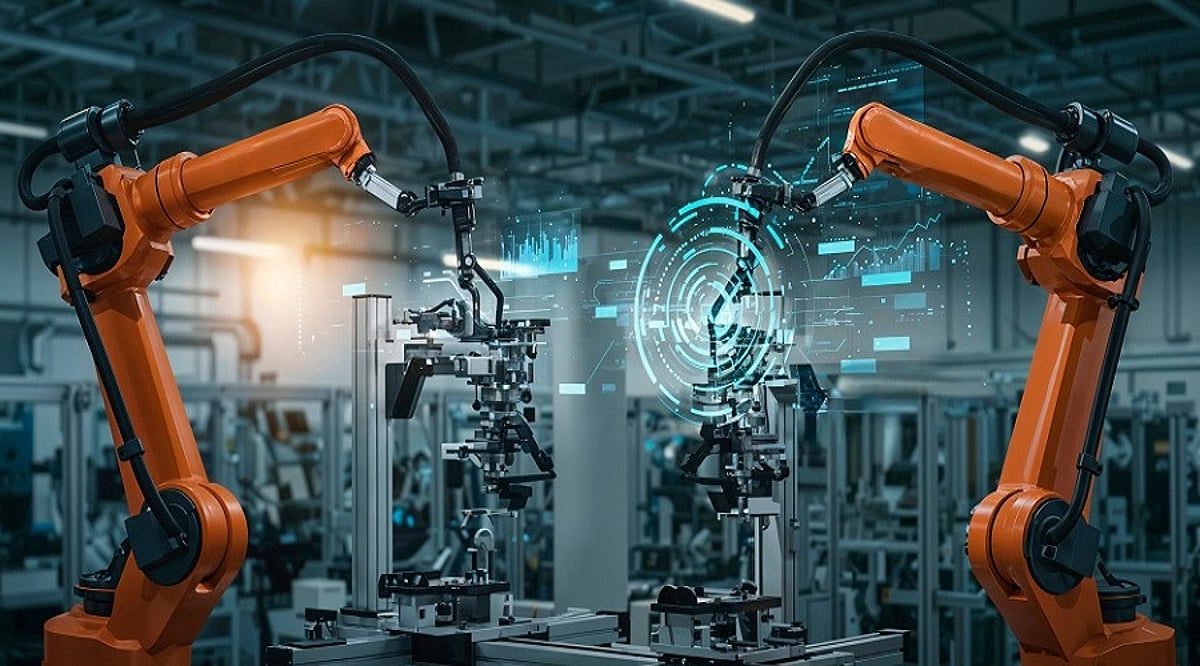
    AI-powered machine vision enables robots to perceive, interpret, and respond to real-world environments using advanced sensors, deep learning, and real-time decision-making. Modern vision systems improve robotic capabilities such as adaptive object handling, quality inspection, autonomous navigation, and safe human-robot collaboration across industries. Advances in vision-language-action models, edge AI, and intelligent automation are making robots more flexible, efficient, and capable while addressing increasingly complex tasks.

    From Blind Automation to Visual Intelligence

    Traditional robotic cells depend on precision fixtures, fixed trajectories, and tightly structured environments. A part out of place stops the line cold. Modern systems replace that rigidity with cameras, depth sensors, and trained models that estimate an object’s position and orientation in real time. Machine vision has evolved from an optional sensing layer into a core component that directly shapes perception, planning, and control.

    Inside the AI Vision Stack

    Perception in a modern robotic system moves through several layers. Sensors, ranging from 2D cameras to time-of-flight units and lidar, capture raw visual and spatial data. Many systems now push early processing directly into the sensor itself and onto edge devices near the robot. This cuts latency and bandwidth before data ever reaches the main compute unit. Deep learning models handle detection, segmentation, and pose estimation. Most run on convolutional networks or transformer architectures. Robots often mix input types too, pairing RGB cameras with depth sensors and force feedback, so one missed signal does not stop the whole task.

    What sets current systems apart from older automation is the tight link between what a robot sees and what it does next. The system reads what it sees and acts on it right away. It adjusts grip or movement mid-task instead of waiting for a person to check the work first.

    New Capabilities This Unlocks

    • Adaptive pick-and-place: A robot estimates the pose of a randomly oriented part directly from a mixed bin, work that once demanded a custom fixture for every product variant.
    • Inline inspection systems: Built on convolutional networks and vision transformers, they catch scratches, weld defects, and misaligned assemblies that rule-based image checks routinely miss.
    • Safe human-robot collaboration: Cobots track a person’s position and proximity closely enough to slow down before a collision rather than after one, letting them work near people without a safety cage.
    • Autonomous mobile robots: Use vision-based mapping to reroute around a spilled pallet or a parked cart without needing the warehouse floor plan reprogrammed.
    • Vision-language-action models: Such as Figure AI’s Helix and NVIDIA’s GR00T N1, these pair a vision-language backbone with a fast motor-control policy, letting a robot act on an instruction like ‘pick the damaged blue container’ instead of only flagging objects it was separately trained to detect.

    Together, these shifts underpin Industry 4.0, where flexible, data-driven automation replaces fixed programming across a plant floor.

    Where This Shows Up Today

    • Manufacturing: Plants use vision-guided bin picking and defect classification to shorten quality checks and catch problems earlier in the line.
    • Warehousing: Barcodes are read visually, and routes are adjusted around clutter without fixed paths, letting operators redesign storage layouts without reprogramming every route.
    • Agriculture: Robots and drones scan crop rows for early signs of disease.
    • Healthcare and retail: Service robots identify people, signage, and obstacles well enough to navigate spaces never built with a machine in mind.

    Limits and Open Problems

    A model trained on one factory floor or one lighting setup often struggles on another. Closing that gap remains active engineering work, not a solved problem. Creating the labeled datasets needed to train these systems is expensive, so manufacturers increasingly use synthetic images generated from digital twins to reduce data collection costs. Dust, reflections, and sensor failure still test the limits of what a camera-based system can handle reliably. Safety certification for vision-driven decisions has not kept pace with the technology itself, and operators still need clear evidence of what a robot ‘saw’ before trusting its judgment call.

    Final Thoughts

    Vision-language-action models point toward robots that take a spoken instruction and work out the steps themselves—without a specialist rewriting detection rules for every new task. That shift, from programming behavior to describing intent, is the next real test for factories deciding how much autonomy to hand a machine.

  • AI Chips Demystified: How GPUs, NPUs, and TPUs Power Modern Machine Learning

    AI Chips Demystified: How GPUs, NPUs, and TPUs Power Modern Machine Learning

    Every major AI breakthrough begins with computing power. As models grow larger, traditional processors face mounting pressure, pushing specialized AI chips into the spotlight. Three chip types lead this shift: GPUs, TPUs, and NPUs. While the central processor still coordinates the system—scheduling tasks and managing data—the heavy computation has moved elsewhere.

    GPU vs. TPU vs. NPU: What Each Does Best

    A GPU (graphics processing unit) was originally built to render images by running thousands of similar calculations simultaneously. That parallel structure suits neural network math perfectly, making GPUs the default engine for AI training across research labs and data centers. Mature software ecosystems such as CUDA, ROCm, and TensorFlow reinforce this position, giving developers stable tools to build on.

    A TPU (Tensor Processing Unit) is not a general hardware category—it is Google’s proprietary accelerator built around systolic arrays that execute tensor operations. These are mathematical calculations on multidimensional arrays that neural networks use to process and learn from data. TPUs mainly power AI workloads inside Google’s cloud infrastructure and its supported frameworks, handling tensor-heavy tasks more efficiently than general-purpose processors.

    An NPU (neural processing unit) is often mistaken for a single product, but it is actually a category of low-power AI processors that chipmakers including Qualcomm, Apple, Intel, AMD, and MediaTek build into phones, laptops, and edge devices. Each company designs its own version, but all share the same goal: running AI features locally without draining battery life or sending data to a server.

    Training vs. Inference: The Core Distinction

    The clearest way to separate these chips is by what they are built to do. GPUs favor flexibility—thousands of general-purpose cores and broad framework compatibility make them the default choice for training large models, where workloads shift constantly.

    TPUs trade that flexibility for efficiency within a narrower lane. Their systolic array design accelerates tensor-heavy training and high-throughput inference but only reaches its full advantage inside Google’s ecosystem. Outside that environment, the efficiency gap narrows.

    NPUs optimize for a third priority: low-power, real-time inference. A phone running a camera effect or a voice assistant does not need to train anything. It needs a fast, efficient response to a model trained elsewhere—often on GPUs or TPUs. Precision drops accordingly. NPUs lean on compressed, lower-precision formats that would be unacceptable for training but work well for inference on-device.

    Where Each Chip Shows Up

    Many AI applications lean on CPUs, GPUs, and NPUs together rather than a single processor. Cloud models typically run on GPUs or TPUs, while NPUs handle supported AI features directly on compatible user devices.

    How AI Systems Actually Combine These Chips

    Production AI rarely runs on a single chip type. A large training run typically pairs a central processor with a cluster of GPUs. Sometimes TPUs handle the parallel math while the CPU manages data pipelines and scheduling. An inference server deployed after training often adds a dedicated accelerator layer alongside the CPU and GPU to handle high request volumes efficiently.

    The pattern repeats at the edge. A modern laptop built for AI features runs a CPU, GPU, and NPU together, each handling a different slice of the work: the CPU for general tasks, the GPU for heavier computation, and the NPU for background AI features that need to stay fast and power-efficient. Smartphones follow the same layered design.

    The chip that trained a model is rarely the chip that runs it for the end user. That handoff explains more about real-world AI performance than picking a single winner among GPU, TPU, and NPU ever could.

    How to Choose the Right AI Chip

    Teams that need broad framework support and maximum flexibility still default to GPUs. Organizations already committed to Google Cloud and training tensor-heavy models at scale can gain real cost and throughput advantages from TPUs. Products that run AI features directly on user devices depend most on NPUs, since they preserve battery life and keep responses fast.

    Software maturity—including driver quality and framework integration—often shapes real-world performance as much as raw specifications. Many teams end up using all three: GPUs or TPUs to train and NPUs to deploy.

    Final Thoughts

    AI hardware is moving toward specialization rather than converging around a single processor. Future systems will lean on CPUs, GPUs, TPUs, NPUs, and emerging custom accelerators working together, each tuned for a specific stage of the pipeline. The real advantage ahead will come less from raw computing power and more from how efficiently these processors divide the work between them.

    Frequently Asked Questions

    1. What is the main difference between a GPU, NPU, and TPU?
    A GPU is a versatile processor designed for parallel computing and widely used for AI training and inference. An NPU is optimized for low-power, on-device AI tasks, while a TPU is a specialized accelerator built by Google for efficient tensor computations in large-scale deep learning workloads.

    2. Which AI chip is best for training machine learning models?
    GPUs are the most common choice for training machine learning and deep learning models since they offer high parallel processing capabilities, broad software support, and flexibility across various AI frameworks. TPUs are also highly effective for large-scale training in supported cloud environments.

    3. Why do smartphones and laptops include NPUs?
    NPUs enable AI features such as image enhancement, speech recognition, real-time translation, and on-device AI assistants while consuming less power than CPUs or GPUs. This improves performance, reduces latency, and helps extend battery life.

    4. Can the same AI model run on a GPU, NPU, and TPU?
    Yes. Most AI models can run on all three types of accelerators, but they often require different software frameworks, runtimes, or optimizations such as quantization or model conversion to achieve the best performance on each platform.

    5. Will NPUs and TPUs replace GPUs in AI computing?
    Not entirely. GPUs remain the most flexible and widely used AI accelerators for training and many inference workloads. NPUs and TPUs complement GPUs by handling specialized tasks such as power-efficient edge AI and large-scale tensor processing in cloud environments.

  • 7 Free AI Courses with Certificates to Boost Your Skills in July 2026

    7 Free AI Courses with Certificates to Boost Your Skills in July 2026

    Build AI skills without spending a rupee. Here are the top free AI courses offering certificates in July 2026:

    • Google AI Essentials – Learn practical AI skills and prompt engineering with beginner-friendly lessons.
    • Microsoft AI Skills Challenge – Gain hands-on experience with Azure AI tools and earn a free certificate.
    • IBM AI Fundamentals – Understand machine learning, generative AI, and business AI applications.
    • Harvard CS50 AI – A rigorous introduction to artificial intelligence using Python programming.
    • DeepLearning.AI Short Courses – Master prompting, LLMs, and generative AI through concise practical lessons.
    • Coursera AI for Everyone – Andrew Ng’s popular course explains AI concepts without coding experience.
    • NVIDIA Deep Learning Institute – Access free AI workshops focused on GPUs, deep learning, and computer vision.
    • LinkedIn Learning AI Courses – Explore workplace AI productivity, Copilot, ChatGPT, and automation topics.

    Read more stories and join our WhatsApp Channel to get the latest news, exclusives, and videos.

  • 10 Essential Data Science Concepts to Master in 2026

    10 Essential Data Science Concepts to Master in 2026

    Data science has evolved rapidly, and professionals who want to stay ahead must master a blend of foundational skills and emerging technologies. Here are the ten most important concepts to learn in 2026, covering Python, statistics, SQL, machine learning, generative AI, data engineering, cloud computing, MLOps, and business intelligence.

    1. Python

    Python remains the dominant language for data science due to its readability and extensive library ecosystem. Key skills include functions, classes, object-oriented programming, error handling, decorators, and context managers. Essential libraries: NumPy, Pandas, Polars, Matplotlib, Seaborn, Plotly, Scikit-learn, PyTorch, TensorFlow, and JAX.

    2. Mathematics

    Mathematics underpins every machine learning model. Focus on linear algebra (vectors, matrices, PCA), calculus (derivatives, gradient descent), probability (Bayes’ theorem, distributions), and statistics (hypothesis testing, A/B testing, ANOVA).

    3. SQL

    SQL is critical for querying databases. Beyond basic SELECT statements, learn CTEs, window functions, indexes, and views. Modern cloud data warehouses like Snowflake, BigQuery, and Redshift, plus lakehouse technologies like Delta Lake, are increasingly important.

    4. Machine Learning

    Machine learning enables pattern recognition and prediction. Supervised methods include linear regression, random forests, and gradient boosting. Unsupervised techniques include K-Means, PCA, and t-SNE. Model evaluation metrics like precision, recall, F1 score, and cross-validation are essential.

    5. Deep Learning

    Deep learning powers modern AI with architectures like CNNs for images, RNNs and LSTMs for sequences, and Transformers for language and generation. Mastering these enables advanced pattern detection and classification.

    6. Generative AI

    Generative AI builds on deep learning to create content. Key techniques include Retrieval-Augmented Generation (RAG), fine-tuning, LoRA, PEFT, and RLHF. AI agents and function calling allow models to perform autonomous tasks, making them central to business AI applications.

    7. MLOps

    MLOps ensures models are deployable and maintainable. Tools like Git, MLflow, Docker, Kubernetes, and CI/CD pipelines are vital. Cloud platforms (AWS, Azure, GCP) enable scalable deployment and monitoring for drift and performance issues.

    8. Cloud Computing

    Cloud platforms provide the infrastructure for data processing, storage, and AI at scale. Familiarity with AWS, Azure, or Google Cloud, along with services like S3, Lambda, and BigQuery, is increasingly required for data science roles.

    9. Business Intelligence

    Visualization and communication turn data into actionable insights. Tools like Tableau, Power BI, Looker, and Apache Superset help create dashboards that convey key metrics. Clear reporting supports better decision-making.

    10. Emerging Concepts

    Stay ahead with emerging fields like Responsible AI, Synthetic Data, Causal AI, Time Series AI, Multimodal AI, and AI agents. Combining these with strong fundamentals in Python, mathematics, and SQL will provide the best career opportunities in 2026.


    FAQs:

    1. Why learn data science in 2026? These skills align with current industry demands and future AI roles.
    2. Is Python still the best language? Yes, due to its simplicity and powerful libraries.
    3. Do I need math? Yes, for understanding model mechanics.
    4. What new skills matter? Generative AI, RAG, and MLOps are key.
    5. Can beginners start? Yes, begin with Python, SQL, and statistics, then progress to more advanced topics.
  • 5 Key Reasons Python Remains the Top Language for AI and Machine Learning

    5 Key Reasons Python Remains the Top Language for AI and Machine Learning

    Python has become the go-to programming language for artificial intelligence and machine learning due to its simplicity, readability, and rich ecosystem of libraries. Developers can build smart applications faster, test ideas quickly, and deploy models with minimal friction.

    Why Python Leads in AI Development

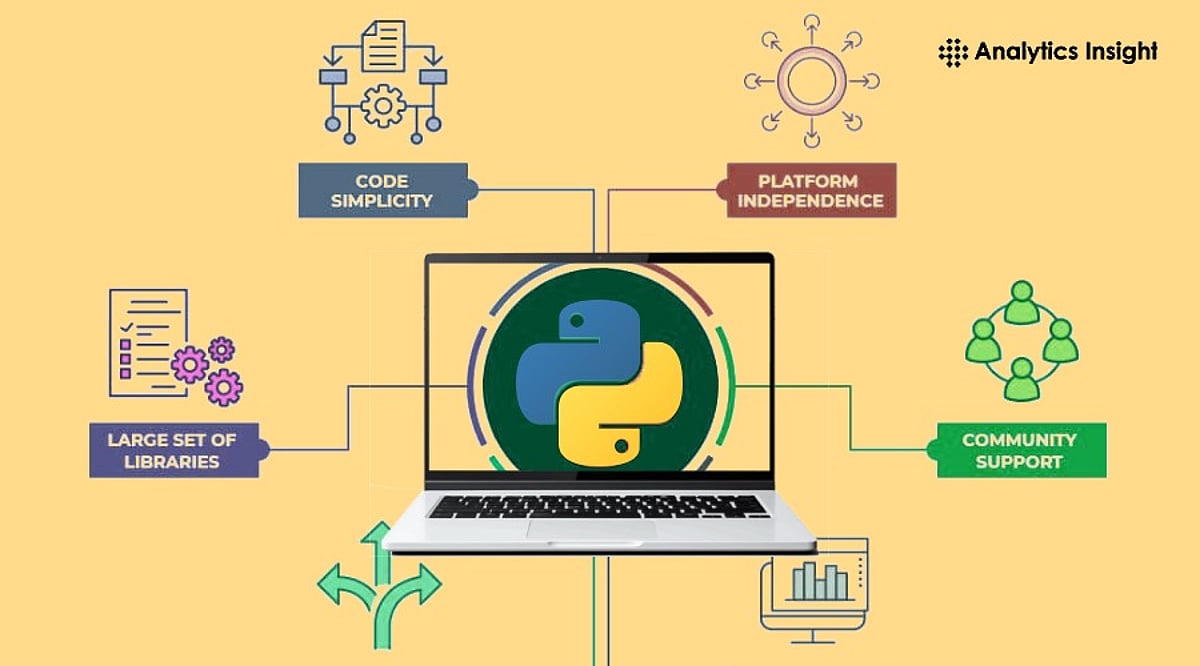
    Python’s clean syntax and minimal learning curve allow developers to focus on solving problems rather than wrestling with complex code. Its extensive library collection, strong community support, and flexibility across industries make it the trusted choice for AI projects, from startups to global enterprises.

    1. Simple, Readable Code Speeds Development

    Python’s syntax is intuitive and clean. Even when reading someone else’s project, the logic is easy to follow. This simplicity reduces the time spent debugging and improves collaboration—critical when AI models frequently need updates and iteration.

    2. Powerful Libraries Save Hours of Work

    Developers don’t have to build AI features from scratch. Python offers mature libraries for every task:

    • TensorFlow and PyTorch for deep learning
    • Scikit-learn for classical machine learning
    • Pandas and NumPy for data manipulation
    • OpenCV for computer vision

    These pre-built tools let developers focus on refining models instead of rewriting boilerplate code.

    3. A Thriving Community Offers Endless Support

    Python’s huge global community means help is always just a search away. Forums, tutorials, guides, and open-source projects ensure that even complex problems have documented solutions. This collective knowledge keeps Python evolving with regular updates and new features.

    4. Versatility Across Industries and Projects

    AI is no longer confined to tech companies. Python powers applications in healthcare, finance, retail, manufacturing, agriculture, and more. The same language can drive a chatbot, a fraud detection system, a recommendation engine, or an image recognition pipeline—eliminating the need to learn a new language for each domain.

    5. Seamless Integration with Modern Infrastructure

    Building an AI model is only half the battle; deploying it matters too. Python integrates smoothly with cloud platforms, databases, APIs, and web frameworks. Many cloud services run Python natively, so moving from training to production requires minimal changes.

    Why This Matters

    Python isn’t just another language—it’s the backbone of many AI tools used daily. As companies embed AI into their products, knowing Python gives developers a durable advantage. While Python may not be the fastest language, its clarity and rapid prototyping capabilities often matter more in AI. With continuous improvements and a growing ecosystem, Python is well-positioned to remain at the center of AI innovation.

    Frequently Asked Questions

    1. Why do most AI developers choose Python?
    Python’s readability, ease of learning, and vast library ecosystem enable faster development with fewer errors.

    2. Which Python libraries are popular for AI?
    TensorFlow, PyTorch, Scikit-learn, Pandas, NumPy, Keras, and OpenCV are widely used for machine learning, deep learning, and data analysis.

    3. Is Python good for AI beginners?
    Yes, its simple syntax and abundant free resources make it one of the best starting points.

    4. Do large companies use Python for AI?
    Yes, many tech giants rely on Python for AI, data science, and automation due to its reliability and strong ecosystem.

    5. Will Python remain important for AI?
    Almost certainly. Its community continues to grow, and new AI tools consistently support Python.

  • AI-Powered Cameras: The Future of Perfect Photography

    AI-Powered Cameras: The Future of Perfect Photography

    AI-powered cameras are transforming the way we capture images, leveraging deep learning to instantly adjust focus, lighting, and colors. This technology makes professional-quality photography easier than ever, even for amateurs.

    Smart AI tracks faces, eyes, animals, and moving objects in real time, ensuring every shot is sharp—whether you’re shooting sports, travel, or wildlife. The camera automatically improves exposure, HDR, white balance, and low-light performance, helping users capture brighter, clearer photos without manual adjustments.

    Modern AI cameras offer cinematic background blur, powerful zoom, image stabilization, and one-tap editing for stunning photos and smooth videos. From smartphones to mirrorless and action cameras, AI now powers autofocus, scene detection, stabilization, and faster editing for every creator.

    However, AI makes photography faster but isn’t perfect. Overprocessed images, higher battery consumption, privacy concerns, and expensive devices remain key trade-offs to consider.