
Artificial intelligence is reshaping industrial operations, but most innovations still cater to desk-based workers. Millions of frontline employees in manufacturing, construction, mining, and logistics operate in environments where conventional devices are impractical. As connectivity spreads, the demand for purpose-built technology grows.
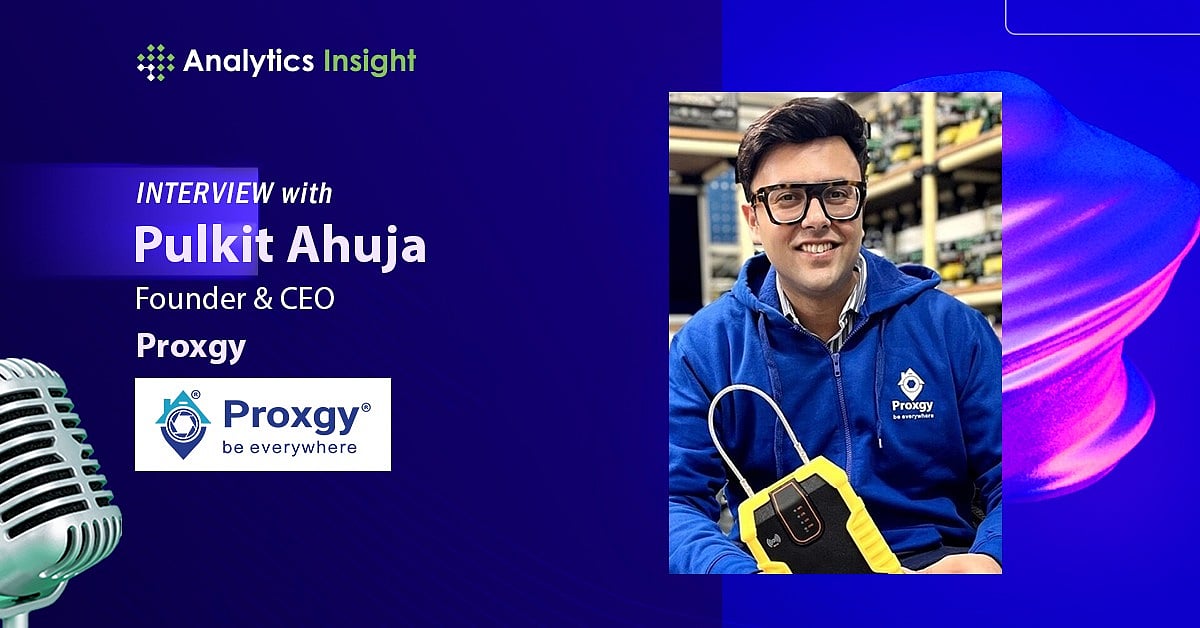
In this episode of the Analytics Insight Podcast, Pulkit Ahuja, Founder and CEO of Proxgy, discusses how the company develops connected wearables and industrial hardware to enhance worker safety and productivity. He also explores India’s deep tech ecosystem, the value of IP-led innovation, and the challenges of building globally scalable hardware products.
Proxgy’s Vision: Connecting the Underserved Workforce
Ahuja explains that Proxgy’s name combines “proxy” (as in a human proxy) and “technology.” Founded during the first COVID-19 lockdown in 2020, the company’s mission is to connect the billion-plus people who do not work at a desk. Ahuja brings a strong background in product innovation, with over 25 inventions to his name—including the world’s first drone-assisted driving technology (recently launched by BYD) and an earthquake-protection bed. He is also the author of a national bestseller, Google to Buy God.
Why Industrial Problems Matter More Than Consumer Convenience
For startups targeting blue-collar workers, long-term commitment is essential, Ahuja says. Unlike purely software or AI plays, these solutions require a physical touchpoint because laptops and mobile phones are unsuitable for harsh working conditions. Proxgy has invented six niche products, including the world’s first smart safety helmet for manufacturing, construction, oil and gas, and mining. A key design principle is minimizing user behavior change—aiming for zero resistance to adoption.
Wearable Tech and the Future of Industrial Safety
Traditional safety methods were reactive, but connected wearables enable proactive approaches. Ahuja believes India is poised to lead because of its large workforce and diverse test cases. Solutions proven in Indian conditions can be replicated globally at optimized costs—a trend already visible at Proxgy.
India’s Path to Global Leadership in Deep Tech
Government support for “Make in India” is strong, and Proxgy leverages it to produce globally scalable products. However, the ecosystem requires patient capital, which India is slowly developing. Unlike in the US, most high-funded Indian startups are not deep tech or hardware companies because hardware development takes time and carries high risk.
Realities of Building a Deep Tech Company in India Today
Founders must lead with IP-led innovation, Ahuja advises. Chasing trends is less valuable than creating long-term value through execution, scalability, reliability, and commercial viability. Seamless integration into existing workflows is critical for success.
To hear the full conversation, listen to the podcast episode.