

Tag: Delhi High Court

  • Delhi High Court Mandates Maternity Protection Beyond Salary, Awards ₹10 Lakh for Post-Leave Demotion

    Delhi High Court Mandates Maternity Protection Beyond Salary, Awards ₹10 Lakh for Post-Leave Demotion

    The Delhi High Court has delivered a landmark ruling affirming that maternity protection must preserve not only a woman’s salary and designation but also her duties, authority, and career advancement opportunities. In a judgment pronounced on August 31, 2026, Justice Sachin Datta ordered an employer to pay Chartered Accountant Rakhi Bisht ₹10 lakh in compensation after she was effectively demoted upon returning from maternity leave.

    Background of the Case

    Rakhi Bisht, a Chartered Accountant with approximately 14 years of professional experience, joined the organization in 2022 as Manager, Accounting, earning a monthly salary of ₹2.60 lakh. She informed management of her pregnancy in May 2023 and later transferred to another team. She proceeded on maternity leave in December 2023 and returned to work in July 2024. Upon her return, she discovered that her previous position no longer existed and was reassigned to the Treasury Department.

    Bisht alleged that the new role was substantially inferior to her earlier managerial accounting responsibilities. She claimed she was assigned no reports and was excluded from managerial meetings. The employer denied these allegations, asserting that her designation, level, salary, and seniority remained unchanged following an organizational restructuring.

    Court’s Ruling: Pay and Title Are Not Enough

    The High Court ruled that maternity protection cannot be limited to retaining a woman’s salary and job title. It held that ‘conditions of service‘ encompass the nature of duties, functional position, reporting structure, supervisory responsibilities, and consideration for appraisal and promotion. The Court observed that retaining the same designation and remuneration is ‘necessary but not by itself sufficient‘ if other aspects of employment change to an employee’s disadvantage.

    As a general principle, the Court stated, a woman returning from maternity leave should resume her previous position. If that role is genuinely unavailable due to demonstrable organizational reasons, the employer must offer a substantially equivalent alternative.

    Compensation and Directions

    The Court ordered the respondent to pay Bisht ₹10 lakh in compensation and ₹1.5 lakh toward costs. The compensation reflected her professional standing, experience, and salary—approximately four months’ wages. The payment must be made within eight weeks; any delay will attract interest at 9% per annum from the date of judgment.

    Additionally, the Court addressed the workplace creche issue, holding that a facility that remains non-functional when needed does not satisfy Section 11-A of the Maternity Benefit Act, 1961. It directed the Union of India to frame rules or schemes within six months under the Code on Social Security, 2020, covering workplace accommodation, protection of women’s roles after maternity leave, creche facilities, grievance timelines, and safeguards against retaliation.

    This judgment reinforces the broader interpretation of maternity protection in India and serves as a significant precedent for workplace equality.

  • Delhi High Court Rules No Copyright Breach in OpenAI’s AI Training Practices

    Delhi High Court Rules No Copyright Breach in OpenAI’s AI Training Practices

    The Delhi High Court has delivered a landmark ruling in favor of OpenAI, stating that the company’s use of copyrighted material to train its artificial intelligence models does not violate copyright law. The decision, announced on Friday, rejected an interim injunction sought by the news agency ANI in its ongoing copyright lawsuit against the AI developer.

    Justice Amit Bansal held that OpenAI’s act of storing ANI’s works for training its Large Language Models (LLMs) does not, by itself, constitute copyright infringement. The court further found that ANI failed to establish a prima facie case that ChatGPT had memorized or reproduced its copyrighted content in its responses.

    “OpenAI’s act of storing ANI’s works does not amount to copyright infringement,” Justice Bansal observed, adding that “ANI had failed to show that any memorization or regurgitation of ANI’s work has happened from responses generated by ChatGPT.”

    ‘Irreparable Injury’ to Public if AI Training is Stopped

    The court emphasized that granting an interim injunction would have wider consequences beyond the parties involved. Justice Bansal highlighted that irreparable injury would be caused not only to OpenAI but also to the public at large if such an injunction were granted. The ruling noted that restricting AI companies from training their models using copyrighted material could adversely affect technological innovation and scientific progress.

    ANI Sought Rs. 2 Crore in Damages

    ANI filed the lawsuit in November 2024, alleging that OpenAI had used its copyrighted news reports without permission to train ChatGPT. The agency sought Rs. 2 crore in damages and asked the court to permanently restrain the company from storing, publishing, reproducing, or using its content. ANI argued that ChatGPT generated responses that were “verbatim or substantially similar” to its reports, and also alleged that the chatbot produced “hallucinated” responses falsely attributed to the agency.

    OpenAI Cited Publicly Available Data

    OpenAI rejected the claims, stating that its AI models are trained based on publicly available data. According to the court, OpenAI informed the court that it had blacklisted the domain name of ANI in October 2024, following which no new content from the website can be used for training any AI model. Senior counsel Amit Sibal, representing OpenAI, argued that “copyright protects the expression of ideas; there is no monopoly on facts” and noted that OpenAI’s servers are located outside India.

    This case represents one of the first landmark decisions in India concerning the use of copyrighted works for training generative AI, setting a significant precedent for the technology sector.

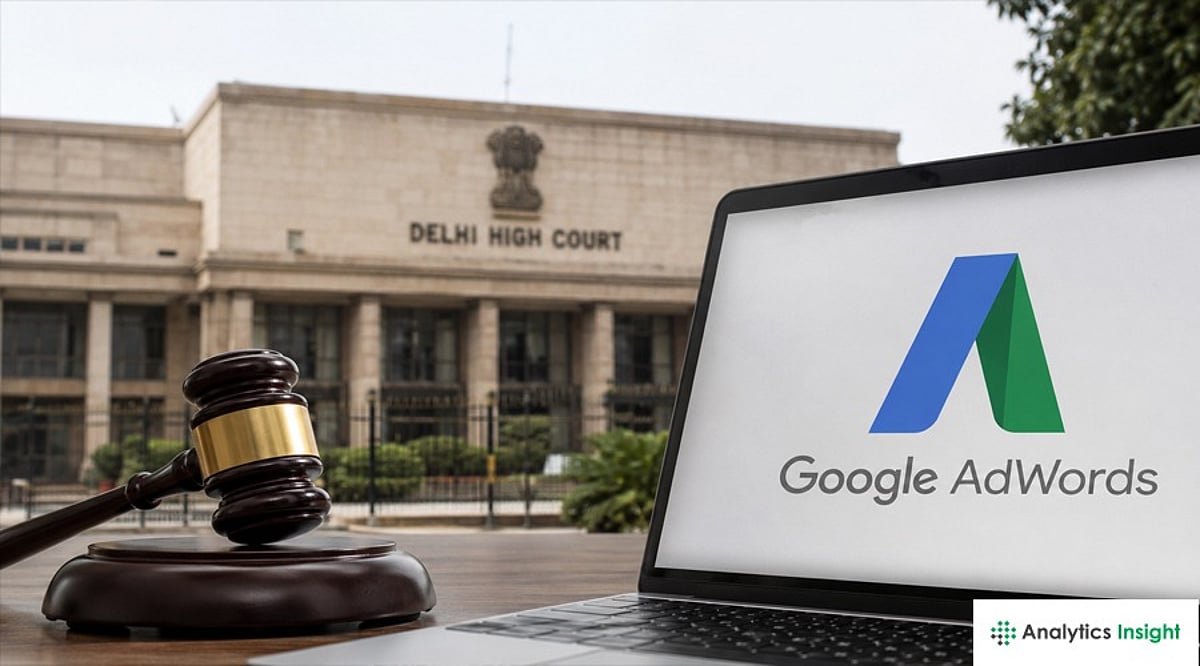
  • Google Challenges Rs. 30 Lakh Delhi High Court Ruling in Hindware AdWords Trademark Dispute

    Google Challenges Rs. 30 Lakh Delhi High Court Ruling in Hindware AdWords Trademark Dispute

    Google has filed an appeal in the Delhi High Court against a recent order that held the company liable for trademark infringement in the Hindware AdWords case. The earlier ruling imposed a penalty of Rs. 30 lakh on Google and prohibited the company from allowing advertisers to use Hindware’s registered trademark as advertising keywords on its AdWords platform.

    Legal Proceedings

    A division bench of Justices V. Kameswar Rao and Manmeet P.S. Arora heard Google’s appeal on Friday. The court issued a notice to Hindware and scheduled the next hearing for July 24. The judges did not grant interim relief, meaning the previous order remains in effect pending a final decision.

    Google’s Arguments

    Senior advocate Abhishek Manu Singhvi, representing Google, argued that the earlier judgment contradicts several prior court decisions and established global practices. He noted that in many countries, bidding on competitors’ trademarks as advertising keywords is not considered trademark infringement. Google maintains that the AdWords system provides a legitimate way for businesses to reach potential customers through search advertising.

    Background of the Dispute

    The legal battle began when Hindware, a leading sanitaryware brand, alleged that rival companies were purchasing its trademark as a keyword through Google’s AdWords service. This caused advertisements from competitors to appear when users searched for Hindware on Google. Hindware claimed that this practice unfairly diverted its customers to competing brands.

    Earlier Court Findings

    In its May 22 judgment, the single judge ruled in favor of Hindware. The court found that Google derived commercial benefit from selling another company’s registered trademark as an advertising keyword, giving competitors an unfair advantage. The court also noted that Google never obtained permission from Hindware before making its trademark available for advertising. Additionally, the court rejected Google’s claim of protection under Section 79(1) of the Information Technology Act, stating that Google’s role exceeded that of a passive intermediary because it actively sold trademarked keywords.

    Implications for Digital Advertising

    The outcome of this appeal could have significant implications for digital advertising in India. If the court upholds the earlier ruling, companies may be barred from using competitors’ trademarks as advertising keywords. Conversely, a decision in Google’s favor would allow the current advertising model to continue, enabling businesses to reach audiences through keyword-based search ads. The July 24 hearing is expected to be a pivotal moment for the future of online advertising and trademark protection in the country.