

Tag: Delhi-NCR

  • Assotech Group: 40 Years of Real Estate Legacy and the Next Generation’s Vision

    Assotech Group: 40 Years of Real Estate Legacy and the Next Generation’s Vision

    Real estate is an industry where longevity is rare and continuity even rarer. Assotech Group has now spent 40 years navigating both—and its story is as much about what comes next as it is about what has already been built.

    The company was founded by Sanjeev Srivastva, whose early conviction was simple: a homebuyer’s trust, once earned through delivered promises, becomes a developer’s most durable asset. That principle guided Assotech Group through four decades of Indian real estate’s most volatile cycles—from pre-liberalization years through demonetization, RERA’s regulatory reset, the NBFC liquidity crisis, and a pandemic that tested every developer’s execution capacity simultaneously. Where many built quickly and disappeared, Assotech Group built a track record of consistency and a brand that homebuyers, channel partners, and lenders associate with reliability over rhetoric.

    That kind of longevity is rarely accidental. It typically comes from a founder’s willingness to prioritize the slower, harder path—clear land titles, honored possession dates, transparent buyer communication—over faster wins from cutting corners. Over 40 years, that discipline compounded into something less tangible than any single project: a brand that lenders underwrite with confidence and channel partners sell without hesitation. In an industry where trust is the scarcest commodity, that is arguably Sanjeev Srivastva’s most significant achievement—not any one tower or township, but an institution durable enough to outlast its founder’s generation.

    That legacy is now entering its next phase. Assotech Group’s leadership has expanded to include Shivani Priyam, Enakshi Priyam, Arpan Patel, and Aditya Prakash, who have taken on roles as Directors. Their entry is not a symbolic handover; it reflects a deliberate broadening of decision-making bandwidth at a moment when Assotech Group is running an unusually active, multi-state growth pipeline. The next generation brings fresh perspective to brand strategy, digital-first buyer engagement, and market expansion, while operating within the execution discipline the founder built. It is a continuity story rather than a changing-of-the-guard story—the same values applied to markets and buyer expectations the sector has never seen before.

    This generational transition arrives as Indian real estate itself is reshaped by younger, more digitally fluent buyers, faster decision cycles, and heightened scrutiny of developer credibility post-RERA. A founder-led company navigating that shift needs leadership that understands both worlds—the legacy discipline that built the brand and the newer expectations shaping how it shows up today. Assotech Group’s four new Directors represent that bridge, positioned to carry the company’s fundamentals into markets and mediums the business hadn’t previously needed to master.

    That expansion is already visible on the ground. Assotech Group’s original stronghold in Delhi NCR—anchored by long-standing developments including its presence in Ghaziabad’s Crossings Republik micro-market—remains the base. Alongside it, the group has moved decisively into two new geographies: Jharkhand, with its Ranchi development, and Odisha, where Bhubaneswar-region projects mark the company’s entry into one of eastern India’s fastest-growing residential markets.

    The logic behind this three-state footprint is consistent with how Assotech Group has always approached growth—not chasing every market simultaneously, but entering states where rising incomes, urban migration, and under-served demand for organized, RERA-compliant housing create a genuine opportunity for a developer with a 40-year delivery record to differentiate itself. In both Ranchi and Bhubaneswar, that opportunity is compounded by a market gap: organized players with genuine institutional credibility remain comparatively few, giving an established brand like Assotech Group a meaningful first-mover advantage over unproven entrants.

    Forty years in, Assotech Group’s brand story is no longer only about what Sanjeev Srivastva built. It is about a leadership team, now spanning two generations, carrying that foundation into Delhi NCR, Jharkhand, and Odisha—and building the next chapter on the same principle the first one started with: a promise made is a promise delivered.

    For more information, visit: assotechgroup.com.
  • India’s AI Startup Ecosystem Expands Beyond Bengaluru: Key Hubs and Specializations

    India’s AI Startup Ecosystem Expands Beyond Bengaluru: Key Hubs and Specializations

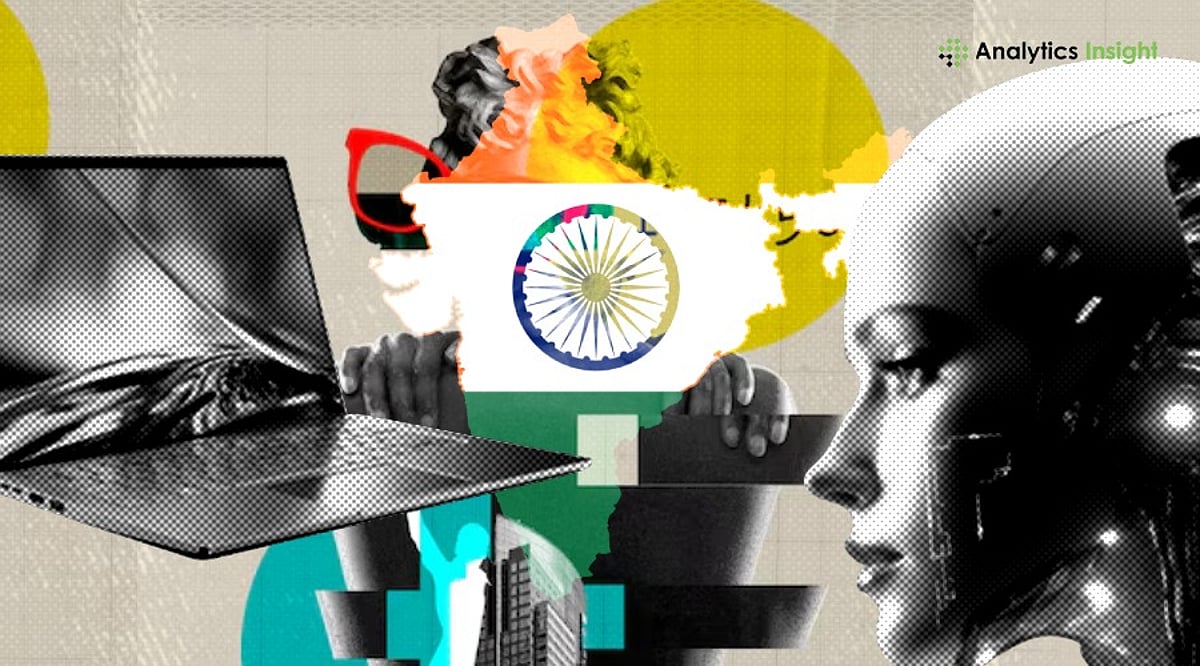
    India’s artificial intelligence ecosystem has entered a new phase. Bengaluru still dominates the funding charts and deep-tech innovation, but the country’s AI growth story no longer revolves around a single city. Hyderabad, Mumbai, Pune, Delhi-NCR, Chennai, and emerging cities like Kochi, Chandigarh, Ahmedabad, and Kolkata are developing specialized strengths in enterprise AI, fintech, healthcare, industrial automation, and language technologies.

    Why Bengaluru Continues to Lead India’s AI Economy

    Bengaluru remains the country’s biggest AI startup destination because of its unmatched scale. The city hosts India’s deepest pool of engineers, startup founders, venture capital firms, and multinational R&D centers. AI companies working on foundational models, cloud infrastructure, and enterprise software continue to choose Bengaluru as their primary base. Notable startups include Sarvam AI, Observe.AI, Mad Street Den, and Uniphore. Global firms have also strengthened Bengaluru’s position, driven by engineering talent and startup density.

    How Hyderabad Turned into India’s Fastest-Growing AI Hub

    Hyderabad has rapidly transformed from an IT outsourcing destination into one of India’s most ambitious AI ecosystems. Government-backed initiatives, better infrastructure, and lower operational costs have encouraged startups to expand aggressively. HITEC City and T-Hub have played a major role in building the ecosystem around enterprise technology and AI innovation. The city has gained traction in conversational AI, enterprise automation, and cloud technologies.

    Why Mumbai’s AI Ecosystem Focuses on Finance and Media

    Mumbai’s AI startup landscape reflects the city’s larger economy. Unlike Bengaluru’s engineering-heavy ecosystem, Mumbai specializes in fintech, advertising technology, and consumer-facing AI products. Banks, financial institutions, media companies, and large enterprises create strong demand for AI-driven analytics and automation tools. AI firms in Mumbai work on fraud detection, financial analytics, personalized advertising, and generative content systems.

    How Delhi-NCR Became a Major AI Innovation Corridor

    Delhi-NCR has quietly emerged as one of India’s strongest AI startup regions. The ecosystem spreads across Gurugram, Noida, and Delhi, creating a large network of enterprise software firms, logistics platforms, and edtech startups. AI companies operating in automation, mobility, and cloud infrastructure are increasingly based in the region. The region also benefits from access to policymakers and government-backed technology initiatives.

    Why Pune is Becoming an Engineering and Industrial AI Center

    Pune’s AI rise comes from its strong engineering and manufacturing base. The city is home to major automotive companies, industrial firms, and educational institutions, creating demand for AI-powered automation and predictive technologies. Startups in robotics, supply-chain optimization, and industrial analytics are increasingly choosing Pune. Lower operating costs and access to skilled engineering talent further strengthen its ecosystem.

    How Chennai Built a Strong Presence in Healthcare and Industrial AI

    Chennai’s AI ecosystem has developed around manufacturing, mobility, and healthcare. The city’s long-standing automotive and industrial network created early demand for AI-led automation. Healthcare technology has emerged as another important sector, with AI startups working on diagnostics, medical imaging, and hospital management systems. Engineering institutions and research centers continue supporting innovation in robotics, mobility technology, and semiconductor research.

    Why Ahmedabad is Emerging as a Growing AI Startup Destination

    Ahmedabad represents the expansion of India’s AI economy beyond Mumbai into western India. The city’s strong business culture and manufacturing ecosystem have encouraged startups building automation and analytics solutions for SMEs and industrial firms. AI companies in Ahmedabad focus on retail intelligence, logistics, and operational software. Lower business costs and faster operational execution are major advantages.

    How Kolkata is Building a New AI Startup Identity

    Kolkata entered the AI startup race later than most major cities, but the ecosystem has begun to show steady growth. Lower operating costs and a strong technical education network have helped several startups emerge in analytics, edtech, and language technologies. University incubators and state-backed innovation programs continue to support early-stage companies. Founders focus on niche areas such as regional-language AI and civic technology.

    Why Kochi and Chandigarh are Attracting the Next Generation of Founders

    India’s AI boom isn’t restricted to metros anymore. Kochi and Chandigarh have started luring startups because of cheaper costs, better infrastructure, and remote work capabilities. Kochi’s ecosystem revolves around health-tech, digital products, and marine technologies. Chandigarh has evolved into a thriving hub for SaaS and enterprise software startups targeting northern India. Remote working practices have lowered the need to recruit from Bengaluru-centric centers.

    Why India’s AI Future Now Belongs to Multiple Cities

    The AI ecosystem in India is slowly breaking free from centralized control. While Bengaluru continues to lead in funding, talent, and startups, other cities have found their own ways to attract entrepreneurs and venture capitalists. Hyderabad comes across as the key city for business development. Mumbai acts as the engine for AI implementation by businesses. Pune serves as the engine for industrial AI research and development. The Delhi-NCR region acts as the engine for both business software and governance technology. Smaller cities are now part of the conversation. The current Indian startup ecosystem has transformed into a diverse network of innovation centers, each developing specialized capabilities to drive progress in the artificial intelligence economy.