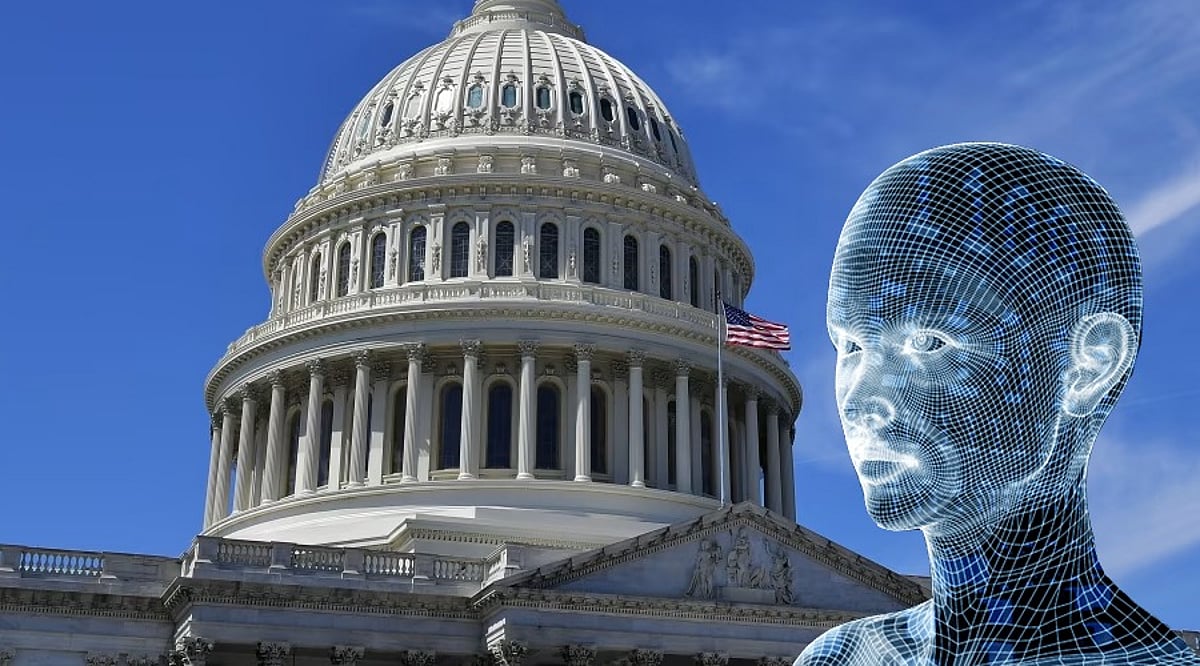
The US government is increasingly turning to artificial intelligence to help federal agencies review and redact sensitive information from documents released under the Freedom of Information Act (FOIA). This move aims to accelerate the processing of public records requests while raising important questions about transparency and the accuracy of automated redactions.
DHS Plans AI-Assisted FOIA Redactions
The Department of Homeland Security (DHS) intends to use AI to identify information that may need to be removed from documents released through FOIA requests. Specifically, US Customs and Border Protection, a DHS component, plans to deploy Google’s AI and machine-learning technology to recommend potential redactions to FOIA officers.
According to the department’s AI use-case documentation, the technology is designed to reduce the time required to process requests. DHS officials have emphasized that human employees will still review the AI’s recommendations before any records are released. The planned use is expected to cover certain categories of FOIA requests that account for more than 10% of the department’s submissions, as reported by The Washington Post.
Other Agencies Are Testing AI for Document Review
DHS is not alone in exploring automated document review. The Department of the Interior is using Microsoft technology to identify potential attorney-client privileged information, while the Justice Department has deployed Veritone’s aiWARE for video redaction. The Department of Health and Human Services is also testing an AI-based system to review and redact records; its 2026 FOIA report notes that some offices are exploring AI and large language models to improve document processing, with qualified FOIA professionals expected to verify AI-generated results.
Concerns Over Automated Redactions
The growing use of AI has raised concerns among FOIA experts and transparency advocates. Redacting government records is not simply a matter of flagging sensitive words. Officers must determine whether information falls under one of FOIA’s legal exemptions. There are also worries that an AI system could reproduce existing patterns of over-redaction. A previous study of government records found that while AI could identify potentially exempt material, it also made mistakes in deciding what to withhold.
Human Review Remains Key
For now, federal agencies say AI is being introduced as an assistance tool rather than a replacement for human reviewers. DHS employees are expected to check AI recommendations before records are released. The broader question remains whether automation will help agencies clear FOIA backlogs faster without unnecessarily limiting public access to government information. As more departments experiment with AI-assisted redaction, these systems will likely remain under scrutiny for accuracy and oversight.