Tag: digital advertising

  • Walled Garden Advertising Explained: Why Publishers Are Moving Beyond the Big Three

    Walled Garden Advertising Explained: Why Publishers Are Moving Beyond the Big Three

    Three companies now capture a larger share of global ad spend than the rest of the internet combined. At the same time, the search traffic that once funded publishers is shrinking rapidly. Alphabet, Amazon, and Meta are on track to absorb 58.8% of the global ad market outside China by 2027, according to WARC. Meanwhile, Chartbeat data shows publisher search referral traffic fell by a third globally in the year to November 2025. This double squeeze is why understanding walled garden advertising has become essential for publishers and advertisers alike.

    A walled garden is a closed system operated by a single platform that controls how ads are bought, targeted, and reported. Advertisers gain scale and precision; publishers gain access to demand. Neither side has much say in the rules or visibility into what happens behind them.

    This guide explains what walled garden advertising means, identifies the major players, outlines how the model works, and examines the real trade-offs today. It also explores why ad revenue diversification through independent platforms has become a serious strategy.

    Key Takeaways

    • A walled garden is a closed ad platform that controls buying, targeting, delivery, and reporting, sharing only the data it chooses to release.
    • Google, Meta, and Amazon are the three largest walled gardens, with TikTok and retail media networks growing rapidly behind them.
    • Walled gardens offer rich first-party data and easy setup, but limited transparency, data portability, and negotiating power for advertisers and publishers inside them.
    • Alphabet, Amazon, and Meta already absorb the majority of global ad spend, while publisher search traffic is falling simultaneously — a genuine double squeeze, not a slow drift.
    • Diversifying across walled gardens, the open web, and independent ad networks is a practical way to reduce dependency on any single platform’s rules or pricing.

    What Is Walled Garden Advertising?

    A walled garden is a closed advertising platform that controls how ads are bought, served, tracked, and reported, giving advertisers and publishers only limited visibility into what happens inside it. Google, Meta, and Amazon are the clearest examples: each runs its own auction, holds its own first-party audience data, and shares only the performance metrics it decides to surface.

    This contrasts with the open web, where advertisers buy inventory across many independent publishers through demand-side platforms, supply-side platforms, and ad exchanges, with more visibility into bid data and placement. A walled garden approach means accepting the platform’s rules, measurement, and reporting as the price of access to its audience and first-party data. There is no external audit, no alternative bid view, and no way to take that data elsewhere if you decide to leave.

    Examples of Walled Gardens in Advertising

    The term covers a small set of companies, each closed in a slightly different way. Search, social, and commerce all have their own dominant walled garden, and newer entrants are climbing the same ladder.

    Google

    Google’s walled garden spans Search, YouTube, and its ad-buying tools, including AdSense and DV360. Each surface feeds the same pool of first-party data, and the buying and measurement tools stay entirely inside Google’s own infrastructure. Advertisers get enormous reach and precise targeting. What they don’t get is an outside view of the auction their spend competes in.

    Meta

    Meta’s social advertising business runs Facebook and Instagram as one closed environment for targeting and reporting. Meta’s ad tools draw on user behavior across both apps, and campaign performance is measured entirely by Meta’s own attribution model. Advertisers can optimize inside that system but cannot independently verify it against a neutral source.

    Amazon

    Amazon’s walled garden runs on shopper and purchase data rather than social behavior. Retail media, powered by the Amazon DSP, lets advertisers target people close to a purchase decision using signals no other platform has at that scale. That purchase-intent data stays inside Amazon’s own systems.

    Other Emerging Walled Gardens

    TikTok is the clearest newer entrant, building its own closed targeting and measurement layer on top of a fast-growing audience. Retail media networks beyond Amazon, such as Walmart and other large retailers, are following the same pattern: platforms with valuable first-party data are increasingly choosing to keep that value inside a closed system.

    How the Walled Garden Model Works

    Walled gardens run on three things: first-party data, proprietary auctions, and self-reported measurement. The platform collects behavioral or transactional data from its own logged-in users, uses that data to run its own ad auction, and then reports back on performance using its own tools.

    Self-reported measurement is worth pausing on because it is the part advertisers feel most directly. It means the platform that sold you the ad is also the one telling you how well it performed, with no independent party checking the numbers. That does not necessarily make the numbers wrong, but it does mean there is no outside verification of the platform’s own report — a very different situation from buying through a neutral ad exchange.

    Platforms keep these systems closed for straightforward business reasons. Data and measurement locked inside one system — sometimes called ecosystem lock-in — makes it harder for advertisers and publishers to leave, since switching means starting audience insight and performance history from zero. It also protects a genuine competitive edge: first-party data at that scale is difficult for any single competitor to replicate.

    The Pros and Cons of Walled Garden Advertising

    Walled gardens are not good or bad by default. They represent a trade-off between reach and data on one side, and transparency and flexibility on the other.

    Advantages of Walled Gardens

    The biggest advantage is data. Walled gardens hold detailed, first-party information on logged-in users, which supports precise targeting most open-web inventory cannot match. That scale, combined with a single dashboard for buying and measurement, makes campaigns easy to launch and easy to read. For direct-response advertisers chasing conversions, that combination of targeting depth and integrated reporting often delivers strong, fast results.

    Drawbacks of Walled Gardens

    Advertisers cannot fully audit delivery or targeting because the platform controls every number it reports. Data portability is limited or nonexistent, so leaving a platform later means losing the audience insight built up while using it. The biggest risk is platform dependency: pricing, policy, and algorithm changes happen on the platform’s schedule, and advertisers and publishers relying on one walled garden exclusively have no seat at that table.

    Transparency issues compound this. Publishers using walled gardens for demand often cannot see the full bid landscape behind their earnings, which is one reason independent platforms that build in-house anti-fraud technology and share it openly with partners have become a meaningful point of difference.

    How Walled Gardens Dominate Ad Budgets

    The scale of ad spend concentration shows up clearly in the numbers. In the US, walled gardens already commanded most programmatic display spend a couple of years ago. A Skai walled garden share analysis put walled gardens at 71.5% of US programmatic display ad spending in 2024. The eMarketer 2027 programmatic forecast shows that trend extending further: US walled garden programmatic display spending is forecast to hit $182.75 billion in 2027, more than four times the open web’s projected $42.53 billion.

    Globally, the picture matches. Per the WARC global ad spend forecast (December 2025), Alphabet, Amazon, and Meta together take 56.1% of the global ad market excluding China in 2025 (about $556.6 billion), rising to 58.8% by 2027. The ExchangeWire revenue outlook, citing WARC, puts the combined figure at more than $200 billion in new ad revenue for Alphabet, Meta, Amazon, and TikTok through 2027. US digital advertising overall backs this up too: the IAB/PwC 2024 revenue report found US internet advertising revenue hit $258.6 billion in 2024, up 14.9% year over year, its strongest growth since 2021.

    The pressure is not only about ad dollars. Chartbeat data in the Reuters Institute’s Journalism and Technology Trends and Predictions 2026 report found global Google search referral traffic to publishers fell 33% year on year to November 2025, and 38% in the US. Define Media Group reported a 42% drop in organic search traffic across 64 US publishers since AI Overviews launched in 2024. Falling traffic and a shrinking share of ad dollars at the same time is what has turned this from background chatter into something publishers are watching closely.

    Alternatives to Walled Gardens: The Open Web and Ad Revenue Diversification

    The open web is what sits outside the walled gardens: independent publishers, plus the demand-side platforms, supply-side platforms, and ad exchanges that connect them to advertiser demand. Buying and selling here happens through open programmatic advertising with more visibility into bid data than any single walled garden offers.

    For publishers, ad revenue diversification comes down to a simple problem: relying on one dominant provider, such as Google AdSense, means accepting that company’s rates, policies, and payout terms as the ceiling on what a site can earn. The concentration numbers above make the risk concrete: IAB/PwC concentration data shows the top 10 companies controlled 80.8% of US digital advertising revenue in 2024, while companies ranked 11 to 25 held 11%, and everyone else split just 8.3%. A publisher earning entirely through one of the largest platforms is exposed to whatever that single company decides next.

    Independent ad networks are the practical counterweight. They give publishers a second or third demand source with its own reporting, its own payout terms, and no ownership stake in competing content. For advertisers, the same logic applies in reverse: independent platforms let you reach untapped audiences outside the walled gardens, often at a lower cost per result, through a wider set of high-performing ad formats than a single closed platform typically offers.

    How to Diversify Beyond Walled Gardens

    Diversifying means adding independent, transparent demand alongside the walled gardens you already use, so no single platform decides your results on its own.

    For publishers, start by adding an independent ad network alongside your existing AdSense setup, or, if you are monetizing a site for the first time, go straight to an independent publisher monetization platform built around these terms. From there:

    • Compare fill rate and eCPM across your demand sources, not just your top earner.
    • Check whether you can see real bid data and payout terms before committing, not just a summary dashboard.
    • Confirm the network handles anti-fraud detection in-house, since outsourced detection is harder to hold accountable.
    • Look for format variety. Spreading earnings across pop-under, in-page push, and display inventory limits how much a single format’s performance swings affect total income.
    • Weigh user experience alongside earnings. A network that respects your site’s UX keeps visitors coming back, which protects earnings long-term.

    For advertisers, the equivalent move is spreading spend across walled garden and open-web campaigns, so no single auction sets the ceiling on results. Demand transparency from every platform you use: ask what data you will actually see, not just what results you will be told. Evaluate open programmatic and independent networks on the same criteria you would apply to a walled garden: targeting precision, fraud protection, and reporting depth. Closed platforms are not automatically the safer choice just because they are familiar.

    Conclusion

    Nobody serious is arguing that publishers and advertisers should abandon Google, Meta, or Amazon. Walled gardens offer data and reach that is genuinely hard to match. But given how much of the market they already hold, and how much more they are forecast to absorb while publisher traffic keeps thinning out, treating diversification as optional is a bigger risk than it looks.

    The practical move is adding independent, transparent demand sources alongside whatever walled gardens you already use. The goal is to prevent any single platform’s policy change, algorithm update, or AI feature from defining your results on its own.

  • 9 Key Digital Advertising Trends to Watch in 2026

    9 Key Digital Advertising Trends to Watch in 2026

    As we move into 2026, digital advertising continues to evolve rapidly. Brands are leveraging cutting-edge technologies and shifting consumer behaviors to create more effective, personalized campaigns. Here are the nine biggest trends shaping the future of digital advertising.

    AI-Generated Ad Campaigns

    Brands increasingly use artificial intelligence to create personalized ads, visuals, videos, and copy. This helps campaigns launch faster while improving audience targeting and overall performance.

    Hyper-Personalized Marketing

    Advertisers rely on real-time customer data to deliver highly relevant ads based on preferences, browsing habits, location, and purchase behavior. This level of personalization boosts engagement and conversion rates.

    Retail Media Networks Grow

    Retailers are expanding their advertising platforms, allowing brands to reach shoppers directly on online marketplaces. This trend drives measurable campaign performance and higher conversions.

    Privacy-First Advertising

    With third-party cookies disappearing, businesses adopt first-party data strategies and privacy-focused tools. This shift ensures effective digital advertising while respecting user privacy and regulatory requirements.

    Short-Form Video Dominance

    Short videos across social platforms continue to attract massive audiences. Engaging, bite-sized content is essential for maximizing reach, engagement, and advertising success.

    Connected TV Advertising

    Streaming platforms are attracting larger advertising budgets as Connected TV delivers targeted, measurable campaigns that reach audiences beyond traditional television.

    Voice and Conversational Ads

    Voice assistants and AI chatbots create new advertising opportunities through natural conversations, product recommendations, and interactive customer engagement experiences.

    Creator-Led Brand Collaborations

    Influencers and content creators remain powerful marketing partners. They help brands build trust through authentic storytelling and highly engaged digital communities.

    Predictive Analytics for Better ROI

    Advanced analytics help marketers forecast campaign performance, optimize spending, identify trends early, and maximize advertising returns with data-driven decisions.

  • PickAdSpace Brings Data-Driven Precision to Outdoor Advertising in Kerala

    PickAdSpace Brings Data-Driven Precision to Outdoor Advertising in Kerala

    For decades, outdoor advertising has operated on assumptions. Brands paid for highway billboards or mall displays with little to no data on who saw them, how many people looked up, or whether the campaign worked at all. Sunil Kumar, a 15-year tech veteran who worked at Intel, saw this gap and founded PickAdSpace, a Kerala-based ad-tech startup that brings the precision of digital advertising to the physical world.

    PickAdSpace converts ordinary display screens into AI-monitored, connected ad spaces. Through a single dashboard, brands can upload creatives, select screen locations, set budgets, schedule campaigns, and watch live reports populate in real time. The pay-per-second billing model replaces fixed weekly rates: advertisers pay only for the time their ad is shown, with no charge if a screen goes down. If a campaign underperforms in one location, advertisers can reallocate their budget instantly.

    What sets PickAdSpace apart is its edge AI technology, which analyzes foot traffic and tracks engagement directly at the screen without sending data to the cloud. Advertisers can see how many people were present when their ad played, how behavior varied by location and time, and how their campaign compared to benchmarks. This level of insight, common in digital advertising on platforms like Meta or Google, is now available at locations such as Trivandrum Bus Terminal or a mall in Calicut.

    The platform also enables lead generation through WhatsApp-enabled QR codes embedded in campaigns. Passersby can scan a screen to connect directly with a business, triggering a conversation, booking, or product inquiry. The system automatically verifies these interactions, turning a once-passive medium into a sales touchpoint.

    PickAdSpace has built a network model where businesses that host display screens become ‘Ad Hosts’ and earn a share of revenue. The company won a tender from the Kerala State Road Transport Corporation to install digital signs across the state, placing screens in front of large daily commuter crowds. Currently operating 250+ smart advertising screens across Kerala, PickAdSpace plans to add 200 more in the next two months and reach 1,000 screens by year’s end.

    The platform has no minimum spend thresholds or complex onboarding barriers, making it accessible to local restaurants, regional startups, multinationals, and agencies. Pay-per-second billing scales to any budget, offering campaign transparency and live reporting that outdoor media has never provided before. PickAdSpace is not replacing digital advertising—it is bringing digital advertising’s discipline to a medium that has run on gut feel for too long.

  • Google Challenges Rs. 30 Lakh Delhi High Court Ruling in Hindware AdWords Trademark Dispute

    Google Challenges Rs. 30 Lakh Delhi High Court Ruling in Hindware AdWords Trademark Dispute

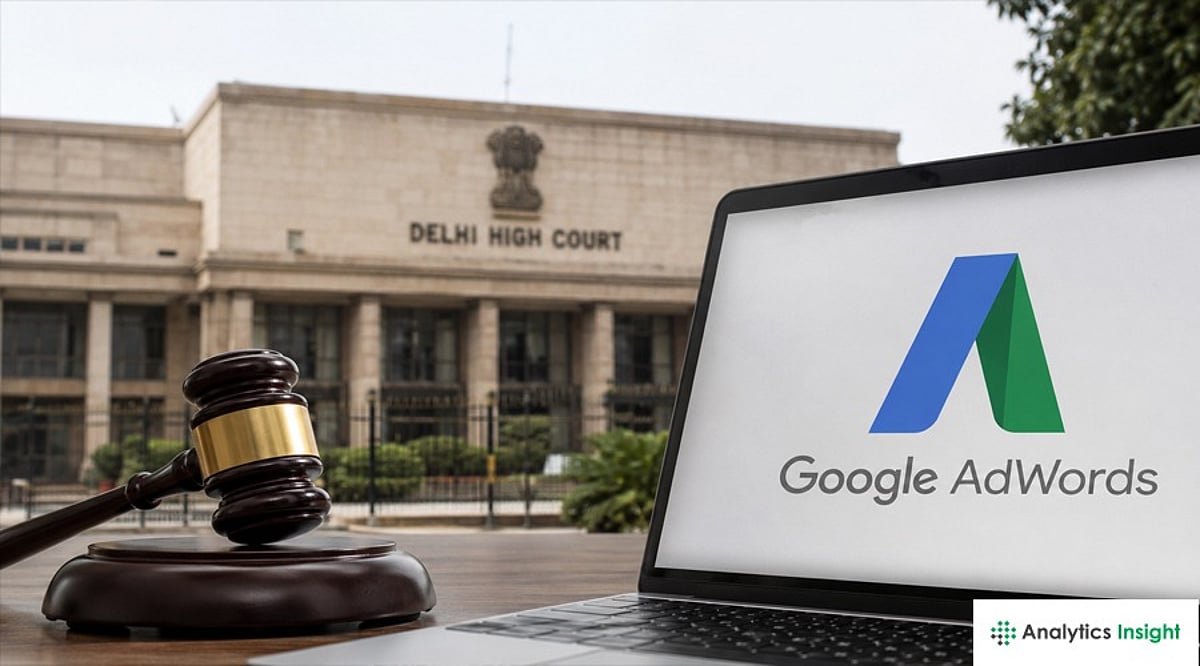
    Google has filed an appeal in the Delhi High Court against a recent order that held the company liable for trademark infringement in the Hindware AdWords case. The earlier ruling imposed a penalty of Rs. 30 lakh on Google and prohibited the company from allowing advertisers to use Hindware’s registered trademark as advertising keywords on its AdWords platform.

    Legal Proceedings

    A division bench of Justices V. Kameswar Rao and Manmeet P.S. Arora heard Google’s appeal on Friday. The court issued a notice to Hindware and scheduled the next hearing for July 24. The judges did not grant interim relief, meaning the previous order remains in effect pending a final decision.

    Google’s Arguments

    Senior advocate Abhishek Manu Singhvi, representing Google, argued that the earlier judgment contradicts several prior court decisions and established global practices. He noted that in many countries, bidding on competitors’ trademarks as advertising keywords is not considered trademark infringement. Google maintains that the AdWords system provides a legitimate way for businesses to reach potential customers through search advertising.

    Background of the Dispute

    The legal battle began when Hindware, a leading sanitaryware brand, alleged that rival companies were purchasing its trademark as a keyword through Google’s AdWords service. This caused advertisements from competitors to appear when users searched for Hindware on Google. Hindware claimed that this practice unfairly diverted its customers to competing brands.

    Earlier Court Findings

    In its May 22 judgment, the single judge ruled in favor of Hindware. The court found that Google derived commercial benefit from selling another company’s registered trademark as an advertising keyword, giving competitors an unfair advantage. The court also noted that Google never obtained permission from Hindware before making its trademark available for advertising. Additionally, the court rejected Google’s claim of protection under Section 79(1) of the Information Technology Act, stating that Google’s role exceeded that of a passive intermediary because it actively sold trademarked keywords.

    Implications for Digital Advertising

    The outcome of this appeal could have significant implications for digital advertising in India. If the court upholds the earlier ruling, companies may be barred from using competitors’ trademarks as advertising keywords. Conversely, a decision in Google’s favor would allow the current advertising model to continue, enabling businesses to reach audiences through keyword-based search ads. The July 24 hearing is expected to be a pivotal moment for the future of online advertising and trademark protection in the country.

  • 2026’s Best AI Agents for Full-Funnel Ad Campaign Management

    2026’s Best AI Agents for Full-Funnel Ad Campaign Management

    AI agents have evolved from simple chatbots into autonomous marketing assistants that can manage nearly every aspect of modern advertising. In 2026, these tools are revolutionizing ad campaign management by automating end-to-end marketing processes and optimizing campaigns through data-driven insights. From content creation and audience targeting to budget allocation and performance reporting, AI agents help advertisers work more effectively across digital advertising spaces.

    Top AI Agents for Ad Campaign Management

    The following AI agents empower businesses to handle campaign planning, creative production, audience segmentation, A/B testing, and performance monitoring across social media and other channels. By combining generative AI with marketing automation and analytics, they enable marketers to focus on strategy rather than repetitive tasks.

    OpenAI ChatGPT Agent

    ChatGPT by OpenAI serves as a versatile tool for ad campaign management, excelling in audience research, campaign planning, and content generation. Marketers use it to produce ad copy, brainstorm campaign ideas, analyze performance metrics, summarize reports, and integrate business processes.

    Google Gemini for Marketing

    Google Gemini for Marketing integrates with Google Ads to enhance search campaigns and Performance Max projects. It supports keyword research, audience insights, creative suggestions, bid optimization, and campaign analysis. By combining Google Ads with generative AI, Gemini helps marketers boost campaign optimization and respond quickly to shifting customer behavior.

    Salesforce Agentforce

    Salesforce Agentforce merges CRM data with AI advertising, allowing for personalized customer experiences, automated lead nurturing, audience segment identification, and seamless coordination between sales and marketing teams. It improves lead conversion through deep insights into customer interactions.

    Microsoft Copilot for Advertising

    Microsoft Copilot for Advertising simplifies campaign management within Microsoft Advertising and integrates with Microsoft 365 productivity tools. It assists in creating campaigns, analyzing reports, identifying audience trends, and generating advertising recommendations. Automated reporting and workflow support reduce manual effort, letting teams focus on strategy and optimization.

    Adobe Experience Platform Agent

    The Adobe Experience Platform Agent unifies customer data, content creation, and omnichannel marketing into a single AI system. It enables creative asset generation, customer segmentation, real-time personalization, and campaign management. By continuously analyzing customer behavior, it helps companies make their advertisements more relevant.

    HubSpot Breeze AI

    HubSpot Breeze AI enhances marketing automation by integrating CRM functionality with AI-driven campaign management. It automates email marketing, social publishing, lead nurturing, content creation, and campaign analysis within a single platform. Customer insights allow marketers to personalize engagement and assess performance without switching tools.

    Jasper AI Marketing Agent

    Jasper AI Marketing Agent focuses on creating high-quality marketing content while maintaining brand tone. It generates ad creatives, campaign copy, landing page content, email campaigns, and social media posts across different platforms. Collaboration tools let teams edit and approve AI-created content while preserving brand voice.

    How to Choose the Right AI Advertising Agent

    Marketers should evaluate compatibility with platforms such as Google Ads, Meta Ads, LinkedIn, TikTok, and X, as well as CRM and analytics integrations. Pricing, scalability, automation capabilities, reporting quality, and data privacy policies also deserve close attention. Enterprise-level agents can be beneficial for firms with limited advertising budgets. Experienced organizations may prefer user-friendly agents that require no advanced technical background. Ultimately, effective campaigns will always depend on human creativity, ethics, and strategy to maintain authenticity and message relevance.

    Frequently Asked Questions

    1. What is an AI agent in digital advertising? An AI agent is an intelligent software assistant that automates campaign planning, audience targeting, content generation, bid optimization, performance analysis, and reporting, helping marketers execute advertising campaigns more efficiently.
    2. Which AI agent is best for Google Ads campaigns? Google Gemini for Marketing is well-suited for Google Ads, supporting keyword research, Performance Max optimization, campaign recommendations, analytics, and creative suggestions within Google’s ecosystem.
    3. Can AI agents manage campaigns across multiple platforms? Yes. Many AI agents support multi-platform campaign management by integrating with advertising, CRM, analytics, and productivity tools to streamline workflows across several digital marketing channels.
    4. How do AI agents improve campaign performance? They continuously analyze campaign data, recommend optimizations, automate repetitive tasks, personalize customer experiences, improve audience targeting, and generate reports that help marketers make better decisions.
    5. What should businesses consider before adopting an AI agent? Businesses should evaluate platform compatibility, integrations, pricing, scalability, automation features, reporting capabilities, data privacy practices, implementation complexity, and the level of human oversight required.