

Tag: Digital Currency

  • Sitharaman Calls AI a ‘Double-Edged Sword’ for Fintech, Urges Human Oversight and Smart Regulation

    Sitharaman Calls AI a ‘Double-Edged Sword’ for Fintech, Urges Human Oversight and Smart Regulation

    Finance Minister Nirmala Sitharaman warned about the dual nature of artificial intelligence at the Global Fintech Fest 2026 in Mumbai, describing AI as a ‘double-edged sword’ that can both enhance and endanger financial systems. Speaking to a gathering of industry leaders, she highlighted the potential for AI to improve fraud detection and operational efficiency, but cautioned that the same technology could amplify cyber threats, systemic risks, and even influence public opinion and elections.

    Sitharaman emphasized that while AI can assist judgment, ultimate responsibility must remain with humans and institutions. She called for stronger oversight as financial firms increasingly rely on automated systems for fraud monitoring, risk assessment, and customer services. The minister argued that faster technology should not come at the cost of resilience in critical financial infrastructure.

    She advocated a ‘soft-touch regulation’ approach, developed in consultation with the Reserve Bank of India, aimed at fostering innovation without creating unnecessary barriers. Sitharaman welcomed the RBI’s recognition of the Unified FinTech Forum as a self-regulatory organization under its SRO-FT framework, noting that this reflects the evolving regulatory needs of India’s expanding fintech ecosystem.

    Higher-risk AI applications should face deeper scrutiny before deployment and throughout their lifecycle, she said, urging regulators, company boards, and senior executives to understand how these systems influence financial outcomes. The minister also proposed a federated industry platform to help Indian technology companies navigate cross-border rules on data, taxation, cybersecurity, and financial regulation.

    Sitharaman also called on the RBI to advance its wholesale and retail Central Bank Digital Currency pilots. Her broader message placed resilience alongside efficiency as a central requirement for India’s AI strategy, signaling that fintech companies will face greater expectations around accountability, cybersecurity, and responsible AI deployment.

    The Global Fintech Fest drew around 8,000 organizations, with technology-related entities accounting for 43% of participants and fintech firms representing another 20%. Sitharaman noted that young Indians are already building companies and shaping future economic growth, underscoring the importance of developing technology systems that can withstand failures and misuse.
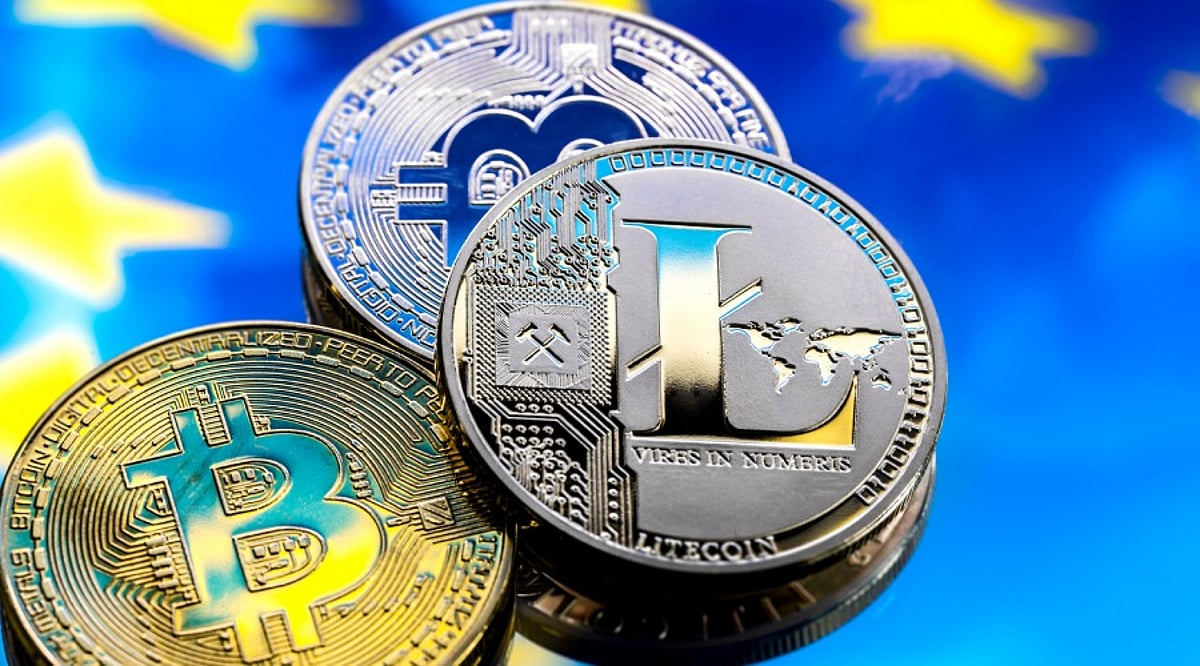

  • Europe’s Strategic Imperative: A Decentralized Euro Stablecoin for Digital Autonomy

    Europe’s Strategic Imperative: A Decentralized Euro Stablecoin for Digital Autonomy

    Europe’s stablecoin debate has shifted from policy papers to real-world launches. European Central Bank President Christine Lagarde recently noted that stablecoins have surged from under $10 billion six years ago to over $300 billion today, with nearly 98% of the market dollar-denominated. In July, Crédit Agricole’s asset-servicing arm CACEIS launched EURXT, a euro-backed token on Ethereum, used for a tokenized Amundi money market fund. Europe is no longer observing from the sidelines—it is witnessing the next layer of payments and settlement take shape.

    This rapid development underscores the urgency of strategic autonomy. Most stablecoin activity relies on dollar-pegged tokens issued outside the EU, while the U.S. GENIUS law has turned stablecoins into an explicit instrument of dollar power and Treasury demand. European banks are moving from internal debate to product execution, building MiCA-compliant tokens and responding to corporate demand for faster, cheaper settlement outside traditional banking hours.

    Brussels must focus on this combination. MiCA gave Europe an early regulatory framework, and the ECB rightly worries about liquidity stress, fragmented issuance, and digital dollarization. But rules alone will not determine who shapes this market. Stablecoins promise near-instant settlement, lower fees, and programmable payments, but their public value depends on the architecture behind them. If Europe leaves the most scalable rails to dollar-based instruments, its regulators will supervise a system whose incentives are set elsewhere.

    The United States has understood this faster. By setting clearer rules for reserves, issuance, and compliance, Washington is giving stablecoins the legal scaffolding to move from crypto markets into mainstream finance. Europe has safeguards but still lacks a convincing euro-denominated alternative that is open enough to scale, trusted enough for institutions, and decentralized enough to avoid becoming another centrally controlled payment instrument.

    Alexandre Azoulay, managing partner of SGH Capital, argues that the current approach is too cautious. “Europe has tried to supervise a market it does not yet shape,” he says. “We need a digital asset that carries European values, not one borrowed from someone else’s system.” A decentralized euro-based stablecoin could achieve this without placing additional control in any single public authority. It could operate under transparent rules, with open protocols, broad participation, and oversight that protects users without stifling development.

    Lagarde’s warnings highlight a real problem: a rush by non-EU holders to redeem EU-issued tokens could strain liquidity and disrupt markets. However, these concerns speak to the design of specific models, not stablecoins themselves. A European decentralized stablecoin with reserves held domestically and governed by clear rules would address most issues. The problem is not the concept—it is the absence of a European version built for scale.

    The European Banking Authority notes that MiCA already contains safeguards for robust liquidity, sound governance, and transparency. National regulators can enforce compliance. But these tools do not replace the need for leadership. Europe has a long tradition of turning regulation into a competitive advantage—for data protection, consumer rights, and payments. Stablecoins should be no different.

    Azoulay frames the opportunity simply: “If Europe wants to remain influential in the next generation of commerce, it needs its own digital settlement layer. Not a copy of the dollar system, not a centralized instrument controlled from Frankfurt, but a decentralized asset that strengthens the euro.” A decentralized stablecoin would support cross-border businesses, improve transparency, and reduce reliance on private intermediaries. It would also reduce Europe’s exposure to regulatory shifts in Washington or geopolitical tensions affecting the dollar-based financial system.

    A centralized European stablecoin may appear safer, but centralization carries vulnerabilities—a single point of control influenced by political cycles, administrative delays, or shifting mandates. A decentralized structure distributes risk and reinforces trust by limiting unilateral intervention. Users would know the asset is governed by predictable mechanisms.

    Europe stands at a crossroads. It can continue managing the rise of foreign stablecoins through rules that address symptoms, or it can take the initiative and design a decentralized, euro-denominated stablecoin that reflects its economic weight and technological ambition. Lagarde’s intervention should encourage action rather than hesitation. Stablecoins are already reshaping global financial infrastructure. The question is whether Europe will shape their future or watch others do so.

  • Russia’s State Duma Advances Final Crypto Regulation Bill: Investor Limits, Licensing, and Cross-Border Rules

    Russia’s State Duma Advances Final Crypto Regulation Bill: Investor Limits, Licensing, and Cross-Border Rules

    Russia’s lower house of parliament, the State Duma, has moved the country’s comprehensive cryptocurrency regulation bill toward final approval. The draft law, titled ‘On Digital Currency and Digital Rights’ (No. 1194918-8), is scheduled for second and third readings on July 21, 2026, and aims to create a formal framework for digital assets in Russia.

    Investor Classification and Licensing

    The bill divides crypto investors into two categories: qualified and non-qualified. Non-qualified investors must pass a knowledge test to purchase approved cryptocurrencies and would face an annual purchase limit of 300,000 rubles through regulated intermediaries. Qualified investors would enjoy broader access and higher transaction limits.

    Licensed exchanges, brokers, custodians, and exchange operators would operate under the supervision of the Bank of Russia. Unlicensed firms would face restrictions after a planned transition period. The revised text removed a proposed rule requiring holders to report individual wallet addresses; instead, users would report balances and transaction volumes, a change lawmakers say reduces exposure of sensitive ownership information.

    Cross-Border Crypto Trade

    While the framework maintains Russia’s ban on crypto payments for ordinary goods and services—keeping the ruble as the sole legal tender—it permits digital assets for selected financial and international transactions. Russian exporters and importers can use cryptocurrencies for eligible foreign trade settlements, building on previous experimental legal regimes.

    Anatoly Aksakov, chair of the Duma Financial Market Committee, confirmed the schedule: “Tomorrow, July 21, we will adopt the law in the second and third readings.” The proposal also allows crypto-for-crypto exchanges through licensed platforms, certain private securities transactions, and blockchain network fees using digital assets.

    Eligible Cryptocurrencies

    Only cryptocurrencies meeting strict market and trading requirements can enter public exchange trading. According to Interfax, Bitcoin and Ethereum currently meet those proposed thresholds. The central bank could temporarily approve other assets for up to six months.

    Timeline and Next Steps

    State Duma approval is not the final step. The bill must next pass the Federation Council and receive President Vladimir Putin’s signature before becoming law. Officials have targeted September 1, 2026, for the main provisions to take effect, a delay from the original July 1 target following extended negotiations and multiple amendments.

    The framework would recognize crypto as property, bring trading into licensed channels, and establish reporting, custody, and supervision rules. Separate legislation would create penalties for violating the new market requirements. Finance Ministry estimates placed domestic crypto trading near 50 billion rubles daily earlier this year, much of it operating outside regulated channels.