Tag: digital infrastructure

  • India’s Internet Growth Faces Undersea Cable Vulnerabilities

    India’s Internet Growth Faces Undersea Cable Vulnerabilities

    India’s rapid digital expansion relies heavily on a network of submarine cables that carry the vast majority of its international internet traffic. However, this critical infrastructure faces several vulnerabilities that could threaten the country’s connectivity ambitions.

    Undersea Cables: The Backbone of Global Internet

    Almost all intercontinental digital communication depends on submarine cables. For India, these cables link the country with Europe, Africa, West Asia, and Asia, enabling seamless international data flow.

    Concentration Near Mumbai Creates a Bottleneck

    At least 13 of India’s 18 intercontinental submarine cables land within roughly six kilometers of Mumbai’s Versova coast. This single landing zone handles a major share of the nation’s international bandwidth, making it a critical point of failure.

    Soaring Data Consumption

    India’s broadband subscriber base surpassed 1.06 billion in March 2026. Wireless data usage jumped from 73,324 PB to 77,953 PB in just one quarter, underscoring the relentless growth in demand.

    Aging Infrastructure

    About 11 of India’s 18 international cable systems are over 20 years old, approaching the end of their typical design life. This aging infrastructure adds strain as AI, cloud computing, and video traffic continue to surge.

    No Domestic Cable Repair Capability

    India currently lacks an Indian-flagged, Indian-owned, or India-stationed submarine cable repair vessel. Repairs depend on foreign operators and ships, leading to potential delays when faults occur.

    Risks of Cable Cuts

    A single cable fault does not immediately disrupt India’s internet—traffic can reroute through other paths. However, multiple cuts, congested alternatives, or slow repairs can degrade international connections, causing higher latency and slower speeds.

    Geopolitical Risks in the Red Sea

    Several key international routes traverse the Red Sea and Strait of Hormuz. Damage in these regions forces traffic onto longer or more congested routes, adding pressure to global connectivity.

    New Projects Offer Hope

    Emerging cable projects aim to reduce dependence on Mumbai. The I-2SEA system will connect India with Malaysia and Singapore, with planned landings at Machilipatnam and South Chennai, targeting operational status by 2029.

    Need for Enhanced Repair Capacity

    The Telecom Regulatory Authority of India (TRAI) has recommended exploring Indian-flagged repair vessels and establishing cable depots on both the eastern and western coasts. Increasing landing sites, deploying newer cables, and speeding up repair systems are essential for building resilience.

    Read more stories and join our WhatsApp Channel for the latest news, exclusives, and videos.
  • Gautam Adani’s Multi-Layer Strategy for Data Centers, AI Hardware, and Digital Infrastructure

    Gautam Adani’s Multi-Layer Strategy for Data Centers, AI Hardware, and Digital Infrastructure

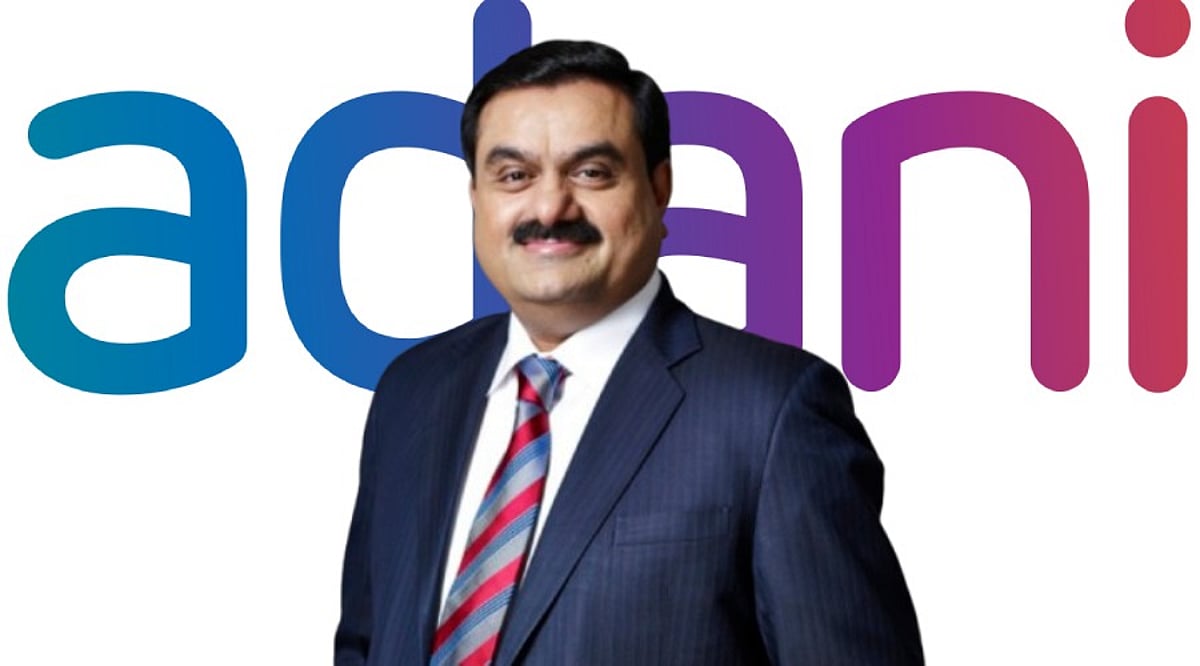
    Gautam Adani is rapidly expanding the Adani Group into data centers and artificial intelligence infrastructure, positioning the conglomerate to capture the surging demand for computing power, energy, and connectivity driven by AI. Through its data center platform AdaniConneX, the group is building hyperscale facilities across India and has secured a landmark partnership with Google to develop a major AI hub in Visakhapatnam. The strategy extends beyond operating data centers to include AI hardware manufacturing via a proposed alliance with Jabil, as well as enhanced connectivity through partnerships like DE-CIX India.

    AdaniConneX: The Core of the Digital Push

    Established in 2021 as a joint venture with EdgeConneX, AdaniConneX combines the group’s infrastructure capabilities with global data center expertise. The platform targets a 2 GW renewable-powered data center footprint by 2030, with over 55 MW already live and a cumulative order book exceeding 560 MW. Its facilities serve enterprises, technology companies, and hyperscale customers, marking a shift from development to large-scale infrastructure delivery.

    Why Data Centers Fit Adani’s Ecosystem

    Data centers are becoming strategic infrastructure assets, especially for AI workloads that require high-density computing, reliable power, and sophisticated cooling. Adani’s existing interests in renewable energy, transmission, logistics, and construction create vertical integration opportunities. AdaniConneX offers Build-to-Suit and Energy-as-a-Solution models, linking digital growth with the group’s energy ambitions.

    Google Partnership Raises the Scale

    In October 2025, AdaniConneX and Google announced a major partnership to develop an AI-focused data center campus in Visakhapatnam. The broader Google AI hub involves approximately USD 15 billion in planned investment across data centers, clean energy, transmission, energy storage, and subsea connectivity. The project is planned for 2026–2030 and aims to support demanding AI workloads while expanding India’s computing capacity.

    Moving into AI Hardware Manufacturing

    In June 2026, Adani Enterprises announced an intended alliance with Jabil to develop an AI and data center infrastructure manufacturing platform. The proposed platform targets gigawatt-scale AI rack manufacturing and could support advanced infrastructure production for global data centers. This move aligns with India’s ambition to become an AI hardware hub and reduce dependence on imported components.

    Connectivity Becomes Another Priority

    AdaniConneX recently partnered with DE-CIX India to establish an interconnection hub at Chennai 1, providing access to cloud connectivity, enterprise networking, and more than 600 networks. Chennai’s subsea cable infrastructure makes it a key digital gateway, enhancing the appeal of data center campuses and highlighting Adani’s focus on connected digital ecosystems.

    What the Strategy Means for Adani’s Future

    Adani’s data center strategy reflects a larger shift in global infrastructure. AI is driving demand for computing, power, connectivity, and specialized hardware, and India is becoming an important destination for digital infrastructure investment. The group has committed to developing 5 GW of green-energy-powered, hyperscale AI-ready data centers by 2035. If execution remains strong, this could transform Adani’s role from infrastructure owner to digital infrastructure integrator, offering a model that global technology companies may find increasingly valuable.

    Frequently Asked Questions

    Who is Gautam Adani?
    Gautam Adani is the Chairman of the Adani Group, a conglomerate operating across infrastructure, energy, logistics, airports, and other sectors. Under his leadership, the group has increasingly focused on data centers and AI infrastructure.
    What is AdaniConneX?
    AdaniConneX is Adani Group’s data center joint venture with EdgeConneX, developing hyperscale and enterprise facilities across India with a focus on renewable-energy integration.
    How much data center capacity does AdaniConneX have?
    AdaniConneX had more than 55 MW of operational capacity by the end of FY26, later securing a 400 MW hyperscale order in Visakhapatnam, bringing cumulative tied-up capacity above 960 MW as of June 2026.
    What is Adani’s partnership with Google?
    AdaniConneX and Google are developing a large AI data center campus in Visakhapatnam as part of Google’s approximately USD 15 billion AI hub investment planned for 2026–2030, including clean energy, storage, transmission, and subsea connectivity.
    Why is Visakhapatnam important?
    Visakhapatnam offers access to power infrastructure, connectivity, and subsea cable networks, making it a strategic location for international digital connections and India’s emerging data center ecosystem.
  • Infosys Co-Founder Nandan Nilekani: Applied AI Can Unlock Major Productivity Gains for India

    Infosys Co-Founder Nandan Nilekani: Applied AI Can Unlock Major Productivity Gains for India

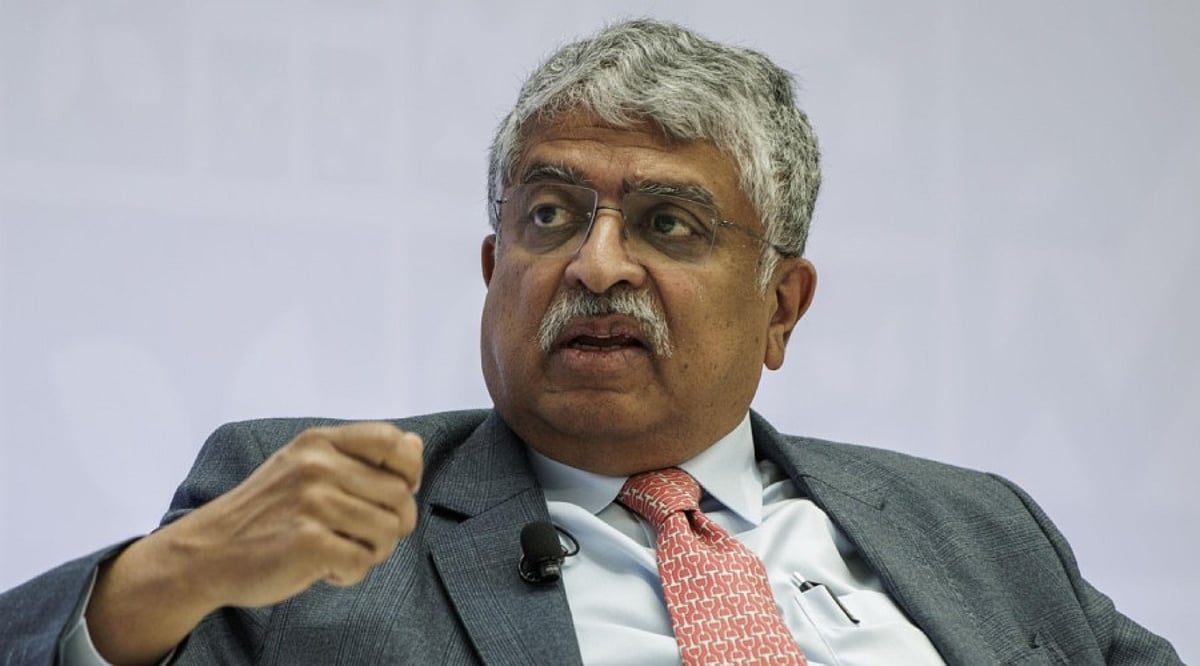
    India could see strong productivity gains from artificial intelligence over the next decade, Infosys co-founder Nandan Nilekani said Thursday at the India Policy Forum in New Delhi. He emphasized that applied AI represents India’s biggest opportunity, not cutting-edge hardware or large language models.

    “It’s in the area of applied AI that India will become a leader,” Nilekani said, according to sources. He argued that India could become the “AI use case capital of the world” by deploying practical AI solutions to everyday problems in sectors such as healthcare, education, agriculture and financial services.

    Nilekani noted that India’s existing digital public infrastructure—including Aadhaar and UPI—provides a strong foundation to deliver AI tools to millions of people across the country, including those in remote areas.

    However, he also raised concerns about AI’s impact on employment, particularly in large organizations. “Large companies will probably be net job losers in the coming years,” he warned, as routine tasks become automated. Small businesses, he suggested, could become the primary engine for job creation in an AI-driven economy.

    To fully realize the benefits of AI, Nilekani stressed the need for improved skills training, broader digital access, and reliable systems. Wider adoption, he said, could turn AI-driven productivity into stronger economic growth and greater inclusion for all Indians.

  • World Bank Report: India Faces Lower AI Job Disruption Risk Compared to Wealthier Nations

    World Bank Report: India Faces Lower AI Job Disruption Risk Compared to Wealthier Nations

    India has less to fear from artificial intelligence than richer countries, according to a new World Bank report released in 2026. The report examines how AI could affect jobs worldwide and finds that developing nations face lower automation risks while potentially reaping productivity gains.

    The World Bank estimates that only 4.5% of jobs in low- and middle-income countries are at high risk of being automated by AI. In contrast, that figure rises to 14.2% in high-income countries, indicating greater job pressure in wealthier economies. The report also notes that AI could improve productivity in 16.2% of jobs across developing economies.

    “AI has thrown developing economies a lifeline, and they should seize it,” said Indermit Gill, the World Bank’s chief economist. Gill emphasized that smaller, locally adapted AI tools could enhance healthcare, education, agriculture, and public services.

    In India, AI could help farmers with crop advice and weather information. Healthcare workers could use AI tools to support medical checks in rural areas. Schools and government offices could leverage AI for learning and public service delivery.

    However, the report warns that India still faces risks in call centers, outsourcing, and entry-level technology jobs where AI could replace routine tasks.

    The World Bank recommends that countries first deploy existing AI tools and customize them for local needs. Advanced AI development can follow once basic digital infrastructure and skills are strengthened.

    To fully benefit from AI, India needs better electricity, internet access, skilled workers, useful data, and strong institutions. Building these foundations could help AI create widespread benefits without increasing inequality.

  • Vertiv Names Raghavendra Kale as New Channel Head for India to Drive Partner Growth

    Vertiv Names Raghavendra Kale as New Channel Head for India to Drive Partner Growth

    Vertiv (NYSE: VRT), a global leader in critical digital infrastructure, has promoted Raghavendra Kale to the role of channel leader for India. In this capacity, he will spearhead the company’s channel sales strategy across the region, focusing on expanding ecosystem reach, accelerating market penetration, and deepening engagement with key partner segments.

    Prashant Bhatia, vice president of sales at Vertiv India, commented on the appointment: “Raghavendra’s journey with Vertiv reflects deep commitment, strong execution, and a consistent focus on partner success. His ability to build strong relationships and deliver business outcomes has been instrumental in strengthening our channel ecosystem. As we scale our presence in India, the channel will play a pivotal role in driving growth and market reach. Raghavendra’s leadership will help us deepen partner engagement and unlock new opportunities across key segments.”

    With nearly three decades of experience, Kale has built deep domain expertise and strong partner relationships across the industry. In his most recent role as director, West Zone, channel, he played a pivotal role in streamlining operations, strengthening the partner ecosystem, and driving consistent business performance across the region.

    In his new role, Kale will also drive the development of a scalable partner engine to nurture and grow strategic accounts, further strengthening Vertiv’s channel-led growth strategy in India.

    Speaking on his new role, Kale said: “I am honored to take on this responsibility at a time when demand for resilient and scalable digital infrastructure is accelerating in India. I look forward to working closely with our partners to drive innovation, expand our reach, and deliver greater value to customers.”

    Vertiv continues to reinforce its commitment to a partner-first approach and sustained growth in India. The company’s portfolio spans power, thermal management, and IT infrastructure solutions, including uninterruptible power supply (UPS) systems, precision cooling, and integrated rack and enclosure offerings, complemented by software and services that give customers greater visibility and control across the data center lifecycle. As organizations across industries scale their digital and AI-ready infrastructure, this breadth of offerings enables partners to address a wide range of customer needs, from edge deployments to hyperscale environments, further reinforcing the channel’s role as a key extension of Vertiv’s go-to-market strategy in India.

    For more information about the Vertiv channel partners program, visit Vertiv.com.

  • Ishan Technologies Names Saibal Roy as COO to Drive Operational Excellence and Enterprise Growth

    Ishan Technologies Names Saibal Roy as COO to Drive Operational Excellence and Enterprise Growth

    Ishan Technologies, a leading pan-India ICT and digital infrastructure provider, has appointed Mr. Saibal Roy as its Chief Operating Officer. The move strengthens the company’s leadership as it expands its digital infrastructure capabilities and enhances operational excellence.

    About Saibal Roy

    Mr. Roy is a seasoned enterprise leader with over three decades of experience in India’s ICT and telecommunications industry. He has led large-scale businesses, developed successful go-to-market strategies, and built high-performing teams across complex and competitive markets.

    During his nearly 14-year tenure at Bharti Airtel, he held leadership roles across Government Business, Enterprise Business, and Carrier Wholesale, driving sustained growth in each segment. Prior to joining Ishan Technologies, he served as India Vertical Head for Manufacturing, Retail, and Distribution at ServiceNow India. His career also includes leadership positions at Tata Communications, HFCL, and Tulip Telecom, giving him deep expertise in enterprise connectivity, digital transformation, and customer-centric growth. He holds a bachelor’s degree in Electronics Engineering and is an alumnus of ISB Hyderabad and INSEAD Fontainebleau.

    Leadership Perspectives

    Commenting on the appointment, Mrs. Purvi Kotecha, Director of Ishan Technologies, said: “Over the past 25 years, we have built a business that our customers trust. As we continue to grow, strengthening our operational capabilities becomes increasingly important. Saibal brings extensive leadership experience, a deep understanding of the enterprise technology landscape, and a proven ability to build scalable organisations. We are confident that his expertise will play a significant role in supporting Ishan Technologies’ next phase of growth.”

    Mr. Saibal Roy, Chief Operating Officer, Ishan Technologies, added: “Ishan Technologies has built a strong reputation through its customer-first approach, robust digital infrastructure, and deep market understanding. I look forward to working with the team to further strengthen operational excellence and build capabilities that support the company’s long-term growth ambitions.”

    About Ishan Technologies

    Founded in 2000, Ishan Technologies is a leading ICT company with a strong pan-India presence, enabling organisations to build and scale digital infrastructure for the AI era. The company delivers integrated solutions across network connectivity, data centre services, cloud, and AI-ready digital platforms, serving enterprises, government institutions, and retail customers. With over 25 years of expertise, Ishan Technologies is committed to building secure, scalable, and sovereign digital ecosystems that power India’s next phase of digital and AI growth.

    For more information, visit: www.ishantechnologies.com